
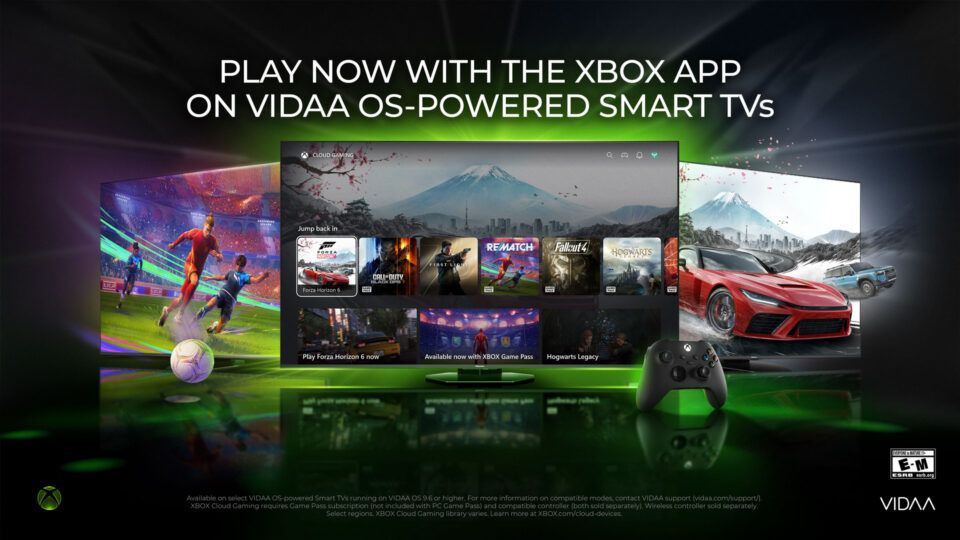

Xbox CEO Asha Sharma has reportedly told staff Project Helix is being built as a next-gen family of devices, with a console first, portable play in view, and a new OS taking shape.
Image: news.xbox.com
Xbox is now talking about Helix as a lineup, not a lone box
The clearest new signal around Xbox Project Helix is that Microsoft’s next generation is being framed as a device family. According to a Windows Central report cited by VGC, Eurogamer, Pure Xbox, CBR, IGN, and Vice, Xbox CEO Asha Sharma told staff during an internal town hall that Xbox is “moving to a family of devices for Gen-10,” adding that “there is not one device that fits all.”
That reported line matters because it tightens months of looser public language. VGC notes that Sharma had already told the BBC in August that Microsoft was working on “a great next generation and a great family of devices for Helix.” The internal town hall quote, as reported by Windows Central and repeated across multiple outlets, goes further by saying Xbox will “certainly have a great console first,” while also acknowledging that “many players will be on the go.”
The important split is between what has been stated and what remains open. The reported town hall comments support the existence of a Project Helix console family strategy, with a primary console at the center. They do not confirm a product lineup, a handheld SKU, a release window, pricing, physical media support, or exact specifications. Eurogamer specifically flags the disc-drive question as unanswered, and none of the supplied reports say Microsoft has announced a launch date.
For players trying to read the field, the tension is obvious. Xbox is still promising a traditional power box, but it is also preparing fans for next-gen Xbox devices that may not all look, cost, or function the same way. That is a very different pre-launch message from a simple “new Xbox is coming” pitch.
The portable hint is strong, but a handheld is still unannounced
Sharma’s reported “many players will be on the go” line is the phrase everyone is circling, and for good reason. VGC says the comment, paired with Sharma’s reference to things Xbox will “partner on,” suggests Microsoft may be preparing a handheld compatible with the Helix ecosystem and games. Pure Xbox reads it similarly, saying it could point to a first-party handheld or another third-party system in the mold of the ROG Xbox Ally.
Eurogamer puts the current strategy in context. This generation already had Xbox Series X and Xbox Series S serving different price and performance targets, while the Asus ROG Ally X partnership brought an Xbox-style experience to a handheld gaming PC. IGN also points to Microsoft’s history of working with hardware makers through Windows, arguing that future Xbox-branded handheld PCs, laptops, or desktops would fit the company’s existing partner muscle.
That is interpretation, not confirmation. The only firm phrasing in the reported Sharma quote is that Xbox will manufacture some things itself and partner on others. No outlet in the supplied material reports a named Helix handheld, a screen size, battery life, chip target, price, or launch timing. If there is a portable in the Project Helix console family, it has not been formally announced in the material provided.
Still, the shape of the pitch is easy to understand. Xbox wants the account, library, and storefront relationship to travel with the player. For shooters, that raises real questions beyond whether Halo or Call of Duty can boot on a smaller device. Competitive players care about input consistency, latency, display refresh, Wi-Fi reliability, cross-save behavior, and whether a portable SKU becomes a convenience machine rather than the place you grind ranked. The current reports do not answer those points, which is exactly why buyers should treat the handheld angle as a signal, not a spec sheet.
The new OS could decide whether the family feels unified
The operating system may be the most important piece of the whole Project Helix story. According to the Windows Central-reported town hall quote carried by VGC, Eurogamer, Pure Xbox, IGN, CBR, and Vice, Sharma said, “The operating system is starting to look really good. We’re very excited about this.”
That is a small quote with big implications, but the limits matter. Sharma’s reported comment does not name the OS, show the interface, describe compatibility layers, or confirm whether it replaces the current Xbox dashboard model. VGC notes that the remark could imply Helix will not use a front-end similar to Xbox Series X/S, whose user experience stayed close to Xbox One. That is VGC’s reading of the comment, not a Microsoft feature reveal.
If the family-of-devices plan is real, the Xbox new OS has a heavy job. A console, a portable partner device, and any PC-like hardware need a shared identity that does not make players feel like they are switching ecosystems every time they change screens. Eurogamer points to Xbox Play Anywhere as a key piece of Microsoft’s current cross-buy approach, where a supported purchase can carry across platforms. IGN’s coverage also emphasizes the PC side of Xbox’s direction, especially after the ROG Xbox Ally X and Microsoft’s partner history.
For players, the OS question is practical. Can it make PC games feel console-clean from the couch? Can it handle storefront sprawl without dumping players into the worst parts of Windows-style handheld navigation? Can it keep party chat, captures, achievements, cloud saves, Game Pass, and input settings tight across hardware? None of that is confirmed in the supplied sources, but those are the tests that will decide whether “family” feels like a platform advantage or a messy device spread.
Xbox and PC game support is the promise to watch
Eurogamer reports that Sharma has previously said Project Helix will “lead in performance and play your Xbox and PC games,” which is the most direct statement in the supplied material about the software target. VGC similarly describes the emerging picture as a hybrid system capable of playing both console and PC games, based on Sharma’s recent comments to outlets and Xbox Wire.
That promise is powerful, but it is also where details can make or break the whole pitch. “Xbox and PC games” could mean a clean, curated console experience with expanded compatibility. It could also mean different levels of access depending on whether a device is a living-room console, a handheld PC, or a partner-built machine. The sources provided do not confirm which PC storefronts will be supported on Helix hardware, how licensing will work, or whether every Xbox-owned game will behave the same across every device.
The ROG Xbox Ally X context matters here. VGC says the Asus-made handheld offers access to Xbox PC games as well as games on other PC storefronts. That existing product gives Microsoft a live example of the portable PC lane, but it does not prove Project Helix will use the same model. Pure Xbox and Eurogamer both treat a future partner portable as possible, not announced.
From a shooter player’s perspective, this is the difference between owning a platform and carrying a launcher. If Helix can make a PC library feel native on a console-class device, the appeal is obvious. If support varies by storefront, anti-cheat, input mode, or device class, players will need to read the fine print before treating the next-gen Xbox hardware as one clean upgrade path.
The Series S lesson hangs over every multi-device plan
A family strategy is familiar territory for Xbox. Eurogamer notes that Microsoft already used a two-device approach this generation with Xbox Series X and Xbox Series S, with Series S positioned as a lower-end companion to Series X. IGN makes the same comparison, describing the current generation as launching with two separate boxes for different users before Microsoft partnered with Asus on the ROG Xbox Ally X.
That history gives Helix a head start in messaging, but it also creates pressure. A premium console player wants the main box to set the pace. A lower-cost or portable device should expand access without dragging down the target for games built around the high-end hardware. Pure Xbox’s comment section excerpt in the supplied material captures that concern directly, with one reader saying they are interested in the high-end premium console and do not want it compromised by handhelds or lesser sibling devices.
That concern is especially sharp for shooters. Frame rate targets, memory ceilings, streaming speed, CPU headroom, and input latency all show up in the feel of a match. If a map loads slower, a firefight stutters, or a large-scale mode gets designed around the weakest supported box, competitive players notice immediately. The supplied reports do not say how Microsoft will set development baselines across the Project Helix console family, so parity remains one of the biggest unanswered questions.
The upside is choice. A player who wants the strongest living-room machine can wait for the flagship. Someone who plays mostly campaign, co-op, cloud saves, or portable sessions may value a cheaper or mobile device. The risk is fragmentation. Xbox’s challenge is to make “family” mean clean options, not confusion over which device runs which game best.
Price may shape Helix as much as performance
The pricing backdrop is ugly for every platform holder. VGC reports that Sharma said in June it is hard to imagine mass audiences being able to spend thousands of dollars on a console generation, while Eurogamer says she has discussed “radically different business models” to keep future Xbox hardware affordable. Eurogamer also points to a memory component crisis driven by AI demand as a factor that has pushed computer hardware prices up and contributed to unusual console price increases this generation.
That context makes the family-of-devices strategy easier to read. If one premium box is expensive to build, Microsoft can surround it with other entry points: a lower-cost device, a partner handheld, financing, subscription-linked offers, or hardware aimed at different levels of performance. The supplied material does not confirm any of those business models for Helix, but Sharma’s affordability comments show Xbox is publicly aware of the price wall.
This is where the rumor lane needs separation from reported fact. Tech Insider reports that leaker KeplerL2 claimed the Helix chip had taped out and attached a 56 TFLOPS performance claim to it, while also saying Microsoft has not announced a consumer release date or price. Those TFLOPS and tape-out claims are unverified in the supplied material and should not be treated as buying guidance. They are part of the chatter around Xbox next gen hardware, not confirmed specs.
The confirmed consumer-facing position is much thinner: a console is planned first, a broader device family is being discussed by Xbox leadership, the OS is reportedly progressing, and price remains unannounced. Until Microsoft gives official hardware tiers and cost, any “wait for Helix because it will be X dollars” argument is guesswork.
Should players wait for Xbox Project Helix?
If you need a console now, the current reports do not give enough hard information to justify freezing every purchase. No supplied source reports a Helix release window, a price, a confirmed handheld, a final OS reveal, or a launch library. Waiting only makes sense if your current setup still covers the games you play and you are specifically interested in a next-gen Xbox devices strategy that may blend console and PC libraries.
If you are deciding between buying current Xbox hardware and holding out, the safest read is this: Helix is real enough as Microsoft’s next-gen direction to monitor closely, but too undefined to plan a budget around. VGC and Eurogamer both report that Sharma is talking about a “great console first,” so players who want a traditional next-gen Xbox should not assume Microsoft has abandoned the living-room box. At the same time, the “on the go” language and partner comments suggest the next generation may include hardware outside the normal console lane.
For competitive FPS players, the advice is sharper. Do not buy into the family concept until Microsoft shows performance targets, storage specs, refresh support, input options, anti-cheat behavior, and whether multiplayer developers must support every Helix-class device equally. A great OS and broad library support would be a huge win, but gunfeel is unforgiving. The flagship console has to deliver stable frames and fast response before the rest of the family matters.
For everyone else, watch for three official reveals before making a wait-or-buy call: the actual device lineup, the OS demonstration, and the price model. Right now, Xbox Project Helix sounds like Microsoft setting up a wider hardware ecosystem for Gen 10. The promise is flexibility. The risk is that players will need a clear chart to know which box fits their library, budget, and play style.