
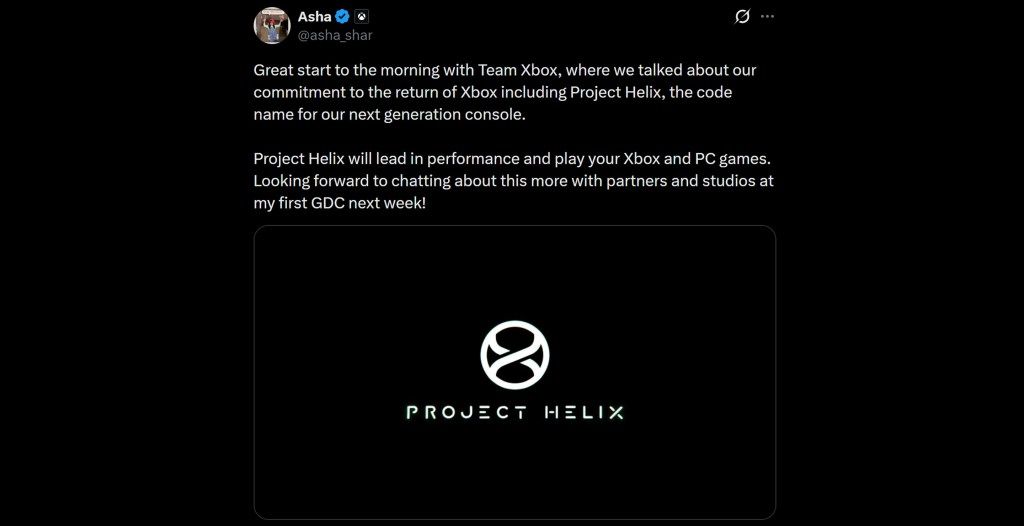

Microsoft’s latest Xbox Project Helix framing says the next Xbox is a console capable of playing PC games, raising practical questions about storefronts, upgrades, pricing, and how hybrid the hardware will really be.
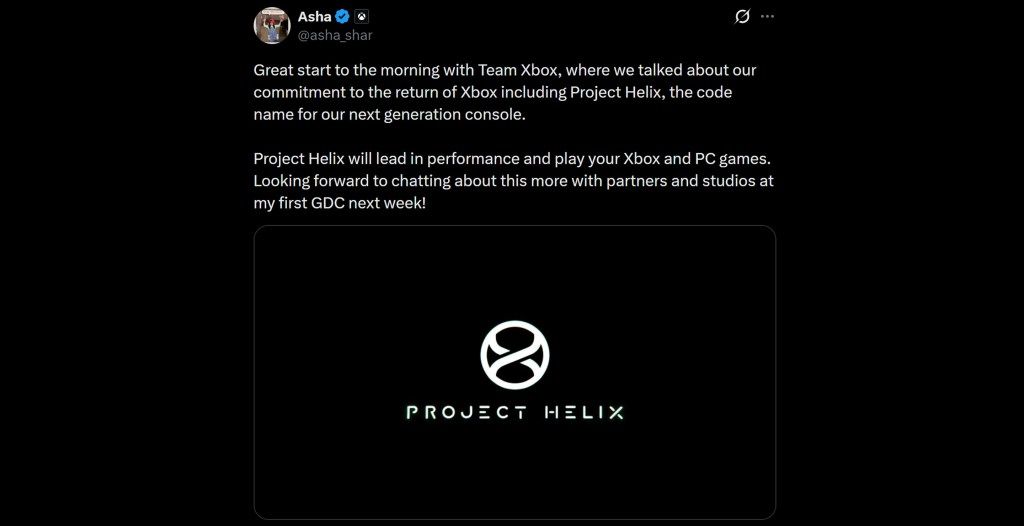
Image: vice.com
Microsoft is drawing a line around Project Helix
Microsoft’s clearest new message on Xbox Project Helix is also its most important one for buyers trying to understand the next Xbox hardware: Xbox is presenting it as a console first, not as a living-room PC with Xbox compatibility attached.
That distinction comes from Jason Ronald, Xbox’s vice president of next generation, in Microsoft’s Xbox 25th Anniversary Magazine. According to Video Games Chronicle, IGN, Pure Xbox, TechSpot, and VICE, Ronald said Project Helix is “designed to be a console that is also capable of playing games from your PC” and “not a PC that can also play console games.”
The tension is obvious. For months, the most interesting part of Project Helix has been the promise, or at least the expectation, that Microsoft’s next gaming hardware could blur the old wall between Xbox and PC libraries. Ronald’s latest framing does not walk that back. It narrows the interpretation. Microsoft is still talking about PC games on Xbox hardware, but it wants the center of gravity to remain console simplicity: instant access, a unified experience, no driver maintenance, and a machine designed around play rather than desktop computing.
For a market that has watched Xbox publish more games beyond its own consoles, reshape Game Pass, and experiment with PC-style devices such as the ROG Xbox Ally, that wording matters. Project Helix may still become the closest thing Xbox has made to an Xbox PC games console. Microsoft is now signaling that buyers should not expect a conventional Windows gaming tower in console clothing.
The console-first pitch is about defaults, not limits
Ronald’s comments describe a familiar strategic compromise: keep the default experience simple enough for console players, while giving power users some of the adjustment range they expect from PC gaming. In the anniversary magazine, as reported by VGC and Pure Xbox, he said the goal is to make games “easy, intuitive, and instant” to access. He also said players who want deeper customizability across settings and performance options will be able to pursue it.
That sounds less like a binary choice between Xbox and PC, and more like a layered interface. At the surface, Project Helix would behave like a console: boot to a game-focused environment, hide system chores, preserve quick access, and reduce the configuration tax that PC players accept as part of the bargain. Under that surface, Microsoft appears to be leaving room for graphics and performance controls that are rarely exposed on current consoles.
TechSpot reports that Microsoft has confirmed the Project Helix operating system is built on Windows, while also describing the experience as tailored to gaming rather than a standard Windows desktop. TechSpot also says Ronald confirmed the Helix interface “will be its own” and will draw from Microsoft’s work on the ROG Xbox Ally and Xbox mode for Windows. That is a key distinction for expectations. A Windows foundation does not automatically mean a Windows PC experience.
This is the strategic lane Microsoft is trying to hold. A true open PC can do almost anything, but that flexibility brings storefront sprawl, driver updates, background processes, compatibility edge cases, and uneven controller support. A traditional console avoids most of that friction, but it also locks players into a curated platform model. Project Helix is being described as an attempt to take PC library access and wrap it in console discipline. Whether that balance holds will depend on details Microsoft has not announced.
The storefront question is still the biggest missing piece
The phrase “games from your PC” invites the obvious reader question: does Project Helix run Steam, Epic Games Store, GOG, Battle.net, or other PC storefronts on Xbox hardware? Microsoft has not confirmed that in the supplied source material.
Wolf’s Gaming Blog points to the ROG Xbox Ally comments as the strongest hint. Ronald described that handheld as an opportunity for Xbox to learn from “playing libraries from across multiple different storefronts” and from seeing PC games and console games appear together in a unified library. He also called the Ally a precursor to what Microsoft is doing with Helix, while saying Helix is informed by many of the same design concepts.
That is suggestive, but it is not a storefront announcement. Wolf’s Gaming Blog explicitly notes that Ronald did not say players will be able to launch Steam on the next Xbox. VICE likewise reports that which PC storefronts and games will be supported remains an open question. TechSpot says Helix appears set to present games from several libraries in one place, based on the ROG Xbox Ally and Xbox mode for Windows direction, but the practical implementation remains unannounced.
This is where the buyer impact becomes very concrete. If Helix supports multiple PC storefronts broadly, then the next Xbox becomes a far more flexible library machine for players with years of PC purchases. If support is limited to Microsoft Store PC titles, Xbox Play Anywhere games, or a curated compatibility layer, the proposition changes dramatically. The words “PC games” and “PC game libraries” can carry very different value depending on licensing, launcher support, anti-cheat compatibility, mod access, cloud saves, and whether games run locally rather than through streaming.
Microsoft’s current language keeps the door open without naming the room. Until Xbox identifies supported stores, account systems, compatibility rules, and whether publishers must opt in, Project Helix should be treated as a console with an announced PC-game ambition, not as a confirmed open storefront box.
Backward compatibility is the safest promise so far
The most stable part of Microsoft’s Project Helix message is backward compatibility. Ronald said, according to IGN, VGC, Pure Xbox, TechSpot, and VICE, that he wants players to bring four generations of Xbox library and progression forward and have them available instantly. VICE frames that as Microsoft going beyond prior statements about keeping four generations of Xbox games playable by tying the idea directly to saves and progression.
That matters because backward compatibility is one of Xbox’s strongest strategic assets. Original Xbox, Xbox 360, Xbox One, and Xbox Series X|S libraries are not equal in licensing complexity, technical behavior, or availability, but Microsoft has spent multiple generations training its audience to expect continuity. If Project Helix preserves that expectation, it gives existing Xbox players a reason to upgrade even if Microsoft’s first-party games continue appearing on other platforms.
The word “progression” is especially important. A library carryover gets players through the front door. Save continuity keeps long-service games, achievements, campaigns, and player investment from feeling stranded. For a console ecosystem increasingly built around persistent games, subscriptions, purchases, and cross-platform accounts, progression can be as valuable as the executable.
Still, there are unanswered questions. Microsoft has not provided a compatibility list for Project Helix. It has not said how delisted games, licensed music, peripheral-dependent titles, Kinect-era software, or older multiplayer infrastructure will be handled. Ronald’s four-generation statement is the direction of travel, not a guarantee that every Xbox disc, download, and save will survive unchanged.
Neural rendering is part of the cost strategy, not a magic price cut
Ronald also connected Project Helix to a harder hardware reality: component costs. VGC reports that he described the current component environment as challenging and said Xbox is looking at techniques such as neural rendering to improve performance while keeping costs as low as possible. Pure Xbox quotes Ronald saying Microsoft does not see the next generation as defined by traditional headline metrics such as 8K or 240 hertz, but by gameplay innovation, deeper immersion, and more efficient visual fidelity.
That is a revealing pivot. Console generations used to be sold on obvious jumps in resolution, frame rate, storage speed, or visual complexity. The next Xbox hardware discussion is happening in a market where memory, chips, and manufacturing costs can limit how much raw power a platform holder can afford to put under the TV. Ronald’s emphasis on neural rendering suggests Microsoft wants to get more visible output from less brute-force silicon.
VGC notes that the term neural rendering has drawn attention recently because of Nvidia’s DLSS 5 feature that changes the appearance of in-game characters, while also clarifying that the term can cover other post-processing approaches. In other words, the label alone does not tell buyers exactly what Project Helix will do. It could refer to frame generation, image reconstruction, animation assistance, asset treatment, or other machine-learning-assisted rendering techniques, depending on what Microsoft and developers implement.
From a strategy perspective, the appeal is clear. If Microsoft can reduce the need for more memory or raw compute while maintaining a premium visual target, it has a better chance of keeping the Project Helix console accessible. But neural rendering will also raise quality questions. Players will want to know about latency, image stability, developer control, offline behavior, and whether generated frames or reconstructed detail feel consistent across genres. A racing game, a twitch shooter, a cinematic RPG, and a competitive fighting game do not tolerate the same tradeoffs.
Timing and price remain reported, not announced
Microsoft has not announced a Project Helix release date or price in the source material provided. That leaves buyers with a familiar next-gen problem: the strategy is becoming clearer before the purchase math is.
Polygon, citing reporting by Fortune, says Microsoft’s projections put the cost of the next Xbox between $1,200 and $1,800, with the possibility that Microsoft could bring that down through subsidy. Polygon also reports, again based on Fortune, that Microsoft plans to release the next Xbox console in time for the 2028 holiday season, while a next-generation handheld device is planned for holiday 2027. Polygon frames the 2028 console target as a possible delay from earlier indications and comments tied to AMD that pointed to late 2027.
Those figures should be read carefully. They are reported projections, not official Xbox pricing or launch details. Still, they help explain why Ronald’s public comments focus on accessibility, affordability, and efficiency. A console that plays PC games is easier to pitch at a higher price if it can replace both a living-room Xbox and part of a gaming PC setup. It is much harder to pitch if PC support is narrow or if the experience feels like a closed console with a few extra compatibility lanes.
The reported price range also changes how to think about Microsoft’s “family of devices” language. IGN notes that Xbox CEO Asha Sharma has previously called Project Helix a family of devices, and the anniversary magazine uses that language again. A family could let Microsoft segment the market, with a handheld, a premium console, and perhaps other form factors serving different budgets or use cases. But Microsoft has not shown the hardware, named models, or confirmed launch configurations in the supplied sources.
The upgrade decision depends on what Microsoft confirms next
For current Xbox owners, the strongest confirmed reasons to watch Project Helix are library continuity, a console-first interface, and Microsoft’s stated goal of removing barriers between Xbox and PC games. For PC players, the appeal depends almost entirely on the unanswered storefront and compatibility details. A console that launches a broad PC library from multiple stores could be a major living-room device. A console that only supports a narrow set of PC titles would be a different purchase.
The latest clarification is useful because it prevents one mistaken expectation from hardening too early. Project Helix is not being pitched by Xbox as a general-purpose PC that happens to run Xbox games. Microsoft wants the instant-access console loop to remain intact. That is sensible platform design if Xbox is trying to keep families, Game Pass users, couch players, and long-time console buyers from feeling abandoned during the transition.
The risk is that hybrid devices are judged by the expectations they invite. If Xbox says PC games are part of the plan, players will ask which PC games, from which stores, with what settings, what performance profile, what mod support, what anti-cheat support, and what ownership rights. If Xbox says console simplicity is protected, players will ask whether PC features have been simplified into a walled garden.
The practical guidance is to wait for three confirmations before treating Project Helix as an upgrade target: supported PC storefronts, official launch hardware and pricing, and a real backward-compatibility policy with examples. Microsoft has clarified the philosophy. The next phase has to prove the business model and the compatibility layer can carry that philosophy into a product people can actually buy.