
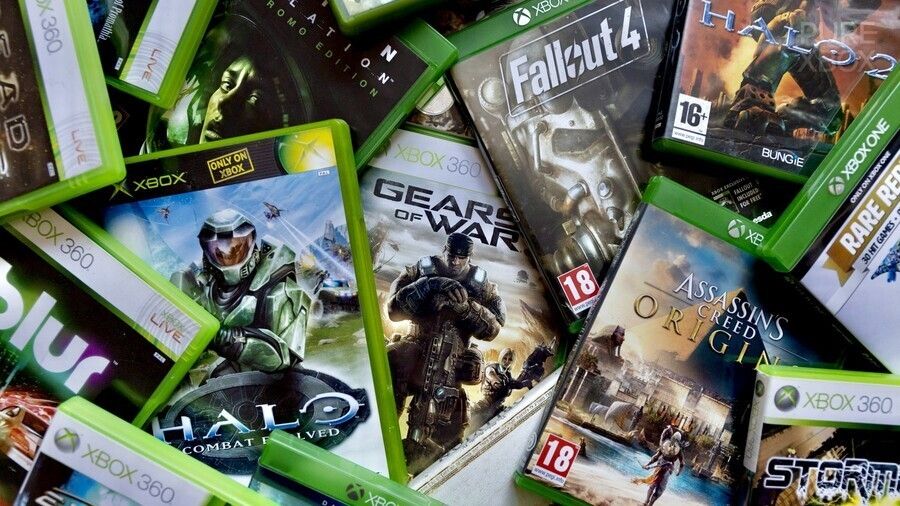

A Microsoft Xbox Games Supply Strategist listing points to continued planning for physical releases, but it does not confirm discs for Project Helix or future Xbox hardware.
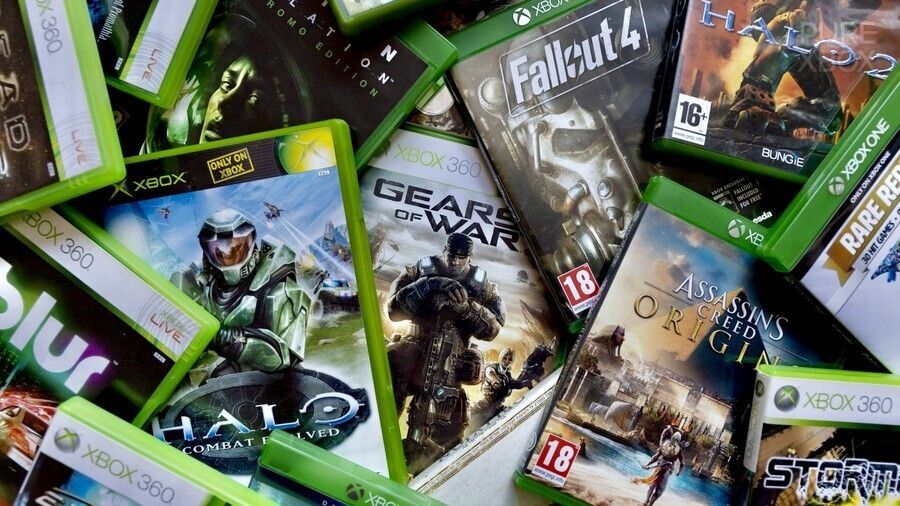
Image: purexbox.com
Microsoft is still hiring around physical Xbox game launches
The strongest confirmed detail in the latest Xbox discs rumor is narrow but important: Microsoft has posted, or recently had posted, an Xbox Games Supply Strategist role tied to physical game launches. As quoted by Wccftech, GamingBolt, Operation Sports and N4G, the listing says the strategist will “coordinate the launch of physical Xbox games across all platforms,” handle global supply positioning through the product lifecycle, position inventory against cost and service goals, and oversee sales and channel execution.
That is a real operational signal, not a promise about the next Xbox. A company does not need a public-facing manifesto to keep a retail supply chain alive. It needs people managing manufacturing forecasts, inventory, retail channels, launch quantities, markdown risk and end-of-life planning. The Xbox job listing physical media discussion has caught fire because those responsibilities are exactly the unglamorous machinery behind boxed games.
The tension is that the listing stops short of the word many collectors care about most: discs. TweakTown specifically notes that the listing does not specify discs or confirm Microsoft’s future hardware plans. N4G makes the same distinction, saying the role is evidence of physical-release planning, but not proof that every future release will be an Xbox-console disc or that Project Helix will include a disc drive.
The job ad supports retail planning, not a Helix disc-drive confirmation
For physical game buyers, the careful read is this: Microsoft appears to be maintaining some form of physical games support at the publishing and supply-chain level. It does not follow that the next Xbox hardware will necessarily read discs.
That gap matters because Microsoft’s current business is broader than Xbox console boxes. Wccftech points out that Xbox now publishes on PlayStation and Nintendo hardware, so the listing’s “across all platforms” language could include physical editions for other consoles. N4G also highlights that Microsoft publishes beyond its own hardware and says the listing does not name Project Helix. In other words, physical Xbox games could mean Xbox-published games in retail channels, not automatically Xbox discs for a future Xbox console.
GamingBolt adds another reason for caution: a Reddit user cited in its report noted that this may not be a brand-new role, but a replacement for an existing position. If that is accurate, it still matters that Microsoft is filling it, but it weakens the idea that the listing reveals a fresh strategic reversal. A replaced supply-chain job can indicate continuity rather than expansion.
That continuity is still meaningful. If Microsoft intended to rapidly eliminate all physical game operations, maintaining a role built around physical launches would be harder to explain. But it is not the same evidence as a Microsoft hardware spec sheet, a public executive commitment, or a console reveal with a visible drive slot.
A small physical market makes the signal stronger and weaker at once
The business context cuts both ways. Wccftech, citing Circana figures, reports that Xbox accounts for just over 4% of new physical game sales in the United States so far in 2026, compared with 32% for PlayStation and 63% for Nintendo. N4G notes that Microsoft does not separately report the physical sales figures in the cited coverage, so those numbers should be treated as a market snapshot from Circana via Wccftech rather than a Microsoft financial disclosure.
If those figures are accurate, Xbox’s physical footprint is small. That makes any ongoing retail planning look notable because Microsoft would be supporting a comparatively limited slice of the boxed-games market. From a strategy perspective, low share can argue for cutting costs and simplifying the platform around digital licensing. Supply chains are expensive. Retail inventory creates forecasting risk. Unsold boxes tie up working capital. A digital sale removes manufacturing, freight and channel complexity.
The same numbers also explain why Microsoft might see physical support as a differentiation lever. If Sony’s disc strategy is moving toward a cutoff, as GamingBolt, Wccftech and Operation Sports report in relation to January 2028 PlayStation disc production, Xbox can gain attention by keeping even partial physical support alive. A feature does not need majority usage to shape platform perception. Backward compatibility worked that way for years: the audience most invested in ownership, preservation and existing libraries may be smaller than the total user base, but it is loud, organized and influential during hardware transitions.
Sony’s reported 2028 shift gives Xbox an opening, but not a free win
The listing is drawing attention because it arrives against a wider industry shift away from boxed media. GamingBolt and Wccftech say Sony has confirmed it will end production of PlayStation discs in January 2028. Operation Sports frames the same timeline as a looming cutoff while also noting reports that Sony may be reconsidering. Those source accounts create a key distinction: the PlayStation direction is being discussed as an announced platform-level move, while Xbox’s position is being inferred from hiring and related initiatives.
That asymmetry is the whole story. Xbox has not, based on the provided source material, announced that Project Helix will include a disc drive. It has not announced a next-generation retail format. It has not guaranteed that future first-party games will ship on Xbox discs. The job listing is a clue in a market where players are hunting for clues because the platform holder has not yet answered the hardware question.
There is also a format question hiding underneath the fan reaction. TweakTown, as summarized by N4G, raises the possibility that future physical releases could use a format other than discs, such as an SD-card-style system, but N4G correctly labels that as speculation rather than an announced Microsoft plan. Physical games support can mean several things: a traditional disc, a boxed code, a cartridge-like medium, a collector’s edition with no game on media, or a retail product that triggers a digital license. Only some of those satisfy the buyer who wants a playable object on a shelf.
Disc-to-digital complicates the ownership argument
Several reports connect this listing to Xbox’s disc-to-digital initiative. GamingBolt says Xbox recently launched a program that lets users convert compatible Xbox One or Xbox Series X|S discs into digital licenses. Operation Sports also describes Xbox implementing a disc-to-digital feature that would let physical discs remain playable in a changing ecosystem. N4G says Microsoft has announced Xbox Disc-to-Digital, granting digital rights for compatible Xbox One and Xbox Series X|S discs.
For players, that sounds reassuring until you separate convenience from preservation. A disc-to-digital path can protect access if future hardware has no drive, or if a player wants to move from physical ownership into a digital library. It can also reduce friction for Microsoft if the company wants fewer disc-drive consoles in the market. The feature supports existing physical buyers, but it does not prove future physical production will continue at the same level.
This is where the strategy gets tricky. If Microsoft wants to court collectors and used-game buyers, it needs clear answers on whether a future Xbox can read existing discs directly. If Microsoft wants to reduce hardware costs while preserving goodwill, a conversion program is a softer landing. GamingBolt also reports that Xbox CEO Asha Sharma said the company wants to “make sure people have a choice” between physical and digital media, while declining to give concrete details about whether Project Helix would include a disc drive. That statement, as reported, aligns with flexibility. It does not lock Microsoft into a specific retail format.
Affordability may decide how much physical support survives
The hardware economics described in GamingBolt’s report are central to the next move. Sharma is quoted as saying the next generation must think about efficiency and affordability alongside performance, citing a component and hardware crisis and arguing that the industry needs to innovate on affordability. If that is Microsoft’s internal framing, a disc drive becomes a cost, design and product-segmentation question as much as an ownership question.
A disc drive adds parts, size, assembly complexity and support obligations. Removing it can lower a console’s bill of materials or allow Microsoft to sell a cheaper digital-first model. Keeping it can preserve backward compatibility for physical libraries and differentiate Xbox from a PlayStation ecosystem that, according to the cited reports, is headed toward a digital-only future for new physical discs after January 2028.
The likely strategic fork is not simply physical versus digital. It may be whether Microsoft offers multiple hardware options, one with a drive and one without, or leans on disc-to-digital to bridge old libraries into a lower-cost future device. The job listing gives the retail side oxygen. The affordability comments explain why that oxygen may not translate into every Xbox console shipping with a drive.
Physical buyers should treat this as a watchlist item, not a buying guarantee
If you buy Xbox physical games, the practical advice is to treat this listing as a cautious positive signal. It suggests Microsoft is still planning around physical retail launches in some capacity. It does not confirm Xbox discs for Project Helix, it does not confirm a disc drive in the next console, and it does not say which platforms future boxed Xbox-published games will target.
The details to watch are specific. Look for Microsoft to use the word “disc” in official hardware messaging, not only “physical.” Look for backward compatibility language that mentions Xbox One and Xbox Series X|S discs directly. Look for whether future first-party games receive Xbox retail editions, not only PlayStation or Nintendo boxed versions. Also watch how Microsoft describes Disc-to-Digital eligibility, because compatibility limits could matter for older libraries.
For now, the Xbox physical games story is a signal of continuity in supply-chain planning, not a settled platform promise. Collectors have reason to pay attention. They do not yet have enough to plan a next-generation library around.