
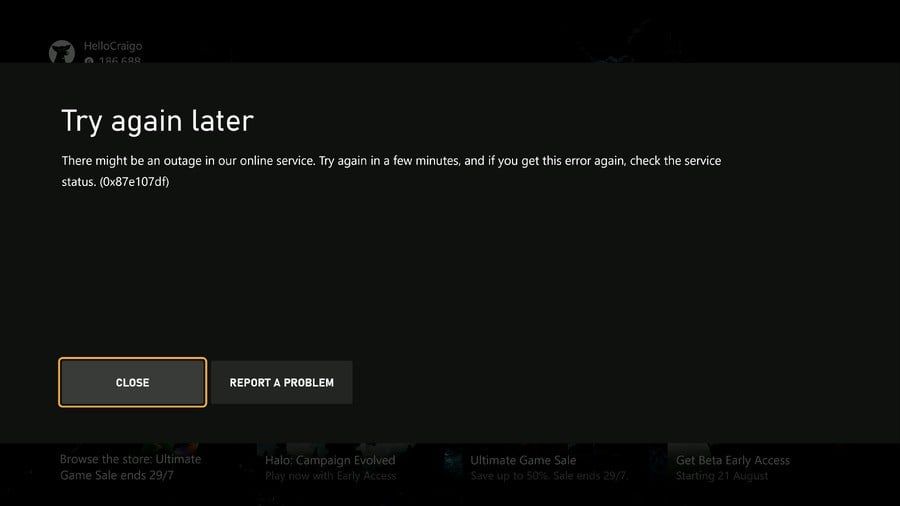

Microsoft says the Xbox July outage was caused by a licensing service failure compounded by a client software bug. Here is what the fix changes, and what it does not guarantee.
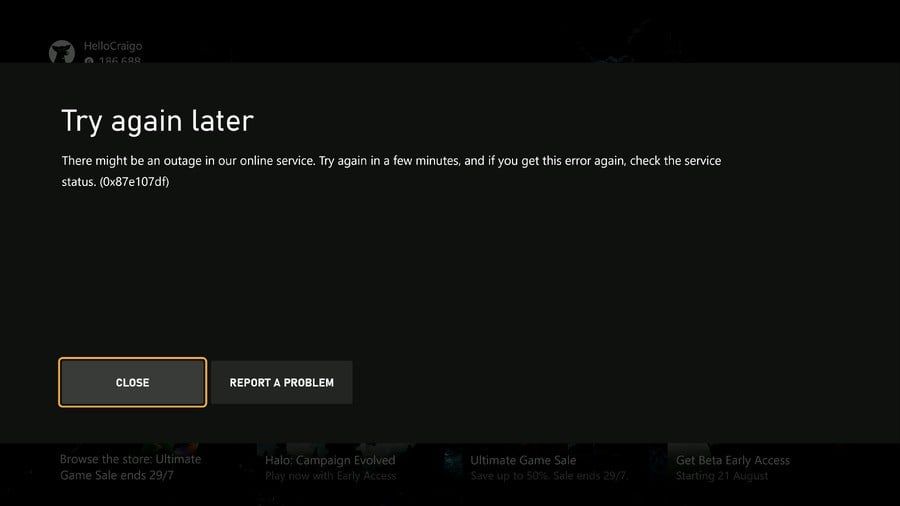
Image: purexbox.com
Microsoft says the Xbox July outage fix is now rolling out
Microsoft’s clearest answer to the Xbox July outage is now on the record: Xbox chief technology officer Scott Van Vliet says the failure that made some players unable to sign in, view their libraries, or launch games has been identified, and that the client-side bug that made the outage spread further has been fixed in an Xbox update that began rolling out on August 10 and becomes mandatory on August 17.
That is the concrete development. The tension is what the fix actually protects against. According to Van Vliet’s post on X, as reported by VGC, Eurogamer, Kotaku, Insider Gaming, and Pure Xbox, the outage was not a single broken switch. It began with an underlying service needed for Xbox Home Console sharing, Game Pass purchased content, and some PC scenarios. An update to that system put some services into an unresponsive state. A separate bug in the Xbox client software stack then caused other license checks to fail when the first service went down.
In platform terms, this is the scary version of a service issue: a dependency failed, then the client behaved as though wider parts of the ownership and library system were also broken. Van Vliet described the result as cascading failure scenarios that affected some players’ ability to launch games and caused library enumeration issues. For players, the translation is simpler and more frustrating: the console could not reliably prove what they owned or could access, so game launch, library display, purchases, and sign-in related flows broke for parts of the audience.
The outage was a licensing problem that became a platform problem
The most important detail in the Xbox CTO outage update is the chain reaction. Van Vliet said the underlying service was required for Xbox Home Console sharing and Game Pass purchased content, with some PC scenarios also involved. VGC quotes him saying that an update to the system left some services unresponsive. That failure was then compounded by a bug in the Xbox client software stack, which caused other license checks to fail once the first service was unavailable.
This distinction matters for how players should read “Xbox outage fixed.” Microsoft is not saying every possible licensing service failure can never happen again. The confirmed claim is narrower: the client bug that let one failed dependency disrupt other license checks has been fixed in an upcoming release that started rolling out August 10 and becomes mandatory August 17. Microsoft is also moving ownership of the underlying licensing service to the Xbox team while engineers harden services and infrastructure for future updates.
That gives us two layers of remediation. The first is a client update, which should change how Xbox devices handle this specific class of failure. The second is an organizational and infrastructure change, with the Xbox team taking direct ownership of the licensing service and reviewing reliability across the stack. The first is a patch with dates attached. The second is a longer operational promise, and players should treat it as work in progress until Microsoft shares more specifics.
Reports differ on duration, but agree on the impact
The source material agrees on the broad impact of the Xbox service issue, even if outlets describe the length differently. VGC reports that Xbox acknowledged “major outage” status early on July 27 and that there were 13 hours between Xbox’s tweet acknowledging the issue and its tweet saying it had been resolved, while noting the issue had been ongoing before the first acknowledgement. Pure Xbox describes the outage as lasting roughly 20 hours. PCMag’s running update said service had been restored as of 2:30 p.m. PT, but came back unevenly across regions, according to Van Vliet’s earlier explanation.
Those differences are not necessarily contradictions. Outage length can be measured from first player reports, from Xbox’s first public acknowledgement, from the start of internal incident response, or from full regional recovery. What is consistent across the reporting is that players experienced failures around sign-in, library access, launching games, purchases, downloads, and, in some cases, disc-based games.
Eurogamer and Pure Xbox both note the detail that stung most for players: even discs were failing for some during the outage. Eurogamer attributes that to license checks being taken down with the wider failure. Insider Gaming also reports that discs failing during the outage drew significant backlash. Microsoft’s new update explains why that could happen, but it does not announce a broader change to disc authentication behavior, offline rights, or the way Xbox handles every physical game during future service degradation.
What the August 10 update should change for players
The practical instruction is straightforward: let the Xbox client update install. Van Vliet says the client bug fix began rolling out August 10 and becomes mandatory August 17. Until it is mandatory, some consoles may receive it sooner than others, which is normal for staged platform updates. After August 17, players should expect the fixed client behavior to be required.
Based on Microsoft’s explanation, the most reasonable expectation is that if the same underlying licensing service fails again, the fixed client should no longer let that first failure break other license checks in the same way. That is the core of the Xbox client software failure Microsoft says it has addressed. It should reduce the chance of a single service outage turning into a wider game launch and library visibility problem.
There are limits to that expectation. The source material does not say Xbox games will always launch during any future licensing outage. It does not say every Game Pass, Home Console sharing, purchased content, or PC entitlement scenario now has a completely independent fallback. It also does not say disc behavior has been redesigned. Van Vliet’s confirmed fixes are the client bug fix, the transition of licensing service ownership to the Xbox team, and ongoing hardening of services and infrastructure.
Microsoft is treating this as a dependency failure, not a messaging problem
Van Vliet’s earlier post, quoted by PCMag, framed the July incident as unacceptable and said he cared less about a one-line root cause than about why one service could take down so much, why recovery took as long as it did, and what Xbox would change so a single point of failure could not ruin players’ night again. The August follow-up is the first concrete answer to that post-incident review.
The answer is partly technical and partly structural. Moving the underlying licensing service into Xbox team ownership suggests Microsoft saw governance and dependency control as part of the weakness. In a live service ecosystem, ownership is strategy. If the group responsible for the player experience does not fully control the system that validates that experience, incident response becomes slower and riskier. Van Vliet’s update says Xbox engineers are hardening services and infrastructure for future updates, which points to a focus on resilience when systems are patched or changed.
For players, transparency helps but does not replace reliability. Pure Xbox praised Van Vliet’s openness, and several outlets emphasized how unusual it is to get this level of explanation from a platform CTO. Still, the test is not whether Microsoft can explain the July outage after the fact. The test is whether a future partial failure stays partial, whether recovery is faster across regions, and whether Xbox Support can communicate clearly while players are locked out of games they believe they should be able to play.
The bigger risk is the console economy’s dependence on entitlement checks
The Xbox July outage arrived shortly after a PlayStation Network breakdown, as Eurogamer notes, which made the timing feel like a warning about how modern console ecosystems work. Games, subscriptions, sharing features, stores, libraries, cloud saves, purchases, and cross-device access all depend on online infrastructure. That dependency is convenient when everything works. It becomes a design liability when one licensing service can interrupt the basic act of launching a game.
From a strategy perspective, the July incident exposed the tradeoff behind the platform model. Game Pass purchased content, Home Console sharing, and PC scenarios all rely on entitlement logic because Xbox has to know who has access to what, where, and under which account rules. The same systems support flexibility, family sharing, subscriptions, and cross-platform libraries. They also create pressure points. If the entitlement layer behaves badly, the whole player economy feels frozen.
Microsoft’s update addresses the most visible failure path from July, but it leaves important questions open. We do not yet know whether future Xbox updates will include clearer offline behavior, stronger local license caching, better degradation modes for discs and downloaded games, or faster public incident reporting. Van Vliet said engineering and operations teams are looking broadly across the stack and that more updates will come in the weeks and months ahead, including new features and quality-of-life system updates. Until those arrive, players should separate the confirmed fix from the broader hope that Xbox becomes harder to knock offline in meaningful ways.
How to read the next Xbox service issue
If a similar Xbox service issue happens again, players should not assume the July bug has returned. The August update means the known client software failure has been fixed, but Xbox still depends on online services for sign-in, licenses, purchases, library features, Game Pass content, Home Console sharing, and some PC scenarios. A future outage could have a different root cause, a smaller blast radius, or different regional timing.
The useful signal will be whether failures remain contained. If sign-in fails but downloaded games still launch, that would suggest better isolation than July. If library enumeration breaks but owned games still start, that would also be a different failure profile. If physical discs or previously downloaded games fail widely again, Microsoft will face the same trust problem, because the July outage taught players to look past the service status page and ask whether ownership on Xbox can survive a bad day in the licensing stack.
For now, the player guidance is simple but cautious. Make sure the August client update is installed, expect it to become mandatory on August 17, and watch for future Xbox Support and CTO updates rather than assuming every outage has the same cause. Microsoft has fixed the bug it says amplified July’s major outage. It has not promised that Xbox can never suffer another licensing or service failure, and the next few months of system updates will show how much resilience the platform has actually gained.