
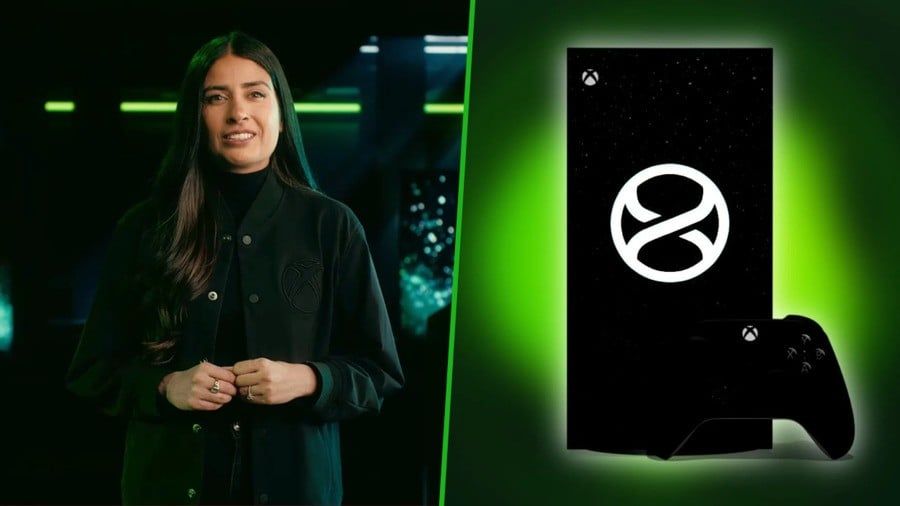

Xbox chief executive Asha Sharma says affordability and efficiency must sit alongside performance for Project Helix, but the next gen Xbox price, disc drive status, and business model remain unannounced.
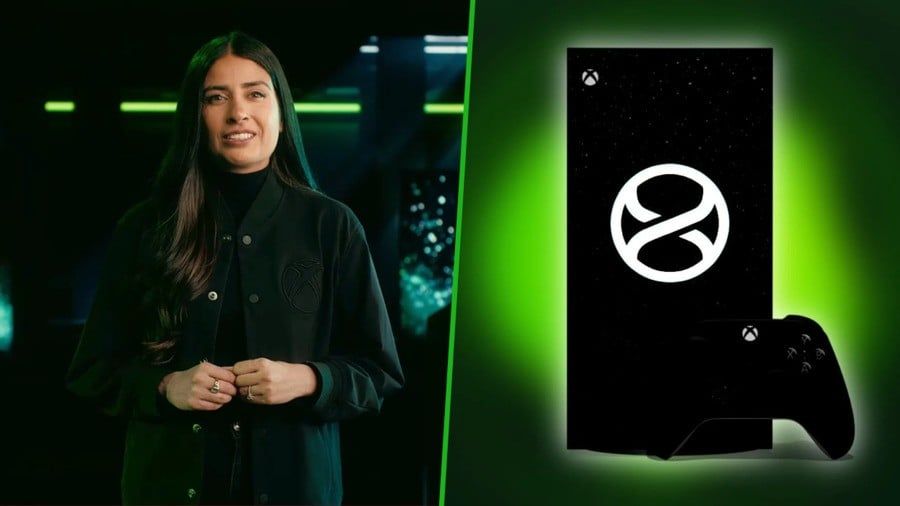
Image: purexbox.com
Xbox is talking price before it talks specs
Xbox chief executive Asha Sharma has put affordability and efficiency on the record as priorities for Microsoft’s next-generation console, currently codenamed Project Helix, at the same time the company is dealing with rising hardware costs and fresh sticker shock around current Xbox models.
Speaking to the BBC, Sharma said, “This next generation, we have to be thinking about efficiency and affordability alongside performance.” That is the clearest confirmed development here: Xbox is publicly framing its next machine around cost control before it has announced the console’s specs, release timing, final name, launch price, or whether it will include a disc drive.
The tension is obvious for anyone watching console economics. Eurogamer reported that Microsoft recently raised the price of existing Xbox hardware in the UK and Europe, with the 512GB Xbox Series S rising to £430 after launching at £250, and the 1TB disc-drive Xbox Series X rising to £670 after launching at £450. Shacknews also noted that Xbox’s 25th Anniversary Series X has been priced at $899.99. Those numbers sit awkwardly beside the word “affordability,” but they also explain why Microsoft is now talking about it so directly.
For players searching for the Xbox next console or the next gen Xbox price, the answer is still that Microsoft has not announced a price. What Sharma has confirmed is a change in the design problem Xbox says it is trying to solve. Performance alone is no longer the clean headline. The new target is performance under pressure from memory, storage, component pricing, and purchase-model reality.
“Affordability” does not automatically mean a cheap console
Sharma’s BBC comments should be read carefully. She did not promise a low launch price, a subsidized box, or a repeat of the Xbox Series S strategy. She said the industry needs to “innovate on affordability and efficiency” because of what she called a hardware and component “crisis.” GamesIndustry.biz reported that, for Project Helix, Sharma specifically pointed to “hardware efficiency in terms of how you use storage and memory, the kind of price per unit, the components, things like that.”
That language sounds less like a simple price-cut pledge and more like a bill-of-materials fight. In console terms, storage configuration, memory type, memory amount, cooling design, chip size, optical drive inclusion, and manufacturing yield all shape the price players eventually see. If the cost of RAM and storage is moving against Microsoft, then “efficiency” becomes a way to defend the price point without pretending component inflation is not happening.
The practical read is that Xbox affordability may show up in several forms. It could mean a more carefully balanced hardware spec. It could mean multiple purchasing options. It could mean a payment plan. It could mean a digital entitlement strategy that reduces dependence on physical media over time. Only the first part is confirmed: Xbox says affordability and efficiency are part of the next-generation calculation. The form that takes is still unannounced.
That distinction matters because “affordable” in executive language can mean lower upfront cost, lower monthly cost, lower total ecosystem cost, or a product that is easier to finance. Players worried about a $700, $800, or higher console should not treat Sharma’s comments as a price guarantee. They are better understood as Microsoft acknowledging that the old console bargain is harder to maintain.
The component problem is now a platform strategy problem
The BBC framed the affordability discussion around rising computing prices, with RAM costs increasing as AI companies buy large quantities of parts for data centres. Sharma described the situation as “Rampocalypse” and said, “AI is fundamentally changing a lot of things.” Eurogamer similarly connected the broader component pricing crisis to AI datacentre demand for memory and storage chips used across gaming hardware.
That puts Microsoft in a complicated position. The BBC noted that Xbox is part of Microsoft, one of the companies investing heavily in AI infrastructure, while Xbox is also trying to build consumer hardware in the same market for high-demand components. In strategy terms, Xbox is playing on a board where its parent company is both a scale advantage and part of the demand environment pushing up costs.
This is where the performance question gets sharper. Sharma’s confirmed phrasing says affordability and efficiency sit “alongside performance,” not ahead of it. Xbox has not announced a CPU, GPU, memory capacity, storage capacity, target resolution, frame-rate goal, or feature set for Project Helix. Any claim that the next Xbox will be weaker, stronger, cheaper, or radically different from PlayStation’s next console would go beyond the source material.
What can be said is that the next hardware cycle is unlikely to be sold purely through the old generational script of bigger numbers and a familiar price. If memory and storage are the pressure points, then the design meta changes. A console maker has to decide where premium capacity matters, where compression and software systems can help, where cloud or PC compatibility fits, and where the retail box can be trimmed without alienating the audience that buys dedicated hardware.
Payment plans are plausible, but Microsoft has not announced one
One of the most player-facing parts of Sharma’s BBC quote is her reference to giving people “more choice in terms of how they play their console and how they purchase their console.” That naturally raises the question of whether Microsoft is preparing a new version of Xbox All Access or another financed hardware model for the next Xbox.
Eurogamer noted that Microsoft previously offered Xbox All Access when Xbox Series X and Series S launched, with monthly pricing listed at £20.99, $24.99, or €24.99 over two years at zero percent interest, including Game Pass Ultimate. Eurogamer also connected Sharma’s latest comments to her June remark that it is becoming hard to imagine mass audiences affording “thousands of dollars” across a console generation, and that “radically different business models” could enter the picture.
That history makes a payment plan a reasonable expectation, but it remains an expectation. Microsoft has not announced the next gen Xbox price, a financing plan, subscription bundle, trade-in program, or regional pricing structure for Project Helix. A monthly plan can reduce the pain of the upfront purchase, but it does not necessarily lower total cost. It can also tie hardware, services, and digital ownership into one long-term commitment.
For players, the smart move is to separate affordability from visibility. A $900 console paid over time is still a $900 console before service costs, taxes, and game purchases. If Xbox returns to a financing model, the useful comparison will be total paid over the full term versus the cash price, what subscription is included, whether the hardware is owned at the end, and whether regional availability matches the markets most affected by console price increases.
The disc drive question is still open, and that is part of the cost equation
Sharma declined to tell the BBC whether Project Helix will include a disc drive. That is a confirmed gap, not a small one. Optical drives carry hardware cost, take up physical space, and preserve a retail ecosystem that many players still value because discs can be collected, shared, bought used, and sold second-hand.
At the same time, Sharma revealed a new disc-to-digital option. According to the BBC, players will be able to get digital versions of many physical games they currently own, with Sharma saying Xbox is announcing digital entitlements for “1,000 titles with physical discs.” The BBC reported that players will access the feature by inserting a supported game into an Xbox console, and that if a disc is sold second-hand, the digital rights would transfer to the new owner.
There is a small source discrepancy worth flagging. The BBC text specifies 1,000 titles, while Shacknews included a public post from Sharma saying Xbox Insiders would start with “thousands of titles” and add more. The shared point is clear: Xbox is preparing a disc-to-digital bridge for supported physical libraries. The exact initial count should be treated cautiously until Microsoft publishes the final supported list.
This feature could matter for the next console even before the disc drive question is answered. Sharma told the BBC, “We’ve long pioneered backwards compatibility and so you’ll continue to see that as we go forward in the generations.” That suggests Xbox wants continuity for existing libraries, but it does not confirm that future hardware will read discs natively. The unresolved scenario for players is whether a current Xbox with a disc drive becomes the gateway for converting supported physical games before moving to future hardware.
Players should wait for the hard numbers before reading this as relief
For now, the confirmed picture is narrower than the conversation around it. Xbox’s Asha Sharma has said affordability, efficiency, and performance are all part of the next-generation hardware plan. She has tied that to component pressure, especially storage and memory. She has declined to confirm a disc drive. She has pointed to choice, backward compatibility, and a disc-to-digital program for supported physical games. Microsoft has not announced Project Helix’s price, specs, release date, final hardware lineup, or purchase options.
That leaves players with a practical checklist. If you are worried about Xbox hardware costs, the next meaningful answers will be the launch configuration, storage size, expansion costs, physical media support, backward compatibility details, and whether any monthly purchase option changes total price or simply spreads it out. If you own a large disc library, the supported-title list for disc-to-digital is now worth watching closely. If you are considering buying current hardware, the recent price increases reported by Eurogamer and Shacknews make waiting less straightforward, because future hardware may also inherit the same component-cost pressures.
The strategic read is that Xbox is trying to reposition the next console conversation before price becomes the whole story. That is sensible. Console generations are won and lost on perceived value as much as raw power, and Microsoft is signaling that the old value equation is under stress.
But a signal is not a solution. Until Xbox attaches dollars, pounds, euros, specs, and ownership terms to Project Helix, “affordability” is a priority statement rather than a player guarantee.