
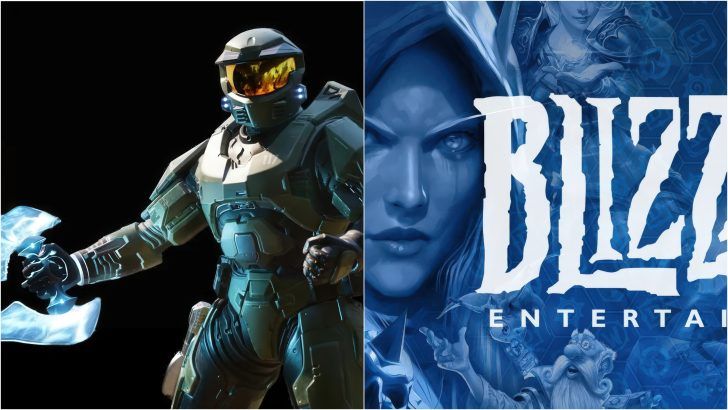

Reports say Microsoft is preparing hundreds more Xbox job cuts and possible studio consolidation, but key details around affected teams remain unconfirmed.
Image: wccftech.com
Hundreds more Xbox job cuts are reportedly planned this week
Microsoft’s gaming division is reportedly preparing to lay off hundreds more employees this week while consolidating several studios, according to The Information, as cited by Video Games Chronicle, Nintendo Life, Techtroduce, DayOne, and TheGamer. The report is the strongest concrete development in a restructuring story that has already reshaped Xbox’s first-party organization across Xbox Game Studios, Bethesda, Activision, Blizzard, King, Mojang, and other Microsoft-owned teams.
The key tension is that the reported Xbox layoffs are specific in scale but still vague in structure. The Information’s report, according to VGC and Nintendo Life, says hundreds of roles could be cut and several studios could be consolidated. It does not name the studios, describe whether consolidation means mergers, shared leadership, support-studio realignment, publishing-arm restructuring, or project cancellations, and Microsoft has not publicly detailed the reported new cuts.
That leaves the industry with a familiar but uncomfortable split screen. The job losses are being reported as imminent, but the practical consequences for specific Microsoft gaming studios remain unannounced. For employees, that uncertainty is the story’s human center. For players, it raises immediate questions about projects, support pipelines, platform plans, and whether Xbox’s current release strategy can stay intact through another round of organizational change.
This is being framed as a second wave, not an isolated correction
The reported cuts sit inside a larger “reset” that Microsoft and Xbox leadership had already signaled. The Verge reported that on June 10, Xbox CEO Asha Sharma and newly promoted chief content officer Matt Booty sent a memo warning staff of an “Xbox reset.” According to The Verge, that memo cited significant challenges including a 3 percent “accountability margin,” much higher console component prices tied to a memory and storage shortage, and an “over extended” studio system.
On July 6, The Verge reported, Microsoft announced mass layoffs at Xbox as part of broader company cuts. Sharma said about 1,600 staffers were laid off that day, with another 1,600 set to be cut over Microsoft’s next fiscal year. VGC similarly reports that July’s sweeping Xbox layoffs initially affected 1,600 jobs, with another 1,600 planned by the end of Microsoft’s business year. Nintendo Life describes the earlier action as over 3,000 job cuts in total, with approximately 1,600 positions eliminated at the time.
Those numbers are important because this week’s reported Microsoft gaming layoffs do not arrive as a surprise bolt from nowhere. They appear to align with a previously announced runway for additional reductions, although The Information’s report, as relayed by other outlets, does not say whether the new “hundreds” are the full remaining total, part of the remaining total, or a separate restructuring layer connected to studio consolidation.
Xbox’s studio map has already been redrawn once this year
Before this reported second wave, Microsoft had already started changing the ownership and structure of several Xbox-associated teams. The Verge and VGC both reported that Compulsion Games, the developer of South of Midnight, and Double Fine Productions, known for Psychonauts, would become independent again. They also reported that Ninja Theory, associated with Senua, and Undead Labs, the State of Decay studio, would move toward new ownership.
The July cuts also affected major internal teams. VGC reported hundreds of job losses at ZeniMax Online, the developer behind The Elder Scrolls Online, and around 100 cuts at id Software, the Doom studio. The Verge reported that changes would vary in size across Activision, Bethesda/ZeniMax, Blizzard, King, Mojang, and Xbox Game Studios, and separately noted reporting that around half of id Software’s staff could be cut. TheGamer also pointed to id Software and Bethesda as examples of the first wave touching prominent development groups rather than only peripheral teams.
That context makes the phrase “Xbox studio consolidation” carry more weight than a simple org-chart adjustment. Microsoft has already shown a willingness to reduce headcount, separate teams from Xbox ownership, and pursue new ownership arrangements for studios. If the new report proves accurate, consolidation could be the next stage of the same strategy: fewer overlapping structures, fewer independently managed pipelines, and more pressure to justify each team’s place inside a broader content portfolio.
The timing puts pressure on Blizzard, Halo chatter, and release planning
The report lands at an especially sensitive point for Microsoft’s gaming teams because it follows one major round of job cuts and arrives before the company has publicly clarified the remaining roles it intends to eliminate. VGC notes that Blizzard was largely unaffected by the first wave, which makes any suggestion of future cuts there especially notable. TheGamer, citing industry reporter Jason Schreier’s comments on the Triple Click podcast, says Blizzard is expected to be affected, while DayOne also reported that Schreier said Blizzard layoffs were imminent.
That Blizzard angle remains unconfirmed by Microsoft in the provided material. It is also distinct from The Information’s broader report, which apparently names no affected teams. TheGamer adds that Blizzard had recently been presented as one of Xbox’s top-performing studios and had just come out of BlizzCon announcements including World of Warcraft: Forever and plans for a new StarCraft in 2030. Those details, as reported by TheGamer, underline the strategic awkwardness if Blizzard is affected: Microsoft would be cutting inside a publisher segment that still has visible live-service momentum and long-tail franchise planning.
Halo is another area where reports and chatter should be separated carefully. DayOne says Jez Corden of Windows Central and ResetEra leaker NatetheHate have suggested major changes could be coming for Halo Studios, with Corden referring to news about “the future of Halo.” DayOne also notes that Halo Studios recently released Halo: Campaign Evolved and argues that post-release windows can be risky for studios between projects. None of that confirms Halo layoffs, a Halo studio consolidation, or a specific restructuring plan. It does show how quickly uncertainty around Xbox job cuts spreads into franchise-level speculation when Microsoft has not yet named affected teams.
Microsoft’s platform strategy is still moving while the organization shrinks
One complication in reading the reported Xbox job cuts is that Microsoft’s release strategy has not stopped while the restructuring continues. Nintendo Life notes that Xbox-owned companies are still releasing games on Nintendo platforms, including Blizzard’s Diablo IV: Age of Hatred Collection on Switch 2 and Mojang’s Minecraft Dungeons II for Switch 1 and Switch 2 later this month. That matters because it shows Microsoft’s gaming business is still operating across multiple platform targets even as its internal studio system is being reduced or reorganized.
The Verge has also reported several broader strategy shifts under Sharma’s leadership, including upcoming Xbox console price hikes, lower Game Pass prices with new Call of Duty games removed, a rebrand from Xbox to XBOX, and a more complicated exclusivity picture that includes Gears of War: E-Day and Clockwork Revolution as Xbox console exclusives. Those moves point to a company trying to rebalance hardware economics, subscription value, platform reach, and first-party content control at the same time.
From a strategy angle, that is a difficult meta to stabilize. A publisher can expand platform reach, tighten costs, and protect marquee franchises, but each move competes for the same development capacity. Consolidating studios may create cleaner reporting lines and reduce duplicated overhead, but it can also disrupt teams, slow production, and blur accountability if projects are moved between groups without clear creative ownership. The sources do not confirm that any particular project is delayed or canceled in this reported wave, so that remains an open question rather than a fact.
What is confirmed, reported, and still missing
The confirmed baseline is that Microsoft has already announced major Xbox job cuts this year and acknowledged an ongoing reset. According to The Verge, Sharma’s July statement said about 1,600 Xbox staffers were laid off that day, with 1,600 more to be cut over Microsoft’s next fiscal year. The Verge also reported the June memo describing an overextended studio system and business pressures around console component costs. VGC and Nintendo Life confirm that earlier restructuring affected multiple studios and ownership arrangements.
The reported new development is narrower: The Information, as cited by multiple outlets, says Microsoft is preparing to cut hundreds more Xbox jobs this week and consolidate several studios. The report does not identify the studios, the affected divisions, the final number of roles, the timing of notifications, or whether the consolidation is within Xbox Game Studios, Bethesda, Activision, Blizzard, or across those publishing groups.
The unconfirmed layer includes Blizzard’s exact exposure, Halo Studios’ status, potential project changes, and whether any teams will be merged, sold, closed, or reassigned. Until Microsoft comments or employees and studios identify impacts publicly, readers should treat claims about specific franchises as reporting signals or industry chatter, not settled fact. The safest practical guidance is also the least satisfying: if you follow an Xbox-owned live game or upcoming first-party release, wait for official studio communications before assuming changes to release dates, platforms, pricing, or support plans.