
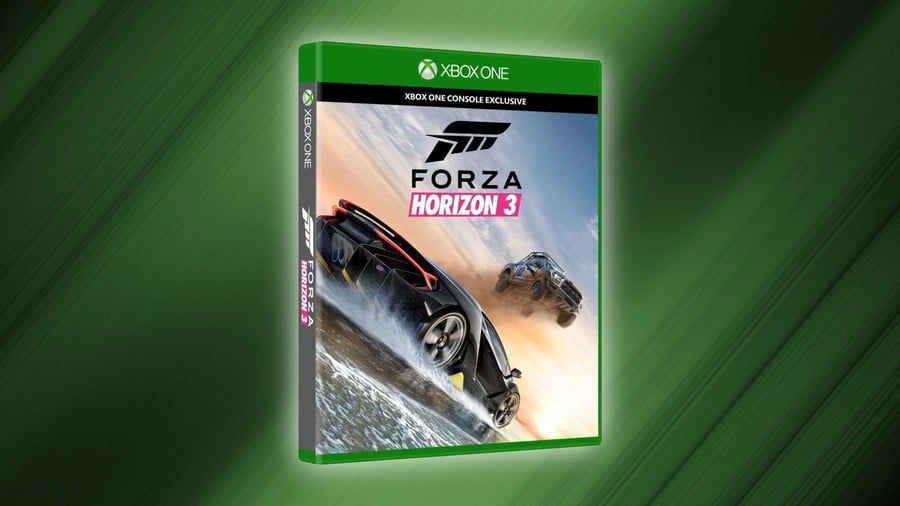

Microsoft’s Xbox disc conversion program starts testing with Xbox Insiders on August 31, giving supported Xbox One and Series X discs a digital entitlement, but revocable licenses and platform gaps leave key ownership questions open.
Image: purexbox.com
Xbox’s disc conversion test starts with Insiders, not everyone
Microsoft has confirmed an Xbox disc to digital program that will let players claim a digital entitlement from supported physical Xbox One and Xbox Series X discs, with testing set to begin for Xbox Insiders on August 31, 2026. The immediate tension is obvious: Microsoft is offering a path from physical libraries into digital access at the same moment console players are arguing harder than ever about what ownership means when discs start disappearing.
According to Xbox Wire details quoted by Pure Xbox, Push Square, VICE, GamingBolt, and Wolf’s Gaming Blog, the first rollout is limited to Xbox Insiders rather than the full Xbox audience. Microsoft has not announced a general release date for all Xbox One and Xbox Series console owners. Pure Xbox describes the first wave as available to “a selection” of Xbox Insiders, while VICE notes that Xbox has not confirmed how long the feature will remain exclusive to the Insider program.
The confirmed pitch is simple. Insert a supported Xbox One or Xbox Series X disc into a compatible console, launch the game, and claim a digital entitlement. Once that entitlement is active, the game can behave like a digital copy where the game supports digital ecosystem features such as Xbox Play Anywhere and Xbox Cloud Gaming. Microsoft’s quoted language also says the physical disc continues to work as it always has.
That last line is important because this is not being framed by Microsoft as a trade-in program where the disc is destroyed, mailed away, or invalidated at the moment of conversion. The disc remains usable. The digital entitlement, however, comes with limits that matter for resale, sharing, and long-term access.
How the Xbox disc to digital process works
The Xbox disc conversion program is built around the disc as proof of eligibility. Sources quoting Microsoft’s announcement say players claim the entitlement by inserting a supported disc into an Xbox One or Xbox Series X console and launching the game. VICE adds that the feature requires a supported console with a disc drive and an eligible Xbox One or Xbox Series X game disc.
That means the first practical gate is hardware. Xbox Series S owners do not have a disc drive, so the sources describe the claiming process as requiring access to a console that can read the disc. Once claimed, the entitlement is described by Push Square as operating like any other digital edition, with access to Xbox Play Anywhere and Xbox Cloud Gaming where supported. The sources do not provide a complete supported-device matrix, so players should not assume every claimed game will automatically work everywhere. Cloud and Play Anywhere remain game-by-game features.
Microsoft says it is starting with “thousands” of titles. Pure Xbox quotes the announcement saying “most” Xbox One and Xbox Series X disc-based games support the feature, with more to be added over time. GamingBolt similarly reports that most Xbox One and Xbox Series X titles are included, while also warning that players should not expect every game in a decade-old physical collection to convert at launch.
Original Xbox and Xbox 360 discs are the major confirmed gap. Push Square reports that they are not supported. Pure Xbox says there is currently no word on whether original Xbox and Xbox 360 discs might be supported in the future. That distinction will frustrate some collectors because Xbox’s backward compatibility story is one of the platform’s strengths, but the announced disc-to-digital test is aimed at Xbox One and Xbox Series X physical games first.
The revocable license is the part collectors need to study
The most sensitive detail is the license model. VICE reports that the fine print specifies “one revokable digital license per game disc.” Wolf’s Gaming Blog points to the same wording and argues that Microsoft has not fully spelled out, in direct terms, what happens when a converted disc is sold, gifted, or inserted into another player’s console.
Push Square gives the clearest account of the likely resale behavior, reporting that most Xbox One and Xbox Series X discs will offer a single revocable digital license and that if someone else claims the digital license from the same disc, the original person will have that license taken away. Wolf’s Gaming Blog is more cautious, saying previous leaks and rumors indicated that the entitlement would move to a new owner if the disc is detected elsewhere, but that Xbox has not said it outright beyond the revocable-license language.
That difference should not be smoothed over. What is confirmed across the reporting is that the license is revocable and tied to a single game disc. What remains underexplained in the quoted Microsoft material is the exact edge-case policy: how quickly revocation happens, whether a second claim requires launching the game, how offline consoles are handled, and what happens during family sharing, borrowing, used sales, or repair scenarios.
For players, the strategic read is straightforward. Treat the disc as the root asset until Microsoft publishes more detailed rules. If you convert a disc and later sell or lend that disc, you should expect the digital access may not be permanently yours. The program may reduce day-to-day disc swapping, but the disc still appears to carry the ownership signal that governs the digital entitlement.
Microsoft is positioning this as preservation, but it is also platform strategy
Xbox says the feature is part of a “broader commitment to game preservation,” according to Pure Xbox and Wolf’s Gaming Blog. VICE quotes Xbox saying players have spent decades building libraries across discs, digital purchases, and multiple generations of hardware, and that Microsoft’s goal is to make it easier for those libraries to move forward with players.
That preservation framing is real, but it sits beside a clear business incentive. Discs are awkward in a platform strategy increasingly built around digital libraries, cloud streaming, cross-device access, subscriptions, and hardware options without drives. A disc-to-digital bridge lets Microsoft reduce friction for players who bought physical Xbox One and Series X games while still moving those players deeper into the digital Xbox account ecosystem.
From a strategy desk view, this is Microsoft trying to solve a transition problem before it becomes a migration penalty. If players believe their physical libraries strand them on older drive-equipped consoles, every all-digital hardware push becomes harder to sell. If a large part of that library can be converted into digital entitlements, the next hardware decision becomes less threatening.
The sources stop short of confirming Microsoft’s next console plans. GamingBolt speculates about the feature as a preservation step if Xbox moves away from physical media for “Project Helix,” while Wolf’s Gaming Blog describes a disc-less next-gen Xbox as heavily rumored. Those are not confirmed announcements. The confirmed move is narrower but still consequential: Microsoft is testing a way to attach digital rights to many existing Xbox One and Series X discs before the next hardware cycle is fully explained.
The Sony timing gives the announcement extra weight
This announcement lands in the wake of reports that Sony plans to end PlayStation disc manufacturing for all games released after January 2028. Push Square states that Sony has no interest in backing down from that decision, citing Sony executives, and describes a wave of backlash from PlayStation fans. GamingBolt also contrasts Microsoft’s move with PlayStation’s reported shift away from discs and says Sony has offered no clarity on what that means for existing titles.
The comparison is part of the public reaction because both companies are managing the same structural problem from different angles. Physical games have been losing ground to digital distribution for years, but console players still attach discs to resale value, lending, collecting, offline confidence, and the feeling of a purchase that is less dependent on a storefront.
Microsoft’s program does not answer every ownership concern. A revocable digital license is still a license. It does not turn every disc into a permanent, platform-independent archive. It also excludes original Xbox and Xbox 360 discs at the start, and it does not have a public full-launch date. Still, the timing gives Xbox a cleaner message than a bare retreat from discs: players who already bought supported physical games are being offered a digital path rather than being told only that the future has moved on.
That messaging advantage matters because platform trust compounds slowly and collapses quickly. Console ecosystems are long games. A player deciding whether to keep buying physical Xbox games, hunt used copies, or wait for digital sales will watch not only whether this test works, but whether Microsoft publishes rules that feel fair when ownership changes hands.
Who should use it first, and who should wait
If you are an Xbox Insider with a stack of Xbox One or Xbox Series X discs, the first wave is worth testing carefully on August 31, provided you understand the limits. Start with games you intend to keep physically. The sources indicate the disc remains playable, but the revocable-license language makes used sales and lending the risky part of the equation until Microsoft gives a fuller public explanation.
Players with Xbox Series S consoles should pay close attention to the claiming requirement. The sources describe the entitlement process as requiring a disc-drive console, specifically Xbox One or Xbox Series X. If you own only a Series S, the available reporting does not show a direct way to insert and claim a disc. If you have access to a drive-equipped Xbox, the post-claim benefits may be useful, but Microsoft needs to clarify the exact account and device behavior before anyone should buy cheap discs assuming guaranteed Series S access.
Collectors with original Xbox and Xbox 360 shelves should temper expectations. Push Square reports those discs are not supported, and Pure Xbox says there is no word yet on future support. The launch pool may include thousands of games, but it is focused on the newer physical library.
The smartest move is to treat the Insider period as a rules-discovery phase. Watch for Microsoft’s official compatibility list, the exact wording around revocation, and reports from testers about second-console claims, cloud availability, Play Anywhere behavior, and delisted games. The Xbox disc to digital program could become a meaningful bridge between physical purchases and digital convenience, but the value of that bridge depends on the fine print as much as the headline feature.