
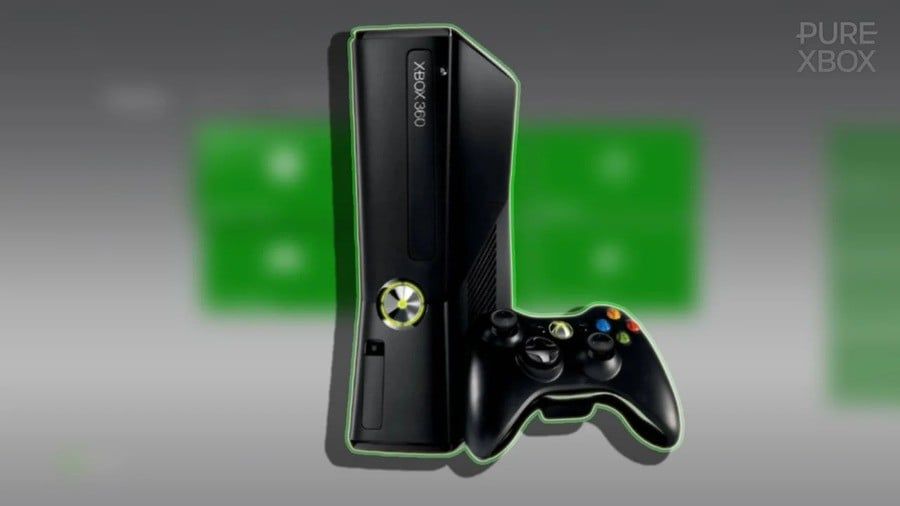

A leaked Microsoft roadmap reportedly points to Xbox 360 games on PC through backward compatibility, but the plan appears publisher opt-in, years away, and separate from the disc-to-digital rumor.
Image: purexbox.com
A reported 2027 plan, not a surprise PC launch
Microsoft has not announced Xbox 360 games on PC, but multiple outlets citing a leaked Microsoft document reviewed by The Verge report that the company has outlined a future backward compatibility path that would let developers bring Xbox 360 titles to PC, handhelds, and the next-generation Xbox device associated with Project Helix.
That is the concrete development at the center of the latest Xbox 360 PC rumor: the plan is reportedly aimed at a gradual rollout between 2027 and 2028, not an immediate wave of playable Xbox 360 classics in the Xbox app. Video Games Chronicle, IGN, Rock Paper Shotgun, GamingBolt, Engadget, and eGamers all point back to The Verge’s reporting on a document sent to Microsoft partners. According to those accounts, publishers would be able to opt in, set pricing, and decide whether their Xbox 360 releases appear on Xbox Game Pass.
The tension is that Microsoft has already publicly started Xbox backward compatibility on PC, but only for original Xbox games. On July 22, Xbox Wire announced an early release of the program with Blinx: The Time Sweeper, Conker: Live and Reloaded, Crimson Skies: High Road to Revenge, and Fuzion Frenzy playable through the Xbox app on PC and supported handhelds in supported regions. The Xbox 360 piece, by contrast, remains reported and unannounced.
For players searching for Xbox backward compatibility PC news, that distinction matters. There is a live Microsoft program today for a tiny slice of the original Xbox catalog. The Xbox 360 catalog, the library most PC players are likely asking about, appears to be part of a longer next-gen setup tied to Helix-era hardware and publisher participation.
The reported plan gives publishers the switch
The most important business detail in the reported roadmap is not the device list. It is control. VGC and IGN both report that developers would decide whether to make their Xbox 360 games backward compatible on PC and Helix, while also controlling each game’s price and Game Pass availability. GamingBolt quotes the reported roadmap as telling publishers that Xbox would manage engineering, certification, and support, while the publisher keeps control over rights, pricing, brand, and commercial terms.
If accurate, that design answers one question while opening several harder ones. Microsoft may be trying to lower the technical cost of reviving Xbox 360 SKUs, but it is not described as unilaterally flipping on the entire generation for PC. The eventual library would depend on publisher approvals, license status, music rights, expired car deals, old middleware, delisted content, and commercial appetite.
That is the strategic difference between an emulator existing and a catalog materializing. A working compatibility layer can solve part of the engineering problem, but it cannot automatically solve publishing rights. Xbox’s existing console backward compatibility library was never the full Xbox or Xbox 360 catalog, and the same friction would likely shape any PC expansion. The leaked-document reporting suggests Microsoft is offering a low-lift route for partners, not guaranteeing that every game a player remembers from the 360 era will be sold or playable on Windows.
The upside is still meaningful. If publishers can re-list old Xbox 360 games without building full PC ports, the economics change. Dormant SKUs that would never justify a dedicated remaster could become viable again, especially if Microsoft absorbs the platform work. The downside is that the most-requested titles are often the ones with the ugliest rights situations.
Helix changes the backward compatibility math
The reported destination list is revealing: Xbox PCs, handhelds, and Project Helix. VGC says the document describes Xbox 360 games running on “Xbox PCs,” including the Xbox app on Windows PCs, as well as handheld devices such as the ROG Xbox Ally X and the next-gen Project Helix console. IGN similarly reports that the alleged plan covers Xbox PCs, Project Helix, and handheld hardware.
That makes Xbox Helix the strategic center of the story. Rock Paper Shotgun notes that Project Helix has been described in reports as more PC-like than earlier Xbox consoles, and VGC says reports suggest the device has the DNA of a gaming PC. Microsoft has publicly announced original Xbox backward compatibility on PC and handhelds, while the reported roadmap points to Xbox 360 support across next-gen devices later.
From a platform strategy angle, this looks less like a nostalgia side project and more like catalog preparation for a hybrid Xbox future. If the next Xbox environment is closer to Windows and PC game delivery, Microsoft needs legacy Xbox software to behave like a portable account library rather than a console-locked archive. Steam has trained PC players to expect old purchases to survive hardware transitions. Xbox’s challenge is harder because much of its identity was built on closed console generations, disc ownership, and compatibility agreements negotiated platform by platform.
That is also why Helix matters to PC players who do not plan to buy a console. If Microsoft builds backward compatibility around a common Xbox-on-PC stack, older games could follow accounts across Windows PCs, handhelds, cloud, and next-gen Xbox hardware. The source material does not confirm how universal that will be for Xbox 360 titles, but the reported device list points in that direction.
Microsoft’s confirmed PC backward compatibility program sets the baseline
The confirmed part of the story is Microsoft’s original Xbox rollout. In the July 22 Xbox Wire post, Jason Ronald, VP of Next Generation at Xbox, said Xbox Backward Compatibility on PC was launching in early release with four original Xbox games playable on PC and supported handheld devices. Microsoft said those games are available for purchase on PC, included with all Xbox Game Pass plans, and accessible on PC or handheld if players already own a digital license for the same games on console.
Microsoft also listed technical improvements for those original Xbox releases. Xbox Wire says the PC versions include graphics settings such as up to 4x resolution upscaling, VSync support, fullscreen and windowed modes, anisotropic filtering, enhanced anti-aliasing, and customizable language and audio settings. The company also said achievements will be added later this year to select original Xbox games on both console and PC, including the first four early-release titles in the coming months.
The hardware requirements give a practical hint at what Microsoft is targeting. Xbox Wire lists Windows 11, 8 GB of RAM, 4 GB of video memory, a four-core/eight-thread CPU such as an Intel Core i3-10300 or AMD Ryzen 3 3100, and GPUs starting at Nvidia GTX 950, AMD Radeon RX 550, or Intel Arc A310 as minimum requirements for the current PC backward compatibility program. Recommended specs include stronger GPUs such as a Radeon RX 6800S, Nvidia GTX 1070 Ti, or Intel Arc A770, and six-core CPUs such as an Intel Core i5-10400 or AMD Ryzen 5 3600.
Those requirements are for the announced original Xbox program, not for unannounced Xbox 360 support. Still, they show Microsoft is treating backward compatibility on PC as a supported product with storefront access, graphics options, and account entitlements rather than a hidden emulator experiment. That confirmed framework is the strongest reason the reported Xbox 360 expansion is plausible, while the lack of a Microsoft announcement is the reason it should still be treated as reported rather than settled.
Keep the Xbox 360 plan separate from the disc-to-digital rumor
The disc-to-digital reporting is related to Microsoft’s broader preservation and next-gen transition, but it is a separate track from Xbox 360 games on PC. The leaked-document reports describe a program where physical Xbox One and Xbox Series X games could be inserted into a console with a disc drive to issue a digital license tied to that disc and the player’s account. IGN, citing The Verge’s report, says that if the disc is traded to someone else, digital ownership can move to the new holder.
That rumored disc program is aimed at modern physical Xbox One and Xbox Series X libraries, not at proving that Xbox 360 discs will suddenly unlock PC versions. Rock Paper Shotgun characterizes the disc-to-digital details as mostly relevant to console players for now. GamingBolt reports that the roadmap may already have slipped, with a July public beta through the Xbox Insider program apparently not taking place as scheduled and general availability originally listed for August therefore uncertain.
This separation is important because the two stories can easily blur online. The Xbox 360 PC rumor is about publishers opting old 360 releases into backward compatibility for PC, handhelds, and next-gen devices in the 2027 to 2028 window. The disc-to-digital rumor is about turning eligible physical Xbox One and Series discs into account-linked digital access while the disc remains the transferable object. They may serve the same long-term push toward a less disc-dependent Xbox ecosystem, but the source material does not say that a stack of Xbox 360 discs will become a PC library.
For readers, the safe assumption is simple: do not buy old Xbox 360 discs expecting future PC entitlements. The current reporting does not support that. If Microsoft announces a broader entitlement path later, that would be a new fact, not something established by this roadmap coverage.
The timeline is long, and one report conflicts with the others
Most accounts of the leaked document place Xbox 360 backward compatibility for PC and next-gen devices in a gradual 2027 to 2028 rollout. Rock Paper Shotgun reports that this 360 compatibility is currently expected to roll out gradually between 2027 and 2028. VGC says the feature will reportedly roll out between 2027 and 2028 across next-gen devices. IGN says potentially eligible titles are not expected to begin their gradual rollout on next-gen Xbox hardware until sometime between 2027 and 2028. eGamers also describes the timeframe as 2027 to 2028.
There is one notable inconsistency in the provided source material. DayOne’s article says Xbox 360 backward compatibility is reportedly coming to PCs this year and later says the document suggests a gradual rollout starting this year before continuing through 2027 and 2028. That conflicts with the clearer 2027 to 2028 framing repeated by other outlets citing The Verge. Based on the broader source set, the safer reading is that original Xbox backward compatibility is the PC program happening now, with more original Xbox titles reportedly expected around an October 2026 full launch, while Xbox 360 support is the later next-gen phase.
Even the nearer original Xbox expansion is not fully locked in through Microsoft’s public post beyond the first four games and the company’s statement that this is the beginning of a broader effort. VGC reports that the leaked document points to a full launch for original Xbox backward compatibility on PC in October, with the first four games joined by more. That October detail is reported from the document, not directly announced in the Xbox Wire source provided here.
The practical guidance is to treat 2027 as the earliest reported window for Xbox 360 games on PC through the official program, and 2028 as part of the same gradual deployment. Anyone expecting a sudden Game Pass drop of dozens of Xbox 360 titles on Windows should reset expectations.
The real question is library quality, not emulator possibility
A viable Xbox 360 backward compatibility PC program would be one of Microsoft’s strongest ways to turn legacy ownership into a strategic advantage for the Helix era. The 360 generation contains games that never received proper PC releases, games trapped behind delistings, and console versions that remain the most historically relevant editions. Bringing even a curated portion of that library to Windows could strengthen the Xbox app, handheld use, and the appeal of a PC-like next Xbox.
But the reported structure makes the outcome uneven by design. Publishers can opt in or stay out. They can charge or use Game Pass. Microsoft can provide engineering support, according to GamingBolt’s quoted roadmap language, but commercial terms still decide availability. That means players should expect a managed catalog, not a preservation floodgate.
The strongest confirmed signal remains Microsoft’s own behavior with the original Xbox rollout: account carryover for existing digital licenses, Game Pass inclusion for the first four games, PC graphics options, and future achievements. If Xbox 360 support follows that template, it could be a useful path for older libraries on PC and handhelds. If publisher participation is thin, it may become another promising compatibility layer with too few games attached.
For now, the story sits between confirmation and strategy leak. Microsoft has confirmed Xbox backward compatibility on PC for original Xbox titles. The Xbox 360 expansion, Helix support, publisher opt-in model, and 2027 to 2028 timing are reported from a leaked document, not announced by Microsoft. The next meaningful checkpoint will be whether Microsoft expands the original Xbox PC catalog as reported, and whether it begins publicly framing backward compatibility as a foundation for its next-gen Xbox devices.