
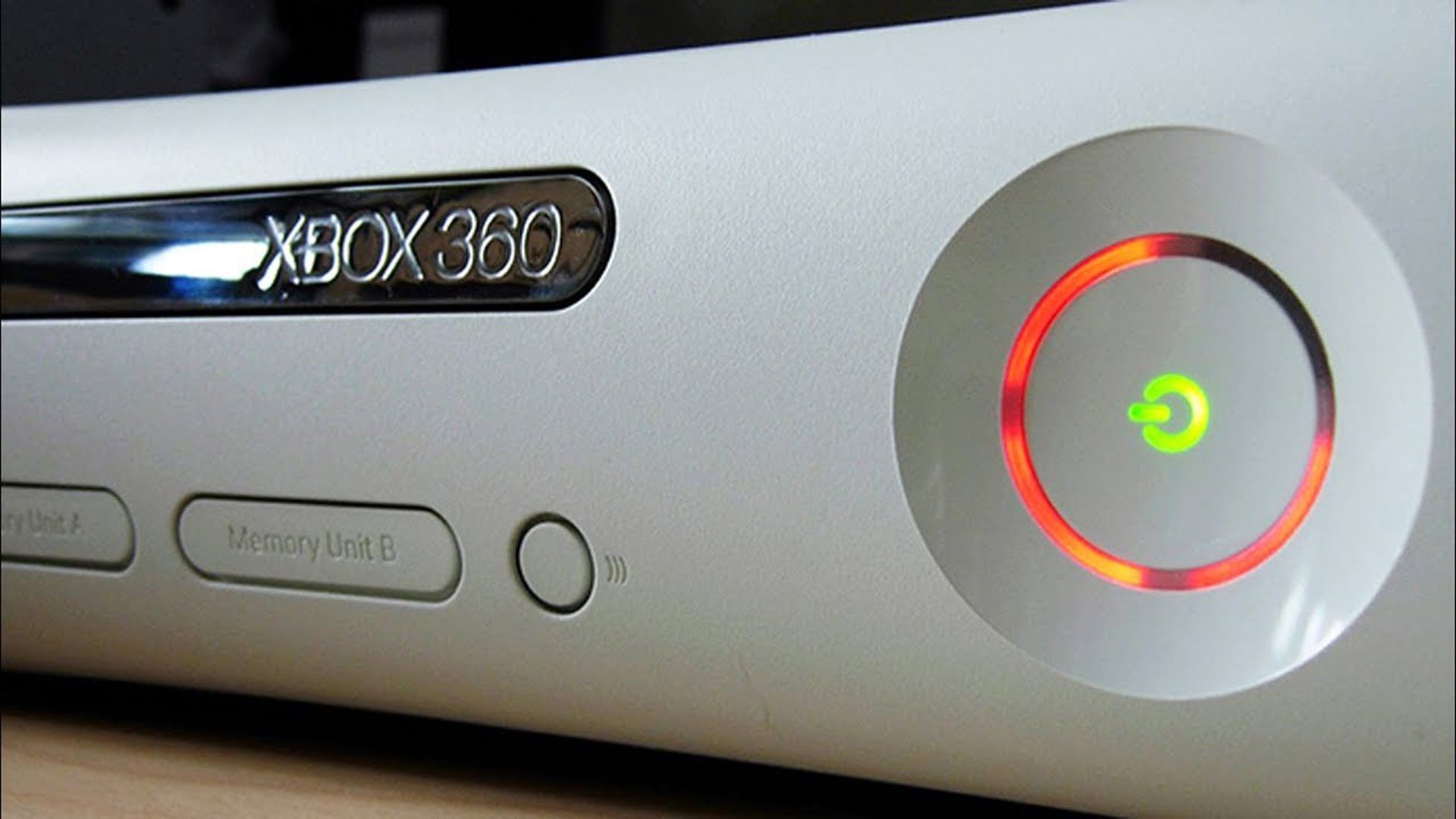

Xbox’s 25th birthday has renewed debate over the Xbox 360 legacy: a defining game library, Xbox Live culture, backward compatibility, and the Red Ring of Death.
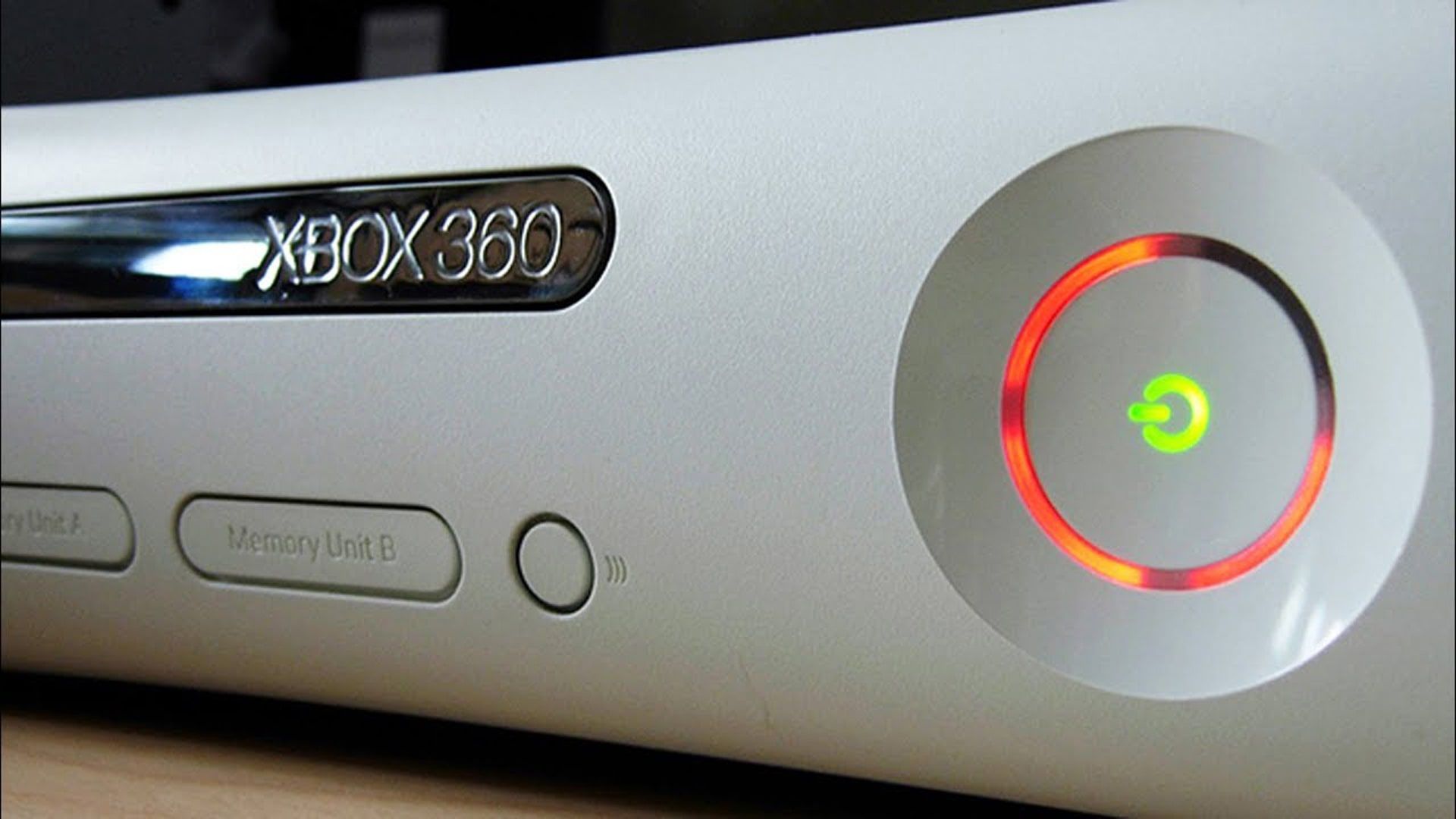
Image: mithrie.com
Xbox’s 25th birthday has reopened the Xbox 360 argument
Xbox is marking its 25th anniversary on November 15, 2026, and the sharpest nostalgia around the brand has quickly circled back to its most influential and most physically troubled machine: the Xbox 360. GameSpot used the occasion to revisit Microsoft’s second console through a personal account of owning four Xbox 360 systems, while Windows Forum pointed out an important calendar distinction. The anniversary belongs to Xbox as a brand, because the original Xbox launched in North America on November 15, 2001. The Xbox 360 followed on November 22, 2005.
That distinction matters because the current conversation is doing two things at once. It is celebrating the Xbox 360 legacy as the era when Xbox Live became an everyday social space for many console players, and it is reopening the hardware failure story that still shadows the console. GameSpot described the 360 as both a platform with an “amazing software library” and a machine infamous for failures, especially the Xbox 360 Red Ring of Death. Windows Forum, summarizing and contextualizing the same retrospective, argued that nostalgia often bundles together separate problems: disc-drive failures, the Red Ring of Death, and the later Xbox 360 S redesign.
For modern Xbox and PC players, that separation is useful. The Xbox 360’s reputation is not a single scorecard. Its software library, online habits, marketplace structure, and backward compatibility afterlife continue to shape Microsoft’s platform strategy. Its early hardware, however, became a cautionary tale about thermal design, repair cost, trust, and the risk of tying a social gaming ecosystem to machines that many owners could not rely on.
The library is the part of the 360 that still travels forward
The enduring case for the Xbox 360 begins with software. GameSpot’s anniversary piece points to the console’s mid-to-late-2000s position as a central place to play multiplatform hits such as Modern Warfare and Grand Theft Auto, alongside Xbox exclusives such as Halo 3. The same account frames Xbox Live as a nightly ritual, with friends gathering online around Halo, Call of Duty, and Left 4 Dead.
That is the cleanest way to understand why the Xbox 360 still matters beyond collectors and nostalgia threads. Its strongest games helped define the console generation’s default expectations: persistent friends lists, voice chat as a social layer, downloadable games, map packs, cooperative shooters, and competitive multiplayer as a routine rather than a novelty. The best Xbox 360 games were not valuable only as boxed discs on a shelf. They trained players to think of a console as a connected service.
The hardware could fail, but the habits survived. That is the strategic lesson Microsoft still appears to be operating from during the Xbox 25th anniversary. Polygon reported that Microsoft’s anniversary activity included fan events in Seattle, free Xbox anniversary items across Call of Duty, Candy Crush, and Minecraft, and an expansion of classic-game availability on PC through 25 original Xbox titles. Polygon’s read was that these cross-platform rewards put Xbox branding where players already are. That observation is about the broader Xbox brand rather than the Xbox 360 specifically, but it fits the 360’s long tail. The 360 was the generation when Xbox’s value became less dependent on a box under the television and more dependent on identity, library, friends, and services.
Backward compatibility reinforces that point. According to the public list of Xbox One and Xbox Series X/S backward-compatible titles, Microsoft added Xbox 360 backward compatibility to Xbox One publicly on November 12, 2015, after announcing the feature at E3 that year. Supported Xbox 360 games run through an emulator, and when a supported physical disc is inserted, the console downloads a repackaged version while still requiring the disc for validation. That means some Xbox 360-era purchases still have practical value on newer Xbox hardware, even though support is selective rather than universal.
The Red Ring was real, but it was not the only failure story
The Red Ring of Death remains the most famous visual symbol of Xbox 360 failure: three red lights around the power button indicating a general hardware error. GameSpot writes that repairs and shipping for affected Xbox 360 consoles cost Microsoft a little over $1 billion. Wikipedia’s technical-problems entry puts the figure at US$1.15 billion and describes the issues as damaging enough to trigger lawsuits and threaten the long-term viability of the Xbox brand.
There is, however, a reporting trap in treating every dead or unusable Xbox 360 as a Red Ring case. GameSpot’s retrospective is valuable because it does not actually describe four identical Red Ring failures. Writer Chris Compendio says his original Xbox 360 avoided the red ring but developed a disc-reading problem. When Halo 3 was inserted, the console made a clicking sound and showed an “Open Tray” message instead of loading the game. Other discs produced the same result. He removed the hard drive, shipped the console through UPS, and said the out-of-warranty repair process cost $90. A replacement arrived roughly two weeks later. Months later, according to the same account, the clicking returned and the console had to go back for service again.
Windows Forum’s reliability retrospective stresses the distinction: four consoles in one personal story does not mean four failed consoles, and a clicking disc drive with an “Open Tray” message is not the same thing as the Red Ring of Death. The third original-style console in GameSpot’s account apparently held up, while the fourth was a deliberate move to the slim model after Microsoft announced the redesign.
That distinction does not excuse the early Xbox 360’s reliability problems. It makes the history more accurate. The platform’s reputation was shaped by a cluster of failures: thermal and general hardware faults visible through the red lights, disc-drive issues that could make physical games inaccessible, and other technical complaints associated with the early design. Players experienced those problems through the same outcome: the friends list was there, the library was there, and the machine could no longer get them into the game.
Failure-rate numbers should be handled with caution
The anniversary discussion has revived the old question of how unreliable the Xbox 360 actually was. The answer depends on which evidence is being used. Wikipedia’s technical-problems article notes that estimates of the console’s unusually high failure rate conflicted. It cites SquareTrade estimating 23.7% in 2009, another survey reporting 54.2%, and a games-journalism workplace sample that reached 90% by the end of 2007 under heavy use. Those figures are not interchangeable. A warranty-provider estimate, a survey, and a high-use office sample measure different populations under different conditions.
That is where anniversary nostalgia can become sloppy. A player who bought one 360 Slim in 2011 may remember a sturdy machine with a huge library. A launch-window buyer who mailed multiple consoles for repair may remember Microsoft’s defining platform as a premium product that could not be trusted. Both memories can be true without proving the same statistical claim.
The confirmed business consequence is clearer than any single failure-rate number. GameSpot says Red Ring-related repairs and shipping cost Microsoft a little over $1 billion. Wikipedia’s entry gives the cost as US$1.15 billion. The difference is not a real conflict so much as a difference in precision, but both sources support the same broad conclusion: Microsoft paid an enormous amount to keep the Xbox 360 installed base alive.
From a platform-strategy perspective, that spending was defensive and necessary. The 360’s advantage was not only the games on discs. It was the network effect of Xbox Live. Every broken console risked pulling a player out of multiplayer groups, party chat, paid subscriptions, and future software purchases. Repairing hardware was also repairing the social graph. That is the kind of cost a platform holder absorbs when the ecosystem is worth more than the individual box.
The Slim redesign changed the memory of the console
Microsoft’s Xbox 360 S redesign, released in 2010 according to the Xbox 360 hardware listing, sits at the center of the console’s reputational recovery. GameSpot’s retrospective describes the slim model as a welcome overhaul after leaks and rumors, especially for players who had dealt with repair cycles. Windows Forum summarizes the sentiment sharply: the 360 was remembered as a fantastic platform trapped in a sickened body, and the slim model offered a way to keep the platform while leaving the worst hardware anxiety behind.
There is a small technical caveat that often gets turned into mythology. GameSpot notes that the slim system could not red-ring in the same visual way because it did not have the same red LED setup. That does not mean electronics became impossible to break. It means the iconic failure signal belonged to the earlier design language. Wikipedia’s technical-problems entry says the crisis was ultimately abated from 2009 by design revisions to later Xbox models and that the S model in particular was far more resilient. By 2012, according to the same entry, the Xbox 360 family’s failure rate was comparable to PlayStation 3.
That timeline matters when people compress the entire generation into a single anecdote. The Xbox 360 that built Halo 3 parties, Call of Duty lobbies, Xbox Live Arcade habits, and a giant installed base is the same product family that produced the Red Ring scandal. But early white models, later revised units, the 2010 Xbox 360 S, and the 2013 Xbox 360 E are not the same reliability proposition. The platform’s cultural memory is unified. The hardware history is segmented.
Backward compatibility is the modern repair job
The most practical reason to revisit the Xbox 360 in 2026 is that Microsoft’s later backward compatibility program turned part of the old library into a living catalog. The public backward-compatibility record says Xbox One did not launch in 2013 with native support for original Xbox or Xbox 360 games. Microsoft publicly released Xbox 360 backward compatibility for Xbox One on November 12, 2015, with 104 Xbox 360 games available at public launch. The Xbox Series X/S, released in 2020, was confirmed to support the same backward-compatible list as Xbox One at launch. A final addition of 69 titles was published on November 15, 2021, as part of Xbox’s 20th anniversary.
That leaves modern players with a mixed but useful answer. If you own a newer Xbox, some Xbox 360 games can still be played through Microsoft’s compatibility system. Physical copies are not treated as direct disc execution; the system downloads a compatible package and uses the disc as proof of ownership. Digital purchases appear in the user’s library when the title is supported. If a game is not on the supported list, the newer console route does not solve it.
For PC players, the 2026 anniversary news Polygon highlighted concerns 25 original Xbox games coming to PC, not a new wave of Xbox 360 backward compatibility. That distinction is important. It shows Microsoft continuing to use preservation and cross-platform availability as part of the Xbox identity, but it does not confirm a fresh Xbox 360 PC catalog expansion. Anyone hoping the Xbox 25th anniversary would bring broad 360-on-PC support should treat that as unannounced based on the provided reporting.
The larger pattern is still clear. The Xbox 360’s afterlife is increasingly software-defined. The safest way to enjoy eligible games today is through supported modern hardware and official compatibility where available, not through dependence on aging early-model consoles whose drives, thermals, and components are now decades old.
The legacy is strongest when the failures stay in the frame
The clean anniversary version of the Xbox 360 would focus on Halo 3 nights, Modern Warfare lobbies, Grand Theft Auto, Left 4 Dead, Xbox Live friendships, and one of the most important libraries Microsoft has ever had. The honest version keeps the repair boxes, UPS trips, warranty bills, and red lights in view.
That honesty makes the console’s legacy stronger, not weaker. The Xbox 360 mattered because its games and services were compelling enough that players kept coming back after hardware failures that would have destroyed affection for a lesser platform. It also mattered because Microsoft learned, expensively, that a console ecosystem cannot be separated from reliability. A great library loses value when the disc drive cannot read it. A thriving online community becomes fragile when the machine connecting players to it is unreliable.
For readers revisiting the best Xbox 360 games in 2026, the practical guidance is simple within the limits of the available sources. Check whether a title is backward compatible on Xbox One or Xbox Series X/S before buying an old disc. Remember that supported physical games still require the disc for validation. Do not assume every Xbox 360 game survived into the modern compatibility program. If buying original hardware, treat model revision and condition as part of the purchase, not trivia.
The Xbox 360 anniversary conversation is really an Xbox platform conversation. Microsoft’s current birthday messaging, Polygon’s reporting on cross-platform anniversary activity, and the continued attention to backward compatibility all point to the same strategic inheritance. The 360 proved Xbox could define a generation through software, services, and social gravity. The Red Ring proved that platform ambition still has to survive the motherboard.