

A look back at Circana’s top-selling Xbox 360 games, how Call of Duty, Halo, and Gears of War ruled the generation, and the way those classics live on through backward compatibility, remasters, and Game Pass.
Twenty years on from the Xbox 360 launch, Circana’s top 20 best-selling games list reads like a snapshot of what the platform did better than anyone else: cinematic shooters, blockbuster campaigns, and endlessly replayable multiplayer.
The ranking, surfaced by analyst Mat Piscatella and highlighted by GameSpot, is dominated by three names that practically defined the 360 years: Call of Duty, Halo, and Gears of War. Together they turned Xbox Live from a novelty into a daily ritual, set expectations for online services across the industry, and built the foundation for how Xbox works today with backward compatibility, remasters, and Game Pass.
The Call of Duty decade
Seven of the top 20 Xbox 360 games in the US are Call of Duty entries, and four of the top five are CoD releases. On Xbox 360, Call of Duty evolved from a respected World War II shooter into the template for modern live service design.
Call of Duty 4: Modern Warfare reshaped the entire shooter landscape with its contemporary setting, tight 60 FPS gunplay, and a progression system that made you want to play “one more match” until 3 a.m. Modern Warfare 2 then turned that success into a full-blown pop culture event, complete with watercooler campaign moments and a multiplayer meta that ruled Xbox Live for years. Black Ops and Black Ops II kept the streak going, adding slicker presentation, fan-favorite maps, and the expanded Zombies mode that became a phenomenon in its own right.
On Xbox 360, Call of Duty was not just a game you bought every November, it was the social network for an entire generation. Friends lists were built around clan tags. Headsets and cheap HD TVs became standard accessories because of CoD lobbies. Microsoft’s decision to aggressively market Xbox 360 as “the Call of Duty box” paid off in subscription revenue and helped make Xbox Live Gold feel mandatory for anyone who owned the console.
Today the impact of that era shows up everywhere in the Xbox ecosystem. The recent ownership of Activision Blizzard means nearly the entire 360 CoD run now sits inside Microsoft’s catalog. Back-compat support on Xbox One and Series X|S lets original 360 discs and digital purchases run with performance and resolution boosts, keeping the classic lobbies at least partially alive. Even as the franchise shifts toward cross-play and battle passes, the spine of the current Call of Duty offering still reflects what worked first on 360: snappy controller feel, fast matchmaking, and a steady content cadence.
Halo’s golden handoff
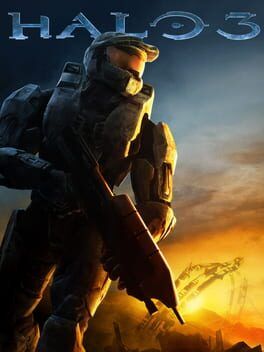
If Call of Duty brought the crowds, Halo built the house they were partying in. Three Halo titles appear on Circana’s best-seller list: Halo 3, Halo Reach, and Halo 4. They capture a moment when Halo was both the technical showpiece for Xbox and the benchmark for console multiplayer.
Halo 3 was the 360’s coming-of-age moment, the game that made early adopters feel vindicated. Its campaign closed the original trilogy with large-scale encounters and cooperative play, but it was the multiplayer suite that turned it into a lifestyle. Forge and Theater modes anticipated the modern content-creation wave, letting players build maps and clips long before “share” buttons existed.
Halo Reach served as Bungie’s farewell to the series, leaning into moodier storytelling and refined sandbox combat. It also carried forward a healthy competitive scene on Xbox Live that overlapped with the peak years of Call of Duty. Halo 4 then marked the transition to 343 Industries, showing how the franchise could evolve visually and structurally while trying to stay faithful to its roots.
In the current Xbox ecosystem, Halo’s 360 era has been carefully preserved and recontextualized. The Master Chief Collection brings Halo 3 and Halo 4 to modern hardware with restored campaigns and robust multiplayer, while Reach was later folded into the compilation after fan demand. With Game Pass, the entire mainline Halo timeline is essentially a single subscription away, making it easier for new players to experience the games that built Xbox Live culture in the first place.
Gears of War and the birth of the cover shooter
Gears of War and Gears of War 3 both make Circana’s top 20 list, and their influence is still everywhere in third-person design. The original Gears crystallized the modern cover shooter, with magnetic snap-to-cover, tight over-the-shoulder aiming, and weighty movement that made every dash between chest-high walls feel risky.
Gears of War also became a showcase for Epic’s Unreal Engine, which in turn shaped how countless other 360 games looked and felt. The chunky armor, exaggerated gore, and desaturated color palette became shorthand for “next-gen” in 2006, and multiplayer modes like Warzone and Execution kept players grinding away long after the campaign credits rolled.
By the time Gears of War 3 arrived, the trilogy had grown into a flagship franchise for Xbox, telling a surprisingly earnest story about sacrifice and closure while backing it up with refined competitive and cooperative modes. Horde mode, which debuted in Gears 2 and was expanded in Gears 3, paved the way for wave-based survival designs that would show up throughout the industry.
Modern Xbox has turned the Gears catalog into a sort of living museum. Gears of War Ultimate Edition rebuilt the first game for Xbox One and PC, while backward compatibility keeps the entire 360 series accessible on Series X|S. Gears 5 and the upcoming next Gears entry sit alongside the classics on Game Pass, making it simple for players to trace the evolution of cover shooters from the 360 era to today.
The rest of the 360 pantheon
Circana’s list is not only about shooters. It also reflects the broader tastes of the 360 audience and how Microsoft’s later acquisitions pulled much of that legacy under one roof.
Minecraft, which began life as an indie PC experiment, found a massive second home on Xbox 360. The console edition introduced a whole new audience to crafting, survival, and collaborative building, and it set the tone for how Xbox would later treat creative sandbox hits. Today Minecraft is one of the pillars of Microsoft’s gaming business, and its presence on that list underscores how early the 360 audience embraced it.
The Elder Scrolls V: Skyrim delivered the definitive open-world role-playing experience of the generation, mixing quest freedom with emergent chaos in a way that justified hundreds of hours per save file. That game is still a staple of the Xbox library today through multiple re-releases, Special Edition upgrades, and its presence on Game Pass. Microsoft’s purchase of Bethesda effectively turned one of the 360’s biggest third-party hits into a first-party legacy title.
Grand Theft Auto IV and Grand Theft Auto V captured another side of the open-world boom. GTA IV leaned into grounded storytelling and a more somber tone, while GTA V pushed scope and spectacle forward and became a multiplayer platform in its own right through GTA Online. Rockstar’s work on 360 helped solidify the idea of consoles as long-term “homes” for persistent online worlds.
Red Dead Redemption showed how that open-world formula could work in a slower, more melancholic Western setting, while Battlefield 3 provided an alternative large-scale military fantasy on 360, complete with destructible environments and team-focused play. Even music games left a mark, as Guitar Hero 3: Legends of Rock and Rock Band turned the Xbox 360 into a living room stage, complete with plastic instruments and late-night parties.
From boxed discs to a subscription library
Looking at Circana’s best-seller list now underlines how differently Xbox operates twenty years later. In the 360 era, these games were physical tentpoles that sold hardware and locked in players for an entire generation. Today, most of them live on as part of a service-based ecosystem built around backward compatibility and Game Pass.
Microsoft’s extensive backward-compat program means that a large chunk of the list is still directly playable on modern hardware, often with higher resolutions and smoother performance. Put a 360 disc of Halo 3 or Call of Duty 4 into an Xbox Series X and it springs to life through emulation layers and patched executables. Digital purchases from the 360 marketplace carry forward as well, giving long-time players a sense that their libraries still matter.
Game Pass then reframes that history as a rotating museum and onboarding path. New Xbox owners can download Halo Master Chief Collection, Gears 5, Skyrim, Minecraft, and more without ever touching a disc. The same franchises that once served as the reason to buy a console now serve as the reason to stay subscribed. That shift from one-time purchase to ongoing relationship might be the biggest structural change between the 360’s heyday and today.
The consolidation of IP is another massive difference. Circana’s list once represented a broad coalition of publishers and developers. After Microsoft’s acquisitions of Mojang, Bethesda, and Activision Blizzard, 17 of the 20 games on that list now belong to the Xbox first-party portfolio. That does not rewrite the history of those games on other platforms, but it does mean that the nostalgic memory of “Xbox 360’s greatest hits” now aligns with the catalog Xbox can actively promote and house under Game Pass.
Why the 360’s hits still matter
Twenty years later, the Xbox 360’s top sellers are more than just chart trivia. They help explain how we got the modern Xbox ecosystem. Call of Duty proved the power of annualized, multiplayer-first shooters on console. Halo showed how a platform holder could nurture a first-party universe across multiple generations. Gears of War demonstrated that cinematic, mechanically tight cover shooters could drive hardware on their own.
Together with open-world giants like Skyrim and Grand Theft Auto, persistent sandboxes like Minecraft, and cultural phenomena like Rock Band, those games turned Xbox Live from a service into a habit. Backward compatibility, remasters, and Game Pass are Microsoft’s way of making sure that habit, and the history behind it, never fully fades.
As Xbox 360 turns 20, the clearest sign of its legacy is simple: the games that defined it are not stuck in the past. They are still being played, patched, bundled, and reimagined. The console may be retired, but its greatest hits continue to shape what Xbox is today and what it wants to be for the next twenty years.