
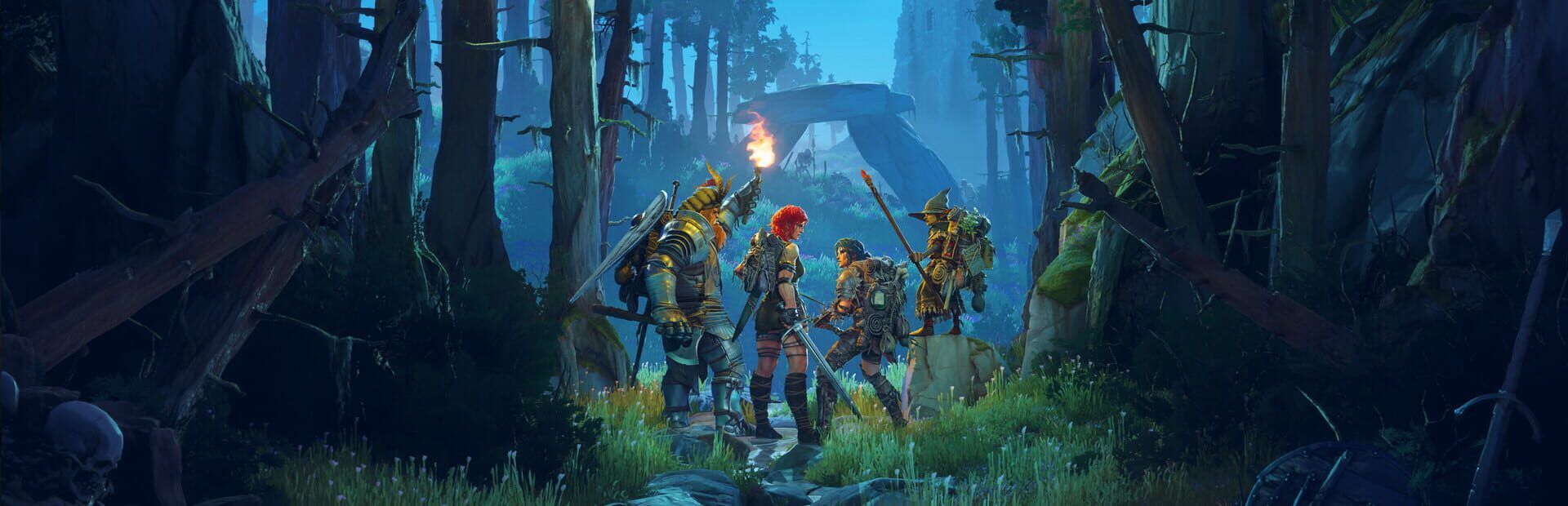
We go hands-on with Wyldheart, a tabletop-flavored co-op RPG that wants your party to feel like a real adventuring group instead of four DPS meters. Here’s what already works, and the big questions that still hang over this frontier fantasy before launch.
Wyldheart does not open like a typical action RPG. There is no lone hero waking up in a burning village, no cutscene of a great evil returning. Instead, it starts more like a friend’s living room on a Saturday night. You and your crew roll in together, build characters side by side, and talk through what kind of party you actually want to be.
That “session zero” energy sits at the heart of Wyldheart’s co-op pitch, and after playing an early build, it is the strongest sign that Wayfinder Studios is onto something special.
A co-op RPG built around the people, not the loot
Wyldheart’s core promise is simple: make online campaigns feel closer to a tabletop group than a loot treadmill. From the first minute, that focus changes how you engage with the game.
Character creation happens in real time with your party, so the usual solo min-maxing is replaced with group planning. You are not picking a rigid “class” so much as sketching a role. Multiple skill trees let you pull melee swings, elemental spells, and utility abilities into a single kit, then tune that kit across the whole campaign.
In practice, this flexibility keeps co-op friction low. If your usual healer cannot make it one night, you do not need to reroll the whole roster. Someone slides a few points into support tools, someone else leans harder into crowd control, and the party composition evolves instead of breaking. It helps that builds feel expressive already, less about squeezing one percent more damage and more about the fantasy of who your character is inside this world.
Combat that nudges you into real teamwork
The combat itself is action forward and reads immediately if you have played a modern co-op RPG. You get light and heavy attacks, dodges with real invincibility timing, and a handful of active abilities on cooldowns. What stood out is how often the game quietly asks the party to cooperate instead of simply standing in a clump and spamming skills.
Regular encounters lean on enemy resistances and weaknesses so it matters that someone can crack armor, someone can stagger, and someone can exploit exposed weak points. In the slime boss fight that anchored the preview build, the encounter only comes together if players split responsibilities. One person kites add waves away from the main arena, another focuses on chip damage to keep the core exposed, while a third swaps to tools that can interrupt the boss’s big split-and-slam tells.
None of this is brutally difficult yet, but the design is already pushing players to talk. Who is on interrupt duty, who is saving a stun for the next phase, who is watching health because there is no hard locked “tank” or “healer” to shoulder the blame. It feels less like four strangers running parallel builds and more like a party solving a fight together.
The biggest open question is how far Wayfinder will lean into this philosophy at higher levels. If late game tuning devolves into raw DPS checks and damage sponges, the careful groundwork could be drowned out. If the team keeps layering encounters that hinge on communication and soft role swapping, Wyldheart’s combat could become one of the strongest co-op pillars it has.
A frontier world built for camping, not sprinting
Where Wyldheart really separates itself from other co-op ARPGs is in how you move through its world. Instead of a continuous open map, you hop across a board game style overworld that looks closer to a Catan or Gloomhaven layout than a Diablo minimap.
Each tile you move onto represents distance and time. Days tick forward, night closes in, weather rolls across regions and the party has to decide when to press on and when to make camp. You are not just pathing to the next dungeon entrance but planning a small expedition with real downtime baked in.
At camp, the tone shifts. You repair worn down weapons that have taken a beating from your last delve, cook meals that add temporary bonuses, craft supplies and simply exhale between pushes. In voice chat, this is where people naturally debrief the boss they just scraped through, joke about misplays, and scheme about the next leg of the journey.
The survival layer is intentionally light rather than punishing, but it reframes the entire loop. Instead of chaining dungeons for two hours, you are on a shared trip with a rhythm of travel, tension, rest, and reflection. It is easy to imagine campaigns where the real memories are not just the big fights but the miserable rainstorm that forced your group to camp early, or the route that left you limping into town with broken blades and no food.
Whether that travel system can stay interesting across dozens of hours is one of Wyldheart’s biggest tests. If events, weather quirks, and route decisions keep evolving, the overworld could become the glue that binds each dungeon run into a proper story.
Immersion through vibe, not just fidelity
Wyldheart’s art direction leans into rustic fantasy and frontier dust instead of standard-issue grimdark. Towns and outposts feel like settlements on the edge of something wild, all rough wood, canvas, and warm lamplight against big skies. The palette tends toward earthy browns, muted greens, and the occasional magical flare rather than neon spectacle.
In play, this gives the dungeons you crawl and the roads you take a particular texture. You do not feel like a god-tier slayer cleaning up a world that already lost. You feel like part of a small community trying to carve out a future at the edges of danger.
That vibe is amplified by details in encounters and exploration. The slime boss fight is less about apocalyptic stakes and more about a real threat to the people who live down the road. Campsites and waypoints are not just UI nodes but little pockets of civilization that you gradually thread together across the map.
Audio and animation work are still clearly mid-development, but the direction is clear. Weapons have weight and a tangible clatter when they connect, spells punch with satisfying crackle rather than excessive particle soup, and the soundtrack leans toward twangy strings and low percussion that sells the frontier feel. The immersion here is more about inhabiting a shared space with friends than marveling at technical spectacle.
Social play hooks that already click
Because Wyldheart is built from the ground up for co-op, some of its best ideas are social by default rather than bolted on. The party-centric character creation is the first clue, but the way progression is structured matters just as much.
Campaigns are designed for groups that cannot keep the same schedule every night. Players can peel off to run smaller objectives or farm resources on their own time, then rejoin the main push without derailing the story. The lack of strict classes helps here, letting a returning friend subtly respec toward what the group needs instead of showing up underleveled and locked into a role that no longer fits.
The board game overworld and camping system act as built in social lobbies. Instead of standing silently in a hub city while everyone fiddles with menus, your party is on the road making choices. Do you spend limited supplies on upgrading a favorite weapon that is nearly broken, or save them to make sure the squishier caster can afford better armor at the next town. Those little frictions generate conversation, light arguments, and the kind of micro stories that make a campaign feel personal.
The potential weak link here is matchmaking. So far the preview has focused on pre-made groups, which is undoubtedly where Wyldheart will shine. How the game handles drop-in, drop-out partners, voice-averse players, and random parties who do not communicate much remains unknown. The design clearly encourages talking, but in public matchmaking that is never guaranteed.
Systems that work now, and ones that need to prove themselves
For an early showing, a surprising amount of Wyldheart already feels coherent.
The flexible builds are doing real work in co-op, letting parties sculpt their own roles instead of bending around rigid presets. Combat feels responsive and legible, with clear tells and enough room to improvise without getting lost in visual noise. The overworld structure and camping cadence give sessions a narrative shape, making even a short night of play feel like a chapter in a longer trip.
Weapon degradation is the biggest mechanical wildcard. The intent is clear. By forcing you to rotate through gear, the system pushes players to experiment rather than hoarding a single legendary forever. Around a campfire with friends, arguing over who gets the last repair kit can be a fun bit of tension.
The risk is that over a long campaign, constant upkeep becomes a chore that only one or two players in the group truly care about. If degradation tuning is off, you could see parties avoiding cool weapons because the mental tax of maintaining them is too high. How generous repair materials are in the full game, and how many tools exist to mitigate tedium, will determine whether degradation adds spice or just sand.
Progress pacing is another unanswered question. The preview build gives you a satisfying drip of new skills and loot, but long running co-op games live or die on how they handle the midgame plateau. If skill trees run out of interesting choices or gear upgrades flatten into small stat bumps, even a strong foundation can start to feel like repetition.
The big questions before launch
Stepping back from the specifics, a handful of structural questions will define whether Wyldheart fulfills its co-op RPG promise.
Can the encounter design keep encouraging genuine teamwork without locking into rigid meta compositions. Can the overworld travel remain compelling on your twentieth expedition, with enough events, story beats, and route dilemmas to prevent it from feeling like a pretty lobby. Can solo play really stay satisfying when the systems are so clearly tuned for groups.
There is also the matter of campaign length and resolution. The tabletop feel works because there is an implied arc to your party’s story. If Wyldheart lands closer to an endlessly repeating live service loop, some of that campaign magic could evaporate. On the other hand, if it delivers finite but replayable storylines that you can tackle with different crews and builds, it could carve out a much more distinct identity.
What is clear from the time spent with the preview build is that Wyldheart understands why people come back to long running co-op games. It is not just the gear or the numbers. It is the rituals, the road trips, the shared “remember when” stories that build up around a group over weeks and months.
Wyldheart is already capturing that feeling in small ways. If Wayfinder Studios can answer the remaining questions about depth, pacing, and matchmaking, this dusty frontier campaign might be one worth settling into with your favorite crew when launch rolls around.