
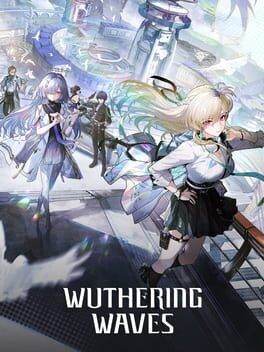

Version 3.2 takes Wuthering Waves to a mirror-world Startorch Academy and quietly locks in a more predictable update rhythm, banner structure, and story cadence as Kuro Games tries to keep pace with its biggest gacha RPG rivals.
Wuthering Waves’ Version 3.2 broadcast did more than tease a spooky academy mystery. It quietly sketched out what the live-service future of the game might look like as Kuro Games tries to hold space in a month stacked with big-name gacha RPG beats.
A Dark Mirror For Startorch Academy
Version 3.2, officially titled Chapter II Act IV: “Gold Suspended in Shadows,” pulls the focus back to Startorch Academy, but with a twist. The broadcast framed the new chapter around a Sonoro sphere that manifests as a mirror version of the school, stitched together from the anxieties and lingering fears of its students.
In-universe, this phenomenon is treated as something the academy has learned to manage with an annual ritual, a nice bit of worldbuilding that makes the Dark Side feel like more than just a one-off Halloween special arriving in March. The stakes escalate when the Fractsidus insert themselves into the process, tying the new arc into earlier teases involving the Grand Architect and reinforcing that these chapter acts are not isolated side stories.
For players, this structure is important. The Dark Side arc is positioned as a self-contained mystery you can clear in a few play sessions, but with threads that continue to build the overarching conflict of Chapter II. It suggests Kuro is settling into a pattern of giving each update a strong, themed core locale and a focused storyline that can be promoted cleanly in a livestream, something its competitors lean on heavily whenever they need to re-excite lapsed players.
Sigrika Steps Up And What Her Banner Signals
The headliner of the 3.2 broadcast is Sigrika, finally moving out of the background and into the roster as a new 5-star Resonator. She is framed as a Royan and a future Heliodic Six successor, which is significant from a service perspective. Kuro is clearly placing marquee lore characters on limited banners rather than holding them back for slow story rollouts, mirroring the way other gacha RPGs push their most important faces directly into the monetization funnel.
Her debut Convene is the clear anchor for the first half of the patch, and the broadcast made a point of setting up her involvement through a personal hook: a riddle written in Royan runes that drags her into the Dark Side investigation. For invested players, it ties her power fantasy to a specific story payoff. For the broader playerbase watching the stream, the message is simple: if you like this arc, rolling for Sigrika feels like buying into the episode.
Alongside her banner, Qiuyan’s Convene returns, followed later by reruns for Lynae, Zani, and Phoebe. That rotation is telling. The game is still relatively young, yet Kuro is already normalizing a schedule where each patch pairs a brand-new 5-star headliner with an anchor rerun, then follows up with additional repeats. It is a familiar template, but an important one, because it reassures players that desirable units will circle back instead of disappearing into an indefinite vault.
Story Cadence: Main Act Now, Afterstory Later
Beyond the main chapter act, the broadcast highlighted a follow-up story arriving a few weeks later: Segue: Afterstory “Rabbit Reflected in Shades,” planned for April 9. In it, Rover teams up with President Lucilla to clean up whatever the Dark Side incident leaves behind.
Structurally, this creates a two-beat narrative rhythm for the patch. The first beat lands with Version 3.2’s launch, giving players a clear entry point and a chunk of story to binge. The second beat arrives deep into the patch’s lifespan, just when daily logins might otherwise start to feel rote. That spacing keeps the story conversation alive across social media and gives content creators a reason to circle back with fresh coverage instead of doing everything on day one.
It also shows Kuro experimenting with lighter “epilogue” quests as connective tissue. An Afterstory can revisit popular NPCs and locations without the burden of pushing the main plot forward too aggressively, which is flexible design for a live-service RPG. If reception to the Dark Side arc is strong, an afterstory lets the team linger in that tone and setting; if not, it still functions as a bridge to the next chapter beat.
Event Schedule And How 3.2 Fills Its Runtime
The broadcast stacked several Solar Celebration themed events around the new chapter to keep the patch feeling busy. Startorch Academy gets dressed up with festive decorations while limited time activities spin out of the celebration itself.
This accomplishes a few things. First, it makes the hub feel alive during the patch, which is vital for an open-world RPG that can otherwise feel static once you have explored the major zones. Second, tying events to a named celebration gives Kuro a recurring calendar hook it can revisit in future years, in the same way other gacha RPGs lean on anniversary festivals or seasonal carnivals.
The broadcast also flagged the usual mix of rewards and limited codes, from upgrade materials to temporary redemption strings like DARKSIDE, RABBITHOLE, and RUNEREADER. These codes are a small piece of the puzzle, but they matter in a month where competing titles are also handing out free pulls and currencies. Making them a part of the livestream is a basic but effective way to drive viewer engagement and funnel lapsed players back into the client to redeem them before they expire.
Taken together, the chapter act, afterstory, event suite, and banners suggest Kuro is trying to build a predictable pattern that players can plan around. Each patch brings a themed story pocket, one major new character, a rerun anchor, a batch of events that visually transform a key area, and at least one mid-patch narrative flourish.
Reading The 3.2 Broadcast As A Live-Service Statement
Viewed strictly as content, Version 3.2 leans into a darker, more surreal academy storyline that should resonate with anyone who enjoys Wuthering Waves’ more contemplative side. Viewed as a service update, though, it reads like an attempt to stabilize the game’s long-term rhythm at a moment when rival titles are also pushing major updates.
Anchoring the patch around the Dark Side keeps production scope manageable. Instead of sprawling the content across multiple regions, Kuro invests in a dense, atmospheric micro setting within Startorch Academy’s mirror world. This containment allows more focused asset reuse and lets the writers build a self-contained mystery that can be marketed cleanly during a broadcast.
The character strategy is equally pragmatic. Sigrika’s banner gives the patch a clear chase unit whose lore relevance is obvious from the broadcast itself, while returning Qiuyan and later reruns ensure players without an interest in the new character still have something to pull for. That is the kind of layered banner planning you see in more mature service RPGs, and it suggests Kuro is already thinking about roster health several patches ahead.
The staggered story beats, capped by Rabbit Reflected in Shades, are where the broadcast most clearly signals Kuro’s live-service intentions. Spacing out narrative drops within a single version update keeps the concurrency graph from spiking and crashing immediately after launch. It also offers more opportunities to respond to community feedback, whether that means fine-tuning difficulty, pacing, or even the balance of future Resonators.
Against a backdrop of competing gacha RPGs touting new regions, collab events, and anniversary campaigns, Wuthering Waves 3.2 does not try to win with raw scale. Instead, it aims for reliability. If Kuro can keep delivering themed chapter acts, consistently attractive banners, and mid-patch follow-ups like Rabbit Reflected in Shades, it can carve out a niche where players know what to expect every few weeks and feel comfortable investing in the ecosystem.
Version 3.2 might be about confronting the dark side of Startorch Academy, but the broadcast surrounding it is really about Kuro Games learning how to run Wuthering Waves as a long-distance race rather than a sprint.