
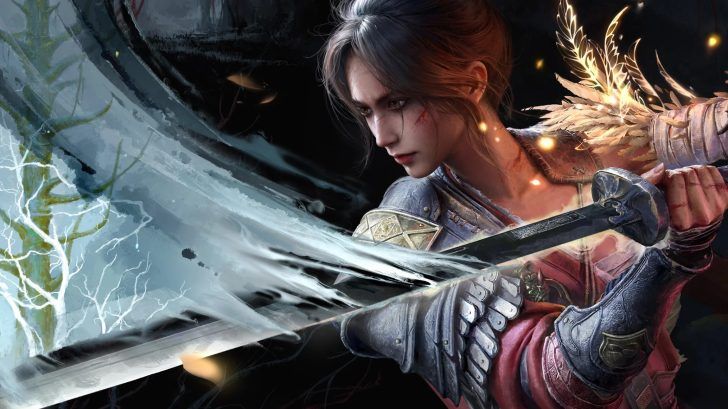
505 Games and Indolphinity have confirmed a Wuchang Fallen Feathers sequel led by original director Xia Siyuan, but platforms, timing, and gameplay details remain unannounced.
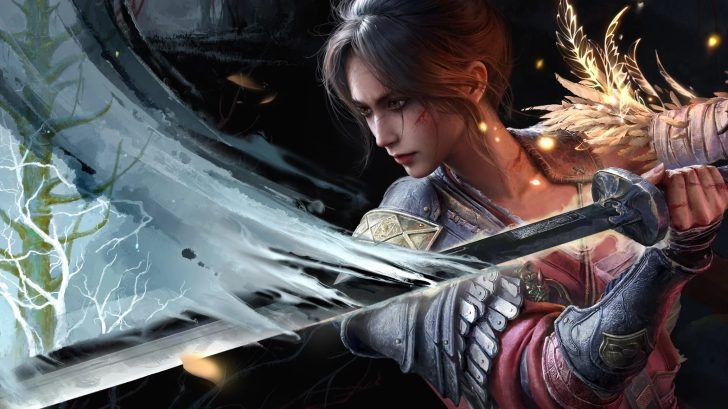
Image: wccftech.com
The sequel is real, but the studio story is the headline
A Wuchang Fallen Feathers sequel is now officially in development, with original director Xia Siyuan leading the follow-up through his new Chengdu-based studio Indolphinity. That confirmation comes through announcements from 505 Games, Digital Bros, and Indolphinity, as reported by Rock Paper Shotgun, VGC, GamingBolt, Gamer Matters, and DayOne.
The immediate tension is that the next Wuchang is not being made by Leenzee, the Chinese studio that developed Wuchang: Fallen Feathers. Instead, the sequel is tied to a new company, Indolphinity, legally named Chengdu Recursive Dolphin Technology Co., Ltd., with 505 Games attached as global publisher. Digital Bros, the parent company of 505 Games, owns the Wuchang intellectual property following its acquisition from Leenzee earlier this year.
That makes this announcement larger than a routine sequel confirmation. Wuchang: Fallen Feathers had already become one of the more visible Chinese-developed soulslike RPG releases, but reports earlier in 2026 raised questions about whether the creative team behind it would remain intact. Now the publisher is presenting the sequel as a continuity play: a new studio, the original director, the same IP, and a stated intention to keep development rooted in China.
For fans, the most important confirmed point is simple: Wuchang’s story is continuing. The caution is equally important. 505 Games and Indolphinity have not announced a release window, platforms, final title, protagonist, combat systems, price, or store pages for the Wuchang sequel.
505 Games now controls the IP and is funding the next chapter
The business foundation for the sequel was laid before this announcement. Digital Bros, 505 Games’ parent company, acquired the Wuchang: Fallen Feathers IP from Leenzee in April 2026. Reports differ slightly on the acquisition value: Rock Paper Shotgun, citing IGN, put it at around €4.6 million, while VGC and GamingBolt described it as around €4 million. The shared point across coverage is that Digital Bros gained control of the IP before moving ahead with the sequel.
DayOne, citing Digital Bros’ press release, reported that the new agreement makes Chengdu Recursive Dolphin Technology the lead creative developer for the sequel, while Digital Bros, through 505 Games, will act as the exclusive worldwide publisher. The same press release put the initial investment for the game at approximately €21.5 million. GamingBolt also reported that Digital Bros described the move as part of a long-term commitment to China’s game development ecosystem.
That funding figure matters because soulslike action RPGs are expensive to execute well. The genre asks for dense level construction, readable enemy animation, precise hit detection, robust boss tuning, weapon and spell variety, progression pacing, and enough performance stability that difficult encounters feel fair. Wuchang: Fallen Feathers entered that space with ambition, and any sequel will have to compete in a market where players closely scrutinize input feel, frame pacing, build balance, and boss design.
Digital Bros co-CEO Raffi Galante said, according to Rock Paper Shotgun and GamingBolt, that the company sees Wuchang as a long-term global franchise. Galante also said the publisher wants to protect and strengthen the original creative vision while keeping the IP’s creative heart in China. Those are publisher statements, not guarantees about design outcomes, but they explain the commercial logic behind pairing IP ownership with Xia’s new studio rather than handing the project to an unrelated team.
Why Indolphinity changes the outlook after Leenzee uncertainty
Indolphinity matters because the future of Wuchang looked uncertain after reports about Leenzee earlier this year. VGC reported that Chinese publication Gamersky claimed Xia Siyuan had been fired from Leenzee and that a large portion of the development team had been laid off after refusing to move to an outsourcing model. Rock Paper Shotgun described Xia as having reportedly left the studio earlier in 2026. Those accounts differ in wording, so the safest reading is that multiple outlets treated Xia’s departure from Leenzee and disruption around the original team as reported developments rather than publisher-confirmed facts.
The sequel announcement reframes that uncertainty without erasing it. Xia is now publicly attached to the Wuchang sequel as founder of Indolphinity and as the director or creative lead associated with the first game. Gamer Matters described the new studio as being based in Chengdu, the same city associated with the original development team, and said 505 Games will provide funding and global publishing while Indolphinity leads creative development.
Xia’s own statement, quoted across the reports, emphasizes cultural heritage and continuity. He said the new team is made up of Chinese creators and that rich cultural heritage is central to the studio’s games and their competitive strength. He also said 505 Games respects the creative process and understands developers’ needs. VGC’s version of the statement adds that the team is listening to player and community feedback while remaining devoted to its original creative aspirations and cultural foundations.
For a lore-heavy action RPG, the director’s return is especially relevant. Wuchang: Fallen Feathers was built around an alternate late Ming Dynasty setting in Shu, the Feathering disease, and Bai Wuchang’s personal search to revive her sister before memory loss and affliction reshape the journey, according to GamingBolt’s summary of the first game. A sequel can preserve that cultural and mythic vocabulary more naturally if its lead creative voice remains close to the original conception. That does not mean every system or story choice will return, but it makes continuity a credible stated goal rather than a purely marketing-driven claim.
The sequel’s story is teased, not detailed
The confirmed narrative detail is deliberately narrow. Xia said the new game will unfold an entirely new chapter of Wuchang’s story that is deeply rooted in Eastern soil, according to Rock Paper Shotgun and VGC. He also said, in VGC’s quoted statement, that Wuchang’s story is far from over.
That wording confirms continuation, but it does not confirm whether Bai Wuchang returns as the playable protagonist, whether the sequel follows the same region, or whether the first game’s specific endings and quest resolutions will be treated as canon. No source material provided for this assignment includes a synopsis, subtitle, cinematic trailer, enemy roster, hub structure, or timeline placement for the sequel.
The phrase “new chapter” is useful but flexible. It could mean a direct continuation, a new protagonist inside the same mythic and historical framework, or a broader franchise installment using the Wuchang name and themes. Fans should avoid treating any one option as confirmed until 505 Games or Indolphinity provides story specifics.
From a systems perspective, the same restraint applies to mechanics. GamingBolt describes Wuchang: Fallen Feathers as a soulslike action RPG in which Bai Wuchang can use multiple weapons and spells, unlock new skills, and interact with the Madness mechanic, which increases both damage dealt and damage taken and can manifest as an Inner Demon after death. None of the current sequel announcements confirm the return of Madness, the same weapon categories, the same skill architecture, or the same spell progression.
That absence is important. In a soulslike RPG, the difference between a sequel that refines an existing build ecosystem and one that rebuilds progression from the ground up is enormous. Players planning around parry windows, spell scaling, status effects, route order, or challenge-run viability do not have enough confirmed information yet. The only responsible expectation is thematic and creative continuity, not mechanical certainty.
The first game gives the sequel both a foundation and a checklist
The original Wuchang: Fallen Feathers gives Indolphinity a meaningful foundation. VGC reported that the game received a generally positive reception, with a Metacritic score of 74 across all formats. DayOne, citing 505 Games, reported that Wuchang: Fallen Feathers attracted more than 131,000 concurrent players on Steam at launch and reached 5 million players worldwide across PC and console platforms. Gamer Matters notes that the game was available through subscription services including Game Pass and PS Plus, so that 5 million figure is a player count rather than a direct sales number.
Reception was not cleanly uniform. Rock Paper Shotgun noted rocky PC performance around launch, while also citing its own Jeremy Peel as praising the game’s level design. In Rock Paper Shotgun’s quoted advent calendar entry, Peel singled out the opening village for its corridors, alleyways, rooftops, shortcuts, and looping routes back to a central temple hub. That is the kind of interlocked geography soulslike players tend to remember, because it affects exploration rhythm as much as atmosphere.
That level design praise should be central to sequel expectations. Wuchang’s strongest reported design identity was not only its difficulty or its boss fights, but its ability to make routes fold back into one another. For an RPG player, that matters because progression is not limited to stat growth. The best areas become knowledge checks: you learn enemy placement, unlock shortcuts, find hidden roofs, discover routes behind locked doors, and gradually turn a hostile map into a familiar one.
The sequel also inherits unresolved pressure points. Rock Paper Shotgun mentioned the first game’s rocky PC performance, and VGC reported criticism from some players after a patch prevented certain historical Chinese figures from being killed and added dialogue so the story still made sense now that those figures no longer died. Those are separate issues, one technical and one content-related, but both shape the questions players will bring to the Wuchang sequel.
For the next game, the practical checklist is obvious even without new gameplay footage: stable PC performance at launch, transparent patch communication, strong encounter readability, clear localization, and a progression model that gives weapon and spell choices meaningful identity. None of that has been promised in concrete terms. It is the bar created by the first game’s reputation and by 505 Games’ public claim that the sequel will aim for higher quality and a more complete experience.
Fans should expect a long wait and watch for platform details
Because the sequel has only just been announced as being in development, fans should treat it as early. The available source material does not include a release date, release year, platforms, editions, price, subscription plans, PC requirements, or console performance targets. There is also no confirmation of whether the Wuchang sequel will launch on Game Pass, PlayStation Plus, or any comparable service, even though Gamer Matters says the first game was offered through Game Pass and PS Plus.
The safest reader guidance is to wait for the next round of official details before making platform plans. If you played Wuchang: Fallen Feathers on PC and were affected by the rocky launch performance cited by Rock Paper Shotgun, performance footage and independent PC analysis should be higher priorities than a cinematic trailer. If you care about lore continuity, watch for whether Indolphinity confirms Bai Wuchang, the late Ming-inspired setting, the Feathering disease, or specific quest consequences from the first game. If your investment is mechanical, wait for combat breakdowns before assuming the same build paths will return.
The confirmed partnership does give the sequel a clearer path than fans might have expected after the reports around Leenzee. Digital Bros owns the IP, 505 Games is publishing globally, Indolphinity is leading creative development, and Xia Siyuan is back at the center of Wuchang. That is a strong structural answer to the question of whether the series could continue after the original studio uncertainty.
It is not a full design reveal. The Wuchang Fallen Feathers sequel currently exists as a confirmed development project with a named creative lead, a named studio, a publisher, an investment figure, and a stated commitment to cultural continuity. Everything beyond that, from release timing to builds to boss structure, remains unannounced. For a soulslike RPG audience accustomed to reading item descriptions for clues, this is one of those moments where the missing text matters as much as the revealed line.