

World of Warcraft Forever is widening character creation with the Skyborne race, undead paladins, new race and class pairings, and two-part regional names, changing the MMO’s pitch without making it a simple remake.

Image: IGDB
Azeroth’s next character creator is doing the heavy lifting
World of Warcraft Forever is expanding character creation in three connected ways: Blizzard has confirmed a new playable Skyborne race, third-party coverage of Blizzard’s race and class guide lists six new race and class pairings including Undead Paladins, and a Blizzard-linked naming announcement says characters will use two-part names that must be unique across a region rather than a single realm.
That combination is the clearest signal yet that World of Warcraft Forever is being framed around identity and long-term player ownership rather than a straight preservation pass. The headline changes are familiar to anyone who has watched World of Warcraft’s many eras argue with each other over class fantasy, faction identity, and server community. The difference here is that Forever appears to be revising the rules at character creation, where a player’s race, role, faction, starting story, and name all lock together before the first quest is accepted.
Blizzard’s official race and class article, as reproduced in the provided source material, says Forever keeps the class lineup to nine options: Druid, Hunter, Mage, Paladin, Priest, Rogue, Shaman, Warlock, and Warrior. MMOHuts and Icy Veins both report from Blizzard’s overview that the new combinations include Orc Mages, Troll Warlocks, Undead Paladins, Human Hunters, Gnome Priests, and Dwarf Shamans. Overgear’s guide adds that these six pairings are confirmed as base additions, while separately saying the Skyborne require a paid upgrade edition. That paid-upgrade detail is not shown in the provided Blizzard article excerpt, so it should be treated as reported by Overgear rather than established here as a direct Blizzard pricing announcement.
The tension is obvious: Forever is using the shape of Classic-era identity, with nine familiar classes and factional race lists, while loosening some of the boundaries that made those choices so defining. Undead Paladins and Dwarf Shamans do the most to disturb the old faction map, because Paladin and Shaman access has historically carried faction meaning in Classic-style World of Warcraft. The Skyborne add another layer by splitting one new race across Horde and Alliance flavors, each with a different magical tradition. The regional naming system then widens the identity change from builds to social presence.
The Skyborne race is a faction split, not a neutral blank slate
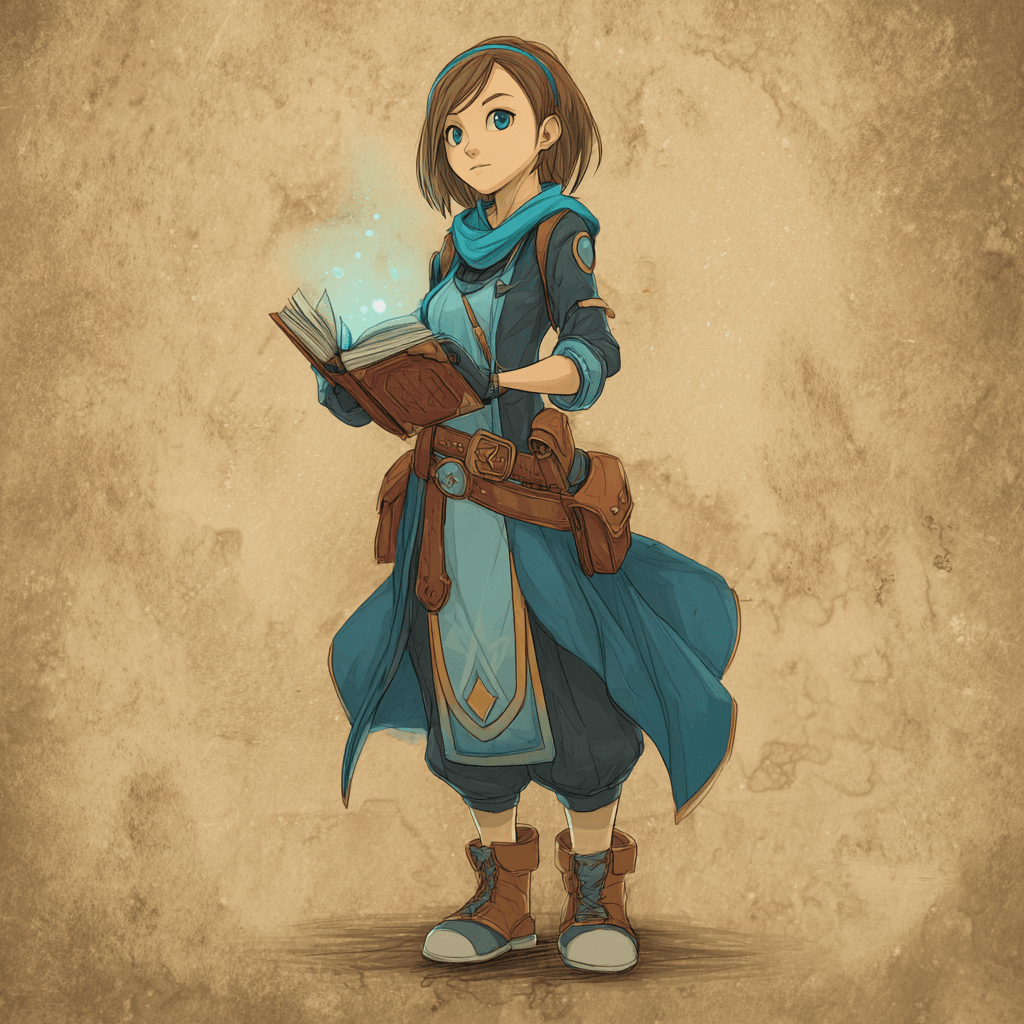
The new Skyborne race is the cleanest example of Forever’s approach. MMOHuts, citing Blizzard’s Skyborne announcement, reports that Skyborne characters begin on Zephras Isle and play through a level 1 to 12 starting experience. Their premise is a wind-touched civilization tied to Skywall, with the starter zone built around Zephras Isle falling into crisis after its protective air spirits vanish.
At character creation, players choose between Horde-aligned Windshaper Skyborne and Alliance-aligned High Order Skyborne. That split is mechanical as well as narrative. MMOHuts lists Horde Skyborne classes as Druid, Hunter, Rogue, Shaman, and Warrior. Alliance Skyborne can be Druid, Hunter, Mage, Rogue, and Warrior. Blizzard’s own race and class guide excerpt says Windshapers can become Shaman, while High-Order Skyborne can become Mages, tying the Horde version to elemental traditions and the Alliance version to the arcane side of Skyborne ancestry.
That design matters because it avoids making the Skyborne a purely symmetric race with a faction badge pasted on later. A Horde Skyborne Shaman and an Alliance Skyborne Mage are different answers to the same origin. For an RPG player, that is useful friction. If you want the new race and a caster identity, the faction choice affects which caster fantasy is available. If you want a shared option across both factions, Druid, Hunter, Rogue, and Warrior appear to be the common lanes according to MMOHuts and Icy Veins’ class lists.
The race also appears built to carry its own cosmetic and movement identity. MMOHuts reports Skyborne-specific druid forms, unique customization options, voices, emotes, and /dance, with appearance changes available later at city barber shops. Shared racial traits include Walk on Air, described as a glide downward for 10 seconds, a passive 1% haste bonus, and increased damage against Elementals. The Horde-aligned active racial is Skysight, granting an Elemental Blessing that increases run speed by 10%, while the Alliance-aligned active racial is Read Ley Line, boosting health and mana regeneration by 100% while active.
Those racials need live-game context before anyone can responsibly declare best-in-slot outcomes. A glide can be powerful in world traversal, but its value depends on zone geometry, fall damage rules, and encounter design. Haste is broadly useful, but a 1% passive is the kind of trait that becomes meaningful only when compared against every other racial package. For now, the confirmed point is simpler: Blizzard is giving the Skyborne a full identity pass rather than treating them as a cosmetic race with a short intro.
Undead Paladins and Dwarf Shamans redraw the faction role map
The most provocative WoW Forever race class combos are not the flashiest new race options. They are Undead Paladin and Dwarf Shaman, because those pairings change who can bring traditionally faction-coded class roles into groups.
MMOHuts and Icy Veins both list Undead Paladin among the new combinations, with Human Hunter, Gnome Priest, Dwarf Shaman, Orc Mage, and Troll Warlock making up the rest of the six widely reported additions. Overgear’s table frames Dwarf Shaman as giving the Alliance its first Shaman option and Undead Paladin as giving the Horde its first Paladin option. That is Overgear’s interpretation of the confirmed combination list, but it tracks the practical consequence of those additions in a Classic-style roster.
For group builders, this is larger than cosmetic novelty. Paladins and Shamans affect healing, support, utility, and raid composition expectations. Even without full class tuning details in the provided Blizzard excerpt, opening Paladin to the Horde and Shaman to the Alliance changes the social pressure around faction choice. A player who loves Horde aesthetics but wants a Paladin no longer has to abandon that faction fantasy, if Undead Paladin is available as listed. An Alliance player who wants Shaman utility can choose Dwarf Shaman without being pushed into the Skyborne path.
The lore pressure is heavier on Undead Paladins than on most of the list. A Human Hunter or Orc Mage is easy to read as a broadening of cultural practice. An undead servant of the Light raises sharper questions about pain, faith, discipline, and what the Forsaken are allowed to become in Forever’s version of Azeroth. LFCarry’s guide goes further than the other provided sources by claiming Forsaken Paladins are sent to Bandarion Keep in the Whispering Wood of Tirisfal around level 10 and receive their own epic mount quest at 60. Because that detail is not present in the provided Blizzard excerpt or the MMOHuts summary, it should be read here as LFCarry’s reported guide detail, not independently confirmed in the supplied official text.
From a completionist perspective, the important question is whether these combinations receive bespoke quests, trainers, dialogue, or class-flavored starting beats. The supplied sources clearly support the existence of the new pairings. They do not fully establish how much unique narrative scaffolding each one receives, aside from third-party claims about Forsaken Paladin content and Blizzard’s broader statement that race and class shape the fantasy and role of the hero.
The nine-class limit keeps Forever from becoming a full reinvention
Blizzard’s own race and class guide excerpt emphasizes that World of Warcraft Forever has nine available classes. That choice narrows the scope of the update in a useful way. Forever is not adding a new class in the provided material. It is reassigning access to existing classes, adjusting racial traits, and introducing one new race with faction-specific class rules.
That distinction keeps expectations in check. Players looking for a tenth class, a new combat role, or a modern expansion-style class reveal do not have support for that expectation in the supplied sources. MMOHuts states directly that the big change is not a new class, but more freedom in pairing familiar races with roles that were previously unavailable in this version of Azeroth.
Icy Veins’ September 17 class table says that, with the exception of Night Elf and Tauren, each existing race gains a new class option. Overgear also notes that Night Elf and Tauren do not receive new class combinations in World of Warcraft Forever. That means the revision is selective rather than universal. Human Hunter, Dwarf Shaman, Gnome Priest, Orc Mage, Undead Paladin, and Troll Warlock broaden specific racial identities, while Night Elf and Tauren remain closer to their prior class profiles in the listed tables.
Racial traits are part of the same rebalancing conversation. MMOHuts reports updated or returning abilities such as Orcs receiving Blood Fury and Shatter Curse, Undead keeping Will of the Forsaken and Cannibalize, Humans receiving Will to Survive and Perception, and Skyborne receiving Walk on Air. Icy Veins, summarizing Blizzard’s official overview, mentions replaced or new racial abilities including Shatter Curse for Orcs and Touch of the Grave for Forsaken. Those details suggest Blizzard is not simply adding checkmarks to a race/class grid, but trying to make the surrounding racial toolkit fit the new character options.
The unanswered systems question is balance. Race/class restrictions in older World of Warcraft often functioned as fantasy gates, but they also shaped population, PvP expectations, and endgame optimization. If every class is represented on both factions, as Overgear states, faction choice becomes less about access to a specific class and more about racial traits, friends, aesthetics, and story preference. That is healthier for player choice, but it puts more pressure on racials not to become the new mandatory answer.
Regional two-part names are the social half of the redesign
The naming change may sound administrative beside a new race, but it touches the same core problem: how does a long-running MMO let players feel ownership when the shared space keeps getting larger? MMOHuts reports from Blizzard’s naming announcement that World of Warcraft Forever will use two-part character names, similar to a first name and surname, with the full combination required to be unique across a region.
Under that system, two characters can share a first name as long as the complete two-part name differs. This is tied to Forever’s larger realmless setup, according to MMOHuts, with Blizzard treating names at a regional level rather than by individual server. The result is a wider namespace with a stricter uniqueness rule for the full identity. A player who lost access to a favorite single name in traditional realm-based naming may have another route, but a player who wants a specific full name will be competing across the region.
Blizzard’s implementation also appears to acknowledge readability. MMOHuts says the second name can be hidden in the game world for players who want a cleaner look, while still appearing in chat. The reported path is Game Menu, Options, Nameplates, then the “My Secondary Name” toggle. That gives role-players, raiders, and minimal-UI players slightly different ways to live with the same naming system.
Existing conduct rules still apply. The MMOHuts summary says Blizzard may restrict certain words, spellings, repeated-character patterns, impersonation attempts, or attempts to split a restricted term across both name fields. In other words, the two-part structure is not a loophole for moderation. It is a larger identity field with the same code-of-conduct obligations.
There is also a practical date attached. Early Name Reservation is planned for October 27 through November 3, 2026, for eligible upgrade purchases, according to MMOHuts’ report on Blizzard’s naming announcement. Reservations will be first come, first served. The source material does not provide full pricing for those eligible upgrades, and MMOHuts’ separate race/class report says it did not include release date or pricing details. Players who care about a particular World of Warcraft Forever name should treat that reservation window as the actionable fact, while waiting for Blizzard’s own purchase details before deciding whether an upgrade is worth it.
The remake label does not explain what Blizzard is changing
Calling World of Warcraft Forever a remake would flatten the most interesting part of the pitch. The supplied sources show Blizzard preserving a recognizable class roster while changing the rules around who can embody those classes, how a new race enters the faction structure, and how names work in a realmless regional environment.
For returning players, the choice is not simply whether to replay an old route. A Horde player can look at Undead Paladin, Orc Mage, Troll Warlock, or Windshaper Skyborne Shaman and see different relationships between race fantasy and role. An Alliance player can consider Human Hunter, Gnome Priest, Dwarf Shaman, or High Order Skyborne Mage with the same question in reverse. These combinations are small on a table and large at character select, because they affect animations, starting context, racial abilities, guild identity, and the emotional logic of a main character.
For new players, Forever’s approach could make the first decision less punishing. If class access is broader and names have a two-part regional structure, fewer players will be forced into awkward compromises before they understand the game. The tradeoff is complexity. A two-faction Skyborne race with different class access by alignment is flavorful, but it also means a player must understand that Skyborne Mage and Skyborne Shaman are not interchangeable options across Horde and Alliance. Likewise, a first name may be available only because the surname makes the full regional identity unique.
The safe advice is to separate decisions by permanence. If the name matters, watch the October 27 to November 3, 2026 reservation period and confirm upgrade eligibility through Blizzard before spending. If class fantasy matters, decide whether one of the six new pairings solves a long-standing faction conflict for you. If the Skyborne race is the draw, wait for Blizzard’s final purchase and launch details unless you are already comfortable with third-party reports that describe it as a paid upgrade race.
World of Warcraft Forever’s strongest confirmed idea is that character creation is becoming the front door to its new version of Azeroth. The Skyborne race gives Blizzard a fresh starting story and a faction-split identity. Undead Paladins and Dwarf Shamans challenge old faction assumptions. Regional two-part names adapt social identity to a broader realmless structure. Those are structural changes, and they deserve to be judged as systems rather than nostalgia packaging.