

Blizzard says WoW Forever will punish gold buyers aggressively and ban GDKP. A packed beta now makes economy trust one of the biggest launch tests.
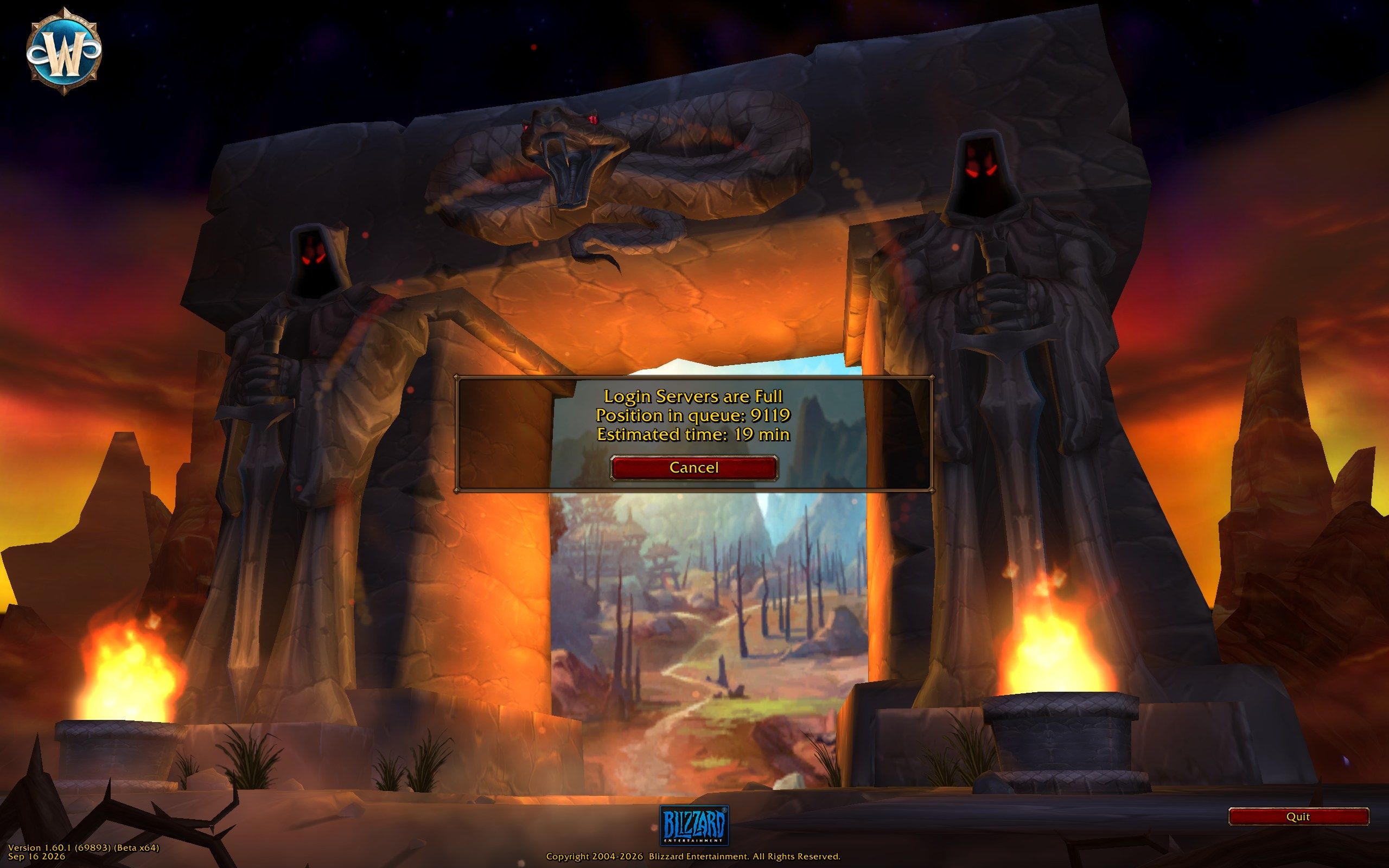
Image: wowhead.com
A crowded beta has turned economy rules into a launch issue
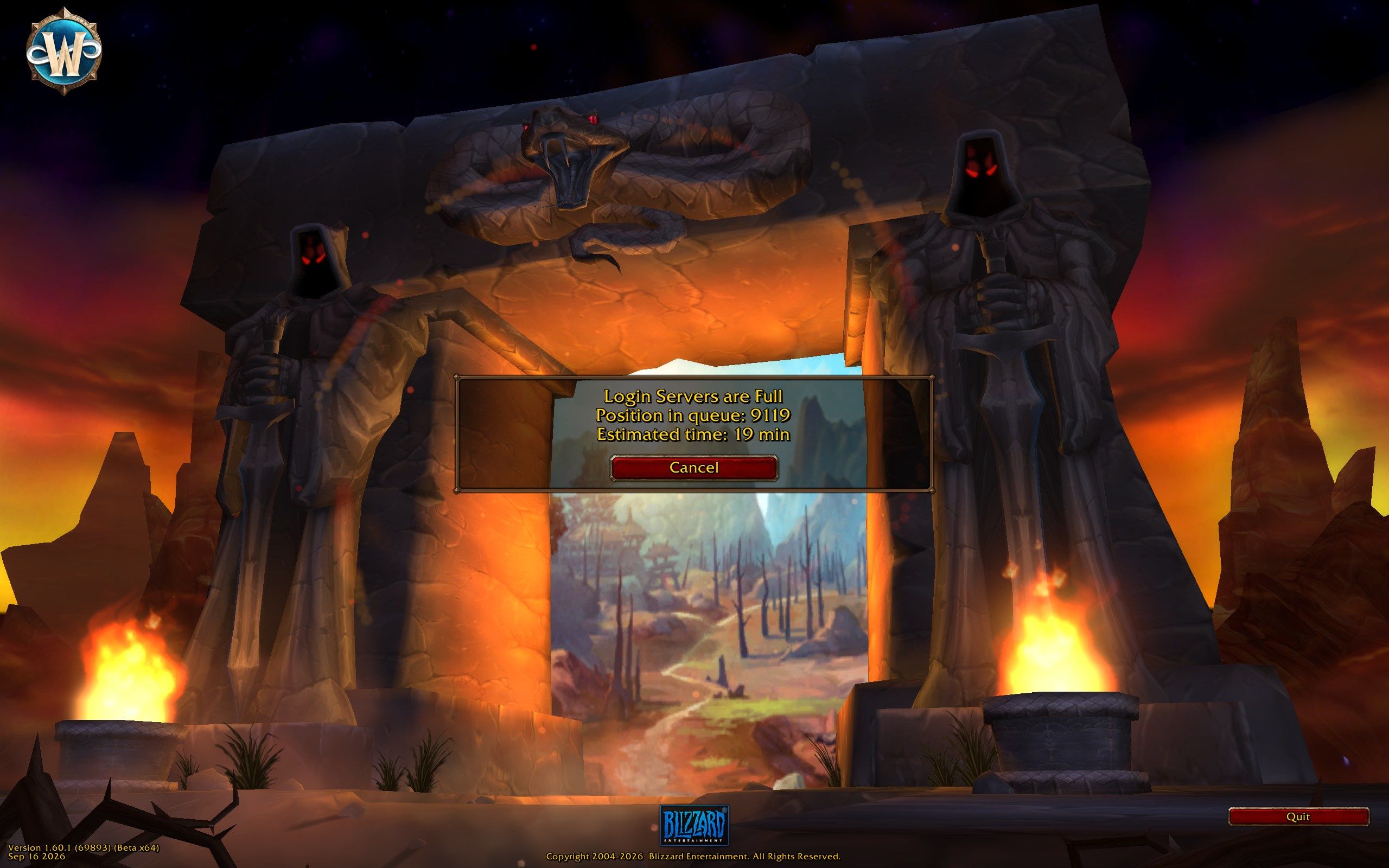
World of Warcraft Forever’s beta has drawn demand strong enough to surprise Blizzard, and that surge has put immediate pressure on the studio’s new promise to police gold buying and GDKP before launch. IGN reported that the beta was flooded by players after Blizzard announced Forever at BlizzCon 2026, with some players encountering disconnects and severe lag while looting or accepting quests. World of Warcraft Classic developer Josh Greenfield wrote on X, according to IGN, that the beta was posting “the craziest numbers” he had seen in 17 years at Blizzard and almost eight years on Classic.
That scale is the good problem Blizzard wanted and the difficult one it now has to solve. Forever is being positioned as a “Classic Plus” MMO by the World of Warcraft Classic team, set during the first year of World of Warcraft, with a November 4 launch date reported by IGN. A fresh Azeroth only works if players believe its economy is fresh too. If gold sellers, bought gold, and gold-gated raid access define the opening months, the leveling curve, professions, dungeon rewards, and guild ladder all begin to feel compromised.
Blizzard is not treating that as a side conversation. PCGamesN reported that Community Manager Randy “Kaivax” Jordan and Senior Game Designer Josh Greenfield discussed gold buying, RMT, and GDKP during a livestream tied to the beta launch. Greenfield said Blizzard will “very aggressively punish gold buyers,” and acknowledged that the company has “probably been too lenient on gold buyers” in the past. That admission matters because World of Warcraft Forever beta interest is no longer theoretical. Blizzard is about to invite a large, highly motivated player base into a permanent economy where early trust may be harder to restore than server stability.
Blizzard’s hard line on WoW Forever gold buying is unusually explicit
The clearest confirmed policy is Blizzard’s stance on third-party gold buying. As reported by PCGamesN, Greenfield said Blizzard is taking the practice “very seriously” in WoW Forever and warned that violations could lead to permanent account bans. He also said that, speaking as someone with a 22-year-old World of Warcraft account, it would not be worth losing an account permanently over bought gold.
That is stronger language than the usual reminder that real-money trading violates terms of service. It is also tied directly to Forever’s design promise. RMT, or real-money transactions, lets players convert real cash into in-game power through third-party sellers. In an MMO built around slow material accumulation, faction identity, professions, dungeon preparation, and raid readiness, that shortcut affects everyone around the buyer. Consumable prices move. Crafting inputs become harder to read. New players see a market shaped by wealth they could not have earned through normal play.
Greenfield also said Blizzard plans to monitor the Forever economy “very actively,” according to PCGamesN. He described internal tools that give the team “levers” and “knobs” to adjust the availability of certain drops or consumables if the economy looks wrong. His example, as reported, was increasing the chance to find some resources in a dungeon, both to improve availability and to make the activity more replayable.
That detail is important because enforcement alone cannot carry an MMO economy. If materials are too scarce, if gold faucets are too efficient, or if a single farming route becomes dominant, the incentive to buy gold rises. Blizzard’s comments suggest the team is thinking about economy health as a live system rather than a static rules page. The unanswered question is how quickly those adjustments can happen once Forever is live and whether players will see enough visible enforcement to believe the rules apply to high-spending raiders as well as obvious spam accounts.
The WoW Forever GDKP ban is about guild health, not only RMT
Blizzard’s GDKP ban is the other half of the economy story. GDKP stands for Gold Dragon Kill Points, a player-run loot system where dungeon or raid drops are auctioned for in-game gold and the proceeds are divided among participants. PCGamesN summarized the system as loot going to the highest bidders, with the gold then shared by the group.
The obvious concern is that GDKP creates demand for purchased gold, but Greenfield’s stated reason goes deeper. According to PCGamesN, he said GDKP can become so common in regions where it has been popular for longer that it begins to overtake the traditional guild structure. In Blizzard’s view, that creates a barrier for new players or players with fewer resources, because access to loot can start to depend on the size of a player’s gold pile rather than their role in a stable group.
Master of Warcraft, citing Greenfield’s September 17 Forever Q&A and an Icy Veins transcript, reported the same core explanation: GDKP will not be allowed in WoW Forever, and Blizzard’s primary concern is that it can push traditional guild raiding aside. The site also connected that stance to Blizzard’s broader Forever raid structure, reporting that every raid tier is planned to include both 10-player and 20-player raids. If accurate, that raid model points toward a deliberate path from dungeon groups into consistent raid teams.
For a progression-minded player, this is the central philosophical split. GDKP can reward preparation and geared carries, and it gives players a market-based way to chase specific drops. It also shifts raid access toward liquid wealth. Blizzard appears to be choosing guild continuity over market efficiency, which fits a version of Azeroth built around knowing who your tank is, who crafts your resistance gear, and who shows up every week with consumables they earned inside the same economy.
Beta forum complaints are a warning signal, not proof of a failed policy
The first community flare-up is already visible. A thread on Blizzard’s World of Warcraft: Forever General Discussion forum titled “Gold Buying Already” includes a player claiming that people are buying gold and advertising gold selling in the beta less than 24 hours in. Another poster responded by pointing out that buying gold in a beta that will be wiped is foolish, while the original poster argued that the concern is whether Blizzard can stop sellers now before the game goes live.
Those forum posts are player allegations, not confirmed evidence that Blizzard’s enforcement has failed. The source material provided does not include a Blizzard response to that thread, ban numbers, confirmed seller activity, or proof of completed transactions. It does, however, show the credibility gap Blizzard must close. When a studio publicly promises aggressive action against gold buying, even beta chat spam can become a referendum on whether players should trust the launch economy.
The distinction matters. A beta is a test environment, and it can attract bad actors who want to probe reporting tools, chat filters, trade limits, and player behavior before launch. It also contains characters and gold that are not part of the permanent economy. Still, the perception problem is real. If the first visible experience for players is gold-selling spam, the promise of a protected fresh start starts taking damage before anyone reaches level 60.
This is where Blizzard’s enforcement communication will need precision. Players do not need the studio to reveal detection methods, and revealing too much would help sellers. But they will need signs that reports are acted on, that buyers face consequences as well as sellers, and that the GDKP ban has a practical enforcement shape rather than existing as a launch-week slogan.
Server demand makes the economy problem larger, not smaller
IGN’s report on beta instability helps explain the scale of the challenge. World of Warcraft senior game producer Tom Ellis wrote on X, according to IGN, that Forever’s beta was running on a “BETA PTR environment stack,” not a production stack, and that WoW betas usually are not major traffic drivers. Ellis later said the beta was running smoothly after Blizzard addressed the immediate issues, with players pouring in “without fuss.”
That infrastructure explanation separates two issues that players often blend together. Login queues, disconnects, and loot lag are technical capacity problems. Gold buying, GDKP enforcement, and auction-house confidence are economy governance problems. One can be fixed by moving from a beta environment toward launch infrastructure. The other depends on sustained policy, automated detection, human investigation, and design choices that reduce the pressure to cheat.
High demand also changes the stakes of every early economy decision. A small launch can absorb oddities because fewer players are competing over the same herbs, ore, rare recipes, dungeon drops, and world-farming spots. A packed launch turns those frictions into public arguments. If legitimate players feel that bots or buyers are setting the price of basic progression materials, the social contract weakens quickly.
Forever’s pitch is especially vulnerable to that because it is leaning into older MMO values. A first-year Azeroth setting, faction separation, meaningful guild formation, and a level 60 endgame all depend on scarcity feeling fair. Scarcity can be exciting when it asks players to plan routes, build professions, and cooperate. It becomes corrosive when players believe the real route is a credit card and a third-party seller.
Practical guidance for players waiting on November 4
For players planning their launch route, the safest reading is simple: do not buy gold, do not organize GDKP runs, and do not assume beta behavior will be ignored if it maps to prohibited conduct. Blizzard’s quoted language, as reported by PCGamesN, specifically warns of aggressive punishment for gold buyers and possible permanent account loss. The company has also made clear through Greenfield’s comments that GDKP is not part of the intended Forever endgame.
IGN reports that World of Warcraft Forever launches November 4. WarcraftForever.games, a guide site that says its FAQ is based on Blizzard’s official Forever page, the panel recap, and Blizzard’s published policies, lists the beta window as September 17 through October 22 with a level cap of 30, name reservation and character creation on October 27, launch on November 4, and raids opening December 9. The same FAQ says Forever is included with an active World of Warcraft subscription on Windows and Mac, while optional paid packs add benefits such as Skyborne access, cosmetics, early name reservation, invite-a-friend codes, beta access on higher tiers, and game time depending on the edition.
That schedule gives guilds a narrow but useful runway. The beta can be used to test leveling routes, dungeon quest value, profession dependencies, UI setups, and class comfort without treating temporary gold as meaningful progression. For raid-minded players, the smarter preparation is social: decide loot rules that are not GDKP, recruit around attendance and role coverage, and set expectations for consumables before the December raid opening.
There are still missing details. The provided sources do not include Blizzard’s full written Forever enforcement policy, exact penalty ladder, appeal procedure, detection approach, or how the studio will define edge cases around gold-based services. WarcraftForever.games says Blizzard has confirmed no transfer, clone, or boost into Forever and tells players to assume a fresh start, but the practical enforcement of trading, boosting, and advertising limits will need official clarity as launch approaches.
Economy trust may define Blizzard WoW Forever more than nostalgia does
The tension around World of Warcraft RMT is familiar, but Forever gives it sharper consequences. A fresh-start MMO asks players to believe that time, knowledge, coordination, and risk will matter. If players instead believe the best progression path is bought gold feeding banned loot systems or their successors, the world loses the slow, communal texture that Classic-style progression is supposed to protect.
Blizzard has made the correct diagnosis publicly: gold buying has been treated too leniently, GDKP can pressure new players, and the economy will need active monitoring. The beta surge reported by IGN proves there is an audience large enough to make those choices count. The forum complaints show how quickly skepticism appears when players think sellers are already testing the walls.
The launch test is no longer whether World of Warcraft Forever can attract attention. It already has. The harder test is whether Blizzard can keep the first months of its economy credible enough that a new guild, a new crafter, or a returning player starting from copper can believe Azeroth is worth investing in again.