
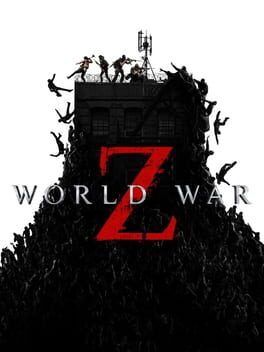
Rick, Daryl and a new breed of Spiked Walkers crash into Saber’s co-op shooter in a three-episode crossover campaign. Here’s how the iconic TV locations, fresh mechanics and returning voice cast could extend World War Z’s life well into 2026.
World War Z is not the newest co-op zombie game in town, but Saber Interactive clearly is not ready to let its swarm tech shuffle off just yet. The newly announced crossover campaign with AMC’s The Walking Dead might be the studio’s boldest pitch to keep players invested into 2026, blending the series’ high-speed Zeke hordes with some of television’s most recognizable survivors and locations.
Revisiting The Walking Dead’s Greatest Hits
The crossover is built as a self-contained, three-episode story that hops across the TV show’s timeline via locations every fan will recognize. Instead of a loose “inspired by” tie-in, Saber is deliberately sending squads through Grady Memorial Hospital, the Prison and the Alexandria Safe Zone, all restaged under World War Z’s rules.
Grady Memorial looks poised to be the most claustrophobic of the three. In the show, it was already a pressure cooker of narrow corridors and power struggles. As a World War Z map, that translates naturally to flashlight-lit hospital wings, tight stairwells and parking decks where the series’ signature swarms can pile up in horrific layers. Expect defenses to focus on funneling zekes through choke points rather than sprawling killzones.
The Prison is the opposite. Its wide yards and layered walls practically beg for holdout sequences. World War Z’s AI director excels at throwing vertical waves of undead at fortifications, and a prison yard lined with improvised turrets and barbed wire feels like the perfect canvas. Watchtowers become key sniper nests, while the inner cell blocks should allow for brutal room-to-room sweeps that echo the show’s fall-of-the-prison chaos.
Alexandria, meanwhile, gives Saber an excuse to showcase a more lived-in, domestic apocalypse. The show’s cul-de-sacs and townhouses are ideal for multi-lane defense missions, where zekes crash over the walls and force squads to constantly rotate between breached gates and collapsing rooftops. If Saber leans into environmental storytelling, Alexandria could also act as a quiet epilogue hub between waves, contrasting its almost-normal streets with the industrial ruin of the core World War Z campaign.
All three locations are still being fed by World War Z’s fast, insect-like hordes rather than the shuffling walkers of the show. It is a conscious clash of tones that lets the DLC feel different from AMC’s other game adaptations. These are not methodical stealth levels about threading between small groups of undead, but arenas that weaponize familiarity. You know exactly where you are, which makes it even more disorienting when the world suddenly erupts into a thousand-screaming-zeke pileup.
Spiked Walkers And Hybrid Combat
The big mechanical twist is the Spiked Walker, a new enemy type that tries to meet The Walking Dead halfway. Visually they read closer to the show’s decayed, improvised-weapon aesthetic than to World War Z’s relatively clean special infected, but their rules are pure systems design.
Spiked Walkers shrug off melee damage as long as they are standing, forcing squads out of the usual “bat first, bullets later” rhythm that defines a lot of low-difficulty World War Z runs. To crack them open, you first have to knock them to the ground, typically with explosives, heavy weapons, or coordinated staggering shots. For a brief window while they are down, melee becomes viable. Once they get up again, that window slams shut.
This one wrinkle has several knock-on effects. Melee-focused builds, which are extremely strong in the base game against regular zekes, now need to travel with teammates specced into crowd control or high-stagger firearms. Classes that bring impact grenades or shotgun knockback become more valuable, and the timing of when the team rushes in to finish a cluster of Spiked Walkers suddenly matters as much as positioning.
In tight spaces like Grady Memorial’s corridors, that vulnerability window can feel like a risk-reward mini game. Do you push forward to capitalize on a toppled Spiked Walker pile, or fall back to avoid being caught flatfooted when they stand? On higher difficulties, where friendly fire and resource scarcity punish mistakes, Spiked Walkers could be the threat that stops veteran teams from sleepwalking through repeat runs.
What keeps this grounded in The Walking Dead fantasy is the cast. Four of the show’s most iconic survivors are playable: Rick Grimes, Daryl Dixon, Michonne and Negan. This is more than a cosmetic pack. Each character brings their signature weaponry and attitude into the campaign.
Michonne’s dual katanas are the most obvious fit with World War Z’s melee-heavy meta, slicing through smaller clusters of zekes with brutal efficiency. Daryl’s crossbow operates at the opposite end of the spectrum, a precision tool suitable for picking priority targets in the middle of swarms. Negan’s bat Lucille finally has a full co-op playground to terrorize, while Rick’s revolver channels the tight, high-damage sidearm fantasy that has arguably been missing from the game’s standard arsenals.
All four are not locked to their iconic tools forever. You can still grab heavier firearms from the field and lean into World War Z’s traditional class synergies. The point is to let you start from an immediately recognizable place, then gradually layer on builds until it feels like your version of Daryl or Michonne rather than a rigid canonical loadout.
Star Power: Rick And Daryl In Your Ear
The detail that quietly elevates this DLC from generic licensing play is the voice work. Andrew Lincoln and Norman Reedus are both confirmed to reprise their roles as Rick and Daryl. That means new barks for horde triggers, revived allies and big set-piece moments, not a recycle of old TV audio.
For long-time fans of the show, this is the sort of connective tissue earlier Walking Dead games often lacked. Hearing Rick shout over the chaos during a last-stand defense or Daryl mutter a dry one-liner about yet another blown escape route goes a long way toward making the crossover feel like an event rather than a costume party. It is also a smart way to cut through some of World War Z’s relative anonymity on the character side. The base game’s survivors are functional but rarely memorable. Dropping two of television’s most recognizable voices into the mix immediately gives squads a stronger sense of identity.
The presence of Lincoln and Reedus also suggests that Saber is investing more than the bare minimum here. VO sessions are expensive. If the studio is spending on performance capture, it is probably not planning to abandon the game six months later. In a crowded co-op market where many shooters peak on launch weekend and then vanish, that sort of commitment could reassure returning players who drifted away after earlier updates.
Can This Keep World War Z Alive In 2026?
The obvious question is whether a three-episode DLC, no matter how nostalgic, can meaningfully extend World War Z’s lifespan into 2026. The answer depends on who you are.
For lapsed players, this is almost an ideal re-entry point. The campaign is self-contained and instantly legible if you ever watched the show. You do not need to remember every perk tree or weapon tier to appreciate a trip through the Prison or Alexandria. World War Z’s core shooting still feels solid, particularly in co-op, and the spectacle of its swarms remains one of the genre’s best tricks. Dropping Rick and Daryl into that chaos is exactly the kind of hook that can pull a group of friends back for a weekend.
For the hardcore, the calculus is slightly different. They need depth, not just familiarity. Spiked Walkers look like they can at least tweak how optimal squads approach melee, and the new locations could provide fresh speedrun routes and difficulty spikes. If Saber layers these additions into the existing class and challenge systems, with unique modifiers or weekly tasks tied to the Walking Dead episodes, the DLC could earn a spot in the long-term rotation rather than acting as a one-and-done story binge.
The longer tail will ultimately hinge on what ships around the campaign. If the crossover arrives in January 2026 as a capstone to a larger update, with balance passes, new challenge modes, or even cross-progression improvements across platforms, it could buy World War Z another year of relevance. If it lands as a mostly isolated three-chapter adventure, the player spike will likely be intense but short-lived.
There is also the question of overlap. By 2026, the co-op zombie field will include newer competitors and a still-growing catalog of live-service shooters fighting for attention. What World War Z has going for it is its distinct swarm tech and the weight of The Walking Dead brand. Marrying those two strengths in a focused DLC is a smart bet. It will not reinvent the game, but it could give it a clear identity again at a moment when “generic zombie co-op” is a crowded shelf.
Right now, the crossover looks like savvy fan service with just enough mechanical bite to matter. If Saber follows through with strong difficulty tuning and integrates the new threats across the wider game, World War Z’s run is not over yet. In 2026, you might still be hearing Rick Grimes yell at you to get back on the wall as a few hundred zekes crash through your carefully laid defenses, and for this series, that is exactly where it belongs.