
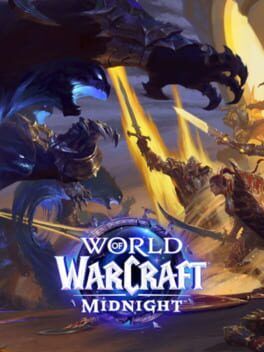
With World of Warcraft: Midnight now live for everyone, we look at how housing, the new Quel’Thalas zones, and the Worldsoul Saga story are landing with the community, plus a practical guide for lapsed players thinking about resubbing this week.
World of Warcraft: Midnight is no longer something people are just theorycrafting off previews and early access. The gates are open, the Sunwell is under siege, and Azeroth’s long-promised housing is finally in the hands of the full playerbase.
The launch window has been remarkably stable so far according to player reports and official trackers, with queues limited mostly to peak servers and some expected realm sharding quirks. With that out of the way, the real conversation has settled on three things: how housing actually feels to use at scale, whether the reworked Quel’Thalas hits the right nostalgic notes, and if the Worldsoul Saga is finally delivering the “soft reboot” Blizzard has been hinting at since The War Within.
For anyone who has not set foot in Azeroth since Shadowlands or earlier, Midnight is already reshaping the social fabric of the game in ways that go beyond another borrowed-power system. Here is how launch night has played out and what you should know if you are eyeing a resub this week.
Housing at launch: neighborhoods, not dollhouses
Housing was the headline for Midnight and it is already the flashpoint of community discussion now that everyone can get in. The core pitch from Blizzard was simple: every account gets a home, there are no lotteries or maintenance timers, and it is shared across your Warband. In practice, the most surprising part at launch is how strongly the neighborhood system is driving organic social play.
Players are discovering that housing is less about perfect solo showcases and more about who you live next to. Guilds and friend groups are forming shared neighborhoods, claiming adjacent plots and using them as persistent hubs. On live realms that has turned into ad-hoc housing districts where recruitment, transmog show-and-tells, and even impromptu music events are happening without the pressure of mythic timers or rating ladders.
Decorating itself has impressed many early adopters. The system takes clear cues from titles like Final Fantasy XIV and WildStar, but the aesthetics are very much rooted in Warcraft. Props snap to surfaces where appropriate but also support fine-grain positioning for players who want to kitbash their own furniture, wall art, or custom bars and stages. Blood Elf, troll, human, and orc style sets are immediately popular, with players stitching together mixed-faction looks that would never fit cleanly in a major city.
The trade-off is that Midnight’s first version of housing still feels like a 1.0 in some places. Community feedback on launch night has homed in on the editing controls, which can feel clunky when swapping quickly between moving props and controlling your character. Some reviewers who spent the early access period decorating note that keybinds and mode switching are the roughest edges, and that high-precision work takes more patience than it should.
Despite that, sentiment around housing is largely positive. For the broader community, just having a permanent, customizable space that persists across your characters is a huge psychological shift. For returning players, it is an immediate long-term project that does not require raiding or pushing Mythic+ to feel meaningful. If you are coming back this week, expect to spend your first hours not only catching up on gear, but also choosing a neighborhood and figuring out which decor themes match the characters you actually play now.
Quel’Thalas reborn: early reactions to Midnight’s new zones
The other talking point across forums and social feeds is the new and remade zones in northern Eastern Kingdoms. Midnight’s story brings players back to Quel’Thalas, finally reworking Silvermoon City, Eversong Woods, Ghostlands, and surrounding regions for the modern game while adding new spaces like Harandar and the Void-torn front lines.
Visually and structurally, the reaction has been strong. Veteran Blood Elf mains are describing the new Silvermoon as the version they had in their heads since Burning Crusade: a city that finally feels like a full capital rather than a beautiful cul-de-sac. The updated geometry and skyboxes, and the way the Sunwell’s light and Void corruption play off each other, are repeatedly cited as standouts on launch streams.
Questing through the new zones on live servers confirms what early-access reviews suggested. The pacing is tighter than most past expansions, with fewer filler objectives and more emphasis on narrative vignettes. Players hop between the pristine, almost overexposed light of central Quel’Thalas and the creeping, oil-slick aesthetic of Void incursions. That tonal whiplash is intentional, and so far it is landing better than the abstract afterlife themes of Shadowlands did.
The new hub layouts are also being praised for practicality. Flight points, profession vendors, and endgame NPCs are clustered in ways that respect current player behavior, making these zones feel like viable alternatives to Orgrimmar and Stormwind for your day-to-day routines. For those returning, it is a bit like revisiting an old neighborhood only to find that the streets have been modernized but the landmarks are still there.
There are some criticisms. Certain leveling bottlenecks have popped up on high-pop realms where multiple story instancing phases collide. A few side quests have bugged out when too many players interact with shared objects. Yet these are typical launch wrinkles rather than showstoppers, and hotfixes are already rolling out.
Worldsoul Saga check-in: does Midnight’s story actually hit?
Narratively, Midnight is the second act of the Worldsoul Saga, which is meant to carry World of Warcraft toward a long-foreshadowed climax. The War Within did the subterranean, cosmic groundwork; Midnight is the surface-level, emotionally charged follow-up that pushes the conflict between Light, Void, and Azeroth’s soul into a more grounded space.
Early reactions from launch-night story runners suggest that Blizzard has learned from the criticism of Shadowlands. Characters are rooted in physical locations that matter to long-time players, and dialog is more focused on personal stakes rather than cosmic jargon. The assault on the Sunwell and the fate of Quel’Thalas give even fairly standard quest beats more weight than “kill ten things” suggests on paper.
The expansion is also leaning heavily into themes of homecoming and loss. For Blood Elves and Forsaken in particular, the arcs feel like delayed reckonings with events that date back to Warcraft III and early WoW. The teased reappearance of key lore figures within this context is already fueling intense speculation threads, but the core feedback is about tone: players are relieved that the story feels like Warcraft again, not an abstract pantheon drama.
Whether Midnight ultimately sticks the landing will depend on later patches and how it hands off to the third Worldsoul expansion, The Last Titan. For now the campaign beats available at launch are being received as some of the strongest since Legion, helped by the fact that they are intertwined with a beloved location rather than a brand-new cosmic layer.
Systems shake-up: UI, addons, and the feel of modern WoW
Alongside headline features, Midnight arrives as part of a broader technical and systemic revision that started during Dragonflight and accelerated across The War Within. The new default UI is finally robust enough that some veteran players are ditching years-old addon setups. More significantly, Blizzard’s tightened policies on automation and combat guidance have already claimed high-profile casualties like WeakAuras in its previous form.
For launch-night groups, the immediate effect is subtle but real. Mythic dungeon pugs and early raid testing are filled with players relying far more on in-game telegraphs, built-in nameplates, and default alerts. There are still addons, but the arms race of increasingly elaborate weak aura packages has cooled. New and returning players are reporting that they feel less pressured to install a dozen third-party tools just to avoid being yelled at in group content.
Not everyone is happy. Power users who loved intricate boss modules and rotation helpers feel constrained, and some are already hunting for replacement tools that skirt the edges of the new rules. That tension is unlikely to resolve quickly. Still, the overall response from more casual and lapsed players has been positive, and it dovetails neatly with housing and neighborhoods, which are inherently low-pressure systems.
If you have not played since the era when addons were practically mandatory, expect Midnight-era WoW to feel more like a complete package on first install. You can still push deep into optimization, but you are no longer starting from a blank UI canvas.
What returning players should know before resubbing
If you are thinking about jumping back in this week, Midnight’s launch state is already answering some of the biggest “is it worth it?” questions.
First, the on-ramp is much smoother than it used to be. The Warband system pulls your alts into a shared progression pool for many unlocks, cosmetics, and housing access. Hitting the new level cap in Midnight does not require you to replay old storylines unless you want to. Story recaps for the Worldsoul Saga are baked into the campaign flow, so you can catch up on key beats without watching external videos.
Second, housing is not gated behind hardcore content. You can claim your first home right away if you own Midnight, start a neighborhood with friends, and begin decorating using items earned from questing, profession work, completion of Delves, and light group play. There is no upkeep currency or risk of losing your plot if you take another break down the line, which is a key difference from some other MMOs.
Third, Midnight’s Quel’Thalas zones are deliberately designed to double as both leveling paths and endgame hubs. That means you can spend your first sessions simply exploring, doing campaign quests, and unlocking local reputation tracks without feeling like you are “wasting” time by not diving straight into raids or Mythic+. The new Prey system and early Delves offer bite-sized content that respects limited play windows.
Finally, socially, Azeroth feels unusually welcoming right now. Neighborhood recruitment is everywhere, returning player guilds are spinning up on most major realms, and cross-faction grouping is fully normalized. For many who drifted away during more fragmented expansions, Midnight’s launch has the same “everyone is back in one place” energy that people still remember from Legion’s early weeks.
If any part of your attachment to WoW was bound up in Blood Elf aesthetics, Sunwell-era story threads, or the fantasy of carving out a literal home in Azeroth, Midnight’s full launch is delivering on those fronts already. The systems are not flawless, and some edges of housing and UI integration still need sanding down, but the overall community mood around launch night is clear: this feels less like a routine expansion and more like the start of WoW’s late-era reinvention.
For lapsed players wondering whether now is the moment to return, Midnight offers both a nostalgia hit and a genuinely new way to live in Azeroth instead of just passing through it between queues.