
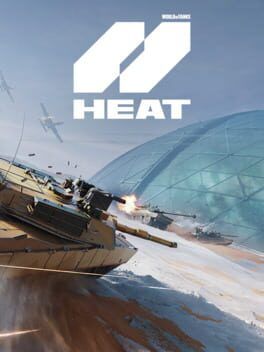

Wargaming’s World of Tanks: HEAT is turning the long‑running armor sim into a hero-driven, crossplay-ready arcade shooter. Here is how its agents, abilities and faster match structure could win over players who never touched a tech tree.
A new kind of World of Tanks
World of Tanks: HEAT is not trying to replace the original client. Instead it is Wargaming’s attempt to turn a decade of meticulous armor sim know‑how into something that feels closer to a hero shooter with treads. Built as a free-to-play spinoff and launching May 26 on PC, PS5, Xbox Series X|S, Steam Deck and GeForce NOW, HEAT leans on fast, readable action, smaller team sizes and a cast of agents and hero tanks rather than tech trees and shell spreadsheets.
For lapsed or curious players who bounced off the main game’s slow pacing, HEAT is positioned as the easy way in. For veterans it is a side dish that trades authenticity and long-term grinding for short, tactical firefights and a cleaner progression track that follows you wherever you play.
Hero agents, not nameless tankers
The biggest philosophical shift is the move to a hero-driven structure. In HEAT you are not just a chassis and gun but an agent, a named character with their own background, role and active abilities. Each agent pairs with specialized tanks that emphasize their strengths, so picking your lineup starts to feel closer to building a hero shooter comp than assembling a historically accurate garage.
Abilities are designed to be instantly readable. Instead of juggling obscure shell types and armor angling math, you are thinking about when to trigger a radar pulse to light up a flank, when to drop a deployable shield to anchor a push, or when to commit a mobility or damage buff to secure an objective. That does not mean the game is shallow, but its tactical depth is expressed through cooldowns, synergies and map control more than armor penetration charts.
Because each agent has a clear battlefield role, team compositions matter in ways that will feel familiar to Overwatch or Apex Legends players. You will want bruiser tanks on the front line, a recon agent to keep sightlines live and at least one support-flavored toolkit to keep the team in the fight. It is a structure built to be legible to shooter fans who never once cared about the angling on a Tiger’s turret.
Faster, more arcade‑style tank fights
If classic World of Tanks is a deliberate 15v15 duel of vision cones and slow pushes, HEAT is pitched as its high tempo cousin. Matches are 10v10 and built around compact, objective-driven arenas that get you into combat quickly. Acceleration and traverse speeds are higher and handling is noticeably more forgiving. The idea is that you should be firing and repositioning within seconds of spawning rather than crawling to the first engagement.
The gunplay sits in an approachable middle ground. There is still lead, drop and weak-point targeting, but the numbers are tuned to keep you firing rather than waiting on long reload cycles. Cooldown-based abilities layer on top of raw gun skill so even a player with average aim can turn a fight with smart utility usage.
This is where HEAT has the best shot at a new audience. Fans of arcade vehicle games and hero shooters will find something that feels immediately graspable. The time-to-fun is dramatically shorter than learning the sightlines, armor models and econ layer of the main game. And because tanks and agents are designed for silhouettes and abilities to read clearly at a glance, spectating or jumping into a friend’s lobby should feel less intimidating.
Crossplay and cross‑progression from day one
Wargaming is treating HEAT as a platform, not a side project. At launch it will be available on Wargaming’s own PC launcher, Steam, PS5, Xbox Series X|S, Steam Deck and via GeForce NOW, all tied together by full cross-platform matchmaking and cross-progression. That means a single profile, progression track and unlock pool regardless of where you play.
In practice this solves one of the biggest adoption problems for any free-to-play competitive title. You can start on console, continue on a laptop through the cloud and then settle in at a desktop later without worrying that your purchases or progress are siloed. For groups of friends scattered across hardware ecosystems this makes HEAT much easier to pitch. There is no wrong platform to pick because every version plays together.
For Wargaming, it is also a signal that HEAT is supposed to be the most accessible on-ramp into the World of Tanks universe. Getting rid of progression friction and hardware walls is table stakes if you want to chase the broader hero shooter audience that expects to invite anyone from any platform at any time.
Can HEAT reach beyond the core WoT crowd?
The way HEAT is structured suggests Wargaming understands that its core sim audience is both a strength and a ceiling. To push beyond that it needs something that feels less like a hobby and more like a pick‑up‑and‑play multiplayer shooter. Hero agents, compressed match times, smaller teams and low-friction crossplay are all in service of that.
For players who never clicked with the original, the biggest selling points are clarity and commitment. You do not need to study penetration charts to understand when to pop an ability or where to push on a clearly signposted objective. Matches are short enough to fit into a lunch break instead of an evening. And because the game is free to play with universal cross-progression, checking it out carries little risk.
The open question is whether HEAT can keep both worlds happy. Some World of Tanks lifers may find the tone too arcade and the heroes too loud compared to the grounded atmosphere they love. At the same time, hero shooter veterans are a demanding audience, used to tight balance patches, rich cosmetics and evolving metas. HEAT will need steady post-launch support and a strong initial roster of agents and tanks to avoid feeling like a novelty.
A promising pivot for the franchise
Taken as a pre-launch snapshot, World of Tanks: HEAT looks like the most aggressive attempt Wargaming has made to modernize its flagship formula. Hero agents give the game a cast to rally around, faster arcade-style combat makes it immediately playable for shooter fans and full crossplay and cross-progression strip away the traditional friction of where and how you play.
If Wargaming can nail post-launch support and keep both veterans and newcomers in the same queue, HEAT has a real shot at being more than a curiosity. It could be the version of World of Tanks you introduce to the friend who has never cared about armor thickness but absolutely cares about landing clutch ultimates on a contested point.