
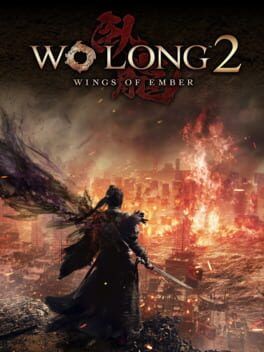
Breaking down Team Ninja’s Wo Long 2: Wings of Ember reveal, its sharper combat focus, a shifting Three Kingdoms backdrop, and how the sequel reflects everything learned from Wo Long: Fallen Dynasty’s updates and DLC.
Wo Long 2: Wings of Ember did not arrive quietly. Team Ninja used the Xbox Games Showcase 2026 to drop a surprise reveal for the sequel to Wo Long: Fallen Dynasty, complete with a mix of cinematic flair and real combat slices that made it clear this is more than a quick follow up. With an early 2027 launch targeting PS5, Xbox Series X|S, PC and Nintendo’s next system, Wings of Ember is being pitched as a genuine second shot at the formula that turned Wo Long into a 5‑million‑player success story.
From the first trailer and early details, three things stand out. Combat is evolving rather than being replaced, the Three Kingdoms setting is shifting to larger, more chaotic fronts, and the structure looks shaped by everything Team Ninja went through with Fallen Dynasty’s post launch patches and DLC.
A reveal that leans into spectacle and scale
The reveal trailer wastes little time showing what has changed. The first game’s claustrophobic forts and demon nests give way to battlefields crawling with soldiers, siege engines and towering beasts. Eurogamer and other outlets point to large scale clashes as a core selling point, and the footage backs that up: cavalry charges cutting across the screen, ranks of troops colliding while the player character weaves between them, and a fiery phoenix presence that frames the whole pitch.
That phoenix, likely a new Divine Beast, is the visual anchor of Wings of Ember. Where Fallen Dynasty’s marketing leaned on dark, damp demon hunts, Wo Long 2 pushes a more blazing, war torn palette. It still looks grim, but it is grim at the scale of nations rather than small strike teams.
Underneath the spectacle, the trailer makes a point of showing actual systems in motion. You see deflections that look very clearly tied to the familiar spirit gauge, quick weapon swaps in the middle of combos, and brief flashes of what appear to be aerial juggles, suggesting Team Ninja wants to nudge Wo Long a little closer to its more expressive action roots without losing the strict rhythm that defined the original.
Expected combat refinements: polishing deflections, morale and weapon expression
Team Ninja is not throwing out Wo Long’s core. Every description of Wings of Ember repeats the same phrase about “evolved Chinese martial arts” and “evolved action combat,” which reads less like a reboot and more like a deliberate second draft.
The first Wo Long lived and died on deflection. Parrying enemy strings to turn the tide, build spirit and break posture was exhilarating, but many players bounced off the narrow timing and the way bosses could erase morale progress with a couple of mistakes. Post launch patches already softened some of those edges with better hit feedback, guard options and build diversity. Expect Wo Long 2 to treat those patches as baseline.
The trailer hints at several likely refinements.
The first is more readable, layered defense. You can spot moments where the player shifts from a traditional guard stance into a brighter, more pronounced parry flash, then rolls into a counter technique. That implies clearer separation between blocking, deflecting and spending spirit on special counters. If Fallen Dynasty’s early game felt binary, Wings of Ember looks set to add more gradations of risk and reward.
Second is weapon identity. One of the big DLC additions to the first game was new weapon types like the cestus and whip, both of which dramatically changed the rhythm of play. Showing multiple weapon archetypes in the reveal, including heavier blades and more agile polearms, is a quiet promise that those learnings are feeding into a richer base roster this time. It would not be surprising if every weapon tree lands closer to Nioh 2’s level of depth, where entire playstyles grow from a single choice.
Finally, morale. The morale system in Wo Long was brilliant in theory, uneven in practice. It encouraged aggressive exploration and rewarded staying alive, but could feel punishing when a single surprise attack stripped your advantage. The sequel’s focus on larger battlefields and more persistent skirmishes suggests morale can be tuned around fronts rather than just individual rooms, perhaps with more mid mission checkpoints, flexible ways to reclaim lost ranks, or party mechanics that stabilize your momentum.
If Team Ninja wants Wings of Ember to hold onto its difficulty while easing its reputation as prickly, rebalancing morale and adding clearer defensive layers will be where the work happens.
The Three Kingdoms setting grows up
Wo Long: Fallen Dynasty approached the Three Kingdoms as a sequence of haunted vignettes. Famous battles appeared as twisted stages whose historical context was often secondary to whoever the next demon infused warlord happened to be. It was effective for a first shot at the era, but it left narrative and worldbuilding potential on the table.
Wings of Ember looks ready to adjust that balance. Descriptions across the reveal coverage emphasize “battlefields of the Three Kingdoms overrun by monstrous demons” and “renowned heroes who left their mark on history.” The order there matters. The sequel is foregrounding the battles and the heroes, then letting the demons intrude, instead of the other way around.
The presence of huge armies, cavalry and siege equipment in the trailer suggests more of the macro war will be visible moment to moment. That opens the door for scenarios that feel closer to Musou scale but filtered through Wo Long’s demanding combat, where you might be carving a path for a famous officer, defending a watchpoint, or dueling a corrupted general while the wider clash rages in the background.
Thematically, the phoenix imagery ties in well with the idea of a war torn land trying to be reborn through fire. Fallen Dynasty toyed with the consequences of alchemy and demonic corruption on the fabric of the Three Kingdoms timeline. Wings of Ember can push that further, showing the cost of those supernatural shortcuts on ordinary soldiers, villages and the land itself.
For fans of Romance of the Three Kingdoms and Dynasty Warriors, the promise is clear. This is still not a strict historical retelling, but it is drifting a little closer to the version of the era where the politics and personalities have room to breathe between boss fights.
Lessons from Fallen Dynasty’s post launch and DLC
Fallen Dynasty had a busy life after release. Across multiple patches and three major DLC packs, Team Ninja slowly transformed a divisive launch into a more welcoming, flexible action RPG. That history matters a lot when you look at how Wings of Ember is positioned.
First came basic feel adjustments. Early updates improved hit feedback, camera behavior and input buffering, then introduced broader balance passes for both enemies and player builds. Later patches leaned into endgame depth with higher difficulties, more loot options and expanded upgrade paths. By the time the Complete Edition arrived with the Thousand Mile Journey endgame layer, Wo Long was a meaningfully better game than it had been on day one.
The DLC itself was a testing ground. Battle of Zhongyuan, Conqueror of Jiangdong and Upheaval in Jingxiang each added new characters, stages, Divine Beasts and, crucially, weapons. By the third pack, you could feel Team Ninja gravitating toward the elements that players actually loved: expressive weapon types, more granular build crafting and challenge content that hit hard without feeling cheap.
Wings of Ember’s marketing language about “evolved action” and “new epic battlefields” reflects those priorities. Instead of promising a radically different sequel, Team Ninja is signaling a consolidation of those DLC era improvements into the foundation. A richer default weapon roster, more robust endgame structures and better tuned difficulty curves should all be assumed starting points now, not patch notes.
Just as important, Fallen Dynasty’s cross platform roll out and Game Pass presence taught Koei Tecmo and Team Ninja how powerful a wide audience can be for a hardcore action game. Wo Long now has a built in base of players who tried it because of subscription access or later sales, then stuck around through the patches and DLC. Wings of Ember, launching again on Game Pass with day one parity across platforms, will be built in the shadow of that feedback cycle rather than discovering it months after release.
Where Wo Long 2: Wings of Ember fits in Team Ninja’s lineage
Viewed in isolation, Wo Long 2 looks like another stylish action RPG with a flashy reveal trailer. Framed within Team Ninja’s broader history, it resembles something more specific. This could be Wo Long’s Nioh 2 moment, the entry where the team takes a strong but uneven debut and quietly turns it into a definitive version.
Nioh 2 refined stances, expanded weapon diversity and rethought enemy design without discarding what made Nioh work. Wings of Ember appears set to do the same for Wo Long. The sequel keeps the Three Kingdoms fantasy, the tight parry driven exchanges and the co op focus, but it is being built by a studio that has just spent years patching, extending and listening to a live game in that exact mold.
Whether the final product reaches that Nioh 2 tier of reinvention will depend on the smallest of details: input timing windows, checkpoint density, co op matchmaking and build flexibility. None of those are things a reveal trailer can fully answer. That said, the direction is promising. More armies and large scale warfare, a more confident grip on the Three Kingdoms material, and combat that sharpens Wo Long’s strengths instead of sanding them down is exactly what a sequel like this should aim for.
With an early 2027 window, Team Ninja has time to show if Wings of Ember can rise from Fallen Dynasty’s embers and become the definitive expression of this demon haunted Three Kingdoms saga.