
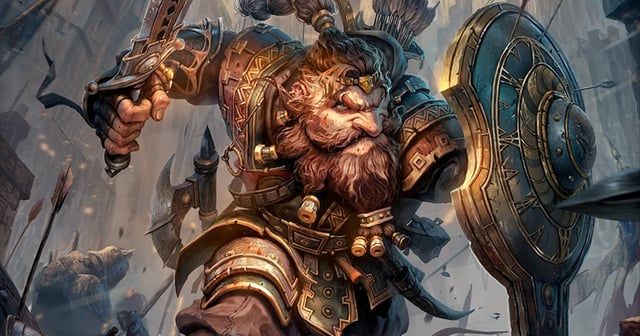

Dungeons & Dragons and Magic: The Gathering workers are joining United Wizards of the Coast and asking Hasbro for a contract with enforceable limits on generative AI.
Image: reddit.com
D&D and Magic workers bring the AI fight to Hasbro’s biggest game brands
Developers, designers, artists, writers, producers, and other workers behind Dungeons & Dragons, D&D Beyond, Magic: The Gathering, Duel Masters, and related Wizards of the Coast projects have announced their intent to join United Wizards of the Coast, the CWA-affiliated union first organized by Magic: The Gathering Arena workers earlier this year. The immediate pressure point is a recognition deadline: according to TechRaptor, Graphic Policy, IGN, and Kotaku, the expanded Wizards of the Coast union is asking Wizards and parent company Hasbro to voluntarily recognize the unit by October 13.
The most volatile demand is not only about pay or remote work, although those are part of the platform. United Wizards of the Coast is explicitly demanding protections against generative AI. In the petition quoted by IGN and 7MMO, the union says leadership has pushed for “adoption of LLMs and generative AI” without regard for team desires, and says workers need “a robust and enforceable AI policy that aligns with our goals and values.”
That language turns the Wizards generative AI debate into a labor issue rather than a branding dispute. Dungeons & Dragons and Magic are both built on repeat creative production: rules text, worldbuilding, card mechanics, illustrations, digital implementation, organized play infrastructure, and publishing schedules that must land cleanly across tabletop and online communities. The union’s argument is that decisions about large language models and generative tools should not be imposed from above as a productivity patch without worker consent, contractual limits, or a clear definition of where human authorship remains protected.
The expanded union builds on Arena’s earlier election win
United Wizards of the Coast did not begin with the new Dungeons & Dragons union and Magic The Gathering union push. The first unit came from Magic: The Gathering Arena workers, who announced their campaign in April and later won a union election. Graphic Policy reported that the Arena vote passed 79 to 16 in June. IGN also notes that the Arena team won its election after Wizards did not voluntarily recognize that earlier unit.
That history matters because the October 13 recognition request arrives with a precedent. If Hasbro and Wizards voluntarily recognize the expanded unit, bargaining can move toward a contract without another election. If they do not, IGN reports that the workers would need to file with the National Labor Relations Board and win another election. Kotaku writes that voluntary recognition appears unlikely in light of Wizards leadership previously sending letters to Arena developers asking them to carefully consider whether they wanted a union.
There is a small timing wrinkle in the available reports. TechRaptor, Kotaku, and Graphic Policy all published on October 6 and describe the Dungeons & Dragons and Studio X workers announcing their intent to unionize, with October 13 as the company deadline. IGN’s article is also updated October 6, but its text says the expansion occurs “on October 8.” The shared confirmed point across the reports is the October 13 voluntary-recognition deadline, not that Hasbro has recognized the expanded unit.
AI protections are being framed as contract language, not a vague preference
The AI demand is sharper than a general statement of discomfort with new tools. In the Dungeons & Dragons effort quoted by Graphic Policy, workers say pressure has increased from Hasbro to adopt LLMs and generative AI tools “in various aspects of our work.” That same quoted statement says Wizards of the Coast has resisted those efforts and kept AI out of its games, which the workers call good. Their stated goal is to preserve that stance through a union contract that ensures the games “will always be made by people for people.”
That creates an important distinction. The union is not only alleging that AI pressure exists. It is saying that whatever resistance has happened inside Wizards so far is not enough unless it becomes enforceable. A company policy can change with leadership priorities, cost targets, or a new production schedule. A contract provision, if won in bargaining, would define the rule set workers and management have to play under.
For strategy-minded readers, that is the real meta shift. In live games and tabletop publishing, production systems determine outcomes long before players see a set, a sourcebook, or a digital update. If generative AI is treated as a management tool to speed ideation, text drafting, visual development, customer support, or internal documentation, it can alter headcount planning, credit, compensation, training expectations, and quality control. United Wizards of the Coast is trying to move that debate from informal assurances into the binding layer where workload, job security, and creative ownership are negotiated.
Creative ownership is part of the same fight over control of authorship
The union’s AI language sits beside another creative-rights demand: ownership of work made outside the office. IGN reports that United Wizards of the Coast repeated a demand from its April announcement, saying Hasbro may currently claim ownership over creative work made by employees in their free time, even with their own resources. The new petition quoted by IGN says Wizards can claim ownership over any intellectual property created by employees during their tenure, including works unrelated to Wizards IP, and argues that free-time work should belong to workers.
That demand is especially relevant at a company whose employees often come from the same creative ecosystems that feed Dungeons & Dragons and Magic: freelance design, home campaigns, indie games, illustration, writing, card evaluation, and community-led play. The sources do not provide the exact employment-contract language at issue, so the scope of the company’s claimed rights cannot be independently evaluated from the provided material. What is clear is that the union sees outside-work ownership and AI adoption as connected pressures around the same core question: who controls creative labor and its output?
For D&D and Magic teams, authorship has direct product value. A D&D book is judged on rules clarity, adventure utility, tone, lore, and trust that the table can make the material sing. A Magic set is judged on mechanical identity, limited and constructed balance, card names, art direction, flavor, and whether the release earns confidence from collectors and competitive players. If workers fear that their personal creative work can be claimed, or that generative systems can be pushed into pipelines without guardrails, the incentive structure around experimentation changes.
The worker platform goes beyond AI, but AI is where the business tension is clearest
Graphic Policy summarizes the broader United Wizards of the Coast platform as demands for wages that reflect worker contributions, defined career progression, job security during industry instability, accessible healthcare, sustainable workloads, remote and hybrid work protections, AI protections, and ownership of work created outside the office. Kotaku similarly reports that the group is seeking layoff protections, better wages, protections against AI, remote work protections, and ownership of work made outside Wizards offices.
Those issues intersect rather than compete. If a publisher pursues faster output while holding headcount flat, workers feel that as workload. If layoffs are possible during profitable or high-output periods, workers read automation proposals differently. If remote-work policy is unstable, employees face cost-of-living, commute, and childcare pressure. The Dungeons & Dragons letter quoted by Graphic Policy specifically mentions fear of sudden job loss, uncertainty created by return-to-office policy, and crunch that varies by team and project.
TechRaptor notes that Hasbro CEO Chris Cocks has been vocal in support of AI integration, while the union materials quoted by Graphic Policy say Wizards itself has kept AI out of its games so far. That is the core tension in the record provided: workers describe pressure from Hasbro, credit Wizards for resisting at least some of it, and still ask both Wizards and Hasbro for a binding policy. The practical question now is whether management treats AI as an executive efficiency lever or as a bargained workplace condition.
For players, the near-term question is recognition, not a product change
Nothing in the provided sources announces a change to Dungeons & Dragons books, Magic: The Gathering cards, D&D Beyond, Arena, Duel Masters, release dates, prices, platforms, or product availability. Readers looking for an immediate gameplay consequence should be careful not to overread the labor news. The concrete next step is procedural: Hasbro and Wizards have until October 13, according to the reports, to voluntarily recognize the expanded United Wizards of the Coast unit.
If the company recognizes the union, attention shifts to bargaining, where AI rules, wages, layoffs, remote work, workload, healthcare, career paths, and outside-work ownership would be negotiated. If it refuses, the path likely moves through the NLRB process and another election, as IGN reports. Arena workers have already shown that such a route can succeed, but it adds time and conflict before contract talks reach the substance players care about.
The long-term stakes are easier to see than the short-term schedule. Dungeons & Dragons and Magic: The Gathering depend on player trust that the worlds, rules, and cards are built by people who understand the games’ histories and communities. United Wizards of the Coast is drawing a line around that labor before generative AI becomes normalized inside the pipeline. Whether Hasbro accepts that line voluntarily, contests it, or eventually bargains over it will shape how one of tabletop gaming’s most important creative shops defines human-made work in the next production cycle.