
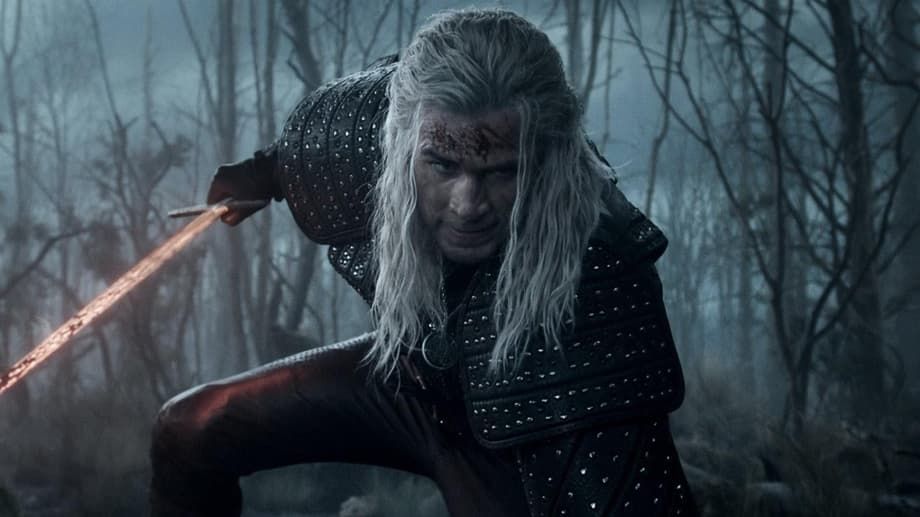

Netflix has not publicly announced a new date, but multiple reports now point to The Witcher season 5 moving from its expected 2026 window into 2027.
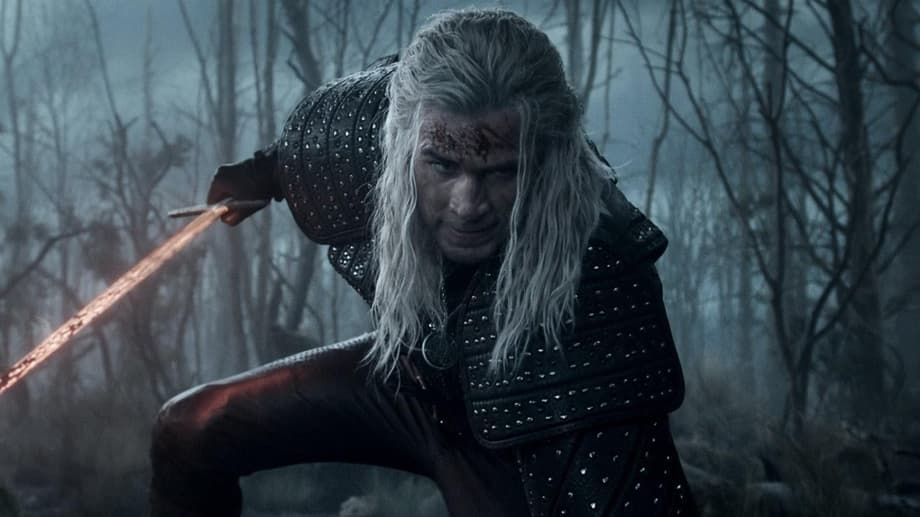
Image: comicbookmovie.com
A finished finale now points to 2027
The fifth and final season of Netflix’s The Witcher is now expected to release in 2027 rather than 2026, according to reporting from What’s on Netflix that has since been cited by Polygon, TheGamer, Dark Horizons, Redanian Intelligence, MovieWeb, and egamers. The tension is simple: this is a reportedly delayed ending to a series that has already completed filming, yet Netflix has not publicly announced the shift or provided a new release window.
What’s on Netflix reports that the final season had been broadly expected for 2026 after appearing in Netflix’s Next on Netflix materials earlier in the year, but that the season has since been removed from Netflix’s public-facing promotional websites and media center for 2026. The outlet says it confirmed the release has shifted to next year, while also noting that Netflix has neither publicly confirmed the delay nor locked a specific 2027 window.
That distinction matters for fans searching for The Witcher final season delayed updates. The strongest available reporting points to The Witcher season 5 2027, but the streamer has not issued the clean version viewers usually want: a date, a month, or even a formal statement explaining the move.
The confirmed pieces are narrower than the headlines
Several details are firmer than the release window itself. Redanian Intelligence reported that filming on season 5 wrapped in September 2025. Polygon and egamers both point to that wrap coming shortly before season 4 premiered on Netflix in October 2025. What’s on Netflix also states that production has been complete for some time, which makes the apparent schedule change stand out more than a normal long post-production cycle would.
Netflix previously confirmed in 2024 that season 5 would be the final season, according to TheGamer and MovieWeb. Liam Hemsworth returns as Geralt of Rivia after taking over the role in season 4, following Henry Cavill’s exit after season 3. Polygon lists Anya Chalotra as Yennefer of Vengerberg, Freya Allan as Ciri, Eamon Farren as Cahir Mawr Dyffryn aep Ceallach, also known as the Black Knight, and Joey Batey as Jaskier among the series cast. Dark Horizons also says Laurence Fishburne is expected back as Emiel Regis.
The unconfirmed part is the exact date. No source material provided here includes a Netflix announcement naming a 2027 premiere day, month, or quarter. No official reason has been given by Netflix for the Netflix Witcher delay. Until that changes, the responsible read is that season 5 is reportedly moving to 2027, based on trade and fan-site reporting around Netflix’s materials and sources, rather than a streamer-issued date change.
The back-to-back shoot makes the gap feel louder
The reported delay lands harder because seasons 4 and 5 were designed and produced as linked chapters rather than unrelated television years. Polygon, citing Screen Rant, reports that the two seasons were produced and filmed back-to-back. Showrunner Lauren Schmidt Hissrich previously said the writers treated “season 4 and 5 as one large story.”
Her explanation frames the final stretch as a 16-episode arc rather than two isolated campaigns. “We knew we had to break it up in terms of how it would be launched on Netflix, but truly it’s the story of this family journey back together,” Hissrich said, according to the quoted comments in Polygon and egamers. She added that “at the end of the day, it has to be 16 narrative episodes that feel cohesive.”
That is the central pacing issue for the audience. If season 4 is the setup and season 5 is the closing movement, then a longer break changes the rhythm of the adaptation’s ending. The series has often relied on converging paths: Geralt, Yennefer, and Ciri pushed apart by politics, monsters, magic, and war, then pulled back toward each other by destiny and damage. A final season delayed into 2027 means Netflix is asking viewers to hold that emotional thread longer after a season that was already carrying the pressure of a recast lead.
Post-production is a plausible explanation, but still speculation
What’s on Netflix says there is no official reason for the reported push. The outlet suggests two possible explanations: the demands of visual effects, large battles, and post-production for the monsters and magic of Andrzej Sapkowski’s world, or Netflix’s broader scheduling strategy as it balances a crowded late-2026 original series lineup. TheGamer and Redanian Intelligence repeat similar possibilities while stressing that the reason is not known.
Those guesses are plausible because The Witcher is a effects-heavy fantasy series built around creature work, spellcraft, prosthetics, digital environments, and staged combat. A finale also carries extra burden. The last season has to pay off character arcs, land its set pieces, and give the Continent a sense of closure after years of shifting alliances and splintered journeys. In action-adventure terms, the final hour cannot feel like a routine contract on a roadside beast. It has to bring the main party’s journey to a convincing endpoint.
Still, plausible is not the same as confirmed. Netflix has not said the delay is due to VFX. Netflix has not said the delay is because 2026 is overcrowded. The only reported schedule signal is that season 5 moved out of the expected 2026 lane after previously appearing in promotional materials, according to What’s on Netflix. Everything beyond that remains interpretation until the streamer or production team speaks.
The ending arrives after the show’s roughest turn
The reported move also follows a difficult fourth season. Polygon says season 4 represented a low point for the live-action fantasy series and received some of its worst critical reviews. egamers similarly describes season 4 as the show’s worst reviewed season. Both outlets connect part of the audience backlash to the recasting of Geralt from Henry Cavill to Liam Hemsworth.
The recast is not a small production footnote for this series. The Witcher debuted on Netflix in 2019 with Cavill as Geralt of Rivia, a performance that became central to the show’s public identity. Polygon reports that Cavill stepped away from the series in 2022, with Hemsworth replacing him. The final season will be Hemsworth’s second and last outing as Geralt, according to What’s on Netflix.
That gives season 5 a complicated job. It has to conclude the flagship Netflix adaptation while also convincing viewers who were divided by the handoff. The final season’s action scenes, monster hunts, and battlefield moments will draw attention, but the real test is continuity of feeling. Can this Geralt carry the same burden in the story’s closing march? Can Yennefer and Ciri’s arcs feel like the culmination of the same family journey Hissrich described? The delay gives the production more runway if post-production is the reason, but it also extends the period in which skepticism can harden.
Even the book roadmap is being described unevenly
The sources agree that season 5 is the end of Netflix’s main Witcher series, but they do not frame the adaptation target in exactly the same way. TheGamer reports that the show will continue with an adaptation of the final two Andrzej Sapkowski novels, The Tower of the Swallow and The Lady of the Lake, and mentions the introduction of characters such as Shani. Dark Horizons says the fifth season is expected to adapt The Lady of the Lake, the final novel of Sapkowski’s saga.
Those descriptions are not necessarily impossible to reconcile, given Hissrich’s comments that seasons 4 and 5 were treated as one large story across 16 episodes. But they do show why fans should be careful with precise claims about what season 5 contains until Netflix releases an official synopsis, trailer, or episode details. A final season can pull from late-saga material in different proportions, especially when a television version is compressing, rearranging, or concluding multiple character tracks.
For viewers waiting on the adaptation’s ending, the practical guidance is straightforward. Do not plan around a 2026 premiere unless Netflix reverses course publicly. Expect no exact date until Netflix announces one. If you have not watched season 4 and want the cleanest run into the finale, waiting for a formal season 5 date may make sense, because the gap now appears likely to be longer than the earlier 2026 expectation.
The wider Witcher calendar does not stop at Netflix
The delay does not leave the franchise quiet, especially for GameLoop readers who follow The Witcher as both a television adaptation and a game universe. Polygon notes that CD Projekt Red’s The Witcher 4 stars Ciri as its primary protagonist and is planned to begin a new trilogy of games. Redanian Intelligence also states that The Witcher 4 is in full production.
That creates an unusual split for fans. Netflix is reportedly holding the end of Geralt, Yennefer, and Ciri’s live-action arc until 2027, while CD Projekt Red is building the next major game era around Ciri. The television series is moving toward closure. The games are moving toward renewal. For a franchise built on destiny, that is a sharp crossfade.
The unanswered questions now sit with Netflix. When in 2027 will The Witcher final season arrive? Will the streamer explain the delay, or simply reintroduce the show when marketing begins? Will the extra time help season 5 land the finale after the backlash to season 4? For now, the reported delay turns the final season into a longer wait for an ending that was already filmed, already promised, and now has to carry even more weight when it finally reaches the screen.