
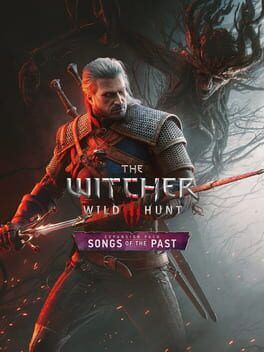
CD Projekt Red’s gamescom showcase sets up Songs of the Past as a paid 2027 Witcher 3 expansion, while the 2026 remaster reshapes combat, traversal and builds first.
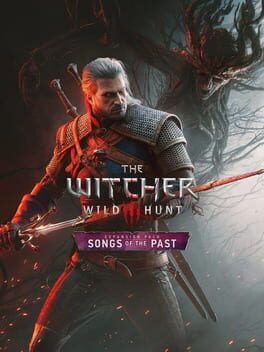
Image: IGDB
Store links: The Witcher 3: Wild Hunt - Songs of the Past on Steam
A 2027 expansion is now tied to a 2026 remaster push
CD Projekt Red has confirmed that The Witcher 3: Wild Hunt is getting a new paid expansion in 2027, and the first gameplay-facing showcase for The Witcher 3 Songs of the Past is already framing it around the parts of Wild Hunt that age most visibly: exploration, environment density and combat feel.
The concrete timeline starts before the expansion. In an August 25 press center announcement, CD Projekt Red said The Witcher 3: Wild Hunt - Remastered will launch on September 29, 2026, with upgrades to visuals, performance, gameplay and more. In the same announcement, the studio said Songs of the Past is available to wishlist ahead of its 2027 release and will take Geralt to Letten, described by CD Projekt Red as a brand new realm of rural tradition with a dark secret below the surface.
That creates the central tension around this Wild Hunt new expansion. Songs of the Past is being marketed as a return to Geralt’s 2015 RPG, but the version of The Witcher 3 that players are being pushed toward in 2026 is not mechanically frozen in 2015. CD Projekt Red is revamping combat, movement, monster behavior, skill trees, mount handling, witcher sign effects and presentation in Remastered. The expansion arrives after that overhaul, but CD Projekt Red has not yet detailed how Songs of the Past will use, require or balance around those remastered systems.
GameSpot’s gamescom 2026 video listing says the showcase features gameplay from The Witcher 3: Wild Hunt Songs of the Past focused on exploration, environments and combat. That is an important framing, because CD Projekt Red’s own announcement trailer language for the expansion is still selective. The publisher has confirmed the new region, its folklore-inflected premise, the 2027 window, paid-expansion status and platforms. Much of the finer detail circulating from preview coverage should be treated as reported showcase material rather than a final specification sheet.
Letten looks built around discovery, but its scale is still being defined
The confirmed setting is Letten, a new region for The Witcher 3. CD Projekt Red describes it as idyllic, rooted in rural tradition and folklore, and home to people living around bountiful harvests and lavish festivals. That is already a meaningful environmental pivot for Wild Hunt, a game remembered for the mud and occupation trauma of Velen, the political claustrophobia of Novigrad, and the harsh isolation of Skellige.
HappyGamer’s report on the showcase goes further, saying Letten is presented as a fully realized open-world region rather than a scaled-down hub area. The outlet describes sunny countryside, a placid lake with sailboats, mountains in the distance and a dawn scene in which Geralt wakes on a hilltop after a party. Those details are useful because they suggest Songs of the Past is leaning into exploratory contrast, not simply adding another war-torn province to the Continent.
The caveat is size. CD Projekt Red’s press release calls Letten a brand new realm and a brand new region, but the provided official material does not give a map size, quest count, expected playtime or comparison to Hearts of Stone and Blood and Wine. Players should not read “open world” as a promise of Toussaint-scale breadth until CD Projekt Red gives firmer measurements.
Still, the chosen language matters. A Witcher region lives or dies by how exploration routes feed quests: roads that look safe but bend toward a notice board, a village festival that becomes a contract, a lake whose shoreline hides a family secret. If the showcase’s emphasis on exploration is representative, Letten’s value will likely come from how naturally its rural life turns into witcher work, rather than from raw square mileage.
The environment is pastoral on the surface, which is very Witcher in practice
CD Projekt Red’s official description of Letten is built on contradiction. The realm is idyllic and festive, but it hides a dark secret beneath the surface. Geralt, according to the publisher, must face never-before-seen foes and confront a long-dormant evil. That is familiar Witcher territory in structure, even if the landscape is brighter: a community’s songs, rituals and inherited stories become the map through which the monster problem is understood.
HappyGamer reports that the story centers on Dandelion’s fractured aristocratic family and a dangerous mystery connected to something called the Garden of Thorns. GameSpot’s site also lists a related recent video titled “The Witcher 3: Songs Of The Past Is A Mystery Centered On Dandelion,” which supports the broader Dandelion-mystery framing, though the provided GameSpot text does not expand on plot specifics. CD Projekt Red’s own press text does not name Dandelion in the excerpt provided, so the family and Garden of Thorns details should be treated as preview-reported rather than fully documented in the official release.
For an RPG player, that distinction matters less because of lore trivia and more because of quest structure. The Witcher 3’s strongest side stories often begin with local color and end in moral debt: a rite performed for practical reasons, a noble house preserving a lie, a village that knows exactly what bargain it made. A Dandelion-linked region gives Songs of the Past a plausible route into personal stakes, but the showcase material available so far does not confirm how branching its quests are, whether old choices carry over, or whether major supporting characters return beyond the bard connection reported elsewhere.
Environmentally, Letten’s rural tradition gives CD Projekt Red and Fool’s Theory a clean design problem: make beauty suspicious without turning it into another haunted swamp. The showcase’s environmental focus is promising because a sunnier Witcher space can still be hostile if its systems sell routine, harvest, class and superstition before the blade comes out.
Combat is being shown through the expansion and the remaster at once
The combat conversation around Songs of the Past is currently inseparable from The Witcher 3 remaster. CD Projekt Red has confirmed that Remastered includes enhanced combat, improved traversal and movement, new witcher sign effects, enhanced monster behaviors, a skill tree revamp and new finishers. On Xbox Wire, CD Projekt Red expert PR manager Marta Piwońska described combat as more precise and smooth, pointing to revamped animations, Geralt closing gaps more fluidly, and an adaptive camera that tightens or pulls back depending on the number of enemies.
That matters for the Witcher 3 Songs of the Past showcase because new enemies are only as interesting as the combat language built around them. CD Projekt Red says Geralt will face never-before-seen foes in Letten. HappyGamer names two enemy types from preview footage, Thornblooms and Swarmion, and reports that Geralt gains a hooked chain. Those names and the weapon detail are not present in the provided CD Projekt Red press excerpt, so they should be read as showcase reporting rather than official feature-lock confirmation.
If accurate, the hooked chain would be the most mechanically provocative combat detail associated with the expansion so far. Wild Hunt’s base rhythm is built around spacing, dodges, rolls, signs, bombs, oils and fast-versus-strong attack commitment. A chain tool could theoretically change encounter control, especially against plantlike or swarm enemies, but CD Projekt Red has not published a breakdown of its inputs, progression ties, limitations or whether it functions as a weapon, tool or contextual mechanic.
The safer confirmed takeaway is that CD Projekt Red is modernizing the underlying feel before asking players to buy a Witcher 3 expansion in 2027. That could help Songs of the Past avoid the awkwardness of adding new foes to a combat system many returning players remember fondly but do not necessarily consider sharp by current action-RPG standards. The unresolved question is balance. A redesigned skill tree, new perks and altered monster behavior can make old builds feel fresh, but they can also disturb years of player muscle memory.
The remaster changes the buildcrafting conversation before Geralt reaches Letten
For completionists and build-minded players, the most significant confirmed Remastered change may be the skill tree overhaul. Xbox Wire says the entire system has been reimagined, with new perks and abilities, reworked existing skills and redesigned trees intended to make builds more flexible and intuitive for a modern RPG audience.
That is a bigger deal than a texture pass. The Witcher 3’s original progression pushed players to commit skill slots, mutagens, gear sets and decoction habits in ways that often rewarded planning but also encouraged familiar dominant routes. A remastered tree could make signs, alchemy, swordplay and hybrid setups feel less like legacy categories and more like active playstyle choices. If Songs of the Past is built for that version of Geralt, its contracts and bosses may be tuned with broader kit expression in mind.
CD Projekt Red has not yet answered some practical progression questions. The provided sources do not explain how existing saves translate into the redesigned skill trees, whether players will receive respec options, how mutation systems from Blood and Wine interact with the revamp, or whether Songs of the Past has its own recommended level range. Those details will determine whether veterans should bring an old endgame Geralt forward, start fresh with Remastered, or wait until the expansion’s requirements are clearer.
There is one immediate preparation point CD Projekt Red has confirmed: all current owners of The Witcher 3 now gain access to Hearts of Stone and Blood and Wine at no additional cost, according to the studio’s press release. For anyone who never finished the expansions, that changes the runway to 2027. Blood and Wine in particular has long been the high bar for a self-contained Witcher expansion region, so it is also the comparison Songs of the Past will have to survive.
Platforms, price gaps and the parts CD Projekt Red has not nailed down yet
CD Projekt Red’s official platform list for Songs of the Past is PC, PlayStation 5, Xbox Series X|S and Nintendo Switch 2. The publisher calls it a paid expansion and says it is available to wishlist across select platforms, but no price, exact 2027 release date or edition structure is included in the provided announcement. Game Informer’s preview listing also names PlayStation 5, Xbox Series X/S, Switch 2 and PC, with CD Projekt Red and Fool’s Theory listed as developers and 2027 as the release window.
The remaster arrives sooner and has a wider set of immediate purchasing implications. CD Projekt Red says The Witcher 3: Wild Hunt - Remastered launches September 29, 2026 on PC, PlayStation 5 and Xbox Series X|S as a free upgrade for existing owners on qualifying platforms. A native Nintendo Switch 2 version is also coming that day, and CD Projekt Red announced a partnership with Blizzard Entertainment to bring The Witcher 3 to Battle.net. Xbox Wire focuses on the Xbox Series X|S launch, but the official CD Projekt Red press release confirms the broader platform plan.
That distinction corrects a narrower reading from some secondary coverage. HappyGamer’s report says existing owners on Xbox Series X|S get a free remaster on September 29, 2026, which is true as far as Xbox is concerned, but CD Projekt Red’s own announcement says the free upgrade applies to qualifying platforms and lists PC, PlayStation 5 and Xbox Series X|S for Remastered. The expansion itself is not announced as Xbox-only in the official material.
For players deciding whether to reinstall now, the practical guidance is simple: if you already own The Witcher 3, check your platform’s upgrade eligibility as September 29 approaches, claim or install the now-free Hearts of Stone and Blood and Wine access if it applies to your account, and do not buy hardware for Songs of the Past until CD Projekt Red gives firmer 2027 details. The showcase signals a serious return to Wild Hunt, but the exact shape of that return still depends on unanswered questions about price, save migration, expansion scale and how deeply the remaster’s new systems are woven into Letten.