
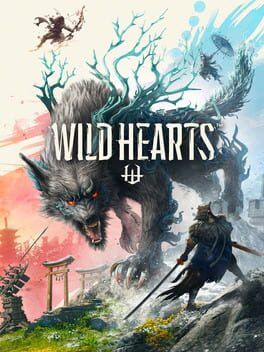

Revisiting EA and Omega Force’s Wild Hearts in 2026: how its brilliant karakuri building, punchy weapons, and co-op hunts still stand apart from Monster Hunter, where performance and content hold it back, and if it’s worth buying on sale while you wait for Monster Hunter Wilds.
Wild Hearts was never really given a fair shot. Released in early 2023 as an EA Originals experiment from Omega Force, it launched into a genre dominated by Monster Hunter and immediately stumbled over brutal performance problems and thin post-launch support. By late 2023 EA had effectively walked away, and the conversation moved on.
It is 2026 now, Monster Hunter Wilds has ridden its own rollercoaster of technical woes and fixes, and Wild Hearts exists in this strange limbo: a brilliant idea preserved in amber. The patches have slowed to a trickle, the roadmap is long dead, but the core loop is intact. Which raises a practical question for hunter RPG fans: is Wild Hearts worth grabbing cheap as a side dish while you wait on more Wilds updates and DLC?
The short answer is that Wild Hearts is still one of the most inventive takes on the hunting formula, with a few ideas Capcom has not matched yet. Whether that is enough depends on your tolerance for jank and your expectations for endgame grind.
Karakuri: The One Thing Wild Hearts Still Does Better Than Anyone
Karakuri remains the beating heart of Wild Hearts and the thing that makes it instantly feel different from Monster Hunter. On paper, it sounds like another crafting layer: you spend a regenerating resource to pop down crates, springs, torches and other contraptions in the middle of a hunt. In practice, it rewires how you think about every fight.
Instead of memorizing set arena layouts, you sculpt your own. A series of crates becomes an instant launchpad into an aerial combo. A spring lets you sidestep a boar’s charge and punish from the flank. Stack enough basic blocks in quick succession and you trigger fusion Karakuri, like a towering wall that staggers a charging kemono, or a giant hammer that slams down when a beast passes underneath.
Monster Hunter toys with environmental interaction in World and Rise, but those are mostly static features authored into the map: endemic life, ledges, wirebugs. Wild Hearts gives you a portable toolkit and asks you to improvise. You do not just adapt to the arena, you customize it to your weapon, your team and the monster’s patterns.
The more you play, the more your muscle memory shifts away from simply rolling and wirebugging to chaining construction into combos. Vault off a three-crate stack into a charged katana slash, then drop a torch mid-combo to trigger a fire-empowered finisher. With the claw blade, grapple to a kemono, carve along its back, then spring away and plant a harpoon tower to keep it pinned. On a good hunt, your flow is this fluid blend of weapon moveset and live map editing.
Capcom has still not gone this far into player-authored arenas. In 2026, karakuri remains the freshest twist any big-budget hunting game has made, and it is the single best reason to play Wild Hearts today.
Weapon Feel: Simpler Kits, Flashy Execution
Compared directly to Monster Hunter, Wild Hearts’ arsenal is smaller and its movesets are less labyrinthine. Where Capcom will happily give every weapon half a dozen stance and switch skill variants, Omega Force chases clarity with a bit of spectacle.
Most weapons have low entry complexity but a satisfying ceiling once you factor in karakuri and their unique gimmicks. The hammer has a charge system that syncs beautifully with crate vaults and walls, rewarding timing and positioning without a three-page moves list. The claw blade turns you into a ziplining acrobat, tethering to kemono like a living grappling hook and encouraging you to stay mid-air far longer than Monster Hunter usually allows.
The real showpiece is the Karakuri Staff, a transforming polearm that cycles between forms as you build meter. It is closer to a Monster Hunter Swiss army knife compressed into a single weapon, constantly asking you to read the flow of battle and commit to big risks for huge payoffs.
Nothing in Wild Hearts has the deep lab-rat nuance of Monster Hunter’s charge blade or gunlance, but the sensation of impact is strong. Hits feel weighty, staggers are readable and the sound design leans hard into exaggerated crunch. Threading a perfectly timed aerial combo off a self-built launchpad earns the same kind of fist-pump that landing a big true charged slash in Monster Hunter does, just with fewer steps to get there.
If World and Wilds sometimes feel like studying a fighting game manual, Wild Hearts is more like picking up an action game you can understand quickly and then remix with your own building tricks.
Co-op Flow: Seamless, Fast, And Built Around Improvisation
Co-op is where Wild Hearts’ systems really sing. The game supports three-player hunts, and instead of slotting into rigid roles, everyone brings their own mix of weapon and karakuri tricks.
Because your base toolkit is so flexible, you do not have to theorycraft a perfect composition. One player might focus on mobility and crowd control, constantly throwing up springboards and towers to keep the monster off balance. Another leans into damage with walls and hammer fusions, while a third handles traversal karakuri to keep the squad on the monster’s tail between arenas.
Comparing this to Monster Hunter’s co-op, Wild Hearts feels less like four solo hunters existing in parallel and more like a messy, creative workshop. Your builds literally intersect: your squad shares and modifies structures, chains fusion karakuri together and improvises escape routes when everything goes wrong.
The session flow is fast as well. It is easy to drop into other players’ hunts, and the story does not wall off multiplayer as aggressively as some older Monster Hunter titles. If you want something to casually queue with friends for an evening, without needing everyone to be at the exact same quest in the story, Wild Hearts is a solid fit.
Kemono And World Design: Nature Fights Back
Monster Hunter still wins on quantity and long-term variety, but Wild Hearts gave itself a clear identity on the creature side. Kemono are mashups of animals and natural phenomena, and that design choice comes through in how they fight.
You are not just hitting a big lizard with thunder breath. You are breaking a boar whose rage causes the forest floor to erupt with roots, or a bird that weaponizes wind to reshape the arena. These environmental shifts feed directly into karakuri use, constantly asking you to rethink where to place structures.
Azuma, the feudal Japan inspired setting, is split into a handful of large maps rather than dozens of smaller zones. They are not as dense as Monster Hunter’s best locales and they recycle some motifs, but they are built to be layered with permanent karakuri infrastructure. Over time your version of each map becomes a personalized hunting ground, with ziplines crisscrossing cliffs and launchpads tucked near common monster routes.
Again, the key difference versus Monster Hunter is authorship. Wilds has stunning, reactive maps, but they remain static canvases. Wild Hearts hands you a brush.
Performance In 2026: Playable, But Never Really Fixed
The reason Wild Hearts failed to take off in 2023 is still the thing that makes it hard to recommend without qualifications in 2026. Technically, it runs better than it did at launch, but it never received the sort of deep, systemic optimization passes that Monster Hunter Wilds eventually got.
On PC, the same complaints keep resurfacing in community threads even years later: inconsistent frame pacing, heavy CPU load, shader stutter when entering new areas and a memory leak that can cause crashes after long sessions. The community has found workarounds like capping the game at 60 fps, aggressively pruning old karakuri from maps and tweaking driver-level settings, but there is no single silver bullet patch.
On consoles, Wild Hearts is serviceable but underwhelming by 2026 standards. PlayStation 5 and Xbox Series players report that sticking to the performance mode and accepting a 60 fps target gives you a mostly smooth experience, with occasional dips and some muddy textures during frantic fights. It plays fine, but it does not look or feel like a current-generation showpiece.
The existence of Wild Hearts S on Nintendo’s newer hardware underlines the situation. That version shipped with obvious attention paid to stabilizing framerate and tightening the building input buffer, but there has been no sign of a similar late-generation tuning pass on PC or the original consoles. EA’s backing evaporated too quickly for the team to fully rehabilitate the tech.
By contrast, Monster Hunter Wilds had a rocky PC launch of its own, but Capcom pushed major title updates throughout 2025 that dramatically improved stability, streaming and CPU utilization. Returning to Wild Hearts after those patches, you feel the difference. Wild Hearts is perfectly playable if you go in with tempered expectations, but it never got that miracle resurrection patch.
Content And Longevity: A Shorter, Sharper Hunt
From a content perspective, Wild Hearts feels lean next to Monster Hunter World, Rise, or Wilds. The base kemono roster is smaller, variants and late-game additions do not reach Capcom’s volume, and there is no equivalent to a massive G-rank expansion.
What you get instead is a more focused climb through a defined bestiary, with a reasonable gear treadmill that does not demand hundreds of hours unless you choose to chase every set and weapon. For some players, that is an upside. If you like the rhythm of Monster Hunter but bounce off the sheer length of its endgames, Wild Hearts can be finished and meaningfully explored in a fraction of the time.
Post-launch support was the missing pillar. Early on, Omega Force talked about seasonal updates and new kemono, but within roughly seven months reports surfaced that EA had ended meaningful support. A few content drops and balance patches arrived, then the lights dimmed. In 2026, you can safely assume what you see now is what you are going to get.
Monster Hunter Wilds, by contrast, is built around a long tail: balance passes, event quests, title updates that add monsters and tweak systems, and the inevitability of a major expansion. If you want a game that will live on your hard drive for years, Wilds is the safer bet.
So Wild Hearts occupies an interesting niche. It is a hunting game you can actually finish, see most of what it offers and move on, rather than a new lifestyle.
How It Stacks Up Against Monster Hunter In 2026
With Monster Hunter Wilds now out and, crucially, patched into a much healthier state, the comparison is sharper than ever.
Monster Hunter still wins on raw depth and breadth. Its weapons have more micro-systems, its monsters demand more study and its endgame is engineered to keep you grinding comfortably past the 200 hour mark. Wilds in particular pushes dynamic weather, large open zones and emergent interactions between monsters and the environment.
Wild Hearts, in turn, offers three clear advantages Monster Hunter has not answered directly.
First, it has the most expressive player-driven terrain manipulation in the genre. No hunting game has yet matched the feeling of cobbling together a last-second karakuri wall and watching a charging kemono crumple against it so your co-op partner can line up their big finisher.
Second, its weapon kits offer a strong middle ground between accessibility and spectacle. If you find Monster Hunter’s inputs daunting but want more nuance than something like Dauntless, Wild Hearts hits a nice balance.
Third, its co-op is tuned around chaos and improvisation rather than rigid meta roles. Friend groups who want to drop in, mash builds together and see what happens will find fewer social barriers than in a highly min-maxed Monster Hunter lobby.
Where Wild Hearts loses is everywhere that long-term support and technical polish matter. Monster Hunter Wilds launched in rough shape but now runs better on contemporary rigs than Wild Hearts ever has. Capcom’s ongoing events and updates give Wilds a sense of life which Wild Hearts simply does not have in 2026.
Is Wild Hearts Worth Buying On Sale While You Wait For Wilds Content?
If you are staring at a steep discount on Wild Hearts or seeing it included in a subscription catalog and wondering whether to install it between Wilds updates, here is the practical breakdown.
You should strongly consider picking it up if you love Monster Hunter’s core loop but want to see how far the idea of building and player-created arenas can go. Wild Hearts is the only major hunting game where your tactical creativity is expressed as much through construction as it is through your weapon choice, and that alone makes it worth a playthrough.
It is also a good choice if your ideal hunting game is 40 to 80 hours of concentrated fun rather than a multi-year commitment. You can experience most of what Wild Hearts does well in a single season of casual play, especially with a dedicated co-op group.
On the other hand, you may want to skip it or only dabble via a service like EA Play if your tolerance for performance issues is very low. Players with mid-range PCs in particular still report stutters and occasional crashes, and even on consoles it can feel a little rough next to contemporary action games. If you are expecting Monster Hunter Wilds’ post-patch smoothness, you will not find it here.
You should also temper expectations about endgame variety. Once you have crafted your favorite sets and cleared the harder kemono, there is no sprawling ladder of escalating anomaly ranks to climb. For some that will be a relief. For others, it will feel like a game that runs out of steam just as it gets truly comfortable.
Verdict: A Brilliant Side Path For Hunting Fans
Returning to Wild Hearts in 2026 feels a bit like visiting an abandoned theme park that still runs one incredible ride. The queues are gone, the staff has mostly left, and the paint is peeling in places, but that one ride is so imaginative that it sticks with you long after you leave.
Karakuri building, flexible weapons and improvisational co-op still make Wild Hearts one of the most distinctive hunting games around. Time has not erased the disappointment around EA’s support or the frustration of its performance issues, but it has clarified what the game actually is: not a rival that could dethrone Monster Hunter, but a fascinating branch of the genre that no one else has fully explored.
If you are waiting on the next big Wilds update, see Wild Hearts at a steep discount, and have the patience to put up with some technical rough edges, it is absolutely worth a visit. Just do not expect a living, evolving platform. Think of it as a bold one-off, a monster-hunting experiment that still has a few tricks the genre’s reigning champion has yet to borrow.