
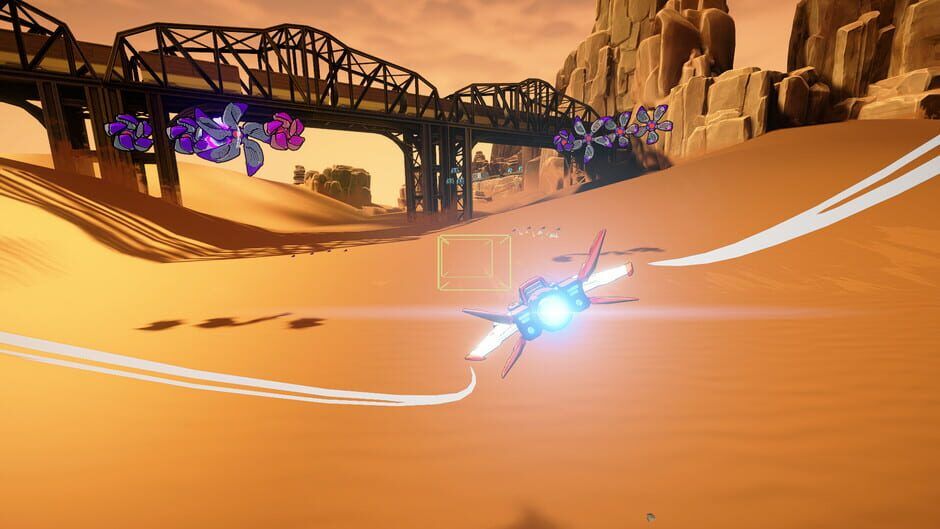
Chuhai Labs’ Wild Blue Skies finally has an August 13 release date, and its indie, Star Fox‑inspired design might be exactly what arcade flight shooter fans have been waiting for.
Wild Blue Skies is finally cleared for takeoff. Chuhai Labs’ retro on‑rails flight shooter has been quietly gathering attention from Star Fox fans, and now it has a locked in release date. Publisher Balor Games is bringing it to PlayStation 5, Xbox Series X|S, and PC via Steam on August 13, giving console and PC players a rare modern take on classic arcade aerial combat.
A firm August release window
Wild Blue Skies has been shown in slices for a while, but the August 13 launch date plants it firmly in late summer, away from the heaviest fall competition. That is smart positioning for a smaller game chasing a very specific nostalgia. Rather than trying to fight for space against massive open world blockbusters, it can court players who want something tighter and more focused.
The release is digital across PS5, Xbox Series X|S, and PC, and there is no sign yet of a last‑gen version. Chuhai Labs and Balor Games are instead leaning into a clean current‑gen presentation with crisp image quality, bold colors, and a rock solid frame rate to sell the sense of speed.
Star Fox DNA in a modern indie package
If you have watched even a few seconds of Wild Blue Skies footage, the inspiration is obvious. This is a deliberate throwback to the era of Star Fox 64, Panzer Dragoon, and arcade cabinets that were all about reaction times and score multipliers.
Missions push your fighter down fixed paths, with enemies, obstacles, and set piece moments choreographed around you. You guide the craft within that lane, dodging incoming fire, weaving between debris, and lining up shots rather than dogfighting in completely free three dimensional space. It is the classic rail shooter structure, rebuilt with more modern responsiveness and visual flair.
Each route is packed with targets, collectibles, and secret paths that reward repeat runs. Taking out enemies efficiently builds your score, and high performance unlocks additional content and alternate routes. It is very much designed to be replayed rather than binged once and forgotten.
Anime skies and squad chatter
Wild Blue Skies does not just mimic the structure of rail shooters, it leans into the tone as well. The art direction has a bright, anime flavored style, mixing chunky, readable silhouettes with expressive character portraits and colorful environments. One mission might have you skimming over oceans and battleships, while another threads you through deserts or caves filled with collapsing rock and swarming drones.
Your pilot, Bowie Stray, flies with the Blue Bombers squad, and there is a strong emphasis on AI wingmates that chatter during missions. Radio calls, warnings about incoming fire, and quick lines during boss phases help sell that feeling of being part of a tight knit team, something Star Fox fans will immediately recognize.
The primary antagonists are the forces of Grimclaw, a villainous faction that provides both rank and file fodder and rival ace pilots. Key stages build to set piece conflicts with these nemesis style enemies, turning the sky into a duel of barrel rolls, charged shots, and carefully timed evasive maneuvers.
Built for accessibility and mastery
While Wild Blue Skies chases a very 1990s flavor, Chuhai Labs is not simply recreating old difficulty spikes. The developers talk openly about building accessible controls that make sense on modern controllers. Inputs are responsive and aim assist is tuned so that new players can enjoy the spectacle without needing arcade grade reflexes from the first mission.
At the same time, the scoring systems and branching routes are clearly aimed at genre diehards. Chasing perfect routes, squeezing every point out of a stage, and discovering alternate paths are what will keep fans of classic rail shooters replaying runs long after the credits roll. It is the same philosophy that kept players looping through Star Fox 64 campaigns years after launch.
Optional missions and hidden objectives also help bridge that gap between casual and hardcore. You might complete a stage comfortably on your first attempt, then return later with a better understanding of enemy waves and environmental hazards to push into new routes or harder variants.
The indie story behind Wild Blue Skies
Chuhai Labs may not have the budget of the big publishers, but that smaller scale is precisely what lets a game like Wild Blue Skies exist. Major studios have largely abandoned rail shooters in favor of live service models and blockbuster open worlds, which leaves a gap that indies are increasingly willing to fill.
Working within that space, Chuhai Labs can aim laser focused at players who grew up on Nintendo and Sega hardware, without needing to chase trends like battle passes or sprawling crafting trees. The result is a project that feels personal, drawing from the team’s affection for arcade cabinets and cartridge era console shooters.
Publishing support from Balor Games gives Wild Blue Skies enough reach to land on all current major platforms while still preserving that indie flavor. It is a reminder that some genres now live mostly through passionate smaller teams rather than platform holders and mega publishers.
Is there room for an arcade flight shooter revival?
That question hangs over Wild Blue Skies, and it might be one of the reasons it has generated buzz. Star Fox has been largely dormant in recent years, and true on‑rails shooters are rare outside of remasters and nostalgia collections. Yet interest clearly still exists among players who miss fast, self contained action games.
Wild Blue Skies arrives into a landscape where shorter, replayable experiences are finding new life. Roguelikes, arcade racers, and score chasers have carved out healthy niches on digital storefronts. A tightly crafted rail shooter fits naturally alongside them, especially as a mid priced download instead of a full priced retail release.
The game is also multiplatform, which matters for a genre long associated with Nintendo hardware. PS5 and Xbox Series X|S players who have not had access to modern Star Fox style campaigns now have a clear point of entry. If Wild Blue Skies manages to hook that audience, it could be one of the titles that quietly proves there is still commercial room for arcade flight shooters.
Why Wild Blue Skies matters
Wild Blue Skies is not trying to reinvent action games, and that is exactly what makes it interesting. It is a focused, confident swing at a style of game that has been underserved for years. Its August 13 launch date gives genre fans something concrete to look forward to and offers a potential blueprint for how rail shooters can exist in 2026.
If Chuhai Labs sticks the landing, Wild Blue Skies could become a cult favorite, the sort of game people point to when they talk about how much they miss Star Fox style campaigns. More importantly, it might encourage other indie teams, or even larger publishers, to revisit arcade style flight shooters with fresh eyes.
For now, Wild Blue Skies is lining up on the runway, engines roaring, with the skies wide open in front of it. Come August, we will see whether this indie squadron can pull off the kind of high scoring run that convinces the industry there is room for more games like it.