
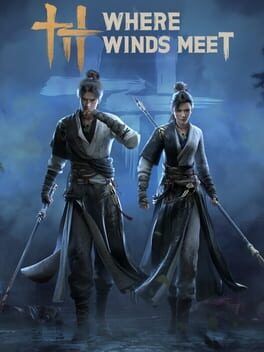
Where Winds Meet version 2.2 closes the Hidden Mountain storyline with Qinye, two campaigns, new world bosses, and Transdust Ruins. Here is what returning players should prioritize.
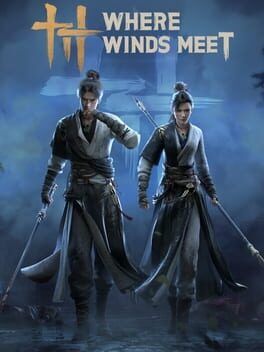
Image: IGDB
Store links: Where Winds Meet on Steam
Version 2.2 turns Hidden Mountain into a return point
Where Winds Meet version 2.2 is now live globally, and its biggest confirmed addition is the conclusion of the Hidden Mountain storyline. Invision Game Community and UnGeek both report that NetEase Games and Everstone Studio have released the update with the final Hidden Mountain chapters, two new story Campaigns, two world bosses, Mid-Autumn Festival events, and a Wuxia extraction mode scheduled to arrive on September 23.
For lapsed players, the practical hook is direct: the Where Winds Meet Hidden Mountain finale finally brings the protagonist into confrontation with the villain tied to the destruction of their home and loved ones. Pocket Gamer names that villain as Qinye, while Invision Game Community and UnGeek spell the name Qianye. The sources are clearly referring to the same antagonist connected to the Blissful Retreat tragedy, but the romanization conflict is worth noting for anyone searching guides, videos, or patch discussions. This article uses Qinye because that is the assignment keyword and Pocket Gamer spelling, while flagging Qianye as the spelling used by other coverage.
The tension around the update is that version 2.2 is doing two jobs at once. It closes a long-running revenge and Mohist Hill arc for story players, while also pushing Where Winds Meet toward repeatable multiplayer systems through Transdust Ruins. If you left because you were waiting for narrative payoff, this is the clearest return window the provided sources support. If you left because you wanted new endgame loops, the answer is more conditional, because the extraction mode is dated for September 23 rather than folded into the story finale launch itself.
The finale is built around A Bitter Winter, Sea of Sunfire, and the Qinye reckoning
The final Hidden Mountain chapters are identified by Invision Game Community and UnGeek as “A Bitter Winter” and “Sea of Sunfire.” According to Invision’s report, the story follows the turmoil around Black Gold, has players join Grandmaster Swallow to uncover the scheme behind Skyward City, and explores Elder Peng’s defining decision about the future of the Mohist Hill sect.
That matters for progression planning because the Qinye boss battle is framed by the sources as a personal narrative payoff rather than a detached challenge arena. Pocket Gamer describes Qinye as the mastermind behind the destruction of the player’s settlement, while Invision says Qianye destroyed the protagonist’s home and stole their loved ones. UnGeek similarly places the confrontation against Qinye at the center of the Blissful Retreat tragedy from early in the game.
For a Where Winds Meet guide approach, the safest confirmed advice is to treat the Hidden Mountain finale as a story sequence first and a boss checklist second. The sources do not provide Qinye’s attack patterns, elemental weaknesses, recommended gear score, revive rules, or phase count, so any detailed Qinye boss battle script would go beyond the available reporting. What is confirmed is that the fight arrives as the culmination of the arc’s central revenge thread, so players returning after a break should prioritize finishing the prerequisite Hidden Mountain narrative content before chasing the new optional systems.
The two new Campaigns test movement, mechanics, and Mohist lore in different ways
Version 2.2 also adds two story Campaigns, and they sound designed to stretch different parts of Where Winds Meet’s toolkit. Invision Game Community reports that Skyward City Ruins puts players on a Wooden Eagle during a high-speed aerial pursuit through collapsing towers, ending in a confrontation with former Grandmaster Halcyon. UnGeek and One More Game repeat the same structure, including the link to Mohist history and Halcyon’s devotion to the principle of “benefiting the people.”
Final Direction, by contrast, is described by Invision and UnGeek as a duel against Elder Peng inside a magnetics-driven battlefield where gravitational forces constantly reverse. One More Game frames the encounter around Elder Peng’s decision over whether Mohist Hill should remain isolated or bring its mechanical arts into the wider world.
For returning players, that split is useful. Skyward City Ruins appears to emphasize spectacle, traversal, and aerial set-piece timing. Final Direction sounds more like a mechanics check, because gravity reversal is the kind of battlefield rule that punishes autopilot play. The sources do not confirm whether these Campaigns must be completed in a fixed order, whether they are solo-only, or how they scale with party play. Until those details are confirmed through the official patch notes or in-game requirements, the patient route is to clear the finale chapters, then approach the Campaigns with a build you already understand rather than experimenting with an unfamiliar weapon at the same time.
World bosses add concrete combat goals after the story credits roll
The update’s two new world bosses give combat-focused players clearer targets once the Hidden Mountain story is complete. Invision Game Community names them as Goshawk and Golden Colossus Taicu. Goshawk is described as a hammer-wielding warrior who uses iron-flower attacks. Golden Colossus Taicu is described as a giant mechanized titan that requires players to destroy structures in the arena to break its seal, then leap onto the machine and attack its core.
UnGeek adds one hands-on detail from its preview: its writer says they fought Goshawk before launch and “got our butts handled,” which supports the idea that the new bosses are tuned as meaningful challenges. That is still an outlet impression, not a full difficulty benchmark, and the sources do not provide recommended levels, drop tables, lockout timers, or matchmaking rules.
As a progression path, Golden Colossus Taicu is the more clearly explained fight from the available information because the objective chain is reported: break arena structures, create the opening, climb or leap onto the titan, then damage the core. Goshawk remains less defined beyond weapon style and attack theme. If you are returning specifically for the Qinye boss battle, these world bosses look like the next step rather than the first stop. Finish the finale, re-familiarize yourself with defensive timing and mobility, then use the new bosses as repeatable tests once your hands are back in rhythm.
Transdust Ruins is the update’s riskier experiment, and it arrives later
The most divisive addition in the Where Winds Meet update may be Transdust Ruins, the new Wuxia extraction mode. Multiple sources agree on the timing: Invision Game Community, One More Game, and Pocket Gamer all state that Transdust Ruins arrives on September 23. It is therefore separate from the immediate story-finale hook for players logging in as version 2.2 launches.
The mode’s rules, as reported by Invision and One More Game, send players into a desert environment either alone or in three-player squads to search for rare treasures while dealing with limited extraction slots. The same sources describe it as PvPvE, with martial arts and mystical abilities shaping survival. Confirmed options include disguises, stealth pickpocketing, and Acupoint Strike, which Invision says can paralyse enemies.
That design is interesting because extraction games usually live or die on risk management: what you carry, when you leave, whether another squad is worth challenging, and how often losses feel fair. Where Winds Meet’s version replaces the shooter baseline with Wuxia movement and martial arts, which could give stealth and misdirection more weight than raw aim. Pocket Gamer’s Iwan Morris expressed skepticism that an extraction shooter-style mode is what Where Winds Meet players are looking for. That skepticism is an opinion, but it identifies the real unanswered question: whether a story-driven martial arts audience wants a loot-and-extract loop after finishing a major narrative climax.
A sensible return route for the Hidden Mountain finale
If you are deciding whether to return now, the cleanest answer depends on which part of version 2.2 brought you back. Story-first players have the strongest case to log in immediately, because the Hidden Mountain finale, A Bitter Winter, Sea of Sunfire, the Skyward City reveal, Elder Peng’s choice, and the Qinye confrontation are all part of the launched update according to the current reports.
Combat-first players also have enough to do now, with Goshawk and Golden Colossus Taicu available as new world boss goals in the version 2.2 coverage. The confirmed Taicu mechanics suggest a fight that rewards reading the arena rather than tunneling damage. For Goshawk, the available details are thinner, so treat any detailed online claims about exact counters or phase scripting as unconfirmed unless they come from in-game testing or official notes.
Extraction-focused players may want to wait until September 23, when Transdust Ruins is scheduled to open. The sources do not list a separate price for the mode, provide performance details, or state any platform-specific differences for version 2.2. One More Game’s page tags Where Winds Meet with Android, iOS, PC, and PlayStation 5, but the provided reports do not break down patch availability, download size, or platform requirements. For practical purposes, the supported guidance is simple: return now for the finale and bosses, return on September 23 if your interest is mainly the Wuxia extraction experiment, and be careful with any guide that pretends to know Qinye’s full move list before documented boss testing catches up.