
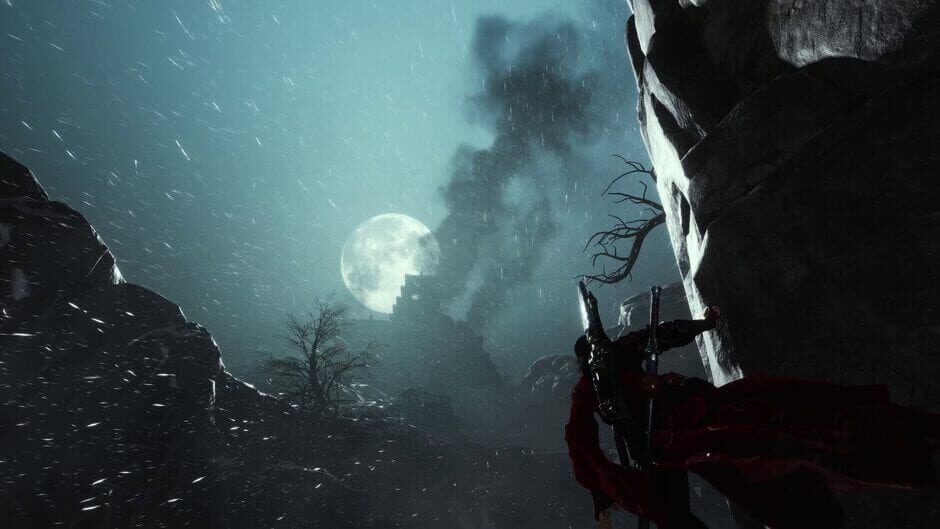

NetEase’s wuxia open world RPG Where Winds Meet has raced past two million players on PC and console. Here is how its responsive combat, acrobatic traversal, and MMO-lite structure helped it find an audience on Steam and PlayStation ahead of its mobile debut.
NetEase’s wuxia open world RPG Where Winds Meet has passed two million players on PC and console shortly after its global launch, an especially notable feat for a free-to-play title that has not even arrived on mobile yet.
On Steam, the game has broken into the Top Sellers charts and currently sits at roughly 80–85% positive reviews, which is a strong result for a F2P online game coming from a big Chinese publisher. Pair that with a fast climb on PlayStation and there is enough early data to say the game is landing better than many expected.
So what is making Where Winds Meet work, and can that momentum carry it to iOS and Android when the mobile versions arrive?
A rare PC‑first push from NetEase
Where Winds Meet is unusual among NetEase’s big online projects because it arrived on PC and console first, with mobile still in the pre-registration phase.
Most NetEase hits are built around mobile from day one, but Pocket Gamer’s reporting highlights two big reasons why this game flipped the script:
- The game leans on high-end visuals and detailed wuxia environments that would be tough to scale down cleanly.
- Its systems are closer to a traditional open world RPG than a stripped-back mobile MMO, with involved combat and traversal that expect a controller or mouse and keyboard.
That decision seems to be paying off. By starting on platforms where players expect deeper mechanics and are skeptical of aggressive monetization, NetEase has effectively stress-tested the design with a demanding audience. The positive Steam response suggests the core gameplay loop holds up even before mobile-sized “numbers” arrive.
Combat that feels more action RPG than auto-combat MMO
Where Winds Meet is marketed as an MMO-lite, but its combat sits much closer to a character action game or soulslike-light than to the typical hotbar MMO.
Key elements that help it stand out:
- Reactive, animation-driven fighting: Encounters emphasize dodges, parries, and timing rather than ability rotations. Enemy attacks are clearly telegraphed, inviting players to learn movesets instead of relying on stat checks alone.
- Weapon variety and martial arts flair: You begin as a swordsman or swordswoman, but the game folds in classic wuxia techniques such as aerial slashes, palm strikes, and chi abilities. These layer on top of grounded swordplay, giving fights a rhythm that alternates between grounded combos and flashy finishers.
- Low friction, high spectacle: Fights happen in the open world without hard loading or excessive UI clutter. It feels more like an RPG where you just happen to see other players around, not a skill-locked MMO arena.
Steam impressions so far praise that the core combat is fast and punchy without demanding frame-perfect execution. That balance is important for an MMO-lite, since the game needs to accommodate both casual open world wanderers and players who want something more technical than auto-combat.
From a mobile perspective, this is the biggest question mark. The combat’s responsiveness and read-heavy design will be challenging to translate to touch controls without leaning on aim-assists or simplified combo inputs.
Traversal that sells the wuxia fantasy
If combat is the spine of Where Winds Meet, traversal is the part that makes screenshots and streams immediately shareable.
The game is set in China’s Five Dynasties and Ten Kingdoms period and leans hard into wuxia cinema’s sense of movement. Common traversal tricks include:
- Wire-fu style parkour: Sprinting along rooftops, wall-running, and chaining jumps across village skylines.
- Gliding and aerial movement: Characters can launch themselves off cliffs and glide or dash through the air, evoking those long, soaring shots from classic wuxia films.
- Mounts and lightfoot skills: Horses and movement techniques combine so that simply getting from a lakeside village to a mountain temple often becomes a highlight.
For MMO-lite players and stream viewers, these systems matter as much as combat. MassivelyOP’s stream coverage frames the early hours as a sightseeing tour through a reactive world, where the joy is less about grinding levels and more about how stylishly you can cross distance.
On mobile, traversal could be a secret weapon. Smooth auto-pathing paired with optional manual control would let less dexterous players enjoy the spectacle, while more serious players can rely on virtual joysticks and swipe inputs to keep their movement expressive.
MMO-lite structure that respects solo play
Where Winds Meet occupies an interesting middle ground between single-player open world and full MMO.
The “MMO-lite” label fits because:
- You play through a story-driven campaign focused on your hero’s past and a stolen jade pendant, with cinematic quests and traditional RPG pacing.
- The world is densely instanced and phased, so you can often treat it as a solo RPG. Many story moments are effectively single-player even though other players are visible in overworld zones.
- Shared-world and social features sit on top rather than underneath the design. You can take part in co-op activities, join sect-like factions, or engage in open-world events, but they are not mandatory for progress.
For PC and console players, this structure is a major selling point. It avoids the social pressure and time commitments that come with full MMOs, while still delivering the sense of a living world and the fun of seeing other players pull off absurd wuxia stunts in the distance.
On Steam, this also means the game competes against big-budget single-player open worlds as much as it does against MMORPGs. The early review scores suggest that, at least for now, Where Winds Meet earns a spot in that conversation.
Why two million players matters
Two million players for a free-to-play game will not shock anyone on mobile, but hitting that mark on PC and console in roughly a week is a different story.
It signals a few things:
- Concept and aesthetic are resonating: Wuxia is still under-served in mainstream open world RPGs. Between the historical setting and the focus on martial arts spectacle, Where Winds Meet immediately feels different from yet another Western fantasy RPG.
- Skeptical PC audiences are giving it a chance: An 80-plus percent positive rating on Steam is a strong start for any F2P title, let alone one from a big publisher that many players approach cautiously.
- Word-of-mouth is functioning: MassivelyOP’s coverage, streaming interest, and the game’s presence in Steam’s Top Sellers all indicate a healthy cycle where new players show up because they have seen gameplay clips circulating.
Revenue is still an open question, and the monetization model will determine whether this early player count translates into long-term health. For now, though, it positions the game as a rare NetEase project that feels at home on PC rather than treated as a console/mobile afterthought.
The road to mobile: opportunity and risk
With iOS and Android versions in pre-registration, NetEase’s next challenge is to deliver an experience that preserves the core of Where Winds Meet across very different hardware.
The opportunity:
- Mobile could multiply that two million player base quickly if the port is faithful.
- The game’s visual style and short-burst objectives are naturally well suited to mobile sessions, and wuxia action traditionally does very well in Asian mobile markets.
The risks:
- Control complexity: Responsive combat and intricate traversal will be hard to compress into a touch-first control scheme without losing what makes the game feel good.
- Performance and visual compromises: The sprawling open world and high-end lighting that look great on PC might need heavy downscaling. If that cut is too deep, the visual fantasy that drives so much of the appeal will suffer.
- Monetization pressure: A more mobile-driven economy could clash with what PC and console players currently appreciate about the game.
If NetEase can solve those issues, Where Winds Meet could become one of the rare cross-platform wuxia hits, using its PC and console credibility to lure players into a mobile version that feels like the same game rather than a simplified spin-off.
Why to keep an eye on Where Winds Meet
As it stands, Where Winds Meet has already cleared its first big hurdle. It has:
- Passed two million players on PC and console.
- Won strong Steam user reviews in a space that usually resists F2P imports.
- Carved out a recognizable identity through responsive combat, expressive traversal, and a solo-friendly MMO-lite structure.
The question now is not whether NetEase can get people to try the game. It is whether the studio can maintain that goodwill as content updates roll out and the mobile ports arrive.
If Everstone Studio can keep leaning into what makes Where Winds Meet distinct while avoiding overbearing monetization, the game may end up defining a new kind of cross-platform wuxia RPG rather than being remembered as a brief curiosity on the Steam charts.