
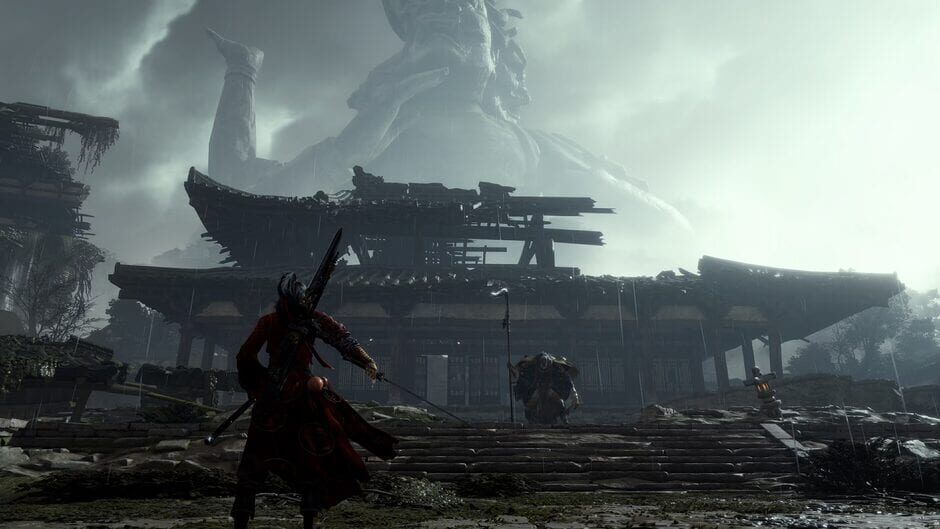

Everstone Studio’s Wuxia open‑world ARPG has already crossed nine million players on PC and PS5. With the iOS and Android launch bringing full cross‑play, we break down what the mobile version offers, how it differs from the big‑screen build, and why its visuals and social systems are powering such rapid growth.
Where Winds Meet has pulled off something you almost never see from a new IP in 2025. In just two weeks after its Western debut on PC and PS5, the Wuxia open world has already attracted more than nine million players. Now Everstone Studio and NetEase are trying to turn that surge into something lasting by pushing the same world onto iOS and Android with full cross play and shared progression.
The mobile launch is not an afterthought. It is a statement of intent that Where Winds Meet is built as a long term, cross platform Wuxia social space as much as it is an action RPG. To understand why the player count is ballooning, you have to look at what the game is actually offering on phones, how closely it tracks the PC and console version, and why its visual ambition and social design land so hard on a crowded market.
A Wuxia sandbox in your pocket
On mobile, Where Winds Meet is arriving as a free to play open world ARPG on iOS and Android, with the same basic pitch as on PC and PS5. You step into 10th century China during the Five Dynasties and Ten Kingdoms era as a wandering swordsman, then head into a version of Jianghu that mixes political intrigue with classic Wuxia fantasy.
The key selling point on phones is scale. The mobile client still delivers a huge contiguous map with roughly twenty regions, hundreds of settlements and landmarks, and thousands of NPCs feeding side quests, random encounters, and profession lines. This is not a chopped down spin off. Mobile players are getting the same marathon length progression, with more than 150 hours of story and exploration already in the live build and a public roadmap promising more zones and events.
Traversal remains one of the game’s biggest hooks. Climbing sheer cliffs, running along rooftops, gliding across valleys, and chaining Wuxia style wire work moves together all survive intact on touchscreen. Early impressions from the mobile version show generous auto pathing when you just want to get somewhere, but enough manual control that you can still improvise routes and use verticality to escape or ambush.
Crucially, the combat system has made the jump. Where Winds Meet draws heavily from Souls likes and Sekiro style duels, with an emphasis on tight parries, stamina and posture management, and reading animations. On mobile, Everstone has mapped core functions to large virtual buttons with swipe based inputs for dodges and special steps, and layered in optional auto combat toggles for grind heavy content. On a commute you can lean on assists for routine bounties. At home with a controller you can return to full manual play without swapping characters or servers.
What changes on mobile
For all its parity talk, the mobile build does make some clear structural changes compared to the PC and console version.
The most obvious is the interface. Menus, inventory, talent trees, and profession systems have been reflowed into big tap targets and sliding trays so you can manage gear and quests with your thumb. Multi step actions that on PC take several hotkeys are now nested radial menus or long presses. It keeps the surface level clean and avoids finger gymnastics, but it does slow down some of the more advanced micro management that keyboard players lean on.
Visually, the game is adjustable in a way the fixed console version is not. On high end iOS and Android hardware you can push a “PC like” preset with dynamic resolution, volumetric fog, dense foliage, and long draw distances. Mid range devices can dial down shadows, crowd density, and texture detail while keeping 60 fps as a target. Lower tiers lean harder on aggressive upscaling and pop in. The core art direction still comes through in all cases, but the crisp painterly vistas you see in marketing really come alive on more powerful phones and tablets.
Content pacing is another subtle difference. The open world structure is identical, yet the mobile client surfaces bite sized goals in a more prominent way. Daily commissions, quick guild tasks, short timed events, and auto queued bounties are all a tap from the main HUD. It is clearly tuned around ten to fifteen minute sessions instead of hour long sits. Main story arcs and large dungeon runs are still present, but the mobile UX pushes you toward content you can safely finish before a bus stop.
Networking options expand in the other direction. Cross play is enabled by default, so mobile users share servers and social spaces with PC and PS5. Cross progression lets you freely swap devices without losing your character. At the same time, there are extra toggles just for mobile, such as limiting real time PvP invitations when on cellular or battery saving modes that restrict high population hubs. It is a small but important acknowledgement that not every social encounter fits every context.
Finally, monetisation reads differently in your hand than it does on TV. Where Winds Meet is a free to play game everywhere, but mobile places the cash shop, battle pass, and cosmetic banners closer to the front of the experience. The underlying economy is the same, yet the friction to check shop rotations or event bundles is lower on a device many players already associate with gacha RPGs. How that perception plays out over the next few months will be worth watching.
Why it looks so good on a phone
The visual pitch is a big part of the game’s appeal. Even before the mobile launch, the conversation around Where Winds Meet revolved around its sweeping vistas and dense martial arts set pieces. Bringing that intact to handheld hardware matters for more than screenshots.
Art direction does most of the heavy lifting. The game leans into water ink palettes, ornate armor and robes, and mist soaked mountains that frame every skyline. Lighting is tuned to flatter silhouettes and sword trails. Even when resolution or texture quality are pulled back on weaker devices, the world still reads as a coherent period fantasy rather than a downgraded port.
Technically, Everstone is leaning on aggressive scalability. Dynamic resolution and temporal reconstruction keep the game playable during large scale fights while particle counts and physics simulation step down gracefully rather than snapping off. Higher end phones get more crowd density in bustling markets and more detailed foliage in bamboo forests, while older devices retain landmark silhouettes and critical signage so navigation still works.
What matters to players is that big, cinematic moments survive. Chase sequences through lantern lit streets, duels on rain slicked bridges, horseback charges across war torn fields, and high altitude gliding over rivers all retain their framing and animation cues on mobile. That sense of being inside a Wuxia drama is what screenshots and clips are selling, and it is arriving close enough to the PC version that cross platform parties do not feel like they are playing different games.
A social Wuxia hub disguised as an ARPG
Underneath the flashy combat and traversal is a design that borrows heavily from MMOs. That hybrid identity is a major reason the community has grown so fast and why the mobile release matters.
Where Winds Meet lets you roam solo, yet almost every progression system has a social layer. Guilds are not just chat channels. They own territory, organize large scale battles, and unlock shared buffs and crafting benefits. City hubs and martial arts schools double as matchmaking spaces where duelists line up for friendly sparring sessions or impromptu tournaments.
Professions are another quiet social glue. Beyond pure combat roles you can pick up work as a doctor, merchant, entertainer, and more. These jobs feed into bustling towns where players heal each other, perform, sell crafted items, or take on contract work. That means your session might be a night of boss runs or an evening of playing support roles in a living Jianghu economy. Dropping all of that onto mobile with intact cross play suddenly turns idle check ins on your phone into meaningful contributions to your guild’s longer term goals.
The game’s event structure also leans into shared experiences. Timed world bosses, faction clashes, guild sieges, and spontaneous social events like in world concerts or street performances show up on the mobile client the same way they do on PC. With millions of players already on the books before the mobile release, that population density ensures that even late night sessions find bustling servers, which in turn feeds back into social stickiness.
Crucially, cross progression keeps the social graph coherent. You build one character, one guild identity, and one friend list that simply follows you from desk to couch to commute. That is an enormous advantage over mobile only spin offs that fragment the community or confine events to one platform.
From surprise hit to Wuxia platform
The nine million player milestone is not just a marketing stat. It is a signal that there is pent up demand for large scale Wuxia games that treat the genre as more than a skin on generic action design. By landing a visually audacious open world and pairing it with MMO like social glue, Everstone has turned Where Winds Meet into one of the fastest growing new RPGs of the year.
The iOS and Android launch is the next stress test. If the mobile version holds up technically on a wider pool of devices, the game suddenly shifts from a well received PC and PS5 release into a persistent Wuxia platform that fits around people’s lives. Sessions no longer have to be anchored to a desk or TV. Dailies, guild chores, and casual duels can happen from anywhere, while long raids and story beats wait at home.
There are still open questions around long term balance, monetisation perception on mobile, and how quickly Everstone can deliver on its content roadmap. But in the short term, the equation is simple. A lavish Wuxia world, a combat system with real bite, and a lattice of social systems all crossed with full mobile support and cross progression is a compelling offer. That is how you turn a promising launch into a nine million player surge, and it is why Where Winds Meet’s move to mobile is one of the most important shifts in live service RPGs this year.