

A focused look at Hexi’s first chapter for Where Winds Meet, breaking down the new region’s visual identity, the grotesque bosses teased so far, the March 5 rollout structure, and how existing players should prepare their builds and progression.
Hexi is where Where Winds Meet finally steps beyond the familiar riverlands and into something stranger, harsher, and more openly mythic. With Chapter 1: Jade Gate Pass dated for March 5, Everstone is treating this expansion as both a new frontier and a combat gauntlet, layering its historical desert corridor with some of the most nightmarish boss designs the game has shown to date.
This is not a full rehash of our launch review. Instead, think of it as a focused field report from the frontier: what Hexi looks and feels like from the footage so far, who you’ll be fighting once you cross the pass, how the rollout is structured, and what you should be doing with your build now if you don’t want to get buried under the sand.
Hexi’s visual identity: a brutal corridor at the edge of the world
Hexi is framed as a corridor beyond the West Pass, inspired by the real-world Hexi Corridor that linked central China to the Silk Road. In trailers, that historical scaffold is still there, but the tone has shifted toward something almost dreamlike, even hostile.
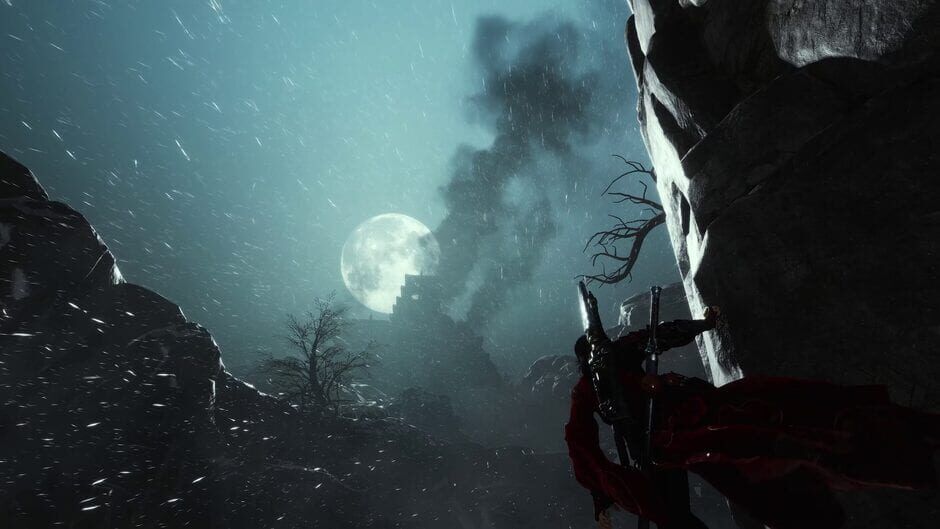
Jade Gate Pass itself is the visual statement piece. Massive stone fortifications squat over a sea of dunes, with sections of crumbling Great Wall trailing off into dust storms. The sky is often bruised and low, giving the sand a metallic sheen that makes the architecture feel half-buried and temporary. Compared to the softer palettes of Qinghe and Kaifeng, Hexi’s colors are sharp and high contrast: sunburnt ochres and rust, cold blue shadows and cyclone-grey clouds. It looks like a place that erodes anything that lingers.
Beyond the gate you get a patchwork of micro-biomes rather than a blank desert. Rock spires pierce the sand like broken spears, forming natural arenas. Tented outposts and caravan relics cling to cliff edges, hinting at trade routes long since choked off. Oasis pockets interrupt the monotony with sickly green water and bleached trees that feel more cursed than welcoming. At night the zone flips again, glowing with spectral lanterns, distant bonfires, and the aurora-like shimmer of Qi techniques cracking through the darkness.
The biggest shift is verticality. Hexi’s canyons and ruined walls give Everstone more excuses to stack combat planes: archers on parapets, beasts clinging to cliff faces, boss arenas that wrap around towers or snake up dunes. Movement tools that felt like indulgent flair in the base game suddenly look necessary. Grapple lines, parkour routes, and wind-gliding over sandstorms all factor into how you read the space, and the expansion’s trailers clearly lean on that, with the camera repeatedly tilting upward to catch swirling debris, flying enemies, and collapsing structures.
It’s still recognizably Where Winds Meet, with its love of painterly lighting and slow pans across vistas, but Hexi feels tuned to discomfort. It is sparse instead of lush, monumental instead of bustling, and every landmark looks like a place where something went terribly wrong.
Nightmares in the sand: the new bosses teased so far
If Hexi’s landscapes are about erosion and isolation, its bosses look like what happens when people and spirits are warped by that environment. The latest trailer is almost a rogues’ gallery reel, showing a lineup that leans harder into monstrous silhouettes and grotesque animation than anything in the base regions.
One of the first standouts is a towering, armor-clad executioner figure wielding an oversized guandao. Its armor plates are pitted and rusted, with strips of fabric whipping in the sandstorm that constantly surrounds it. The encounter footage shows sweeping, arena-wide cleaves that leave glowing scars in the sand, followed by sudden lunges that close huge gaps in an instant. It plays like a deliberate stress test of your dodge spacing and your ability to read delayed swings, with sand gusts often obscuring the windups.
Another highlight is a many-limbed beast that looks part scorpion, part centipede, with a carapace that mirrors the jagged dunes around it. It tunnels beneath the surface and erupts without warning, leaving quicksand-like pits that swallow careless players. The trailer suggests multi-phase escalation: early on it relies on burrowing strikes and tail lashes, then shifts into a frantic chase sequence where it coils around rock pillars, raining venom across multiple elevations. The design sells the idea that the desert itself is hunting you.
There is also a spectral warlord encased in layered desert robes and half-ceremonial armor, whose face flickers behind a cracked mask. This boss emphasizes ranged intimidation, conjuring blazing Qi sigils that hang in the air before detonating in patterns reminiscent of siege engines. Between volleys, it teleports across the arena using mirage afterimages, forcing you to track movement in shimmering heat haze. Compared to the more grounded human duelists of the base game, this fight looks like a midpoint between wuxia and outright dark fantasy.
Smaller teases show a grotesque, puppet-like monk whose limbs bend at impossible angles as it crawls along temple walls, and a sandstorm spirit that manifests as a vortex of weapons and cloth, briefly coalescing into humanoid shapes only when striking. Across the board, attack telegraphs are more theatrical and more misleading. Stagger timings look tuned to punish panic-dodging, with lingering hitboxes and chained feints that demand pattern recognition rather than simple reaction speed.
The throughline is clear. Hexi’s bosses are not just stat checks. Their designs are built around environmental storytelling and mechanical gimmicks that lock into the region’s themes: disorientation, burial, and the cost of pushing too far beyond the frontier.
How the March rollout is structured
For all the focus on March 5, Hexi is not a one-and-done content drop. Everstone is treating it as a serialized expansion, and that structure matters for how you plan your play.
Chapter 1: Jade Gate Pass is the starting slice, arriving on March 5. This unlocks the Hexi region’s initial desert corridor, including Jade Gate itself and its surrounding landmarks. From there, the rest of Hexi is set to unfold in roughly four-week intervals, with two further chapters centered on Liangzhou and Qinchuan. Each chapter is framed as its own region arc, with local storylines, side activities, and boss rosters that escalate the threat curve.
The March chapter brings the foundation systems that will carry through the season. A new martial path debuts alongside Hexi’s arrival, broadening how you can spec into aggressive desert-ready builds. New weapon pairings, including sleek Tang Dao and Heng Blade variants shown in trailers, are seeded into the loot tables and quest rewards. Some of Hexi’s boss drops and progression materials won’t fully pay off until the subsequent chapters, which helps explain why the rollout is spaced a month apart: Everstone wants players to live in each slice of the region and build up before the next frontier opens.
Expect a patch cycle wrapped around this structure. The initial March patch unlocks Jade Gate Pass and its associated world quests, bosses, and gear. A second update, arriving near the end of the month, is likely to reinforce Hexi with tuning tweaks and seasonal tasks that bridge into Liangzhou. By the time you are pushing the later bosses, your build and inventory will essentially be co-authored by the expansion and its cadence, not just by the base-game grind.
How to prepare your build and progression now
With Jade Gate Pass only days away, existing players have a finite window to get their accounts and characters expansion-ready. The game is already signaling that Hexi’s challenges will be tuned above current open-world roaming content and closer to late-game trials, so you will want to enter as something more than a sightseeing tourist.
First, stabilize your core build. Whatever martial path you are using, aim to get your main weapon line to a point where upgrades are no longer cost-efficient in the short term rather than chasing half-finished sidearms. Hexi’s loot tables and new weapon lines will tempt you to respec, and you will want resources on hand rather than tied up in experimental gear. That means pushing your primary weapon to a solid breakpoint, then banking materials instead of spreading them thin.
Second, plug the holes in your survivability. The bosses previewed for Hexi emphasize chip damage, lingering ground effects, and multi hit strings. That punishes glass cannon setups running minimal defensive relics or accessories. Work through your outstanding trial bosses, especially those that reward tanky or sustain oriented accessories, and shore up your dodge windows by practicing on existing high level encounters. If you have been leaning on co-op carries to muscle through difficult content, now is the time to internalize patterns yourself.
Third, clear your quest and exploration backlog in the current regions. Hexi’s serialized rollout is designed to be played as it lands, not stacked up as a future binge. Any lingering story chains, reputation grinds, or unlockable traversal tools should be wrapped up now so they do not compete for your attention once Jade Gate opens. Several movement upgrades and late game support skills from the base map double-dip in Hexi, especially in vertical arenas where stamina and aerial control matter.
Fourth, stockpile currencies and crafting materials. New weapons like the Tang Dao and Heng Blade, plus the fresh martial path introduced alongside Hexi, will demand expensive early upgrades. Finishing your current daily and weekly loops in the run-up to March 5 is less about squeezing out another gear level for your old kit and more about building a war chest so you can pivot aggressively into Hexi gear without stalling.
Finally, plan your co-op circle. The bosses teased so far look mechanically dense enough that organized groups will have an easier time learning them than ad hoc matchmaking. Touch base with friends or guildmates about when you will be hitting Jade Gate, and align on roles. Even if you ultimately prefer solo play, having a reliable squad for first kills on the more punishing encounters will smooth out the learning curve.
Hexi is positioning itself as the moment Where Winds Meet fully commits to its more surreal, punishing side. The dunes, walls, and ruined passes of Jade Gate are gorgeous, but they are built to kill you, and the creatures stalking them are some of Everstone’s most confident designs yet. Spend the remaining days before March 5 tightening your build, clearing your plate, and stockpiling options. When the West Pass opens, you will want all of them.