
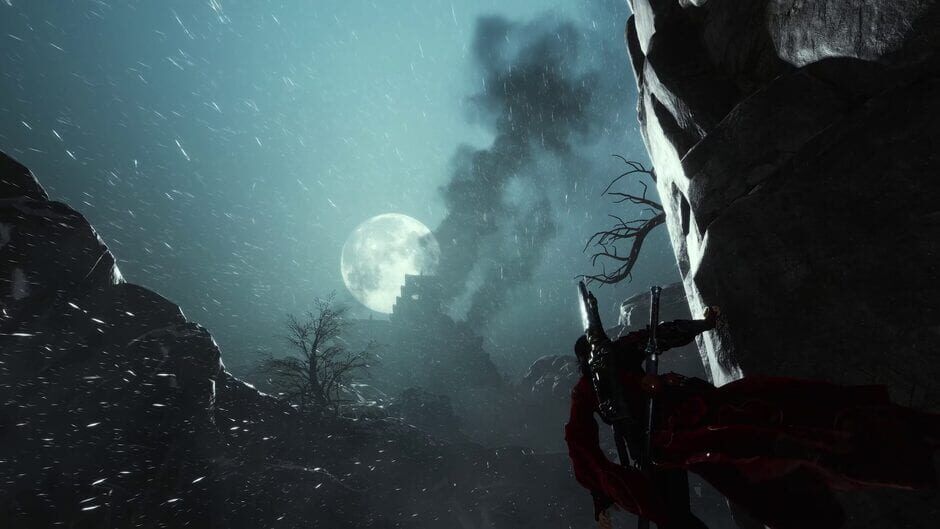

How Jade Gate Pass, Liangzhou, and Qinchuan are poised to reshape endgame builds and the Wuxia meta in Where Winds Meet over the next few months.
Hexi is not just more map for Where Winds Meet. By carving the expansion into three distinct regions that roll out between March and May, Everstone is effectively using Jade Gate Pass as a live testbed for how far it can push traversal, environmental combat puzzles, and late‑game buildcraft in a free update.
Chapter 1 is the headline right now, but to understand what Hexi is actually doing to the game over the next few months, it is better to treat Jade Gate Pass, Liangzhou, and Qinchuan as one long endgame season.
Jade Gate Pass as the blueprint for Hexi
The first chapter drops players into a Tang Dynasty dream of the Hexi Corridor, framed as a pilgrimage from the moment the region is cut off from Chang’an. It is self‑contained narratively, yet mechanically it touches almost every part of the live game.
Jade Gate Pass is a wide, mostly horizontal desert where your core verbs change the moment you unlock Sand Chaser and Cosmic Reversal. Sand surfing rewires how you read terrain, turning dunes into downhill ramps and curved walls into momentum toys. Cosmic Reversal does the opposite: it fixes your attention on ruins, broken bridges, and sunken structures that might be reversible set pieces rather than static props.
Together those systems make traversal itself a kind of soft gear check. You are not gated by power score as much as how confidently you can weave movement tech into combat, chase world bosses across the wasteland, and rewind structures mid‑fight to open new elevation or cover.
The new bosses underline that shift. Guo Xin in White‑Crown City is an early preview of what Hexi wants out of late‑game duels: layered arenas, long patterns that pressure your stamina management, and phase transitions that ask for on‑the‑fly adaptation instead of pure DPS checks. The Wandering Ark turns that design outward, literally roaming the map like an MMO field boss that forces you to juggle ranged harassment and melee bursts while also tracking its route through sandstorms and shifting dunes.
Most importantly for future chapters, Jade Gate Pass arrives with new Umbrella and Rope Dart martial art paths. On paper these are just two extra branches. In practice they are a statement of intent: Hexi is willing to add mobility, crowd control, and stance‑swapping depth at the very top of the progression ladder, even if it means destabilising established builds.
The takeaway is clear. Hexi is less an isolated DLC and more a mechanical soft reset for endgame, one that will only fully make sense once Liangzhou and Qinchuan are live.
From desert to ice field to grassland
The three‑chapter rollout is explicitly pitched as a journey from desert to ice fields to grasslands. Even with official details on later chapters being lighter than Jade Gate Pass, there is enough in the Hexi showcase and roadmap to sketch how the regions will likely play off each other.
Jade Gate Pass is all about open sightlines, sand mobility, and vertical ruins. Liangzhou, the second chapter, is described as shifting the adventure into a harsher, colder climate, with frozen plains and mountainous terrain that break up those clean lines of engagement. Qinchuan, the third chapter, closes the loop in greener country, but still on the edge of empire and war.
From a systems point of view, that progression matters more than the postcard variety. Deserts push movement speed and glide‑style traversal, ice regions tend to constrain it with slippery surfaces, blizzards, and line‑of‑sight blockers, while grasslands reward mounted travel, mid‑range skirmishing, and frequent elevation breaks like ridges and gullies.
In other words, Hexi is lining up three biome‑driven laboratories to see how far Everstone can stretch its physics and combat layers without losing the feel of a grounded Wuxia.
What to expect from Chapter 2: Liangzhou
Liangzhou is the big inflection point. If Jade Gate Pass is sand surfing and time rewinds, Liangzhou is poised to be the chapter that weaponises climate and visibility.
The marketing beats for Hexi talk about ice fields as a key pillar of the expansion’s three‑region arc. In practical terms for high level builds, that suggests more than just new scenery. Everstone has a chance here to tie status effects and positional play directly into the environment instead of only into weapon arts and inner skill trees.
Expect frozen terrain that modifies stamina efficiency, dodge distance, or recovery windows, rewarding builds that invest in stability, super armor, or parry‑first playstyles over pure dash cancels. If Jade Gate Pass encourages long drift approaches into fights, Liangzhou will likely pull camera and movement tighter, forcing you to commit to reads in shorter windows as blizzards and fogs reduce telegraph visibility.
Boss design can lean into this. Sandstorms around the Wandering Ark punishing greedy ranged play could easily evolve into ice storms that slow projectiles, shrink safe zones, or periodically lock off parts of the arena under frost. Builds that rely on reactive counters or projectile spam may find themselves pushed toward hybrid setups that can stay effective within striking distance.
From a gear and martial art perspective, Liangzhou is a natural home for:
New weapon paths that emphasise guard counters and stance breaking. Think greatsword or spear branches that trade raw speed for super armor frames during committed thrusts, rewarding players who plant their feet instead of surfing around the edges.
Inner skills that mitigate chill‑style debuffs or extend invulnerability windows so aggressive players can still pierce through elongated boss strings.
Support or utility arts that manipulate field hazards, such as blasts that shatter ice pillars into shrapnel or reposition bosses into exposed ground when environmental cover collapses.
That last point is key. Cosmic Reversal in Jade Gate Pass already proves Everstone is comfortable making the map a direct combat resource. Liangzhou could easily mirror that with mechanics that do not rewind structures but instead crack, melt, or freeze them dynamically.
If that pans out, late‑game theorycraft will have to add a new column next to raw DPS and rotation smoothness: how much your kit can exploit the map itself.
What to expect from Chapter 3: Qinchuan
Where Liangzhou tightens the lens, Qinchuan looks set to open it again across rolling grasslands and war‑scarred countryside. As the final chapter of the Hexi arc, it has to land the narrative about Hexi’s spiritual longing for Chang’an while also delivering the highest ceiling in encounter complexity.
Grassland maps are perfect for multi‑phase, multi‑target scenarios. Instead of a single towering world boss like the Wandering Ark, Qinchuan can field battles that feel closer to small raids: mounted elites circling a central commander, siege engines ringing a ruined fort, or roaming patrols that can be pulled mid‑boss to change the flow of the fight.
For builds, that implies a pivot back toward flexibility and battlefield control. Kiting tools, ranged pressure, and wide area crowd control should all regain importance after Liangzhou’s likely focus on tight duels and limited visibility. That gives Everstone cover to introduce martial arts that might feel oppressive in smaller arenas, such as large‑radius knockups, long‑line dashes, and chain pulls.
Thematically, Qinchuan is also the cleanest place to showcase Hexi’s promise of new Jianghu Legacies. In a dream set at the end of the Tang, legacies tied to fading schools, outlaw bands, or frontier armies can be framed as powerful but unstable techniques that sit above existing inner skills. Think high‑risk actives with large buff windows, defensive penalties, or resource drains that reward clean execution.
If those tools ship with generous scaling, Qinchuan builds could end up defining the live meta for months even once the dream narrative ends.
How Hexi reshapes endgame builds
Hexi’s most interesting move is that it treats story structure as a progression spine for buildcraft. Every chapter arrives with a distinct biome and at least one headlining mechanic.
Jade Gate Pass already hints at this through its Umbrella and Rope Dart paths. Both favour mobility and multi‑angle pressure, with new combos that keep you airborne or constantly crossing the boss’s hitbox. Layered over Sand Chaser and Cosmic Reversal, they push players into hit‑and‑run, positionally aware play.
If Everstone mirrors that pattern in Liangzhou and Qinchuan, by the end of May the late‑game toolkit might look like this: desert‑born movement and time manipulation, ice‑forged mitigation and hazard play, and grassland‑honed battlefield control.
The meta impact comes in three waves.
First, mobility and terrain exploitation become baseline expectations, not luxury picks. Builds that cannot leverage Hexi’s traversal tools will feel clumsy in roaming encounters like the Wandering Ark and whatever large‑format fights follow in the next regions.
Second, defensive tech and debuff interaction gain value. If Liangzhou leans into chill, slowing, or stamina‑drain effects, and Qinchuan brings bleed, burn, or morale‑type debuffs via large‑scale battles, inner skill setups that can cleanse, shorten, or reflect these effects will climb in priority. Offense‑only glass cannons may find themselves capped by survival checks rather than raw output.
Third, rotation complexity will likely increase. Jade Gate Pass already layers new martial paths on top of existing ones. Additional paths in later chapters will encourage stance dancing between movement, burst, and control modes as fights transition between open desert chases, blizzard duels, and wide grassland brawls.
The end result is a meta where the strongest builds are not just the highest DPS combinations but the ones that can stay functional across all three environmental archetypes.
Preparing your build for the full Hexi arc
If you are diving into Jade Gate Pass at launch but want a character that will still feel sharp once Qinchuan hits, it helps to build with the full arc in mind.
Use Jade Gate Pass to master traversal‑infused combat. Practice entering and exiting fights via Sand Chaser routes, using elevation from restored ruins to control camera and positioning, and treating bosses like Guo Xin as movement puzzles as much as damage checks.
Invest in at least one martial art path that keeps you comfortable in tight arenas with poor visibility, even if it feels a little over‑defensive for the open desert. Liangzhou is almost certainly going to reward that discipline.
Finally, keep room in your inner skill and legacy planning for high‑risk, high‑reward actives that might arrive with Qinchuan. The strongest futureproof builds will be those that can slot in a powerful new legacy without collapsing their entire rotation or defensive baseline.
A new seasonal rhythm for Where Winds Meet
Because Hexi is free and arrives on a fixed roadmap from March to May, it effectively functions as Where Winds Meet’s first true seasonal arc. Each chapter is a step in a controlled meta evolution that asks players to rethink their relationship with the world, not only their damage numbers.
Jade Gate Pass is already changing how wanderers move, fight, and read the desert. Liangzhou and Qinchuan are poised to extend that experiment into ice and grass, folding climate, visibility, and scale into the combat sandbox. By the time the dream of Hexi fades, the strongest wanderers in Tang‑era China will not just be the ones with the sharpest swords, but the ones who learned to treat the land itself as part of their build.