
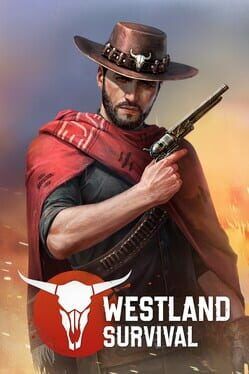

Breaking down the reveal trailer for PS5 survival game Westlanders, from solo and co‑op structure to base‑building, crafting, gunplay, horses, and how its pitch compares to Red Dead Redemption and smaller survival sandboxes.
Sony’s latest PS5 trailer drop quietly introduced something the platform has largely lacked: a dedicated Wild West survival sandbox. Westlanders, from The Breach Studios and publisher Radical Theory, pitches itself as an open world survival, crafting, building, and management game set in a hostile 19th century North America. The reveal trailer only runs a couple of minutes, but it outlines a fairly clear shape for how the game wants to play, both solo and in co‑op.
Solo and co‑op in a hostile frontier
The trailer opens on a lone rider crossing empty plains that quickly give way to snow‑choked forests and rough canyons. That framing underlines two things the studio has been explicit about: Westlanders is fully playable solo, but much of its systems are designed to scale into co‑op.
In solo, the footage focuses on a single character hunting, chopping wood, and carefully approaching camps. There is no HUD on show, but you see familiar survival rhythms: gathering resources by hand, dragging carcasses, and hauling lumber back to a rough camp. The pacing is slower than a pure action game and more in line with something like Green Hell or The Forest, where every outing from base is a deliberate risk.
Later shots switch to multiple players sharing a settlement. You see two riders leaving a town together, and there are snippets of characters building side by side and fighting in the same encounter space. The studio describes the game as a “solo and co‑op survival journey,” and the trailer reinforces that co‑op is not a bolt‑on mode. The core loop appears built around players jointly expanding settlements, defending them, and carving out trade routes across the map.
This already sets it apart from narrative‑driven westerns like Red Dead Redemption, where online modes feel structurally separate from the main story. Westlanders frames co‑op as the default way to engage with its systems rather than a parallel offering.
Base‑building and village management
If there is a single throughline in the trailer, it is construction. Early on, we see a basic homestead made of rough timber: a campfire, a shack, a few fences. As the footage progresses, that outpost grows into something closer to a frontier village, with multiple buildings, fenced ranch land, and workshop areas.
Buildings rise piece by piece. Walls, roofs, and platforms are placed in an almost ARK‑like fashion, hinting at modular construction rather than pre‑baked structures. There are dedicated work areas that appear to be crafting benches and resource processors, along with crops planted in neat rows. The publisher pitches Westlanders as not just a survival game but also a building and management title, and you can see that in the small details: livestock pens, stacked crates, and lanterns lining dirt streets.
Where Red Dead Redemption uses towns primarily as social and narrative spaces, Westlanders seems to treat settlements as the heart of the experience. Your village is a resource sink, a production hub, and a defensive liability whenever raiders or wildlife show up. That emphasis brings it closer to games like Medieval Dynasty or small‑team survival sandboxes where base upgrades are the main way you feel long‑term progression.
The trailer briefly shows a hand‑drawn style world map with roads traced between settlements, which matches the pitch about establishing trade routes. It suggests that as your town grows, your concerns expand from just staying alive to managing supply chains and protecting caravans.
Crafting and survival systems
The footage paints a familiar picture of survival systems, but the historical setting gives those systems a different flavor. We see characters skinning animals, carrying pelts, and hanging meat, as well as chopping down trees and converting logs into planks at a saw setup. There are shots of tanning racks, smelters, and what looks like a blacksmith’s forge, all pointing to tiered resource processing from raw materials to finished gear.
Crafting appears to cover both practical survival tools and frontier tech. Simple tents and fire pits give way to timber houses, more advanced workshops, and eventually larger, more fortified structures. The official description talks about “developing technologies” for your settlement, which in survival game terms likely means a progression of crafting benches and unlockable recipes rather than literal research trees.
Westlanders’ trailer does not drown you in UI windows, so it is hard to judge depth, but the number of distinct stations suggests a systems‑heavy approach rather than a light, cosmetic focus. Structurally it sits closer to ARK: Survival Evolved, where crafting chains gate progress, than to Red Dead’s softer camp upgrades.
Gunplay, melee, and moment‑to‑moment combat
Combat sits somewhere between simulation‑leaning westerns and the snappier fights of typical survival sandboxes. Gunplay is shown from a first‑person perspective, with revolvers, lever‑action rifles, and shotguns making up the bulk of the arsenal. The reload animations are relatively deliberate, and muzzle flash and recoil are pronounced enough that it looks weightier than the floaty weapons you get in many indie survival games.
Fights in the trailer tend to be short, ugly affairs. A group of bandits ambushes a supply wagon. A player ducks behind cover while another flanks around a corral. A cabin shootout spills into the yard as attackers try to rush the porch. This gives combat a scrappy, improvisational feel more in line with The Forest than with the cinematic shootouts of Red Dead Redemption 2.
Melee weapons make a brief appearance with axes and knives, mostly in close quarters. There is no clear sign yet of elaborate melee systems or dual‑wielding, and the game seems more interested in firearms backed by simple brawling when enemies close distance. That focus fits the intended tone: messy survival rather than heroic gunslinging.
Horses and traversal
Horses are central to how you move through the Westlands. The trailer shows multiple riders traveling in formation across plains, threading through forests, and cutting between rock formations. Saddlebags and strapped‑on cargo are visible, suggesting that mounts double as mobile storage for longer expeditions away from your settlement.
Compared to Red Dead Redemption 2’s detailed horse behavior, Westlanders looks more utilitarian. The animation work in the trailer is serviceable but clearly secondary to the game’s systemic ambitions. Horses appear to be treated as vehicles first, companions second. That lines up with its survival focus, where they are tools to extend your reach and carry resources rather than narrative characters.
Even so, their presence fundamentally shapes the map size the team can work with. An open world that expects players to establish trade routes and haul materials between settlements needs large stretches of wilderness. The emphasis on riding sequences implies that traversal time and route safety will be active considerations rather than just background dressing.
Tone and atmosphere
The developers have cited The Revenant as a tonal touchstone, and you can see what they mean. The trailer leans on harsh weather, bleak light, and a sense of isolation. Snowstorms whip through pine forests. Distant thunder rolls across empty plains. Towns, when you see them, look like fragile interruptions in a landscape that would rather swallow them whole.
That tone is markedly different from the mythology‑soaked, often romantic western of Red Dead Redemption. Where Rockstar leans into drama, larger‑than‑life outlaws, and a thick layer of Americana, Westlanders looks more like a survival movie translated into game logic. The world itself is the main antagonist, with bandits, wildlife, and rival factions layered on top.
At the same time, it does not fully discard the genre’s pulpier side. There are shots of tense standoffs in dusty streets and silhouettes of riders framed against the setting sun. It wants the iconography of the spaghetti western but filtered through a survival lens where a bad supply run hurts more than a lost duel.
How Westlanders’ pitch stacks up to its peers
Inevitably, Westlanders invites comparison with Red Dead Redemption simply by virtue of being an open world western on consoles. On that front, its goals are very different. Red Dead builds around authored missions, cinematic storytelling, and handcrafted set pieces. The survival elements are relatively light and mostly in service to immersion.
Westlanders inverts that priority list. Narrative takes a back seat in the trailer to systems: base construction, resource management, co‑op logistics. Where Red Dead wants you to feel like you are living through a specific outlaw saga, Westlanders is aiming for a looser sandbox where the story emerges from how your town survives and grows.
In the survival space, it sits closer to games like The Forest, Green Hell, or Medieval Dynasty. From those, it borrows the idea of a punishing environment, granular building, and a progression from subsistence to settlement management. The difference is mostly aesthetic and thematic. Forests and tropical jungles are traded for prairies, mountains, and snowfields, and the threats are more grounded in period‑appropriate hazards than in overt horror.
That said, Westlanders is entering a crowded, demanding genre. Smaller survival sandboxes live or die by how satisfying their gathering, building, and co‑op loops feel over dozens of hours. The reveal trailer shows ambition in scope but, understandably at this stage, stops short of proving whether the fundamentals feel good when you have chopped your hundredth tree or defended your settlement from yet another raid.
A measured expectation
Westlanders is early. The team is upfront about a long runway, with a Kickstarter campaign planned for early 2026 and a PC early access phase before the PS5 and Xbox Series version 1.0 launch. That timeline suggests plenty of time for iteration, but it also means that what we see now is a pitch more than a promise.
Framed on its own terms, though, the reveal trailer outlines a clear identity. This is not trying to be Red Dead Redemption with hunger meters grafted on. It is a systems‑first survival game that happens to wear a Western coat, focusing on co‑op base‑building, route planning, and harsh environmental survival.
Whether that blend of frontier management and survival grind will stand out depends on execution, not on concept. For now, Westlanders is an intriguing attempt to bring the survival‑crafting formula to a console‑friendly Wild West setting without chasing cinematic open world trends. If the systems feel as layered as the trailer suggests, it could finally give PS5 players a western where the town they ride out of is one they actually built themselves.