
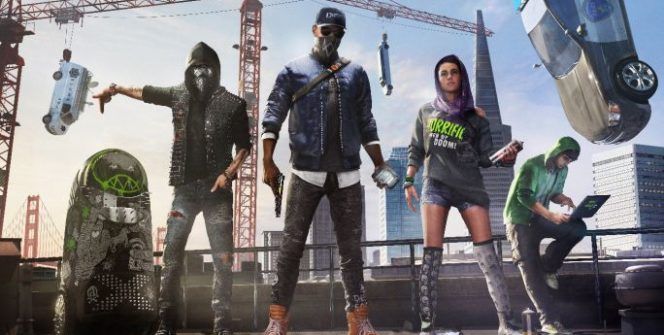
Yves Guillemot says Watch Dogs remains important to Ubisoft, but reports from the investor meeting point to no active new game in development. Here is what fans should realistically expect.
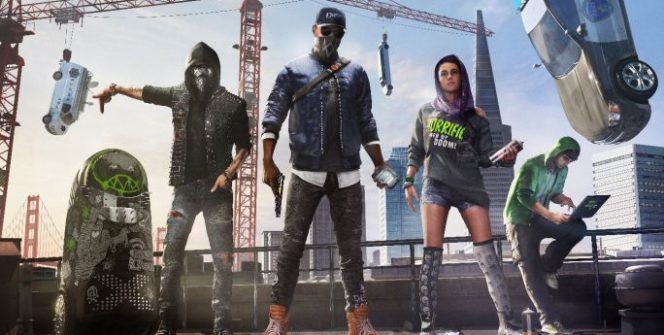
Image: thegeek.games
Ubisoft’s clearest Watch Dogs signal is a pause, not a comeback
The strongest confirmed development for Watch Dogs fans is also the hardest one to dress up: Ubisoft CEO Yves Guillemot has described the franchise as important to the company’s future, but reports from the company’s investor meeting indicate that a new Watch Dogs game is not currently in active development.
According to VGC, Guillemot was asked about Watch Dogs during Ubisoft’s annual meeting with investors in early October. VGC, citing Game File, reports that Guillemot said a new game in the franchise is not currently in production while still calling the brand important to the French publisher. IGN’s account of the same Game File report says Guillemot told investors Ubisoft considers Watch Dogs “to be an important brand for the future,” but did not explain how that importance translates into an actual project.
That is the tension at the heart of the Ubisoft Watch Dogs future. The company is not burying the name, at least not publicly. It is also not telling players to expect a Watch Dogs sequel, a remake, a reboot, or even a pre-production concept moving through a team. For a series that has been absent from games since Watch Dogs: Legion in 2020, that difference matters. A brand can be valuable in a portfolio without being next in line for a greenlight.
VGC quoted Guillemot, via translation, as saying Watch Dogs is “not expected to be put in a creative house for the moment, before it’s potentially remade.” VGC also cautioned that the phrasing could be a translation issue, and that it may refer to the series being revived or reintroduced by a new team in the future rather than a literal remake of an existing Watch Dogs game. That caveat is important because Ubisoft has not announced a Watch Dogs remake, has not named a studio, and has not put a date on any future game.
The phrase “important brand” keeps the door open, but it does not schedule a release
Guillemot’s comment is the kind of corporate answer that can sound hopeful when taken in isolation. In practice, it reads more like brand preservation than product confirmation. Ubisoft has a recognizable open-world hacking series with three major releases, a film adaptation somewhere in the pipeline, and a fanbase that still debates whether Watch Dogs 2 was the formula the company should have carried forward. Saying the IP remains important keeps all of that alive without committing resources publicly.
That distinction is useful for anyone searching for a Watch Dogs new game update. A game in active development usually comes with some combination of a team, a production phase, hiring signals, platform targets, an earnings call reference, or a formal announcement. The reports around Guillemot’s answer provide none of those. Instead, they place Watch Dogs outside Ubisoft’s immediate slate while preserving the possibility of a future return.
VGC connects the comment to Ubisoft’s broader internal reset. At the start of the year, the outlet reported that Ubisoft detailed a “major reset” involving restructured creative teams, new autonomous “creative houses,” six canceled games, seven delayed games, and two studio closures. In that context, Watch Dogs being described as important but not currently placed into active production suggests a company choosing its battles carefully.
The contrast with Ubisoft’s other franchises sharpens that point. VGC notes that Guillemot said in February that “several” Far Cry and Assassin’s Creed games are on the way. Those brands appear to have clearer near-term movement. Watch Dogs, by comparison, is being spoken about in future-facing language without the usual signs of an incoming release.
Why Ubisoft may want to keep Watch Dogs warm
There is a clear business reason for Ubisoft to avoid saying Watch Dogs is finished. The series occupies a space Ubisoft does not have elsewhere in quite the same shape: contemporary cities, surveillance culture, hacking as a traversal and combat tool, and open-world crime filtered through systems rather than pure firepower. When Watch Dogs works, its best rhythm is different from Assassin’s Creed parkour or Far Cry chaos. The player scans a street, bends traffic, turns cameras into scouting tools, and wins a set-piece before the shooting starts.
That identity still has value, especially because the games industry has become more cautious about expensive open-world bets. A dormant brand can be reopened when the company sees the right angle, the right studio availability, or the right market gap. Ubisoft’s public language lets it maintain that option without promising fans a timetable it cannot support.
The film adaptation may also be part of that brand maintenance, although its status is murky. VGC says a Watch Dogs film is in production. IGN reports that the movie wrapped production two years ago, underwent reshoots last year, has no release date, and has not received meaningful promotion. GamingProMax adds that the film is directed by Mathieu Turi and stars Sophie Wilde, Tom Blyth, and Markella Kavenagh, while describing it as being in post-production. Those accounts all point in the same general direction, a Watch Dogs screen project exists, but they differ in wording around where exactly it stands.
For fans, the movie does not currently function as a reliable countdown to a new game. Ubisoft has not announced a game tie-in, a remaster timed to the film, or a coordinated relaunch. The safer reading is that the film keeps the name visible while Ubisoft works out whether Watch Dogs can return with a design strong enough to justify modern open-world development costs.
Legion left Ubisoft with a design problem, not simply a scheduling gap
Watch Dogs has never lacked a hook. The issue has been turning that hook into momentum across a full campaign. The 2014 original arrived after enormous anticipation. VGC describes it as critically and commercially successful, while noting that it did not match the ambitious gameplay shown in an earlier teaser trailer. IGN adds that it had originally been planned for the PS4 launch window in November 2013 and was positioned by Ubisoft as a direct competitor to Grand Theft Auto 5, which had released in September 2013.
That first game still made a mark in the open-world crime genre, but Watch Dogs 2 is the entry many fans point to as the clearer expression of the series. VGC calls it “much-loved,” and IGN describes the San Francisco sequel as a much more impressive follow-up. Its lighter tone and livelier setting gave the hacking fantasy a cleaner pulse: infiltrate, improvise, use the city against itself, then slip away before the whole stage collapses into a firefight.
Watch Dogs: Legion, released in 2020, took the biggest swing. IGN highlights its central idea: the ability to control any NPC in the world. On paper, that is the kind of systemic ambition Ubisoft open worlds often chase. In practice, the reception did not create a clear runway for another sequel. VGC says Legion’s critical reception was generally positive but notes that its Metacritic score of 76 was lower than the previous two Watch Dogs games. IGN says the game received generally mixed reception from fans and failed to keep the momentum going from Watch Dogs 2.
That matters because a Watch Dogs sequel cannot simply exist because the name is recognizable. Ubisoft would need to decide what Watch Dogs is now. Is it the character-driven hacker crew energy of Watch Dogs 2? Is it the systemic sandbox promise of Legion? Is it a darker techno-thriller closer to the original? Guillemot’s non-committal answer suggests that question has not been publicly solved.
Grand Theft Auto 6 hangs over any open-world crime return
IGN and Unboxholics both frame the next Watch Dogs decision against the larger open-world landscape, especially Grand Theft Auto 6. IGN writes that Ubisoft may still be figuring out how to separate Watch Dogs from GTA 6, which it says is set to shake up the genre in November. Unboxholics similarly says Ubisoft appears to be weighing the series’ direction as anticipation for GTA 6 threatens to redefine the open-world gaming landscape again.
That comparison has followed Watch Dogs since the start. IGN reports that Ubisoft hyped the original as a direct competitor to Grand Theft Auto 5. The result was a difficult launch narrative: even a successful new IP looked smaller when measured against Rockstar’s genre-dominating machine. If Ubisoft brings Watch Dogs back after years of silence, it will need a sharper pitch than “another open-world city.”
The series’ best chance may be leaning harder into what Grand Theft Auto does not foreground: surveillance systems, stealth routes built through cameras and networks, social engineering, drones, remote control, and urban spaces designed as puzzles before they become battlefields. That is interpretation based on the franchise’s established identity, not something Ubisoft has announced. But it is the kind of distinction a future Watch Dogs would likely need if it is going to avoid being swallowed by the larger open-world conversation.
There is also a pacing question. Ubisoft’s action-adventure strengths often come from readable mission flow, escalating outposts, and set-pieces that let players alternate between stealth and spectacle. Watch Dogs at its best turns a city block into a machine the player can conduct. Legion’s “play as anyone” system was ambitious, but the reported mixed fan reception suggests ambition alone is not enough. A future game would need a stronger dramatic spine to hold those systems together.
Rumors of a dead franchise remain separate from Ubisoft’s public position
The strongest public position from Ubisoft is that Watch Dogs remains important but has no reported active game in production. That is different from saying the series is permanently dead. It is also different from confirming a revival.
GamingProMax cites an earlier 2026 report from insider Tom Henderson claiming Watch Dogs was “completely dead” inside Ubisoft following the company’s restructuring, mixed reception to Watch Dogs: Legion, and broader cuts. That claim should be treated as an insider report, not an Ubisoft confirmation. Guillemot’s investor answer does not fully match the finality of that language. If anything, it creates a more complicated picture: Ubisoft may not be building a Watch Dogs game right now, but it still wants the market to understand that the IP has future value.
This is where fans should be careful with the word “remake.” VGC notes that Guillemot’s translated phrasing could seem to suggest a remake, but the outlet explicitly warns that the wording may instead mean the franchise could be reintroduced or revived by a new team later. Until Ubisoft announces a project, names a game, or attaches Watch Dogs to one of its development structures, there is no confirmed remake, no confirmed Watch Dogs sequel, and no confirmed release window.
That leaves Watch Dogs in a familiar Ubisoft holding pattern. The brand is alive enough to be referenced by the CEO, absent enough to frustrate fans, and undefined enough that every translated phrase gets inspected like a hacked security feed. The signal is real, but it is faint.
Realistic expectations for Watch Dogs fans now
For players, the practical guidance is simple: do not expect a Watch Dogs new game within the next few years unless Ubisoft changes its public posture. IGN reaches the same broad conclusion, saying there may be more Watch Dogs games one day, but fans should not expect them soon. The current reporting points to no active development, no announced platforms, no release date, no price, no upgrade path, and no confirmed remake.
That does not make the franchise irrelevant. Watch Dogs still has a distinct fantasy in Ubisoft’s catalog, and Guillemot’s comments show the company is unwilling to publicly close the file. But the gap since Legion is now long enough that the next entry, if it happens, would need to behave like a relaunch in all but name. It would have to reintroduce the tone, choose a protagonist strategy, prove its hacking systems can still surprise players, and justify itself in an open-world market that has become less forgiving of familiar maps filled with routine objectives.
The best near-term expectation is brand movement rather than game movement. That could mean further film updates, renewed franchise references, possible catalog activity, or simply more executive language that keeps Watch Dogs visible. None of those would equal a new game announcement.
For fans who loved Watch Dogs 2’s San Francisco energy or still defend Legion’s audacious NPC experiment, Guillemot’s answer is not the revival they wanted. It is a reminder that Ubisoft knows the name still carries weight. The missing piece is the one that matters most: a concrete game, in a real studio pipeline, with a design bold enough to bring DedSec back into the city lights.