
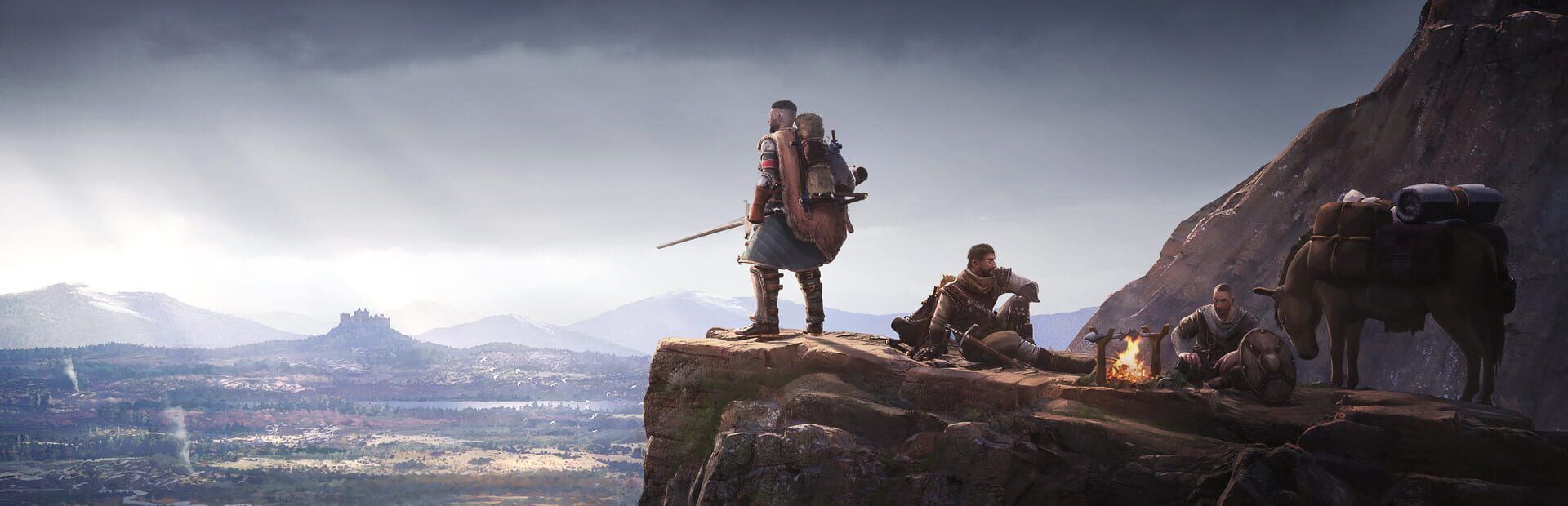
Why the Isandrin DLC could be a turning point for Wartales’ identity, shifting it from a wandering contract sim into a reactive, city-scale tactics sandbox.
Wartales has always been about the road. You trudge across sodden borderlands and plague‑touched forests, chasing contracts and trying to keep a half‑starved company of killers paid. Contract: Fires in the Capital points that compass in a different direction. Instead of another beleaguered province to chew through, Shiro Games is building a dense, reactive metropolis and asking what happens when Wartales’ wandering mercenary fantasy slams into the politics and pressure of an imperial capital.
On paper it could sound like a simple new region. Isandrin is technically another map, another place to pick up work. The early details from Shiro, TechRaptor and Rock Paper Shotgun paint a more interesting picture. This is not a backdrop to ride past, it is a living city that pushes back at your choices, tracks its own level of unrest and can tip into full‑blown chaos if you mishandle it.
That matters for Wartales because, up to now, the game’s rhythm has been defined by distance. You look at the map, pick a direction, weigh how much food and wages you can afford, then march. Encounters, events and contracts are distributed across that open world. The fantasy is vagrant and horizontal, your company a mobile solution to other people’s problems. Fires in the Capital inverts the axis. Isandrin compresses that sprawl into tight streets and districts where every step is still tactical, but your decisions are suddenly vertical, stacked through layers of civic systems and clashing factions.
The most striking promise is how reactive the city is meant to be. Shiro talks about a capital in crisis, simmering under unpopular reforms from General Maxime. That tension is not just lore. As unrest rises, traders hike prices, contracts vanish, and riots spill into the streets. Those are the same pillars Wartales has always used to define the health of your company, but here they are tied to the mood of one city. Ignore trouble in a quarter and it is not just a missed opportunity, it is a slow twist on the economic knife that keeps your mercenaries fed.
That reactivity is framed by concrete levers rather than vague morality. When propaganda posters go up, you can rip them down. When agitators and brigands move through the alleys, you can hunt them or cut deals. When people starve, you can pour your hard‑earned crowns into charitable works. Rock Paper Shotgun describes Isandrin as something you can save or destroy, and that duality is crucial. The same toolkit that lets you shore up order can be bent to profit from the chaos if you are willing to live with the long‑term consequences.
This tilt toward urban decision‑making has big implications for Wartales’ identity. In the base game, your moral footprint is broad but thin. You might execute prisoners, steal from peasants or back one local lord over another, but you are passing through. The world remembers you in small ways, mostly through reputation ticks and local bounties, before you ride to the next county. Fires in the Capital offers a different fantasy: your group as a semi‑permanent fixture in a single, combustible space. You are no longer just consuming the map’s stories, you are authoring the fate of a city that will be visibly better or worse off because of your campaign.
The structure of Isandrin supports that shift. Instead of a chain of villages and wilderness pockets, you navigate a lattice of wards with their own hotspots, choke points and flashpoints. Information in the early previews suggests that unrest is not a simple global number, but something that expresses itself in specific places. One district might be relatively calm, another already on the brink. That forces a different kind of route planning. The question is no longer only which contract pays best along the road, but which cluster of streets you can afford to neglect without watching the whole capital slide into a firestorm.
That density should also change how the tactical layer feels. Wartales combat thrives on positioning, line‑of‑sight and environmental interaction, but much of the base game’s terrain is rural: fields, roads, camps, caves. Isandrin is all walls, plazas and tenement corners, and the DLC leans hard into environmental hazards. Fire is not just in the title. Expect burning barricades, chokepoints that can be sealed or cleared with flames, and fights where collateral damage to civilians and infrastructure is part of the challenge.
Urban layouts naturally favor more complex engagement design. Tight side streets are perfect for ambushes and hit‑and‑run engagements, while open squares can host multi‑front brawls with watch patrols and rioters colliding. Combine that with a city that reacts to your broader choices and you get a feedback loop that Wartales has only flirted with before. If you let tensions boil, the city throws harsher fights at you. If you invest in stability, you might trade spectacle for security and better economic conditions. Either way, your stance toward Isandrin reshapes the tactical sandbox rather than just reskinning it.
It is useful to compare this to earlier Wartales add‑ons. Previous DLCs have expanded the map with new biomes, side systems like tavern management or pit arenas, and fresh enemy types. They broadened the buffet but kept the core loop intact. Fires in the Capital looks more like an attempt to deepen a specific slice of that loop. Instead of simply asking “where will your company wander next,” it asks “what does your company become when movement is constrained and every decision echoes through the same streets.”
That focus could also sharpen Wartales’ storytelling. The base game’s narrative power comes from accumulation: a string of anecdotes about desperate contracts, botched ambushes and brutal winters piling up over dozens of hours. Isandrin gives those anecdotes a consistent stage. General Maxime, legion officers, rebel leaders and ordinary townsfolk will cross paths with your company again and again as the city’s situation changes. That repetition is an opportunity to build arcs that feel less like scattered vignettes and more like a season of a grimy political drama in which your mercenaries are the swing vote with swords.
Of course, the risk with any “capital city” DLC is that it flattens into a busy hub stuffed with icons rather than a genuine evolution. If Isandrin turns out to be a glorified quest board, with unrest mostly a backdrop and outcomes limited to a couple of ending slides, then Fires in the Capital will feel like a well dressed zone pack. The promise in the previews lies in the enemy of that outcome, in systems where losing control of the streets threatens your bottom line and forces you to choose between profiteering and stewardship.
If Shiro follows through, Fires in the Capital could quietly redefine what Wartales is about. Instead of only being the story of a company roaming the edges of fallen kingdoms, it becomes the story of how that same company behaves when there is finally something worth staying for. A city that burns or survives based on your contracts, your compromises and your appetite for violence is a natural crucible for a game about mercenaries. More than just new ground to march across, Isandrin might be the place where Wartales proves it can handle not just the long road, but the long fallout of your choices.