
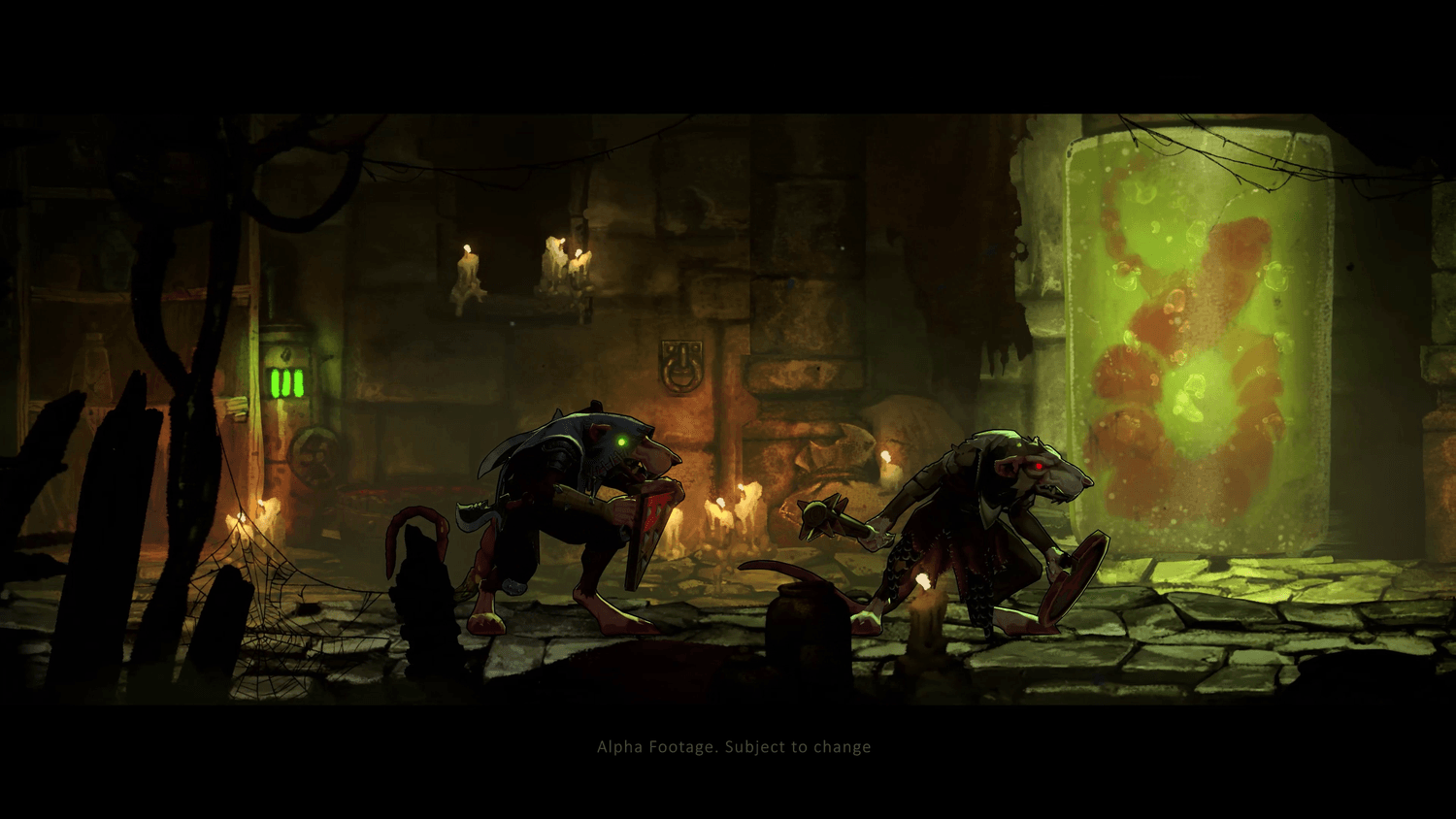

Early Deathmaster preview coverage points to a stealthy Warhammer platformer with Skaven wall-crawling, lethal encounters, and enough exploratory level design to invite Hollow Knight comparisons.
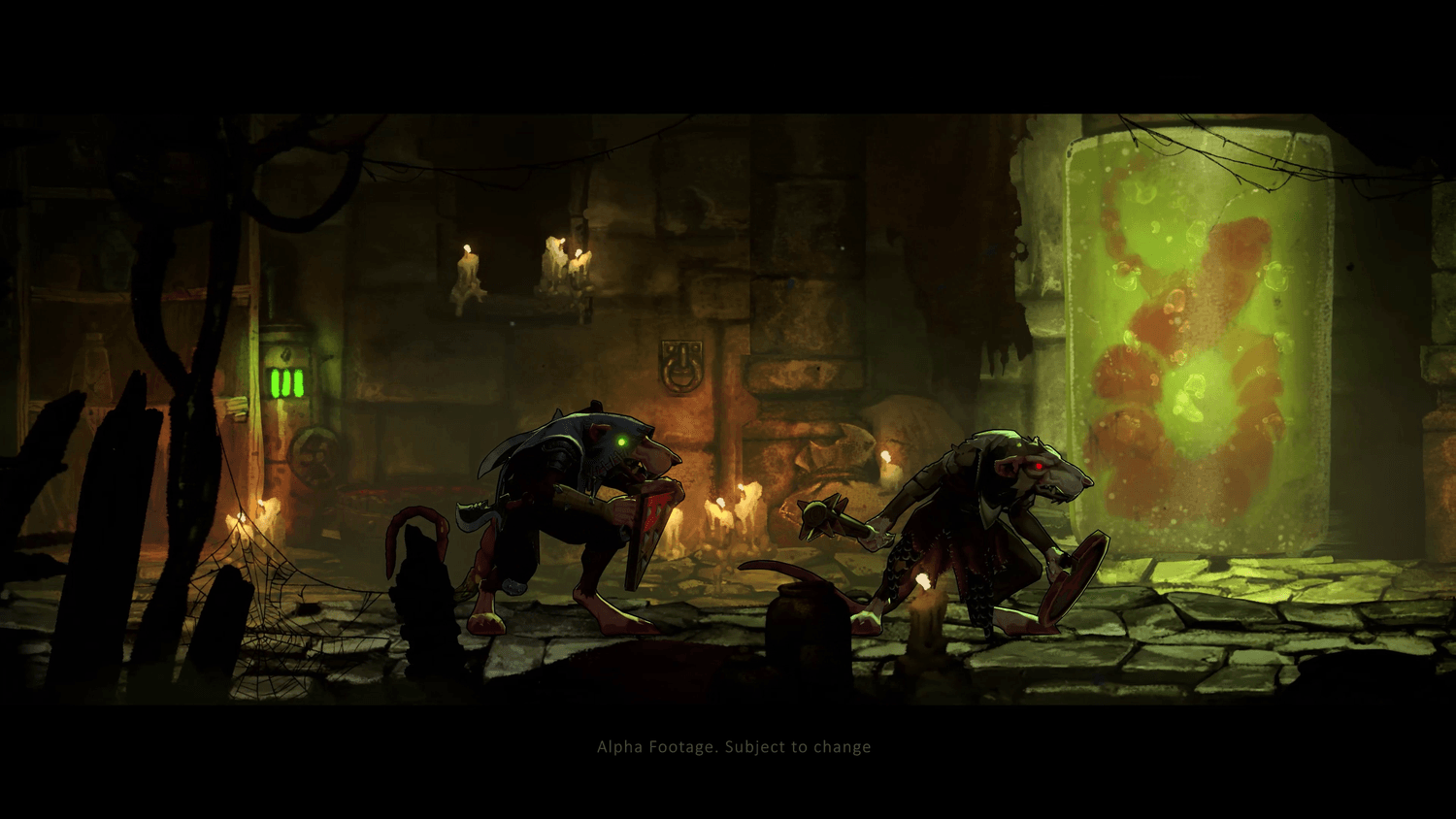
Image: polygon.com
Deathmaster’s sharpest hook is a Skaven assassin, not another battlefield
The strongest early signal around Warhammer Age of Sigmar: Deathmaster is also the simplest: Old Skull Games and Dotemu are building an upcoming 2D stealth-action platformer around a playable Skaven assassin named Vihneek. Across preview coverage published on September 2, outlets describe a short opening slice that starts in a corpse pit, strips the character down to basic movement, then gradually turns him into a ceiling-crawling, dagger-wielding problem solver.
That alone gives this Age of Sigmar game a different temperature from the franchise’s usual video game pitch. IGN notes that Skaven are often the bodies players cut through in games such as Vermintide, rather than the lead. Console Creatures goes further, writing that Deathmaster lets players play as a Skaven “a first in Warhammer history.” That is a broad claim and should be treated as Console Creatures’ framing, but the practical point is clear: Deathmaster is selling Warhammer from ground level, through gutters, shadows, and murder holes, rather than from the command chair or front line.
The tension following this Deathmaster preview is the genre label. IGN’s preview headline and takeaways explicitly connect the game’s level design to Hollow Knight, while other outlets describe it as a stealth-action platformer, stealth-puzzle platformer, or stealth-focused adventure. Based on the reported demo details, Deathmaster is not confirmed as a full metroidvania in the strict sense. It is, however, borrowing enough of that form’s appeal, dense 2D spaces, traversal upgrades, alternate routes, and expressive movement, that the Hollow Knight comparison is going to follow it until Old Skull Games shows the larger map structure.
The Hollow Knight comparison starts with movement, not combat
The reported Warhammer Deathmaster gameplay does not sound like Hollow Knight because Vihneek is pogoing through boss arenas or trading crisp sword duels. It sounds like Hollow Knight because players are reading the shape of its spaces. IGN says the level design reminded its previewer of Hollow Knight, pointing to gloomy, layered caverns and twisting nooks that stretch in several directions. That is a platformer comparison rooted in navigation, mood, and spatial curiosity.
Vihneek’s body is the main reason the comparison has traction. IGN describes him as starting nearly powerless, bound in wooden stocks and able only to waddle, before freeing himself and becoming an agile character who can run along most walls and ceilings. Console Creatures similarly reports that when Vihneek runs against a wall he begins crawling, and that he can crawl across ceilings, turning the area above enemies into a hiding place and a route. MonsterVine also highlights wall climbing, darkness, long grass, and upside-down crawling as early pillars of play.
For platformer players, that matters because a character who can treat walls and ceilings as routine surfaces changes the way every room is read. A guard’s patrol path is no longer a horizontal obstacle. A light source becomes part of a stealth puzzle. A ceiling ring, a corner, or a strip of shadow can become a route. This is where Deathmaster’s stealth metroidvania energy appears: the pleasure is not only in reaching the exit, but in recognizing that the room has several legal solutions hidden in its geometry.
Stealth gives the platforming a harsher rule set
Previewers are consistent on one point: Vihneek is deadly only when the player is careful. Console Creatures describes a section in the Gnaw built around watching guard vision cones, patrol routes, and nearby light sources before committing to an assassination. MonsterVine frames the core loop as observation, understanding, and planning, with avoidance, staged accidents, and backstabs all presented as viable answers. The Nerd Stash says the demo rewards shadows and patience, comparing parts of its stealth thinking to Shadow Tactics: Blades of the Shogun.
Deathmaster’s danger model sounds closer to a puzzle box than a brawler. IGN reports that close contact with armed guards means instant death and a restart at the entrance to the current chamber, with guards also able to throw accurate projectiles if they spot Vihneek perched above them. Console Creatures says that if Vihneek is caught, players have only a few seconds to escape before he dies, while praising the checkpointing for returning players to the start of an encounter quickly.
That quick reset is a major design detail. Hard stealth can curdle if every failure costs too much time, especially in a platformer where experimentation is part of the fun. The early reports suggest Deathmaster understands that failure should teach the room. You toss a skull or a piece of rotten meat, test a patrol reaction, misread a sightline, get killed, then return close enough to revise the plan. The game’s brutality works because the punishment appears immediate rather than bloated.
Distractions, trapdoors, and assassinations make it a stealth puzzle platformer
The clearest distinction between Deathmaster and a pure exploration platformer is how much attention the demo places on manipulation. Console Creatures reports that players can pick up skulls and other items to redirect guards, then either kill them or sneak around. The Nerd Stash mentions skulls, meat, and corpses as throwable distractions. MonsterVine gives the most specific example: throwing rotten meat to lure a guard, then opening a trapdoor beneath them.
That toolkit is why several previews reach outside the metroidvania shelf for comparisons. MonsterVine specifically invokes Mark of the Ninja, calling the demo closer to a stealth-puzzle game, while The Nerd Stash reaches for Shadow Tactics. Those references say a lot about the game’s apparent priorities. Deathmaster seems interested in readable information, enemy routines, and player-authored timing, rather than stealth as a vague “stay crouched until the icon goes away” layer.
The violence is also part of the cadence. Console Creatures describes the assassination animations as flashy, bloody, and fast, with decapitations and quick kills in the preview section. In a lesser version of this idea, those finishers could become noise around repetitive stealth rooms. The encouraging note from multiple outlets is that the kills are one option among several. MonsterVine says sneaking past guards, engineering accidents, and assassinating unaware enemies all felt viable in the build it played. That flexibility is the craft question to watch as the full game expands: can each new room keep offering real choices, or will the safest pattern become obvious too quickly?
The upgrade picture is promising, but still incomplete
Deathmaster’s metroidvania appeal depends heavily on progression, and this is where the preview reports become interestingly uneven. Console Creatures says Vihneek is brought to a hideout where he can be upgraded, with the first upgrade being a grappling hook that latches onto rings for quick escapes and repositioning. The Nerd Stash also says it unlocked a grappling hook and glimpsed a few extra skills. MonsterVine, however, says its build contained resources used to purchase upgrades, but that there were “no upgrades in the build to preview.”
That does not necessarily mean the outlets contradict each other in a damaging way. Preview events often involve slightly different slices, or writers may describe access to systems differently. Still, it leaves a real unanswered question: how much of Deathmaster is structured around ability-gated expansion, and how much is a linear stealth platformer with optional resources and encounter upgrades?
For Hollow Knight fans, that distinction is not academic. A grappling hook can support metroidvania backtracking, hidden routes, and late-game mastery, but it can also be a room-by-room tool in a mostly directed campaign. The current Deathmaster preview evidence supports saying the game has exploratory 2D level design, multiple paths, resources, and at least one traversal upgrade shown to some outlets. It does not yet support promising a full interconnected world, a Hollow Knight-style map economy, or the same long-form discovery loop Team Cherry’s game is known for.
Warhammer’s grime is doing real design work here
The Skaven focus appears to be carrying more than aesthetic novelty. IGN describes the opening environments as gory, putrid, and almost hopeless, with layered caverns, torn canvas, and an underground society defined by clan rivalry. MonsterVine praises Old Skull Games’ “beautifully grotty” vision of Skaven life, calling out color palettes, platforming animations, audio, and the chattering personality of the rat-men. The Nerd Stash says the demo made the faction work as protagonists and gave the Skaven universe care in its short slice.
That matters for a licensed platformer because the setting seems to justify the mechanics instead of sitting behind them. Wall-crawling works because Vihneek is a rat assassin. Cowardly lethality works because a Skaven protagonist should feel dangerous from the shadows and fragile in the open. Disgusting props such as skulls, rotten meat, and corpses fit both the fiction and the stealth grammar. Even the corpse-pit opening reported by multiple outlets establishes Deathmaster’s tone while teaching helplessness, escape, and predation in sequence.
There is still a story question hanging over it. IGN’s key takeaways explicitly say the quality of the story remains to be determined after a very brief 30-minute hands-on demo. Console Creatures describes Vihneek being saved by a terrifying Skaven who then effectively claims ownership over him and sends him into the Gnaw. That is a grimly appropriate setup, but a strong opening vignette is not the same as a campaign that can sustain character, faction intrigue, and Warhammer flavor without drowning the platforming pace.
Who should keep Deathmaster on their radar
Based on the source material, Warhammer Age of Sigmar: Deathmaster is safest to watch if your favorite platformers are built around movement literacy and your favorite stealth games treat every room like a small machine. The early appeal is clear for players who like Mark of the Ninja’s readable stealth, Shadow Tactics-style patience, and Hollow Knight’s sense that a 2D space can be studied from several angles before it is solved.
Practical details remain limited in the provided previews. The articles identify Old Skull Games and Dotemu as the teams behind the upcoming game, and several source links point readers to the Steam page for Warhammer Age of Sigmar: Deathmaster. The excerpts provided here do not confirm a release date, price, console platforms, PC requirements, demo availability for the public, or performance targets. Anyone planning around platform or launch timing should wait for a publisher update or storefront listing with those specifics.
For now, the useful read is measured optimism. The Hollow Knight comparison is understandable because Deathmaster’s rooms, traversal, and gloomy underground presentation invite that mental shortcut. The preview evidence points more precisely to a stealth-first 2D action platformer with metroidvania flavor, a harsh fail state, generous checkpointing, and a protagonist whose movement changes the surface language of every chamber. If Old Skull Games can scale that 30-minute slice into a campaign with richer upgrades and consistently flexible encounters, Deathmaster could become one of the more distinctive Warhammer games precisely because it thinks small, low, and sneaky.