
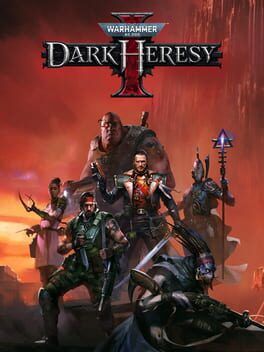

An early, lore-heavy look at Owlcat’s Warhammer 40,000: Dark Heresy Founder alpha on PC, how the Calixis Sector slice is structured, and why it already feels like a darker, more investigative cousin to Rogue Trader and Pathfinder.
Warhammer 40,000 has always had room for quiet horror between the bolter fire. With the Founder alpha of Warhammer 40,000: Dark Heresy now live on PC for early backers, Owlcat is finally letting players live in that space, not as a Rogue Trader or a righteous Space Marine, but as something far more fragile and insidious: an acolyte of the Inquisition.
This is an early look, about ten to fifteen hours of content by Owlcat’s estimate, but it is already a striking statement of intent. Where Warhammer 40,000: Rogue Trader wrapped Owlcat’s Pathfinder-style CRPG in voidships and mass warfare, Dark Heresy leans into whispered accusations, late-night interrogations, and the sickly glow of lumen strips in forgotten hab-blocks.
Wearing the rosette in spirit, not in rank
You do not start as an all-powerful Inquisitor. You are an acolyte, a trusted but expendable instrument in the retinue of a shadowy master. In practical terms, this reframe is the spine of the whole alpha. Your authority is terrifying to common citizens, but it is also conditional and easily contested by planetary governors, Ecclesiarchy preachers, and rival Imperial organs.
In Owlcat’s CRPG framework that shift plays out in conversations more than in combat. Dialogue trees are dense, with branching checks for skills like Inquiry, Intimidation, Scholastica Psykana lore, and the usual social graces twisted into 40K’s grim lexicon. You do not simply pick the blue or red answer. You decide whether to flash Inquisitorial seals, pull rank through a superior’s name, probe at doctrinal heresy, or feign ignorance to draw cultists into overconfidence.
NPCs react to that posture. The alpha already tracks how you lean: merciful investigator, dogmatic zealot, or ruthless pragmatist. A factory overseer cowed through threats will later spread fearful rumors of your team. A hive ganger you treat as a valued informant might open doors into underhive networks someone more pious could never see. It is all handled in familiar Owlcat dialogue, but the cadence and stakes feel distinctly Warhammer 40,000.
Crucially, the power fantasy is fragile. You are dangerous, but not untouchable. Hive enforcers can stonewall you if you misjudge their loyalties. Adepts couch their heresy in reams of sanctioned paperwork and obscure legal rites. On the table, this means many quests can fail sideways. Leads dry up, suspects vanish, and you move forward with incomplete information. That imperfection is the point.
A Calixis Sector slice built like a conspiracy board
The Founder alpha is framed as a focused slice of the Calixis Sector rather than a sector-spanning crusade. Instead of ping-ponging around dozens of planets, you work through a smaller set of locations that feel interconnected, more like nodes on a conspiracy corkboard than isolated dungeons.
Structurally the sector plays out in layered hubs. An Imperial world’s spire-level administratum, its mid-hive manufactoria, and its underhive warrens are all separate maps, but quests knit them together. A seemingly routine audit in the upper levels might reveal discrepancies that point to a missing cargo route in the mid-hive. That in turn hints at a smuggling ring tied to a heretek cult scraping by in sump-choked depths below.
Traveling between these layers is not just a change of scenery. Owlcat leans on verticality and elevation to sell the scale of Imperial architecture. Walkways over yawning chasms host ambushes; gantries become kill zones or vantage points in fights; interrogation chambers overlook factory floors in a way that quietly underscores how few lives the Imperium considers expendable. The geography is designed to reinforce the idea that the hive itself is complicit in heresy. The same elevator that ferries workers between shifts also shuttles forbidden relics and cult literature.
Instead of a classic chapter-to-chapter campaign, the alpha presents something closer to a casefile structure. You pursue core investigations that branch into side inquiries, each with its own suspects, leads, and pockets of lore. Threads cross between them. A minor NPC from an early labor dispute might resurface in a far more sinister context several in-game days later. By the end of the current content, the map of the Calixis slice feels less like a checklist of zones and more like a web of people who all touch the same invisible corruption.
The detective system is the real bolter
Mechanically, the most defining addition in this early build is the detective system. Owlcat has talked about it as the centerpiece of Dark Heresy, and even in alpha form it is already more than a cosmetic clue log.
Investigations generate discrete leads: evidence found at crime scenes, discrepancies in manifest logs, testimonies you pry from terrified workers. These details slot into a kind of mental dossier where you are pushed to draw conclusions rather than simply tick objectives. Crucially, the game allows and even expects you to be wrong.
You might, for instance, connect smuggled promethium canisters to a known underhive gang and declare them the principal heretical vector. That conclusion can become canon for your playthrough. The Inquisition’s wrath descends, entire hab-blocks burn, and the true architect of the conspiracy quietly adjusts plans off-screen. The alpha lets you live with that. There is no glowing "perfect" solution marker. You have done the Emperor’s work as you understood it, and that is both satisfying and horrifying.
This detective scaffolding wraps around dialogue and environmental exploration rather than standing apart as a minigame. Questioning a suspect with the wrong tone might close off certain lines of inquiry permanently. Failing a Lore check about an obscure cult symbol does not stall the story. It simply changes what you think you know, and the dossier you build in your head becomes just as important as the one on the screen.
For fans of Rogue Trader and Owlcat’s Pathfinder adaptations, this is the same studio-wide love of systems-driven narrative, pointed not at character power curves but at your ability to interpret imperfect information in a deeply hostile setting.
Acolytes, xenos, and the heresy of cooperation
If your character is the lens, your companions are the chorus and occasional devil on your shoulder. The Founder alpha already showcases a surprisingly colorful retinue for such a bleak premise.
The Kroot outcast is the most obvious flashpoint. Simply walking through Imperial spaces with a xenos ally has weight. Guards tighten grips on lasguns, clerics spit prayers a little louder, and ordinary citizens stare a bit too long. Conversations constantly prod at the contradiction of an Inquisitorial cell that tolerates an alien in its ranks. Some NPCs refuse to work with you unless you sideline or banish the Kroot temporarily, and agreeing or refusing is not just a mechanical choice. It says something about your interpretation of the Inquisition’s mandate.
The Medicae specialist is a different lens on Imperial cruelty. She keeps people alive at the edges of sanctioned suffering, and the writing leans into how medicine in the 41st millennium serves the state before the individual. She is at once horrified by the things your investigations dredge up and professionally resigned to cleaning up afterward. In party banter she can clash with more fanatical allies, raising uncomfortable questions about whether saving a witness or suspect is truly in the Imperium’s best interest.
Then there is the Ogryn, unusually perceptive by his kind’s standards, used by Owlcat as a blunt yet earnest commentary on class and engineered obedience. He sees injustice in a plainspoken way that more educated acolytes have learned to rationalize. He will sometimes notice cruelty or hypocrisy that others ignore, not in the sense of granting secret clues, but as an unfiltered moral mirror.
Together they anchor Dark Heresy firmly in party-based CRPG tradition while still feeling very specific to Warhammer 40,000. Their interjections in investigations, their approval or disgust at your choices, and the way NPCs treat the group as a composite of these identities all subtly shift how each case feels.
Combat in the shadows of Rogue Trader
Owlcat is not giving up on tactical battles just because this is a more investigative story. Combat here is more restrained and less frequent than in Rogue Trader, but when guns and blades finally come out, the system shows clear iteration.
Encounters are tightly staged, with cover, elevation, and fields of fire that reward methodical positioning. The new emphasis on suppressive fire and breaking enemy resolve means that often you are not trying to exterminate every hostile on the map. Instead you might pin cultists in place, shatter their morale with targeted attacks, then sweep in for arrests or brutally efficient executions.
Targeted shots at weak points, debuffs that undermine leadership figures, and environmental hazards like rupturable promethium tanks all serve the fantasy of a kill team operating within a broader investigation. You are not a frontline Guard regiment purging trenches. You are a scalpel. A shock-and-awe firefight can be as damning to an Inquisitor’s subtlety as open heresy, and some missions make it clear that a loud resolution could torpedo future leads.
Compared with Owlcat’s Pathfinder work, the action economy and ability bloat feel slightly pared back in this alpha, though that may change as development continues. The bones of the studio’s usual crunchy systems are present, but slanted toward quick, high-stakes engagements that punctuate slow-burn detective work rather than overshadow it.
Narrative beats that already stand out
Within the limited Founder alpha scope a few themes are already coming through strongly for lore-minded players.
The first is that Dark Heresy understands the Inquisition as an institution fractured by ideology. Conversations are laced with passing references to puritan and radical philosophies, debates over acceptable xenos tools, and arguments about whether protecting the Imperium’s body is more important than preserving its soul. You constantly brush up against other servants of the Throne who think they are more Inquisition than your own cell.
The second is the way ordinary Imperial life is rendered as both banal and monstrous. The Calixis Sector has been a fan-favorite tabletop setting for years, and Owlcat’s take is already full of familiar textures: corpse-starch rations, recidivist gangs, glow-lamp shrines crammed in maintenance corridors. But the alpha keeps circling back to small, human-scale tragedies. A line worker disappears and nobody files a report because quotas must be met. A shrine to a local saint turns out to be built on a misremembered incident of sanctioned slaughter. Heresy here does not always wear spiky armor. It often looks like resignation.
Finally, there is a clear effort to make your missteps part of the story, not just reload bait. The detective system’s willingness to lock in flawed conclusions, the way companions and NPCs remember your harshest judgments or rare mercies, and the slow, almost procedural accumulation of consequences all point toward a campaign where “I did my best with what I knew” is the closest thing you will ever get to a happy ending.
An alpha that already knows what it wants to be
As an early Founder-only slice, Dark Heresy’s alpha is obviously not representative of the full campaign. Systems may change, and Owlcat is explicitly soliciting feedback over the coming months. But for fans of Rogue Trader and the Pathfinder games, this is less a technical proof of concept and more a thematic declaration.
Dark Heresy is shaping up to be the studio’s most focused and deliberately paced RPG so far, turning its usual strengths in reactivity and mechanical depth toward a story about what it means to seek truth in a universe where truth itself may be heretical. Playing an Inquisition acolyte in this framework feels like constantly balancing zeal, doubt, and survival.
If the rest of the Calixis Sector can match the grim nuance of this opening act, Owlcat might have something rare on its hands: a Warhammer 40,000 CRPG that is less about waging war and more about deciding which kinds of damnation you can live with.