

A deep-dive preview of Darktide’s upcoming Skitarii class, its Adeptus Mechanicus style talent tree, weapon kit, and how it could reshape team composition in Fatshark’s evolving co-op horde shooter.
Warhammer 40,000: Darktide is about to plug into the Omnissiah with its most radical class yet. The incoming Skitarii archetype does more than add another gun-toting zealot to Tertium. It folds the cold logic of the Adeptus Mechanicus into Darktide’s already flexible class system, with a kit that can hard‑swap between battlefield roles, shift team expectations, and deepen the game’s long term meta.
The Omnissiah’s Vanguard Enters Tertium
Revealed during Warhammer Skulls 2026, the Skitarii arrives June 23 as a premium archetype. Fatshark leans fully into Mechanicus flavor, from heavily augmented character models to granular cosmetic tinkering. Players choose material types, augment patterns, Forge World origins, and even tune voice modulation to sound more or less machine filtered.
Lore wise, Skitarii are the cybernetic soldiery of the Adeptus Mechanicus. In Darktide that translates into an archetype that feels more engineered than organic. Instead of a simple “melee, ranged, or toughness” focus, the class is built around power allocation, battlefield data, and a servo skull that acts like a floating multi tool.
A Talent Tree Wired For Modularity
The Skitarii talent tree is structured to encourage specialization without locking the player into a single static role.
One throughline is a core power system that shapes how your Skitarii expresses their abilities. Rather than only choosing flat damage buffs or cooldown reductions, many talents appear to key off how you channel that internal power grid. Focus on ranged output and you become a precision marksman with galvanic fire support. Tune toward melee or electricity and you end up crackling through enemy lines with transonic blades and arc fields.
The tree supports at least three distinct archetypes. Long range builds emphasize stability, accuracy, and execution of high priority targets with galvanic rifles and phosphor weaponry. Melee focused paths turn the Skitarii into a whirling array of monomolecular edges that rewards closing distance, staggering elites, and clearing tight corridors. Electricity heavy talents tie the kit together with crowd control and area denial, helping control mixed waves of hordes and elites in ways traditional Guardsmen or Zealots do not.
This design fits the Adeptus Mechanicus fantasy of constant recalibration. You are not just pushing deeper into one style, you are tuning a combat engine. In practice that means Fatshark is offering a class that can be tailored to a group’s weak spots rather than only stacking onto existing strengths.
Servo Skull: Mobile Utility Platform
The Skitarii’s most striking feature is the servo skull companion. Darktide has flirted with deployables and pets before through grenades, abilities, and Ogryn crowd control, but the servo skull is closer to a persistent tool held in reserve.
Out of the box, the skull carries a las pistol and can be directed to harass enemies, creating low level suppression or finishing weakened targets. Talents appear to unlock additional protocols like flamethrower bursts for close quarters control, healing bursts that top up nearby allies, or data rituals that interact with mission objectives faster.
In team play, that turns the Skitarii into a highly reactive support chassis. When a Veteran is busy lining up headshots, the servo skull can be floated ahead to contest a choke. When a Zealot is bleeding out after diving deep, the skull can be specced to pivot into short range healing or defensive fire. Paired with the game’s existing coherency and toughness systems, the skull promises to fill micro gaps in a squad’s formation without requiring a full reposition.
Adeptus Mechanicus Arsenal: Arc, Phosphor, Transonic, Galvanic
Fatshark is expanding Darktide’s already sizable arsenal with signature Mechanicus kit that further defines the Skitarii’s battlefield role.
Galvanic rifles provide long range precision and reward disciplined fire. In practice they are likely to compete with Veteran Sharpshooter weapons for high value target deletion. A Skitarii specced into ranged talents could take over sniper and specialist hunting duties, freeing Veterans to carry more hybrid or horde capable loadouts.
Phosphor blasters trade some precision for radiant area impact. Expect them to excel at marking and softening clusters, complementing flamers and plasma by dealing with mid range packs or annoying gunners entrenched behind half cover.
Transonic blades give melee builds their own identity. Rather than pure brute force, transonic weapons should play into brutal stagger and bleed style pressure, chewing through armor or quickly collapsing mixed packs. In a group that already runs a bruiser Ogryn, a transonic Skitarii would be the scalpel that follows up on knockdowns and staggers.
Arc weapons anchor the electricity centric paths of the talent tree. These tools look primed for chaining between clustered enemies and stripping armor or toughness, which is something Darktide’s higher difficulties constantly demand. Combined with talents that reward overloading or redirecting power, the Skitarii can become an area denial specialist that punishes hordes for grouping up while feeding kill windows for allies.
How Skitarii Reshapes Team Composition
What makes the Skitarii interesting is not just the tools themselves but how they slot into a four person team already crowded with defined roles.
In a composition with a traditional Veteran, Zealot, Psyker, and Ogryn, Skitarii can push the group toward more hybrid builds. A ranged focused Skitarii might take over specialist and sniper execution, letting the Veteran pivot to a more flexible mid range or suppression oriented setup. Alternatively, an electricity heavy Skitarii paired with a Psyker could create overlapping crowd control fields and priority deletion, basically turning lanes of the map into death corridors.
For squads that struggle with survivability, a servo skull specced for support can smooth out damage spikes without committing a full slot to pure healing. That potentially reshapes expectations of who must run the most defensive builds. A Zealot can lean harder into reckless melee if they know a skull can patch them up or cover their retreat.
At higher difficulties, where coordination and role compression matter most, Skitarii’s flexibility lets organized teams script very specific combat plans. One Skitarii path could be built entirely around wave management and toughness sustain, another for boss damage and armor shredding. Fatshark’s modular talent layout encourages experimentation, so it is easy to imagine dedicated builds emerging for specific modifiers, enemy sets, or weekly events.
A New Expedition and Fresh Threats
The Skitarii’s release is not happening in isolation. Fatshark is pairing the new class with a fresh Expedition area and new enemies that give the Mechanicus arsenal something meaningful to dissect.
The Expedition promises a different rhythm to mission flow, likely leaning into multi stage objectives that reward a tech forward archetype. A servo skull built for data tasks should shine here, shaving precious seconds from interactables while the rest of the squad holds off encroaching hordes.
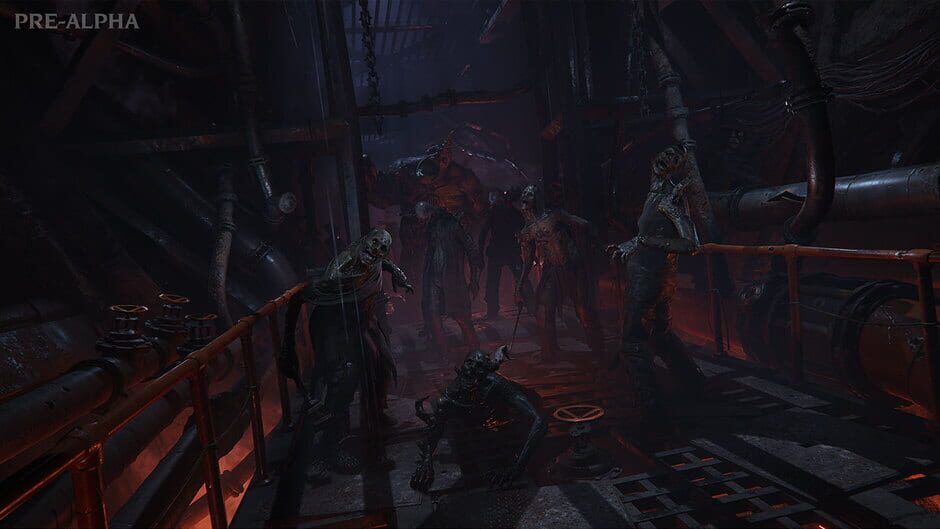
Two new foe types, the Traitor Vanguard and Cultist Vanguard, are also joining the Heretic ranks. Thematically they sound like aggressive forward elements designed to push into player space faster. That plays directly into the Skitarii’s crowd control and support strengths, forcing them to choose when to stand ground and when to dispatch the servo skull to triage the most dangerous flank.
Darktide’s Post Launch Evolution
Since its launch in 2022, Darktide has undergone a slow but tangible transformation. Early criticism focused on progression bloat and a lack of build identity. Fatshark has been steadily responding by reworking class systems into more open talent trees, injecting new mission types, and layering live events such as Dark Rites that give players time limited goals beyond simple loot acquisition.
The Skitarii continues that trajectory. Instead of a simple fifth body, Fatshark is using the Adeptus Mechanicus theme to push its systems in new directions. Power allocation, modular companion behavior, and a talent tree that encourages hard specialization without sacrificing flexibility are all steps toward a game where classes feel like frameworks rather than rigid boxes.
Live events and content drops around these classes also show a stronger sense of cadence. The Skitarii’s launch is timed with balance updates, quality of life passes, and new enemies that give players reasons to revisit old missions with fresh tactics. It is a model that resembles seasonal refreshes in other co op action games, but tailored to Darktide’s smaller, more curated mission roster.
Why The Machine Cult Matters For Darktide’s Future
Bringing the Adeptus Mechanicus into Darktide is more than fan service. It signals how far Fatshark is willing to stretch the game’s class architecture. If a Skitarii with a configurable power grid and multipurpose servo skull can fit cleanly into the existing sandbox, the door opens for even wilder archetypes built around other Imperial or xenos doctrines.
For players, the draw is obvious. A class that can be tuned to act as a sniper, a melee duelist, an area control specialist, or a roaming support piece changes how you think about queueing solo or building a static group. For Darktide as a live game, it is a proof of concept that evolution does not have to mean only new maps or new enemies. It can mean entirely new ways of expressing the core cooperative loop.
When the Skitarii marches into Tertium on June 23, it will not just bring new weapons and a shiny red cloak. It will bring a different way of thinking about roles, responsibility, and synergy in one of the most atmospheric co op shooters on the market. The Omnissiah would approve.