
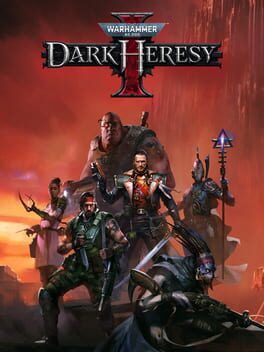

Owlcat’s Founder Alpha for Warhammer 40,000: Dark Heresy turns its crunchy CRPG formula toward investigations, conspiracies, and the miserable day‑to‑day work of serving the Inquisition in the Calixis Sector.
Warhammer 40,000 has always been a setting about institutions as much as individuals. Space Marines get the glory, Rogue Traders get the profit, but it is the Inquisition that quietly keeps the Imperium’s rotting machinery grinding on. With Warhammer 40,000: Dark Heresy, Owlcat Games is finally making the Inquisition the main act, and the new Founder Alpha on PC is our first real taste of what that looks like as a CRPG.
Rather than another tour of the front lines, Dark Heresy drops you into the Calixis Sector as an acolyte, a disposable but vital asset in the retinue of an Inquisitor. Your job is not to conquer worlds, but to scrutinize them: poke at cults, interrogate witnesses, cross‑reference Administratum manifests, and then, when the time comes, burn everything that cannot be saved.
Calixis Sector: Where Heresy Festers in the Seams
The Calixis Sector is a classic Warhammer 40,000 locale, carved out of the Drusus Marches and riddled with old crusade scars, decaying hive cities, and half‑remembered pacts. Owlcat leans into that history. From the opening, the alpha positions Calixis as a pressure cooker of overlapping authorities and quiet corruption. Planetary governors cling to their tithes, the Ecclesiarchy polices shrines and cathedrals, and the Mechanicus hoards knowledge in rusting forges, all while your Inquisitor peers into the cracks for signs of the Ruinous Powers.
Alpha content limits the number of worlds you can visit, but each hub is dense in the way Rogue Trader’s best locations were, only more grounded. Instead of voidships and xenos embassies, you start with hab‑blocks, manufactoria, Administratum archives, and back‑alley chapels, each layered with competing NPC agendas. Life in the Calixis Sector is presented as a slow suffocation under Imperial doctrine, and as an acolyte you are both its enforcer and its victim.
From Rogue Trader to Witch Hunter: How Owlcat’s Formula Is Changing
If you played Pathfinder or Warhammer 40,000: Rogue Trader, you will recognize the bones of Dark Heresy immediately. This is still an isometric, party‑based, story‑driven CRPG with reams of reactive dialogue and elaborate character builds. What changes is the core loop. Instead of sailing from system to system making profit‑factor rolls, your campaign is structured around investigations.
Owlcat’s usual approach to quest design leaned on combat encounters and branching dialogue with the occasional skill check to spice things up. Dark Heresy’s alpha reorients that structure. Each major case feels like a self‑contained investigation arc, built around evidence gathering, cross‑examination, and deduction, with combat as a tool rather than the default solution.
Encounters that would have been clear‑cut fights in Rogue Trader can now be approached as scenes to be dissected. You arrive at a crime scene or a cult ritual aftermath and fan out, clicking through interactable elements, rolling checks to notice sigils, inconsistencies, or traces of forbidden technology. Conversations are longer, more pointed, with options that explicitly reference what you have already discovered.
The result is a slower, more methodical pace. Instead of chewing through combat maps, you are constantly reading, interpreting, and reevaluating your suspicions. For players used to Owlcat’s prior games, this feels less like a detour and more like a specialization, applying their obsession with systems and reactivity to a different kind of fantasy: not galactic conquest, but witch hunting.
The Mind Map: Turning Intel into Insight
The most striking mechanical addition in the alpha is the investigation mind map. It sits somewhere between a detective board and a quest log you can actively manipulate. Every time you uncover key intel in dialogue, exploration, or scripted scenes, Dark Heresy can turn that discovery into a node on this web.
In the alpha’s early cases, these nodes represent suspects, organizations, locations, and hypotheses. You connect them manually to test theories: link a guild factor to a smuggling route, tie a shrine’s heretical iconography to a known cult, or crosswire contradictory testimonies to surface a new question. The game reacts when you form valid or insightful connections, unlocking new dialogue topics, confrontation options, or even combat setups that only occur if you have correctly understood the situation.
Crucially, Owlcat uses this system to model ambiguity. The map does not exist to funnel you toward a single “correct” answer. Some links are misleading, some are incomplete, and the Inquisition’s work is often about acting under conditions of doubt. The alpha already shows cases where you can pursue one of several plausible interpretations, each leading to different arrests, executions, or cover‑ups.
For fans of classic CRPGs that dabble in investigation, this is the first time Owlcat has built a bespoke structure around detective work instead of just layering skill checks on top of linear quests.
Life as an Acolyte: Authority Without Security
In most Warhammer 40,000 games, you are power first and context second. Dark Heresy inverts that. As an acolyte, you act in the Inquisitor’s name but live at the mercy of their judgment and the Sector’s bureaucracy.
In the alpha, you feel this immediately. Local enforcers and nobles know they must cooperate, but they also understand how far the Inquisition’s reach extends and how willing it is to look the other way when it suits Imperial stability. Your rosette opens doors and mouths, but it does not guarantee the truth. NPCs lie, stall, and manipulate, hoping that your Inquisitor’s gaze will drift elsewhere.
Your party composition reflects this fragile authority. Instead of a retinue of demigods, you begin with specialists: scribes, sanctioned psykers, a scarred guardsman, an Ogryn conscript. These are the kind of personnel an Inquisitor can lose on a bad day and replace on the next. In conversation, they often defer, but their backgrounds unlock unique investigative angles and interaction options.
The tone is as oppressive as you would expect. The Inquisition in the Calixis Sector is portrayed not as a noble order of incorruptible agents, but as a ruthless filtering mechanism for loyalty and talent. Success might bring you closer to your Inquisitor’s inner circle; failure can mean censure, mind‑scrubbing, or a quiet transfer to a penal regiment. The alpha constantly reminds you that in the grim darkness of the far future, even the secret police live precarious lives.
Combat: Turn‑based Purges In Service of the Case
Owlcat is not abandoning its love of crunchy tactical combat. When violence erupts in Dark Heresy, it is turn‑based, cover‑focused, and fully in line with what Rogue Trader delivered, though smaller in scale during the alpha.
Fights tend to be more intimate. Instead of mass boarding actions or pitched battles across voidship decks, you are clearing hab‑rooms, warehouse aisles, chapel naves, and maintenance tunnels. The weaponry is familiar: lasguns, autoguns, stub pistols, chainswords, flamers, and the odd exotic piece of tech, each benefiting from traits like penetration, reliable, or blast radius.
What is different is the role combat plays in the narrative. Skirmishes typically erupt as the endpoint of a bad interrogation, an ambush you failed to anticipate, or a deliberate choice to escalate a situation rather than continue talking. The alpha already uses combat outcomes as investigative data. Sparing a suspect mid‑fight to question them later, deliberately allowing a cult cell to run in order to track their movements, or purging a crowd to maintain secrecy all feed back into your standing with factions and your Inquisitor’s expectations.
Tactically, the alpha suggests an emphasis on synergy between specialists. Psykers set up mind‑affecting debuffs that make interrogation easier later, snipers pin down specific cult leaders, and heavy hitters like the Ogryn break shields and disrupt formations. Positioning, overwatch, and managing limited resources like grenades and stimm injectors remain key pillars.
Character Building and Party Dynamics
Character creation in the alpha feels familiar if you have spent hours in Owlcat’s previous games. You pick an origin, background, and archetype, each with mechanical benefits and lore flavor. The crucial twist is that everything is framed through the lens of Inquisition service.
Backgrounds are not simply “noble” or “criminal,” but explicitly tied to Imperial institutions: Schola Progenium training, hive ganger turned informant, failed priest, former regiment medic. Each grants investigative perks. A former cleric can parse doctrine and spot subtle heresies in sermons. An Administratum adept notices gaps in ledgers. A voidborn acolyte recognizes signs of warp taint where others see only superstition.
Party banter and companion quests showcase Owlcat’s narrative density as strongly as any stat sheet. Even in alpha form, your teammates comment on evidence you find, challenge your theories, and bicker about the ethics of your work. A guardsman might push for summary execution while a scribe advocates for deeper audit and a psyker warns of unseen forces at play.
Alignment is less about good versus evil and more about shades of Imperial doctrine. Do you act as a puritan, scorning compromise and erring on the side of mass purges, or do you lean radical, willing to wield forbidden methods and make uneasy alliances to combat greater threats? The alpha hints at a system of Inquisitorial philosophies that will shape how superiors view you and how cases can be resolved.
Narrative Density: Fewer Planets, More Threads
One of Rogue Trader’s quiet weaknesses was that some locations felt like beautiful, combat‑heavy postcards rather than fully lived‑in spaces. Dark Heresy responds by pulling the camera in tighter and cramming more narrative threads into each area.
In just the alpha slice, hub regions are saturated with optional leads: side investigations that might connect to your main case, petty local dramas that can be weaponized later, or whispers of unrelated heresies you can choose to log or ignore. Every cogitator terminal, archive shelf, and shrine plaque is another chance to uncover background on Calixis or hints about the larger meta‑plot.
The writing leans heavily into the Warhammer 40,000 tone without becoming unreadable. Text is dense but purposeful, constantly reminding you that you are looking at the Imperium from the inside. The bureaucratic language, the grim devotional phrases, and the cold logic of sacrifice all serve the fantasy of being an acolyte sifting through the trash of a dying empire.
Crucially, the alpha gives you room to be wrong. Misinterpreting evidence, trusting the wrong official, or drawing a hasty conclusion can close some narrative doors and open others. It is too early to tell how far Owlcat will push failure as a valid storytelling path, but the foundation is there.
What Founder Alpha Players Can Expect
As a Founder Alpha, this build is clearly aimed at feedback rather than content binging. You are getting an early look at:
A focused chunk of the campaign that introduces your Inquisitor, your starting cell, and your role in the Calixis Sector, with enough quests to test the investigative structure without spoiling the full story.
Core investigative systems, especially the mind map and how evidence gathering, interrogation, and deduction feed into each other.
Turn‑based combat tuned around small‑scale encounters, letting you experiment with party roles and synergies.
Early impressions of alignment and philosophical choices as they relate to the broader Inquisition.
Performance, balance, and interface are all still in flux. Owlcat has a reputation for iterating heavily between alpha, beta, and release, and Dark Heresy looks no different. Combat difficulty spikes, UI awkwardness in the mind map, and bugs in branching dialogue are exactly the kind of issues this phase is meant to flush out.
For players willing to tolerate rough edges, though, the Founder Alpha already delivers something distinct in the CRPG space: a full‑fat, lore‑heavy Warhammer 40,000 campaign that treats investigation as seriously as it treats purging.
The Road Ahead for Dark Heresy
If this alpha is any indication, Warhammer 40,000: Dark Heresy is shaping up to be Owlcat’s most thematically focused game to date. The Calixis Sector feels oppressive and alive, the Inquisition fantasy is sharply realized, and the investigative systems have real teeth rather than functioning as mere flavor.
There is still a long path from Founder Alpha to launch. Balancing freedom of deduction with clear feedback, ensuring that combat serves the narrative without becoming a slog, and maintaining performance across sprawling, dialogue‑heavy hubs are all non‑trivial challenges. But the core pitch is already compelling: serve an Inquisitor, hunt the countless small heresies that threaten a crumbling empire, and live with the consequences of the truths you uncover or choose to bury.
For now, Founder Alpha access gives PC players a rare opportunity to step into the Calixis Sector early, feel out the life of an Inquisition acolyte, and help shape a CRPG that wants you to think as hard as you fight in the name of the God‑Emperor.