
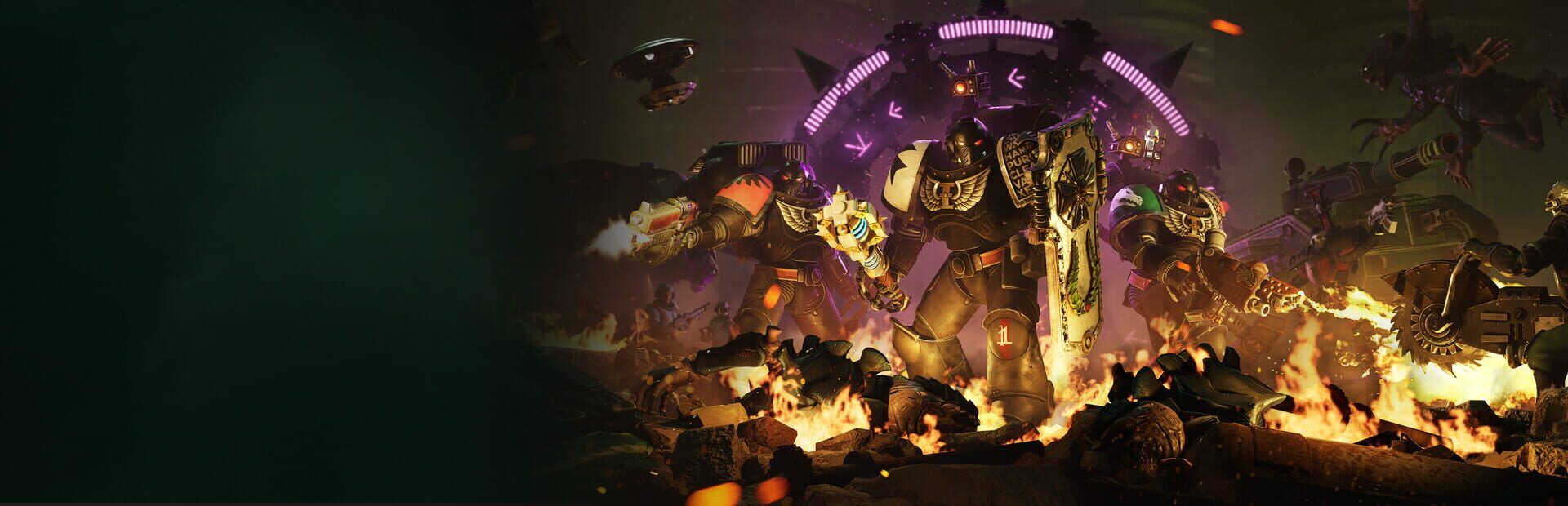

Previewing Chaos Gate – Deathwatch, the tactical RPG sequel that hands command to the Deathwatch and reshapes squad-building, battlefield roles, and long-term strategy while riding a wider 2026 resurgence of Warhammer strategy games.
A New Kill Team At The Gate
Warhammer 40,000: Chaos Gate – Deathwatch is not just more Daemonhunters with black shoulder pads. Frontier Foundry and Complex Games are taking the rock-solid tactical chassis of 2022’s Daemonhunters and rebuilding the campaign around the Imperium’s most flexible tool: the Deathwatch.
Where the Grey Knights of Daemonhunters were a single, tightly defined Chapter built to delete daemons up close, the Deathwatch are a composite force. Battle-brothers from dozens of Chapters, inquisitorial specialists and even Astra Militarum assets all serve under a single banner. That premise is what gives Deathwatch its teeth, because almost every layer of the design now revolves around hybrid squads, cross-faction loadouts and multi-front xenos wars instead of one hyper-focused crusade.
From Grey Knights To Kill Teams
Daemonhunters was all about precision shock troops. You deployed a small squad of psychic paladins, teleported into the teeth of Nurgle’s warp-spawned hordes, and used a handful of carefully tuned classes to surgically dismantle specific daemon threats. Your enemy roster was narrow but deeply explored, and your strategic layer revolved around racing the Bloom across a single sector.
Deathwatch flips that formula. You are now an Inquisitor working through the Deathwatch, and the campaign spans the Tyrian Expanse under siege from seven factions, including Genestealer Hivecults, Orks, T’au and Chaos forces. Instead of learning every quirk of one Chaos god’s plague, you are juggling very different xenos doctrines. The Grey Knights felt like a scalpel aimed at a single tumor. The Deathwatch are a traveling toolbox that has to be repacked before every battlefield.
How The Deathwatch Change Squad-Building
The biggest shift comes from who can serve in your squad. Rather than drawing every marine from the same Chapter, Deathwatch lets you assemble mixed-Chapter Kill Teams, inquisitorial agents and even supporting Guard units under a shared command.
In practical terms that means building around synergies that simply did not exist in Daemonhunters. A Salamanders veteran with heavy flamer wargear covers short-range crowd control while an Ultramarines marksman brings disciplined long-range fire and a Raven Guard operative specializes in infiltration and overwatch traps. That spread of doctrines lets you tune a team precisely for enemy and terrain instead of reshuffling four variants of the same psychic knight.
Class identity is wider too. Where Daemonhunters leaned on a small pool of roles like Justicar, Interceptor and Apothecary, Deathwatch emphasises broader archetypes across its roster, with more pronounced differences between heavy weapon platforms, stealth and recon experts, battlefield control casters and support characters. Kill Teams start to feel less like a group of elite generalists and more like a puzzle made from sharply cut tactical pieces.
Inquisitorial agents are the wildcard. Instead of simply fielding more Astartes, you can slot in specialists that warp the rules of engagement entirely, from battlefield intelligence buffs and targeted debuffs on key enemy units to mission modifiers that change deployment, objectives or rewards. That layer should give campaign runs more personality, since the Inquisitor’s toolkit can nudge you toward different tempos and risk profiles.
New Tools: Vehicles, Fire Support And Battlefield Control
Deathwatch also adds heavier hardware. Redemptor Dreadnoughts, Scout Sentinels and Leman Russ tanks bring armored anchors that sit between pure infantry tactics and the grandiose scale of something like Dawn of War.
On the ground, that matters because positioning and line-of-fire puzzles now extend to vehicle arcs and hull placement. A Redemptor used as a breach unit demands terrain that can funnel hordes into its kill zone, while a Scout Sentinel is more about mobile vision, flanking fire and baiting enemies into prepared crossfires. Leman Russ tanks add slow but brutal area denial, turning open kill-lanes into no-go zones for lightly armored xenos.
For players coming from Daemonhunters, where mobility and melee dominance often defined the meta, this should push the game toward layered fronts. Infantry advance under armor, infiltrators angle for side objectives, and long-range assets thin out priority targets before the close combat elements commit. It is closer to the combined-arms fantasy many tabletop fans imagine when they think of 40K.
Multi-Faction Threats, Multi-Role Squads
Tactically, the seven enemy factions change how you think about a "default" squad. Daemonhunters let you lean into one set of answers for Nurgle’s slow, chunky opponents with predictable mutations. In Deathwatch, a list built for Orks and their melee rush will not survive against T’au firing lines or Genestealer ambushes.
The most interesting wrinkle is how environmental use and mission design evolve to reflect those opponents. Genestealer cults will likely test your scouting, overwatch and reaction fire, pushing you to build recon-heavy Kill Teams that can spot traps before they spring. Orks encourage durable frontlines and crowd control, rewarding flame templates, blast weapons and knockbacks. T’au force you to solve firing-lane problems, using smoke, terrain destruction and flanking tools to collapse gunlines before markerlights and railguns chew your Kill Team apart.
Chaos is the pivot point, combining psychic threats, elites and battlefield corruption that will feel more familiar to Daemonhunters veterans. But here they are one problem among many rather than the sole antagonist, which should keep late-game squads from ossifying into a single optimal layout.
The Strategic Layer: A Sector-Sized Vigil
On the campaign map, Deathwatch again builds on Daemonhunters but stretches its focus. Instead of chasing a single spreading Bloom, you are maintaining vigil across a sector with multiple flashpoints. That framing fits the lore, where Deathwatch forces are often thinly spread, redeployed constantly and forced to make ugly triage decisions.
In design terms that suggests more interesting trade-offs around where to send your best Kill Team, when to commit your vehicles and which threats to tolerate for a few more turns. Supporting units such as Astra Militarum forces can plug gaps, but their arrival and survival likely hinge on earlier decisions, upgrades and inquisitorial priorities. If Complex Games can match their narrative to that structure, every missed deployment could echo in later missions.
The new Skirmish mode is worth watching too. It is positioned as a way to trial squad builds and tactics off the main campaign, which is great for a game leaning harder into roster depth and cross-faction synergies. Being able to iterate on Kill Team compositions against customizable encounters should make it easier to experiment with oddball combinations instead of defaulting to the safest all-rounders.
Why Warhammer Strategy Is Booming Again In 2026
Chaos Gate – Deathwatch is landing into one of the healthiest Warhammer strategy lineups in years. It is not happening in isolation. Games Workshop has spent the last decade loosening its licensing reins, and by 2026 we are seeing a second wave of projects that have learned from earlier stumbles.
Total War: Warhammer set a high bar for big-picture fantasy campaigns, and more recent 40K titles like Chaos Gate – Daemonhunters and Rogue Trader proved there is an audience for slower, more tactical takes that embrace the rules-crunch roots of the tabletop. Those successes are feeding back into newer licenses, giving developers the confidence to drill down into specific factions or sub-themes instead of chasing broad, generic adaptations.
Deathwatch in particular shows how granular the partnerships have become. The Deathwatch were once a niche faction, but they are perfect for a modular tactical game, where kill teams, wargear swaps and cross-Chapter rosters map cleanly to class design and long-term progression. Rather than watering down the lore, 2026’s strategy games are leaning into that specificity.
There is also a broader industry shift. Turn-based tactics have carved out a durable space alongside live-service shooters and open-world RPGs, helped by the success of series like XCOM, Phoenix Point and indie tactics hits. For Warhammer, which thrives on list-building, percentages and movement rules, that genre fit is almost too natural. A player base hungry for deep, replayable tactics experiences is overlapping neatly with a license built on exactly that.
Put those threads together and Chaos Gate – Deathwatch starts to look like a logical next step for the brand. It is a sequel that understands what worked last time, widens the scope across multiple xenos threats and then hands the player the exact faction best suited to answer them with surgical brutality.
The Road To Release
Frontier and Complex Games are not attaching a release date yet, but the reveal trailer and early feature lists make one thing clear. If Daemonhunters was a proof of concept for modern, cinematic 40K tactics, Deathwatch is aiming to be the full expression of that idea, powered by mixed-Chapter Kill Teams, heavier hardware and a sector-wide campaign that demands tough choices.
For Warhammer strategy fans, it is another signal that 2026 is not a blip but part of a real resurgence. The Imperium may be beset on all sides, but on the strategy front, it is looking stronger than it has in a long time.