
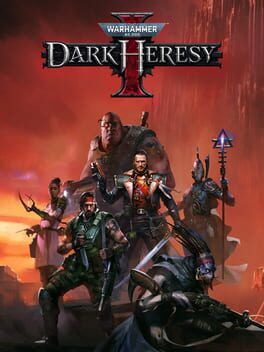

Owlcat's Warhammer 40,000: Dark Heresy launches January 28, 2027 on PC, PS5, and Xbox Series X|S, with Switch 2 planned later. Here is what is confirmed about the Rogue Trader follow-up, its Inquisition setup, beta timing, and platform reach.
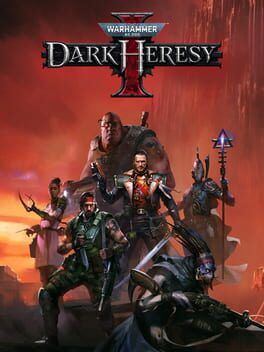
Image: IGDB
Store links: Warhammer 40,000: Dark Heresy on Steam
Dark Heresy now has a date, but Switch 2 is on a different clock
Owlcat Games has dated Warhammer 40,000: Dark Heresy for January 28, 2027 on PC, PlayStation 5, and Xbox Series X|S, according to reports from Eurogamer, GameSpot, RPG Site, Wccftech, Invision Community, and Gematsu citing the developer’s announcement. On PC, the game is listed for Steam, GOG, and the Epic Games Store.
The platform tension is Nintendo Switch 2. Nintendo Everything reports that Owlcat intends to bring Warhammer 40,000: Dark Heresy to Switch 2, but that release timing for Nintendo’s console will be shared later. Gematsu likewise lists Switch 2 as arriving “at a later date,” while Eurogamer says a Switch 2 release date will be provided later, citing a press release. In practical terms, the Warhammer 40K Dark Heresy release date is confirmed for January 28 on PC, PS5, and Xbox Series X|S, while Switch 2 has a confirmed plan but no dated launch.
That distinction matters because this is a party-based Owlcat CRPG with tactical combat, companion management, and investigation systems, rather than a lightweight spin-off. If you are planning around platform, save files, beta access, or launch-week performance, the safe reading is simple: PC and current-gen console players have a fixed date; Switch 2 players have a confirmed destination, not a confirmed day.
Owlcat is following Rogue Trader by moving from dynastic power to Inquisition work
Dark Heresy is being positioned across multiple reports as Owlcat’s follow-up to Warhammer 40,000: Rogue Trader. GameSpot calls it a follow-up to the studio’s previous lengthy game, and Eurogamer frames it as building on Rogue Trader’s work in the setting. That lineage is important for RPG players because Owlcat’s recent Warhammer project was not a short tactics exercise. Eurogamer’s Rogue Trader review, quoted in its Dark Heresy coverage, said Rogue Trader “nails the 40k setting” and delivers a massive narrative with substantial tactical combat, while also noting that bugs and poor performance held it back.
Dark Heresy changes the player fantasy. Rogue Trader gave players the authority of a voidfaring noble whose power comes from a warrant, dynasty, trade, exploration, and command. Dark Heresy puts players inside the Inquisition. According to Owlcat’s description carried by Nintendo Everything, Gematsu, RPG Site, and Wccftech, players begin as lowly acolytes in the Calixis Sector, assemble a warband of zealots and outcasts, investigate crimes and apostasy, and try to root out heresy before it spreads.
For an Owlcat-style RPG, that setup changes the shape of choice. The premise is no longer only about where power can take you. It is about what an investigator, interrogator, and sanctioned agent is willing to do with incomplete information. The announced companion and investigation details suggest a campaign built around judgment calls, suspect alliances, and party advice as much as battlefield positioning.
The Calixis Sector pitch is built for investigations and morally ugly party choices
Owlcat’s published setup, quoted by several outlets, places Dark Heresy in the Calixis Sector, where heresy spreads through both the slums of the Imperium’s underbelly and the elite spires above them. The enemy list is broad by design: cults, conspiracies, and the Archenemy’s servants. That gives Owlcat room to structure quests around layered suspicion rather than a simple chain of combat encounters.
The companion roster is already doing a lot of mechanical and narrative work. Owlcat’s description names abhumans such as Cogg, dangerous psykers such as Saro, Pariahs such as Discordance, xenos such as the Aeldari Corsair Laarthyr and the Kroot Ra’akhti, and human companions including the Catachan fighter Haymar, Rogue Trader Chorda, and Touma. Nintendo Everything also quotes Owlcat describing the party as ranging from loyal Imperial subjects, including a veteran Guardsman from Catachan, to xenos such as a bird-like Kroot mercenary.
Those categories have obvious RPG consequences, even before Owlcat reveals full class trees, builds, or progression rules. Psykers imply power with risk. A Pariah suggests a different relationship to the warp and to other people in the party. A Kroot or Aeldari companion inside an Inquisition story raises trust and doctrine questions before a single combat round begins. The confirmed point is that each companion has unique skills that can contribute in revamped tactical encounters or through advice during investigations. The expectation, based on Owlcat’s stated design and prior CRPG focus, is that party composition will affect both combat solutions and investigative interpretation, but the exact build system still needs final launch documentation.
Choice is being framed around consequences, not clean hero routes
Owlcat’s language around player choice is unusually direct. The developer says Inquisitors are free to decide how to handle tasks, whether searching for truth at all costs or sacrificing innocents for their own benefit, with consequences that can be intended or unintended. That is the core promise behind Warhammer 40000 Dark Heresy as an RPG: the job is to fight corruption, but the methods are part of the corruption test.
This is where the Dark Heresy name carries weight for tabletop-minded players. The provided source material does not detail tabletop mechanics, dice systems, or a direct rules conversion, so it would be premature to claim how closely the video game follows any specific pen-and-paper structure. What is confirmed is the role fantasy: acolytes rising into Inquisition work, a warband of compromised specialists, investigations into hidden crimes, and choices that may protect the Imperium by damaging the innocent people living inside it.
From a progression and quest-design perspective, that is a richer fit for Owlcat than a pure power fantasy. A good Inquisition campaign can make a persuasion check feel as dangerous as a plasma volley, because bad information can turn an entire district, faction, or companion arc. Owlcat has also shown a “detective system” trailer previously, according to RPG Site’s release-date report, which points to investigations being a visible pillar of the campaign. The final question is how often those systems produce meaningful branches rather than flavor text around the same endpoint, and that answer belongs to the finished game.
Founder’s Packs and beta access give PC players one last pre-launch window
For players who do not want to wait for launch, several reports say Founder’s Packs remain available through the official Dark Heresy website until the beginning of January 2027. Invision Community and Gematsu report that the current beta is available to founders and will close on January 7, 2027, so Owlcat can prepare for launch.
Wccftech adds more specific access history: the game was announced during the Warhammer Skulls 2025 livestream on May 22, 2025, Owlcat launched an open alpha in December 2025, and that alpha transitioned into beta in May 2026. Wccftech also reports that joining the beta is still possible on Steam by pre-ordering or buying a Founder’s Pack, Developer’s Digital Pack, or Collector’s Edition through Owlcat’s Dark Heresy website. That is useful, but it also narrows who should jump in now.
If you want to test the first act, experiment with early builds, or decide whether Owlcat’s new investigation and combat revisions fit your taste, the founder route gives you a dated opportunity before January 7. If you are waiting for console performance, Switch 2 details, final balance, or a cleaner first run, the beta is not a substitute for launch information. Owlcat’s previous Rogue Trader reception, as summarized by Eurogamer, leaves a sensible caution flag here: ambition and density are strengths, but launch polish and performance are worth watching.
Switch 2 is the platform question with the biggest upside and the least detail
The Warhammer Dark Heresy Switch 2 listing matters because it would put a dense, party-driven CRPG on Nintendo hardware in the same broad launch plan as PC, PS5, and Xbox Series X|S, even if it does not arrive on the same day. Nintendo Everything’s report is clear that Owlcat intends to bring the game to Switch 2, but the console’s release timing will come later. Gematsu’s wording, “followed by Switch 2 at a later date,” reinforces that this is a post-launch platform rather than part of the January 28 rollout.
There is a small reporting discrepancy worth separating. GameWatcher’s article says Dark Heresy will be a “full release across all platforms,” but the same wave of platform reporting from Eurogamer, Gematsu, Nintendo Everything, RPG Site, and others identifies January 28 for PC, PS5, and Xbox Series X|S, with Switch 2 undated or later. The strongest supported reading is that Owlcat’s full release begins on those three platform families, while Switch 2 remains announced without a release date.
For Nintendo players, the unanswered questions are the important ones. The provided sources do not confirm pricing, file size, physical release plans, performance targets, cross-save, parity with PC and console patches, or whether Switch 2 will launch with any post-January updates already included. For a tactical CRPG with text-heavy questing and large combat encounters, interface scaling and stability will matter as much as portability. The Switch 2 announcement broadens the game’s potential audience, but it does not yet answer whether that version will be the best way to play at launch, because it currently has no launch date.
Who should plan for January, and who should wait
If your priority is playing Warhammer 40,000: Dark Heresy as soon as possible, the confirmed path is PC, PS5, or Xbox Series X|S on January 28, 2027. PC buyers will have Steam, GOG, and Epic Games Store options, according to the release-date reports. Steam is also the relevant storefront for current beta access as described by Wccftech, though that beta is set to close on January 7.
If your priority is the most stable Owlcat CRPG experience, waiting for launch impressions is reasonable. The game’s premise is promising for players who like party builds, morally pressured questing, and tactical encounters tied to companion identity. At the same time, Eurogamer’s quoted assessment of Rogue Trader is a reminder that Owlcat’s Warhammer work can be ambitious enough to strain performance and polish. That does not predict Dark Heresy’s launch state, but it is the right lens for a buyer’s decision.
Switch 2 players have the clearest reason to wait. Warhammer 40,000: Dark Heresy is officially planned for the platform, according to Nintendo Everything and Gematsu, but no Switch 2 date has been announced. Until Owlcat gives timing and technical specifics, the Nintendo version should be treated as confirmed but still undefined. For everyone else, January 28 is now the date to watch, with the Inquisition replacing the Rogue Trader dynasty as Owlcat’s next big test of Warhammer 40K role-playing.