
Digital Extremes’ latest cinematic chapter uses Tau, new systems and smart rewrites of old content to make Warframe feel new again, just as surging player counts are crashing its servers.
Warframe is twelve years old and buckling under its own success again. With The Old Peace, Digital Extremes has shipped one of its most ambitious updates to date, and the result is a live service game so popular that its servers are creaking just to keep up. That tension between thoughtful long term design and the messy reality of massive demand is exactly why The Old Peace is worth paying attention to, even beyond Warframe’s own community.
A Cinematic Return To Tau That Reframes The Past
At the center of The Old Peace is a new cinematic quest that finally dives into the long foreshadowed Tau system. Rather than treating Tau as a clean break, the quest is structured as a tour through the Operator’s buried memories. You are not just seeing new planets and architecture. You are reliving the Perita Rebellion, walking the fragile line between Orokin arrogance, Sentient resistance and Tenno identity that the game has been hinting at for years.
That framing does a few important things. It gives lapsed players an emotional bridge back into the story, because it explicitly connects to earlier quests like The Second Dream, The War Within and Whispers in the Walls. It gives lore watchers long awaited answers about what really happened on Tau without discarding old canon. And by putting you back in the Operator’s skin instead of the Drifter, it restores the perspective of the original cinematic saga while still paying off newer story threads.
Crucially, this is not a one and done lore drop. Digital Extremes is already clear that The Old Peace is laying groundwork for a larger Tau focused expansion in 2026. The quest is built as a hinge, pointing forward to new systems and conflicts, but rooted firmly in the history that made players care in the first place.
Perita Rebellion: A Warfront Mode That Feels Like A Payoff
The first sign that The Old Peace understands how to refresh a live service is Perita Rebellion. On paper it is another mission type. In practice it feels like a reward for a decade of ramping up the game’s sense of scale.
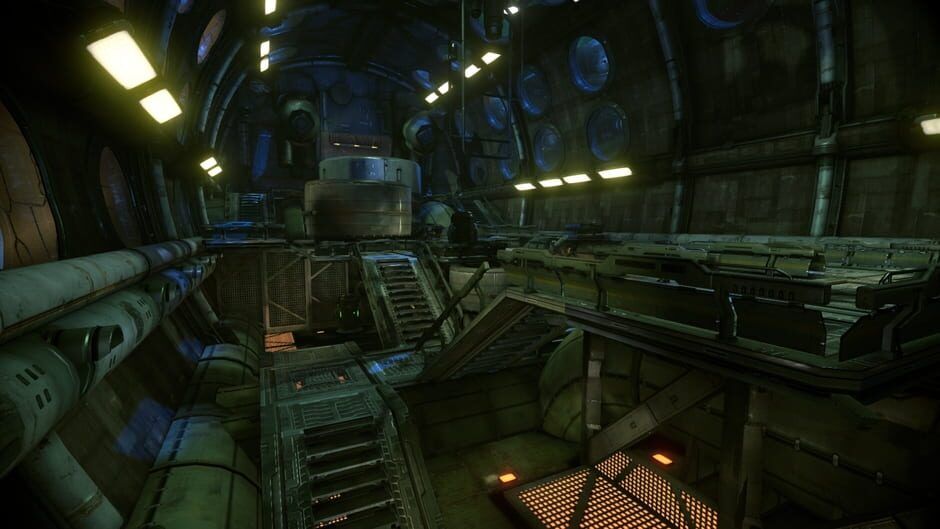
Perita Rebellion drops you on the front line of Tau for a tight twelve minute sprint. You sprint across a huge battlefield, dart through caves, skirmish under dropships and rip through objectives that remix classic mission types. One moment you are blowing up vehicles, the next you are cutting down priority targets while Sentient artillery falls around you.
Movement is the glue that holds it together. A new grapple system lets you hook across open ground and even sling yourself through passing ships. Old tilesets were always about chaining bullet jumps and slides into a kind of personal parkour ballet. Perita Rebellion externalizes that fantasy into the environment itself so the map is constantly helping you play like the trailers looked.
Because objectives mash together familiar behaviors from exterminate, sabotage and interception, Perita Rebellion is instantly readable for returning players. Yet the pacing and layout feel like something Warframe has never quite attempted at this scale. It plays like a living war story rather than another checklist node.
Descendia: Weekly Content That Honors Old Systems
If Perita Rebellion is about delivering the fantasy of a Tau warfront, Descendia is about stitching the rest of Warframe’s history back together. It is a multi floor gauntlet you tackle under a timer, descending deeper each run. Every floor pulls a different slice of the game’s past into the present.
One level might resurrect the old Nidus salvage missions. Another might throw you into a room full of Narmer Deacons from The New War. Later you might be handed a Warframe 1999 style rocket launcher and told to survive against stacked modifiers. It feels less like a brand new mode and more like a curated museum of forgotten mission types, tuned and spliced together into something sharp and modern.
The weekly structure is clever. Descendia uses checkpoints at floors seven and fourteen that let you extract and resume later so you do not have to commit to a single marathon session. That is a direct response to the current reality of Warframe’s endgame, where players are already juggling Archon Hunts, Netracells, Nightwave challenges and whatever limited events are live. Rather than demand a new chunk of schedule every week, Descendia folds itself around the way people currently play.
This is where The Old Peace’s design philosophy is clearest. Instead of retiring older systems or pretending they never existed, Digital Extremes acknowledges them, upgrades them and gives them a new role in the weekly routine. Live service games often grow by stacking disconnected layers of content on top of each other until new players are crushed by choice and veterans simply ignore whatever is not optimal. Descendia threads that needle by turning legacy content into a curated, rewarding highlight reel.
Tauron Strikes And Artifact Weapons Rekindle The Power Fantasy
Narrative and structure are only part of the refresh. The Old Peace introduces a new tier of gear in the form of Artifact weapons and the Tauron Strikes they unlock. These act as a kind of ultimate ability for your loadout, big cinematic attacks that clear the screen and remind you that Warframe is supposed to feel outrageous.
After twelve years of balancing, nerfs and incremental upgrades, it is easy for even wild builds to start feeling routine. You press the same four powers, spin the same melee combo and enemies evaporate in the same predictable way. Tauron Strikes puncture that monotony. They give you a reason to think about timing, positioning and enemy density in a fresh way because unleashing one at the perfect moment feels distinct from your normal rotation.
From a systems perspective, Artifact weapons represent a new long term progression track that does not invalidate days and months spent on existing gear. They sit alongside Primes, Arcanes and Rivens instead of replacing them. In a game where collections and fashion are a big part of the appeal, that matters. Players get a new chase without feeling that their legacy arsenal was just reset for the sake of an expansion marketing beat.
Honoria Titles Turn Forgotten Resources Into Social Flex
The other quiet masterstroke in The Old Peace is Honoria titles. On the surface they are account wide labels you can pin next to your name, purchased from a new NPC. Underneath, they are a sophisticated solution to two of Warframe’s long standing problems: dead content and junk drops.
Each Honoria title is tied to specific resource turn ins. Some simply ask for a mountain of credits. Others demand huge piles of items that have languished for years at the bottom of veteran inventories, like dozens or hundreds of Harrow Chassis drops. Many point directly at older modes and nodes that have struggled to sustain a healthy population in 2025.
Want a particular title? You might find yourself queueing for Lua Conjunction Survival for Voruna resources, diving back into Isolation Vaults, or revisiting obscure bosses that only diehards still farmed. Newer players benefit because they are suddenly able to find squads for this content again. Veterans benefit because the time they spent mastering those corners of the star chart now translates into visible social clout.
Crucially, none of this is framed as a punitive tax. Honoria titles are prestige. They turn the act of clearing out dusty lockers of materials into a kind of victory lap through Warframe’s history. It is an approach that other long running live services could easily copy. Instead of sunsetting old gear and currencies, you can recycle them into optional status symbols that encourage players to re engage with legacy activities on their own terms.
Live Service, Growing Pains And A 12 Year Surge
All of this would be impressive even if it only stabilized Warframe’s population. Instead, The Old Peace has helped ignite one of the biggest surges the game has ever seen. Steam charts, console dashboards and community hubs are filled with returning Tenno, fresh installs and people posting that they finally finished old quests to reach The Old Peace in time.
The success has been tangible enough to hurt. Login queues, matchmaking errors and outright mission failures have plagued the launch window as Digital Extremes scrambles to push hotfixes and scale infrastructure. The studio has been unusually transparent, posting frequent status updates, acknowledging the frustrations and trying to keep players informed while they bring more capacity online.
You can read that situation in two ways. One is as a technical failure, a reminder that even seasoned teams can underestimate demand. The other is as proof of just how powerful a well aimed update can be for a decade old free to play shooter. Very few live service titles survive long enough to ship something like The Old Peace. Fewer still can claim that their biggest problem is too many people trying to log in.
Why Warframe Is Still Growing
The Old Peace did not arrive in a vacuum. It lands after The New War, Duviri Paradox, Whispers in the Walls and Warframe 1999, each a risk that pushed the game’s structure in new directions without abandoning its free flowing action core. Over twelve years, Digital Extremes has cultivated three habits that The Old Peace puts into sharp focus.
First, the studio treats the main story as a long running television series rather than a sequence of disposable campaigns. The Old Peace respects what came before, fills in gaps players have speculated about for years and signposts the next chapter. That continuity keeps invested players around and makes returning ones feel like their past time spent still matters.
Second, new systems are almost always built with the rest of the game in mind. Perita Rebellion and Descendia are fun on their own, but they are also doors back into older nodes, loot tables and factions. Artifact weapons and Tauron Strikes sit alongside existing builds instead of stamping them out. Honoria titles transform old clutter into aspiration. The Old Peace is a live service update that makes the whole game feel more coherent instead of more fragmented.
Third, Warframe continues to respect different kinds of players. There is a cinematic quest for story focused fans, extravagant new gear and ultimate style attacks for power gamers, romanceable protoframes and cosmetics for fashion heads, plus weekly structure that understands how people actually schedule their time. That breadth is exhausting to maintain, but it also means every major update catches multiple overlapping audiences at once.
The result is what we are seeing now. A twelve year old sci fi looter that can still headline platform charts, trend on social media and, yes, knock over its own servers when a big chapter hits. The Old Peace is not just another content drop. It is a working example of how a live service can age gracefully by investing in its past as much as its future.
If other long running games are looking for a blueprint on how to refresh themselves without erasing what players already love, Warframe’s journey to Tau is a blueprint written in real time.