
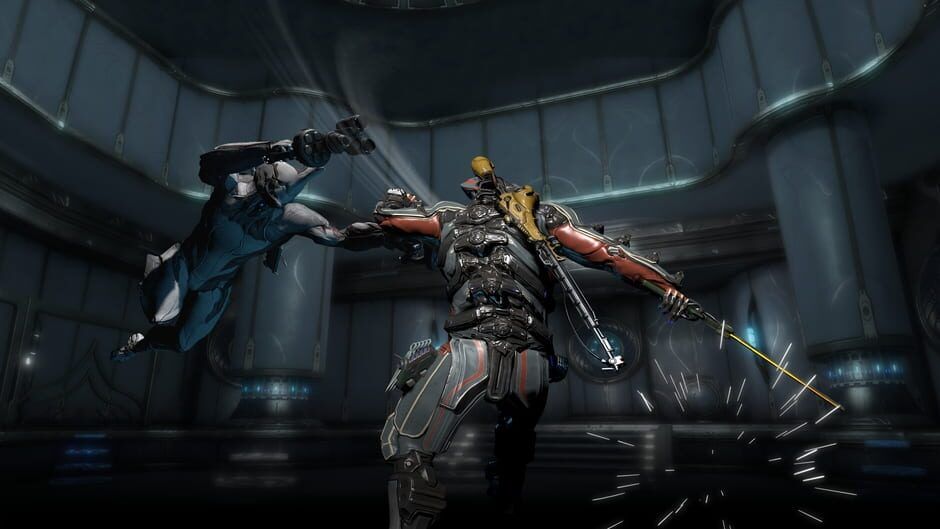
With The Shadowgrapher update, new co‑op horror mode, and a Nintendo Switch 2 launch, Warframe is trying to prove a 13‑year‑old live service can still surprise players. Here is how Follie, Vesper Relay, and platform expansion fit into Digital Extremes’ long‑term strategy.
Warframe is not supposed to be here. A 2013 free‑to‑play co‑op shooter, built in the era of Xbox 360 and PS3, should not be launching on a brand‑new Nintendo system in 2026 with a headline update that adds a surreal horror mode and one of the strangest Warframes to date.
Yet that is exactly what The Shadowgrapher update does. As Warframe lands on Nintendo Switch 2, Digital Extremes is using the moment to push a very specific message about how it wants this game to age. Platform expansion and content drops are not separate tracks anymore; they are part of a single longevity plan.
Follie and the logic of getting weird in year 13
Instead of playing it safe with another power fantasy frame, The Shadowgrapher update centers its entire identity on Follie. She is an ink‑blot, greasepaint, almost clown‑like Warframe whose kit leans into surreal art and analog horror more than conventional sci‑fi combat.
The headline ability is Shadowgraph, tied to Follie’s sketchbook. In moment‑to‑moment play it works like a conjurer’s toolkit. Players flip open a radial menu with roughly a dozen objects and gadgets: explosive props to funnel enemies, jump pads to bend the usual routes across tiles, ammo and utility drops that can reshape how a team sustains itself in long missions. It feels less like a spellbook and more like a live level editor you carry with you.
What really turns Shadowgraph into a systems story is the custom creation layer. Digital Extremes effectively built a tiny image editor into Warframe, giving Follie owners a multi‑layer canvas to design the look of their conjured objects. The tools are compared to a cut‑down Photoshop: multiple layers, shapes, strokes, a fiddly but expressive interface that lets players imprint personality on what would otherwise be anonymous utility props.
It is a risky feature for a live service. The studio is candid that it expects players to test the boundaries of taste, so the update ships with moderation levers, reporting tools, and the option to disable other people’s custom Shadowgraphs entirely. The important design read here is not just that the system exists, but that Digital Extremes is willing to sink tech time into expressive, potentially troublesome features this deep into Warframe’s lifespan.
Most aging live services trend in the opposite direction, sanding off edge cases and doubling down on attainable, monetizable content: new guns, new skins, slight mechanical riffs. Follie feels more like a late‑season experiment, proof that the team still sees Warframe as a playground for strange ideas rather than only a catalogue to be maintained.
Follie’s Hunt turns Vesper Relay into a co‑op horror vignette
The other pillar of The Shadowgrapher update is Follie’s Hunt, a new co‑op mode that repurposes the ruined Vesper Relay as a horror space. For long‑time players, Vesper Relay is a ghost from an earlier Warframe era, a social hub that was destroyed in prior events and then left as scar tissue in the lore.
Instead of just restoring it as a shiny hangout, Digital Extremes leans into that history. Vesper returns as a broken, flickering relay, stuffed with tense corners and sound design that emphasizes echo and absence more than the usual bombast. The mode slows Warframe down. It is still cooperative and action‑driven, but encounters are structured around being stalked by Follie’s presence rather than sprinting from objective to objective.
Developers directly compare the pacing to Resident Evil’s Mr. X. You are not running from A to B at bullet‑jump speed, you are listening for cues, regrouping with your squad, and making calls about when to poke at objectives and when to regroup and wait. In a game famous for high speed movement and screen‑melting builds, that shift in rhythm is striking.
Thematically, using Vesper Relay is clever for longevity. Recycling classic locations can easily feel like cost cutting, but tying a horror experience to the carcass of an old social space also gives veterans a reason to care. Thirteen years in, raw mechanical novelty is hard to deliver every patch; emotional resonance is a different lever. Horror in the ruins of a once‑bustling relay taps into nostalgia in a way a brand‑new tileset cannot.
As a co‑op experience, Follie’s Hunt hints at where Warframe could go next: smaller, more authored modes that temporarily bend the core rules of movement and power while still respecting existing builds. It is not a new open world or another star chart, but it meaningfully changes how you and your friends talk and move while you are in it.
Why a Switch 2 launch matters now
Warframe arriving on Nintendo Switch 2 in 2026 is not just another port; it is a statement about how Digital Extremes sees the future of the game. Most live services that survive past a decade are fighting entropy on multiple fronts: aging tech, shrinking engagement on older platforms, and the perception that newcomers are too far behind to bother starting.
A Switch 2 version tries to tackle all three.
On the technical side, more modern hardware finally gives Warframe room to breathe on Nintendo’s ecosystem. The original Switch port was impressive but visibly constrained. Lower resolution, longer load times, and performance dips made it the platform of last resort for many dedicated players. Switch 2 promises a version that sits closer to current PS5 and Series X builds, which is vital if Digital Extremes wants cross‑platform squads to feel genuinely interchangeable.
That feeds into the second angle: audience reach. Nintendo’s hybrid audience has always been a different demographic slice from typical PC and PlayStation shooter circles. Landing on Switch 2 near the hardware’s early life gives Warframe another growth spike, not just a maintenance port. The timing with The Shadowgrapher is deliberate. A new, visually distinctive frame, a co‑op horror mode, and a big platform launch create a bundle that is easy to market to lapsed or brand‑new players.
The third piece is perception. A live service that keeps arriving on new consoles feels alive. For a wary newcomer, the existence of a polished Switch 2 client in 2026 signals that Warframe is not quietly winding down. It says the studio believes it can sustain updates across another hardware cycle, which matters if you are considering investing dozens or hundreds of hours into learning its systems.
Platform expansion plus steady updates as a longevity strategy
Digital Extremes has quietly built a pattern that The Shadowgrapher and the Switch 2 launch highlight. Major beats in Warframe’s life often line up with new platform pushes or technological pivots. The Xbox One and PS4 era was about proving free‑to‑play co‑op shooters could thrive on console. The Switch port showcased scalability. The move to PS5 and Series X normalized high frame rates and reduced load times across the board. Each leap paired new hardware with content or structural changes that made the game feel freshly relevant.
The Shadowgrapher fits that pattern. Follie’s experimental kit and the horror of Vesper Relay give existing players something to chew on. The Switch 2 release opens the door to an audience that might have missed a decade of Warframe entirely. Together, they create what every old live service needs most: momentum.
Whether this strategy is working comes down to how convincingly the game keeps addressing three problems that plague aging service titles.
First is fatigue. After more than a decade of frames, quests, and systems, it is easy for any new addition to blur into the mass. Follie deliberately swerves into expressive weirdness to stand out. A built‑in drawing tool is not a safe, spreadsheet‑optimized feature; it invites clips, fan art, and social chatter. That is a sign Digital Extremes knows attention, not just content volume, is the scarce resource now.
Second is fragmentation. As Warframe spreads to more platforms, the risk is splitting the community or having obvious second‑class versions. Cross‑play and progression work to counter this, and a solid Switch 2 build is crucial so new players are not siloed by performance issues. The more seamless platform parity feels, the more realistic it is to treat Warframe as one big, loosely shared galaxy instead of a set of hardware islands.
Third is narrative and mechanical coherence. Each new mode and system has to feel like part of the same universe rather than bolt‑on experiments. Tying Follie and her hunt to the history of Vesper Relay helps here. She is not just a random horror guest star, she is embedded in Warframe’s fractured relays and long‑running story of decay, survival, and strange powers emerging from old scars.
On balance, The Shadowgrapher suggests that Digital Extremes is still threading this needle. The update does not feel like a desperate content dump timed to a console launch; it reads as a considered attempt to show there are still corners of Warframe’s universe and toolkit worth exploring.
Can Warframe keep this up?
Longevity in live service games is rarely about one big expansion; it is about the sense that there will always be another reason to come back. In that context, Follie and Switch 2 are less important as standalone features and more important as a signal.
If Digital Extremes keeps treating new platforms as excuses to take risks rather than simply to resell the existing experience, Warframe has a path to remain culturally relevant deep into its second decade. Experimental modes like Follie’s Hunt, expressive tools like Shadowgraph, and smart reuse of old spaces such as Vesper Relay all point to a studio that is still interested in surprising both veterans and curious newcomers.
Thirteen years in, Warframe is not reinventing itself so much as proving it can still mutate. The Shadowgrapher era and the jump to Switch 2 show that this strange, agile shooter is not content to age quietly in the background. For a live service that has outlived whole console generations and trends, that might be its most important update yet.