
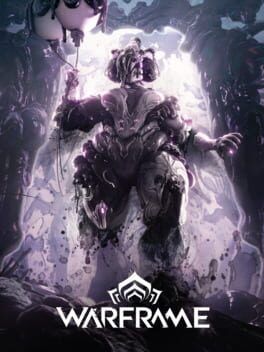

A deep dive into Warframe’s upcoming Jade Shadows: Constellations update, its dual-entity Warframe Sirius & Orion, and how this sequel quest is built to keep veterans and new Tenno hooked for the long haul.
A New Kind Of Follow‑Up For Warframe
Jade Shadows: Constellations lands on June 17 as one of the most unusual updates Warframe has had in years. It is not just another cinematic quest, but the game’s first direct sequel story, picking up threads from 2024’s Jade Shadows and putting players back behind the mask of the Stalker.
Digital Extremes is framing Constellations as the “major pre‑TennoCon” beat for 2026, and everything about it looks tuned toward deepening narrative investment while also setting up fresh systems for long‑term engagement.
The Sequel Quest: Stalker, Fatherhood, And Split Futures
Where Jade Shadows re‑framed the Stalker as something more than an edgy assassin, Constellations pushes that arc into stranger territory. The new solo quest is set after the events of Jade Shadows and digs into the fallout of the Stalker’s sudden responsibilities as a father.
The hook is that this time you are not just exploring his psyche, but his legacy. The story centers on Sirius and Orion, two future versions of Stalker and Jade’s child that exist across diverging timelines. Each carries different ideals, different scars, and different ideas of what their parent’s choices meant.
Digital Extremes has confirmed that choices you made in the original Jade Shadows quest will ripple into Constellations. Specific scenes and dialogue will react to how you handled key moments, which gives the update something Warframe quests usually lack: a sense that your past decisions can echo forward.
Tonally, expect more of the grounded, personal storytelling that Jade Shadows tested. Instead of another galaxy‑shaking war, this is a story about identity, inheritance, and what it means when your “children” turn out to be your sharpest critics. The Railjack expansion and new gear orbit this core, but the beating heart of the update is a very small and very angry family drama.
Sirius & Orion: Two Warframes Sharing One Slot
At the center of Constellations is Warframe’s most experimental suit in years: Sirius & Orion, a dual‑entity frame that effectively crams two distinct characters into one loadout.
Mechanically, they are described as two conflicted entities fighting over control of the same body. In play that means you are constantly flipping perspectives between them as they struggle for dominance. Both share a passive and resource pool, but each brings their own ability kit and combat rhythm.
Sirius is the support‑leaning half. Wielding a thrown scythe and unstable star‑themed ordnance, he leans into area denial and survival. His kit emphasizes explosive traps, radiant zones that offer healing and damage reduction, and battlefield control that keeps squads alive when the scaling gets nasty.
Orion is the aggressive counterpart. His abilities tilt toward heavy melee pressure, stripping armor and defenses, and clustering enemies together with a black‑hole style crowd control skill so they can be cleaved down. Where Sirius mitigates, Orion escalates.
The key point is that you do not pick one or the other. You juggle them both in real time, swapping as the situation demands while the two personalities “bump each other out of the player’s hands,” as the devs put it. It is a rare attempt to fuse character conflict directly into the controls and to make a Warframe feel like an argument in motion.
For veteran players, Sirius & Orion could be the most interesting build puzzle since Protea or Wisp. Modding choices must account for two conflicting playstyles, and finding a configuration that lets both halves shine without undercutting one another looks like the main theorycrafting challenge.
Protoframes Vena And Ryoku: Lore First, Loadout Second
Backing up Sirius & Orion are two new Protoframes, Vena and Ryoku, who function as both narrative anchors and aspirational power fantasies.
Vena is a proto‑variant inspired by Garuda. Where Garuda is all about bloodletting and risk‑reward aggression, Vena’s design leans into a more ritualistic, predatory elegance that plays nicely with the constellation and fate motifs of the update. She reads as a mentor figure whose approach to violence is cold, almost ceremonial.
Ryoku, modeled after Ash, fills the other side of the spectrum. He is stealth‑adjacent, surgical, and methodical, but with a rawer edge that fits Constellations’ themes of training and shaping two wayward futures. Both Protoframes serve as mirrors to Sirius and Orion, showing what different paths of mentorship might create.
For players, Vena and Ryoku are important because they show Digital Extremes still likes to ground new frames and variants in bespoke lore instead of dropping them in as pure stat sticks. That attachment to character makes the grind of relics, standing, and resources feel more meaningful and is a quiet but effective form of retention.
Railjack And Uranus Proxima: Making Old Systems Matter Again
Once the quest wraps, Constellations immediately pivots into systems content by unlocking Uranus Proxima as a new Railjack region. Railjack has gone through several redesigns over the years, often swinging between being a siloed side mode and a lightly integrated star chart extension.
Uranus Proxima looks like another attempt to stitch it firmly into the main progression fabric. Tying the region’s unlock to completion of the new story quest gives veteran players a concrete reason to revisit their ships, while newer Tenno who have climbed that far get a clear next step that feels narratively justified.
If Digital Extremes can tune the rewards appropriately, Uranus Proxima has the potential to become the default “after the quest” loop for Constellations. It is a classic Warframe pattern: deliver a punchy, curated narrative and then open a repeatable farm that thematically and mechanically flows out of what you just played.
New Incarnon Weapons: Long‑Term Carrots For Theorycrafters
Conspicuously, Constellations adds at least five new Incarnon weapons to the rotation. Incarnons have quietly become one of Warframe’s most reliable long‑tail systems because they offer transformative evolutions rather than minor stat bumps.
Every time Digital Extremes drops a new Incarnon batch, veteran players dive back into old content to min‑max evolutions and uncover broken synergies. Folding a new set into this update is less about the raw firepower and more about giving the community a fresh spreadsheet of possibilities to chew through over the coming months.
Expect new Incarnons tailored to complement Sirius & Orion’s duality, as well as sidegrades that help round out loadouts for Vena and Ryoku. For players who live on buildcrafting, these weapons are probably the single biggest reason to stick around after the quest dialogue fades.
Cross‑Platform Momentum: Mobile Matters Here
Pocket Gamer’s angle on the announcement underlines another important point. Warframe is no longer just a PC and console behemoth. The mobile versions are now first‑class citizens, and Constellations is launching simultaneously across all platforms.
That matters because this is a story‑heavy update with a big marketing push. New and lapsed players who discover Warframe through the mobile storefronts will land in a game that is loudly talking about an emotionally charged sequel quest, a bizarre two‑in‑one Warframe, and flashy new loot. For retention, having that momentum visible everywhere at once is huge.
It also pushes Digital Extremes to design encounters and abilities, including Sirius & Orion’s more complex kit, in ways that stay readable and manageable on smaller screens. If they can pull that off without flattening the mechanics, Constellations could be a proof‑point that deep narrative updates can still feel good in the mobile era.
Why Constellations Matters For Long‑Term Engagement
Viewed as a whole, Jade Shadows: Constellations looks less like a one‑off quest and more like a targeted strike at several long‑term goals.
On the narrative side, it cements Warframe’s willingness to tell smaller, character‑driven sequel stories that acknowledge past player choices. That keeps lore‑obsessed veterans invested and makes it easier to build multi‑year arcs around specific figures like the Stalker and his child.
On the mechanical side, Sirius & Orion could open a design lane for more dual‑identity frames or multi‑mode kits that are tied directly into story themes. The frame itself is a retention loop: mastering two playstyles in one body, experimenting with builds, and chasing Incarnon combinations that let each side shine.
Finally, the surrounding systems content and rewards Uranus Proxima Railjack missions, new Incarnons, Protoframes, and cosmetics reinforce Warframe’s usual endgame loop. You come for the quest, stay for the grind, and then keep coming back as future updates reference choices and characters introduced here.
If Digital Extremes sticks the landing on pacing and rewards, Jade Shadows: Constellations has a real shot at being the update that ties Warframe’s future storytelling and long‑term engagement together into a single, constellation‑shaped package.