
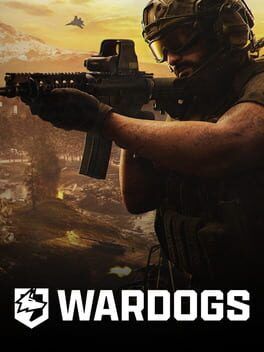
Bulkhead’s Wardogs takes a King of the Hill twist on large-scale warfare, pushing 100 players into three rival factions on a single control zone while experimenting with persistent cash, destruction, and an Early Access-driven live design process.
Wardogs arrives with a very clear mission statement: this is not a battle royale, and it is not an extraction shooter. Instead, Bulkhead is pitching a “tactical all out warfare” FPS that tries to recapture the chaos of Battlefield-scale combat while threading in some of the systemic tension that has made modern extraction games and economy shooters so sticky.
At the heart of that pitch is a bold structure: 100 players, three full teams, one evolving control zone, and a persistent cash system that turns every spawn into a strategic purchase.
100 players, three factions, one pressure cooker
On paper, Wardogs is deceptively simple. Matches drop up to 100 players into a massive 256 km² sandbox set across derelict industrial mountains in Eastern Europe. Those players are split evenly across three color-coded factions that all want the same thing: control of a central objective zone.
Rather than scattering squads across isolated objectives, Wardogs funnels the action into a single shifting control area. The team with the most bodies inside that zone ticks up points, and the first to hit the target score wins. That structure sounds closer to Arma 3’s King of the Hill than to a traditional conquest layout, and Bulkhead is upfront about that inspiration.
What three teams do to that formula is the interesting part. Two-team large-scale shooters tend to fall into predictable flow: a tug-of-war front line, a backcap attempt, a slow grind. With three factions, Wardogs is built to constantly break those patterns. If Red and Blue are trading ground in the zone, Green can roll in with armor and third-party the entire scrap. When one faction pulls ahead, the other two can naturally pinch them from opposite sides. Temporary “soft alliances” form in the chaos, even if no one can formally team up.
That three-sided pressure should make map reading as important as aim. Holding the hill is never safe, because there is always another angle, another spawn wave, another vehicle column bearing down on the objective. If Bulkhead’s networking and spawn logic can keep those 100 players coherent rather than scattered, Wardogs could become one of the few shooters where battlefield awareness genuinely matters more than raw mechanical skill.
Cash as the real win condition
The other major structural twist is Wardogs’ economy. Every player operates inside a persistent cash ecosystem that carries from match to match. There is a rough benchmark of 10,000 dollars per match to spend, but how you deploy it is up to you.
Every spawn begins at a buy screen where you purchase your loadout from what is available. Weapons, armor, gadgets, vehicles, and even building tools are all treated as economic choices rather than static unlocks. If you splash out on a high-end sniper and heavy armor this life, that is cash you will not have in reserve for a tank push later in the match.
The design idea is to push risk versus reward into every respawn. Running cheap rifles and light equipment gives you more attempts and more flexibility. Investing aggressively in specialist kit or armor could let you swing a specific fight, but only if your squad makes those dollars count. Kills, assists, objective play, and general performance flow cash back into your account, so smart play feeds future power.
Where this differentiates Wardogs from battle royales and extraction games is permanence. You are not dropping into a loot lottery or extracting high-value items to stash; you are managing a stable currency that gates your options across sessions. It is a subtle pivot away from “what did I find this round” toward “what kind of player am I building over the long term.”
Crucially, Bulkhead insists that cash affects gameplay choices, not whether you can play at all. This setup is crying out for careful tuning, because it can very easily become a soft win-more mechanic if high-skill players snowball money while struggling players are locked into bargain-bin kits. The promise of Early Access is that this economy will be iterated in public, with data from thousands of matches rather than just studio playtests.
Destruction, building, and combined arms
Underneath the economy is a classic combined-arms sandbox with a modern twist. Wardogs supports infantry, vehicles, limited building, and extensive destruction.
Buildings and cover can be blown apart, shredded, or reshaped, which has big implications for a single-objective mode. A reinforced warehouse that anchors the control zone early in a match may be nothing but a skeletal frame by the time the winning team closes out the game. Defensive lines are temporary by design. A wall that saved your squad one push might be rubble the next time you spawn.
Building tools let teams patch gaps and create improvised fortifications, but because anything can be destroyed, engineering is about buying time rather than creating permanent safe havens. A cheap, hastily built barricade might delay an enemy armored push just long enough for your team’s air support or anti-tank squads to get into position.
Vehicles deepen that interplay. Armored columns, light transports, and potentially aerial support all factor into how you leverage your cash. Spending a chunk of your budget on a tank is pointless if no one protects it from engineers wielding explosives. On the other hand, a well-supported vehicle push could be the decisive swing that wipes two teams out of the zone at once.
All of this sits atop a relatively grounded shooter foundation. Wardogs is pitched as “hardcore” without going full mil-sim, sitting somewhere between Arma and Battlefield in tone. Bulkhead’s history on Battalion 1944 and their Counter-Strike-leaning projects suggests a focus on tight gun handling and lethal time-to-kill, but applied to a much larger arena.
Bulkhead’s independent era and what it means for Early Access
Wardogs is being developed by Bulkhead in partnership with Team17, and that pairing says a lot about the game’s Early Access strategy. Bulkhead is positioning itself as “the next big shooter studio,” and Wardogs is their flagship project in a new, more independent chapter after their earlier work.
Where previous Bulkhead titles leaned on more traditional boxed releases and one-shot content drops, Wardogs is planned to live and breathe in Early Access on Steam across 2026. The official line is that the initial launch will focus on refining core systems, expanding features and content, and responding directly to player feedback.
In practice, that likely means a smaller number of maps or biomes centered on that single Eastern European industrial region, one primary mode based around the shifting control zone, and a constrained set of weapons, vehicles, and buildables to keep balancing manageable. If Wardogs finds an audience, Bulkhead can then layer in additional regions, alternative objective variants, and systemic wrinkles like weather, new vehicle classes, and more exotic gadgets.
Bulkhead’s semi-independent status gives them a bit more room to be aggressive on iteration. They are not building a monolithic live service with half a dozen monetized modes on day one. Instead, they can afford to pin everything on a single core loop: three sides, one hill, cash on the line. That narrower focus should make it easier to act on community data, whether that means rebalancing the economy, reworking how teams spawn around the control zone, or even large overhauls to vehicle availability.
Team17’s track record with Early Access is also relevant here. They have shepherded a mix of indie and mid-scope games through multi-year public development cycles, and they know how to market regular content beats without turning every patch into a battle pass event. That should, in theory, keep Wardogs closer to the “buy once, help shape the game” model rather than a free-to-play treadmill.
Monetization in a cash-based shooter
Putting cash at the heart of Wardogs’ design naturally raises questions about real money. Bulkhead and Team17 are drawing a clear line between the in-match currency that defines your tactical options and whatever real-world monetization the game will use.
Current messaging and the Steam page positioning suggest a premium purchase with optional cosmetic-focused monetization on top. Wardogs is explicitly not built as a free-to-play extraction or royale, and the cash that fuels your loadout choices is earned by playing, not by swiping a card.
That separation is crucial, both ethically and structurally. If real money could buy in-match economic power, Wardogs would instantly cross the line into pay-to-win territory. By keeping the economy self-contained and tying it to performance and match decisions, Bulkhead can lean into the high-stakes feel of “buying” your next life without undermining competitive integrity.
There is still plenty of room for missteps. Long-term progression systems, cosmetic unlock tracks, and potential season passes all need careful framing so that Wardogs’ economy remains readable. If players cannot easily parse what is earned, what is bought, and what actually affects gameplay, the design will suffer. The advantage of launching in Early Access is that Bulkhead can test different cosmetic structures, cadence of events, and reward ladders in real time, then dial back anything that starts to distort the on-field experience.
Where Wardogs fits in a battle royale and extraction world
Wardogs launches into a market where the large-scale shooter space is carved up between three main pillars: battle royale, extraction, and legacy franchises like Battlefield that still lean on traditional conquest. Bulkhead is explicitly positioning Wardogs as a fourth lane.
Battle royales are about shrinking circles, last-squad-standing tension, and randomized loot economies. Extraction shooters center on risk, loss, and the value of what you bring out. Wardogs borrows the high player counts and high stakes of both, but anchors them in a known objective and a shared economy that persists across matches.
The focus on one control zone keeps every match legible. You always know where the fight is and why it matters. That makes Wardogs easier to watch and easier to jump into than the 30-minute stealth-and-loot arcs of extraction or the sometimes glacial early game of battle royale. At the same time, the three-team structure introduces enough volatility that matches should rarely feel like linear steamrolls.
In that sense, Wardogs has more in common with Arma’s King of the Hill community modes and the best moments of Battlefield’s large conquest maps than with modern trend-chasers. It is a throwback to big, messy firefights, but filtered through a contemporary understanding of progression and player agency.
There is also a clear gap that Wardogs could fill. Battlefield has struggled to maintain a consistent identity over the last decade, and mil-sims like Arma or Squad demand a level of time and coordination that many players cannot commit to. If Bulkhead can hit a middle ground where tactical choices matter, teamplay is rewarded, but solo players can still log in for a satisfying session, Wardogs may become the default “big war” shooter on PC for a while.
A design experiment worth watching
Right now Wardogs is a promise more than a solved equation, but it is a thoughtfully framed one. The combination of 100 players, three teams, a persistent cash economy, and a destructible control zone creates a lot of emergent design space.
If Bulkhead’s independent mindset and Team17’s Early Access experience can keep the scope disciplined and monetization restrained, Wardogs might finally offer something genuinely new in a genre that has spent years chasing shrinking circles and loot-filled extractions. The question from here is not whether the pitch is appealing, but whether the studio can tune this fragile ecosystem of money, metal, and map control into a shooter that feels fair, legible, and endlessly replayable.
With public playtests on the horizon and Steam Early Access planned for 2026, we will not have to wait too long to find out whether Wardogs can live up to its “tactical all out warfare” label or whether the three-way war for the hill collapses under its own ambition.