
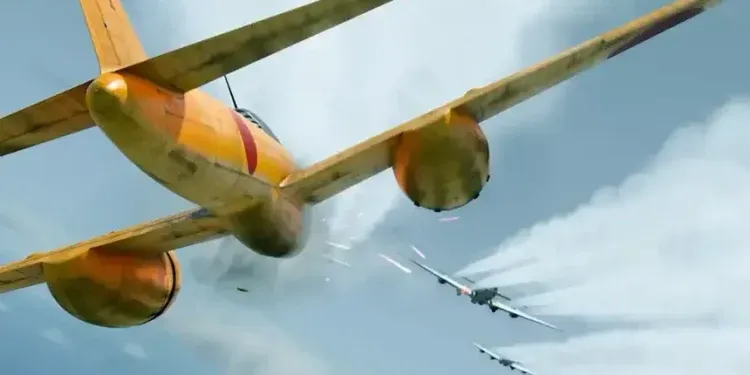

Gaijin’s Sky Odyssey update brings Greek aviation and ground subtrees to Israel, a Falklands ground map, modern aviation systems, and key changes for returning War Thunder players.
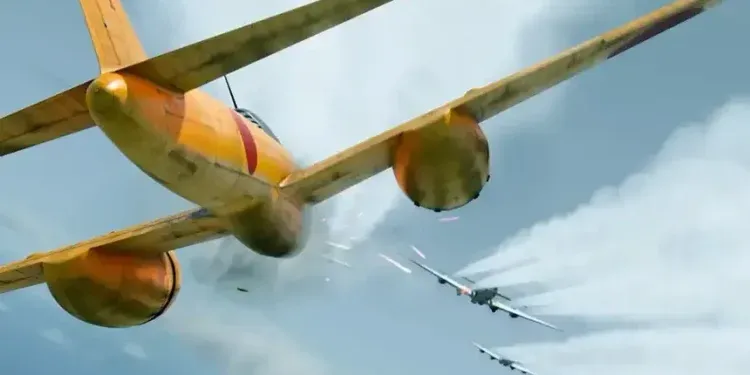
Image: aroged.com
Sky Odyssey makes Greece the headline, but not as a standalone nation
Gaijin Entertainment says War Thunder’s next major update, Sky Odyssey, is due in mid-September, and its biggest confirmed addition is a pair of Greek aviation and ground forces subtrees. The catch for returning players is placement: according to Gaijin’s announcement distributed through Games Press, both Greek subtrees will sit inside the existing Israeli tech tree rather than launching as a separate national tree.
That single detail shapes the whole update. Players who have already pushed through Israel gain a wider tactical toolbox. Players coming back specifically for War Thunder Greek forces should know they are entering that progression structure, not starting a new Greece-only tree from scratch. The same update also adds a new Falkland Islands ground map, changes to bomber damage models, new modern aviation display systems, and vehicles outside the Greek lineup, including India’s Arjun Mk 1, Britain’s AW159 Wildcat HMA2 helicopter, and the HMS Duke of York battleship, according to Gaijin.
The War Thunder Sky Odyssey trailer went live on the official War Thunder site on September 3. IDC Games noted that the trailer announcement itself was brief and did not give a full content list or exact release date, while Gaijin’s press release confirms a mid-September window. That leaves some critical competitive details unannounced, including exact battle ratings, economy placement, stock loadouts, and final module paths.
The Greek air subtree runs from Helldiver to Rafale EG
Gaijin describes the Greek aviation line as spanning from mid-20th-century aircraft to modern Hellenic Air Force combat jets. The starting historical marker is the SB2C-5 Helldiver dive bomber, which Gaijin says was delivered to Greece in spring 1949. The top of the line is the Rafale EG (AESA), presented by Gaijin as the high-end aircraft in the Greek aviation subtree, with AESA radar, modern avionics, strong flight performance, and advanced weaponry.
The most immediately readable meta piece sits in the middle: the A-7H and A-7E Corsair II attack aircraft. Gaijin says these specialized land-based attack versions were developed for Greece and can carry a broad anti-tank weapons package. The sharper competitive angle is their ability to attack air defense systems with Shrike anti-radiation missiles while still carrying Sidewinder air-to-air missiles for fighter defense.
That combination matters in War Thunder terms because it gives the Greek air line aircraft that are not locked into a single role once the sortie begins. Based on Gaijin’s description, A-7 pilots can threaten armor, hunt radar-guided air defense assets, and retain some self-defense capability against aircraft. We do not yet have final in-game tuning from the supplied sources, so the real question for air players is how Gaijin sets battle ratings, missile access, countermeasures, and matchmaking. The platform sounds flexible on paper, but War Thunder balance lives or dies in the exact bracket.
Greek ground forces add SAM coverage and a Leopard 2A6 HEL anchor
On the ground side, Gaijin confirms that Greece brings imported air-defense systems and a localized main battle tank variant to the Israeli tree. The listed systems include the Soviet-made Osa-AKM and Tor-M1 surface-to-air missile systems, along with the Leopard 2A6 HEL, a version built for the Greek Army with reinforced upper glacis armor, according to Gaijin’s announcement.
For a returning tanker, the important part is the spread of jobs this subtree appears designed to fill. Osa-AKM and Tor-M1 point toward dedicated air denial. The Leopard 2A6 HEL gives the line a modern MBT centerpiece. The value is less about national flavor in isolation and more about plugging lineup holes inside Israel, since Gaijin specifically says the Greek aviation and ground subtrees being combined with Israeli vehicles will give players more tactical options.
There is already some community friction around that approach. Comments visible under the official September 3 trailer include complaints about another copy-paste-heavy subtree and comparisons to BeNeLux. Those comments are anecdotal, not a full player survey, but they capture the obvious tension: subtrees can quickly broaden matchmaking options, yet veterans often judge them by how many vehicles feel meaningfully distinct once they are in the hangar. The Leopard 2A6 HEL’s armor difference and Greece-specific A-7s are confirmed distinctions, but the final player verdict will depend on the full tree layout and in-game performance.
The Falklands map is built for sightlines, not tree cover
Sky Odyssey also adds a new ground battle map set in the Falkland Islands. Gaijin’s press release says the map is based on the Darwin Hill area near the settlement of Darwin, where British commandos and Argentine forces fought. Aroged refers to the new land location as Mount Darwin, while other reports describe it as Darwin Hill. The naming differs across coverage, but the shared confirmed setting is the Falkland Islands around Darwin.
The terrain description is the key for players. Gaijin describes a treeless plain biome with rugged rocky coasts and yellow gorse thickets. Buildings are mostly single-story, with farms featuring greenhouses and fenced enclosures for poultry and livestock. The Escapist also describes open treeless terrain, rocky coastline, low buildings, greenhouses, and fenced farmland.
That reads like a map where bad rotations will get punished. Without forests or dense urban blocks to break contact, concealment and hard cover become much more deliberate resources. Rocky coastlines and rural structures may create defensive pockets, but the overall language from Gaijin points to exposed ground and long visual lanes. For players coming back after time away, the War Thunder Falklands map should be approached less like a city brawl and more like a positioning check: scout first, assume open crossings are watched, and treat every low building as temporary cover rather than a safe reset.
The non-Greek additions push modern combined arms harder
Sky Odyssey is not only a Greece update. Gaijin also names several signature vehicles outside the Greek subtrees. The Arjun Mk 1 arrives as India’s first domestically designed and built main battle tank. The British AW159 Wildcat HMA2 joins as a modern naval helicopter, and Gaijin’s announcement also lists the HMS Duke of York battleship among the update’s notable additions.
The Wildcat is the clearest pacing changer from the supplied details. Aroged reports that it can use guided weapons including Martlet and Spike NLOS missiles, with Martlet suited for anti-aircraft systems, light vehicles, and helicopters, while Spike NLOS is primarily for armored targets. The Escapist similarly reports that Spike NLOS is intended for tanks, while Martlet can be used against SAM and SPAA systems, helicopters, and lighter vehicles.
IDC Games adds more tactical framing from Gaijin’s previews, saying the AW159 Wildcat HMA2 is planned for the British helicopter research tree at Rank VII and can carry as many as 20 Martlet missiles simultaneously. IDC also says Gaijin presents the Wildcat as a mobile ambush platform, using speed and agility to approach from battlefield edges, strike exposed targets, and relocate before air defense responds. Until Gaijin’s final patch notes lock the numbers, the safest read is that Britain is getting a flexible helicopter built around target selection rather than brute-force armor killing alone.
Returning players should watch the systems changes as closely as the vehicles
The War Thunder September update also includes mechanical and presentation changes that could matter more than a single vehicle unlock. Gaijin’s announcement lists improvements to bomber damage models and new MFDs and HMDs for modern aviation. Aroged adds that bomber survivability will change through a new damage model, modern aviation will receive a new multi-function display and helmet-mounted target designation system, and the update includes additional ammunition, equipment replacement, and extensive repairs.
Those are confirmed categories, not complete patch-note breakdowns. That distinction matters. A bomber damage model change can affect how aircraft survive sustained fire, but the sources provided do not give exact hitbox behavior, structural thresholds, repair rules, or weapon-by-weapon outcomes. Modern MFD and HMD additions could improve situational awareness and targeting workflows in top-tier aircraft, but the competitive effect depends on implementation, controls, and which vehicles receive which systems.
If you are returning for Sky Odyssey, the practical move is to treat mid-September as the content window and wait for the final War Thunder patch notes before spending currency or committing to a grind route. The confirmed Greek subtrees make the Israeli tree more attractive for players who want mixed ground and aviation options. The Falklands map rewards disciplined positioning. The Wildcat and modern aviation systems point toward sharper air-to-ground and anti-air play. What remains unconfirmed in the supplied material is the exact release day, vehicle battle ratings, economy costs, final research placement, and balance changes that decide the live meta.
For PC players reinstalling ahead of the update, the official War Thunder site lists Windows minimum requirements as Windows 10 64-bit, a dual-core 2.2 GHz processor, 4 GB of memory, a DirectX 11-level GPU such as an AMD Radeon 77XX or Nvidia GeForce GTX 660, broadband internet, and 23.1 GB for the minimal client. The same page lists the Windows full client at 75.9 GB and recommended memory at 16 GB or more. Official Mac and Linux requirements are also listed on the War Thunder site, with full-client storage shown at 62.2 GB for both platforms in the supplied page text.