
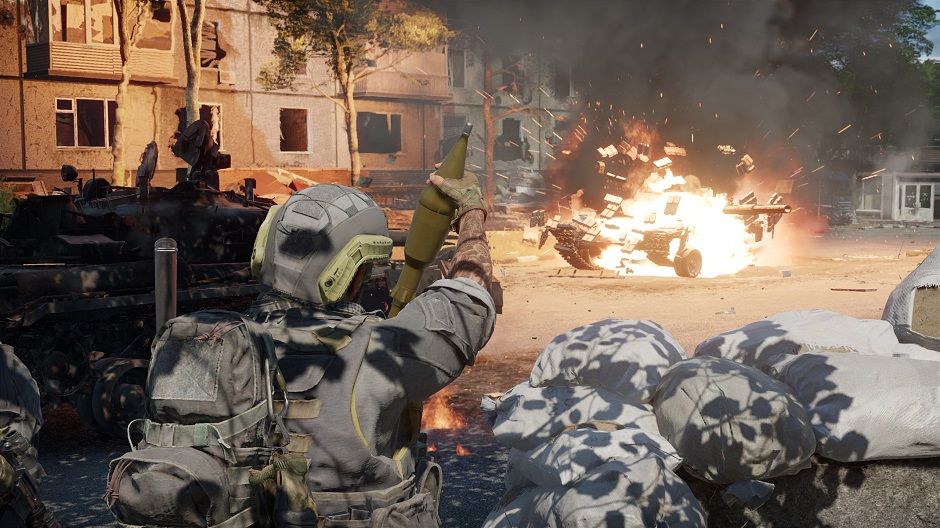
Gaijin’s third War Thunder Infantry Battles closed beta test adds Kivu, a Central Africa map built for 64-vs-64 infantry, vehicles, new spawns, transports, and class limits.
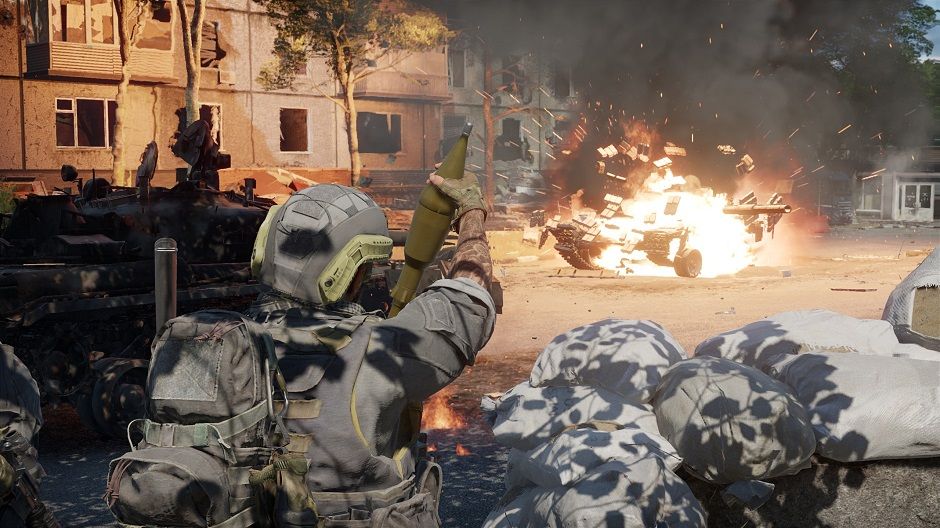
Image: warthunder.com
Kivu turns War Thunder Infantry into a 128-player stress test
Gaijin Entertainment is preparing the third closed beta phase for War Thunder Infantry Battles, and the headline change is clear: Kivu, a new Central Africa-set map, is being built for up to 128 players in a 64-vs-64 format. In its official development post and press materials, Gaijin says Kivu is roughly four times larger than previous infantry closed beta locations and is designed around fighting over five capture points.
That scale is the immediate tension in the War Thunder Kivu beta. Infantry combat lives or dies on travel time, sightlines, readable audio, spawn pressure, and server consistency. Gaijin says it has put “significant effort” into server optimizations before bringing back 64-vs-64 sessions, which frames this phase as a technical test as much as a content update. A bigger player count sounds good on a trailer card, but in an infantry shooter it can quickly become noise if the map flow, respawn rules, and objective spacing do not hold up.
The War Thunder 128 player test also expands the series beyond its usual vehicle-first identity without abandoning it. According to Gaijin and the Games Press release, the Kivu phase combines modern infantry with tanks, helicopters, anti-aircraft systems, UAVs, and transport vehicles. That puts the infantry mode in a tough but interesting lane: it has to make riflemen matter on a battlefield still shaped by armor and air power.
The new map is built around distance, not hallway fighting
Kivu is the largest infantry CBT map so far, according to Gaijin, and its five-capture-point layout changes the expected pace. Earlier infantry tests used smaller locations, while this phase moves toward broader front lines where squads need to solve movement before they solve gunfights. The map’s Central Africa setting also comes with new gear and character appearances tailored to the location, according to the official War Thunder post.
For shooter players, the key detail is not the square footage alone. It is how Gaijin is trying to prevent the map from becoming a long run back to the fight. The developer says players will be able to respawn at capture points their team already controls, while base spawns remain available. That kind of spawn network can create faster pressure on objectives, but it also raises balance questions: if forward spawns are too safe, defenders get buried; if they are too exposed, squads get farmed before they can reset.
This is where the five-point structure matters. A large map with multiple objectives can encourage flanks, convoy pushes, and split squads instead of one meat grinder. It can also create dead zones if one side loses mobility or if players ignore far objectives. Gaijin has confirmed the framework, but it has not published enough detail to judge exact capture distances, spawn protection, ticket behavior, or how Kivu handles base pressure. Those are the pieces that will decide whether the War Thunder infantry mode feels like large-scale combined arms or a stretched-out infantry playlist.
Vehicles are not background props in this infantry test
Gaijin’s published equipment list makes clear that infantry will be sharing Kivu with serious hardware. The press release names the M1A2 SEP V2 and T-90M main battle tanks, the AH-64A Apache and Mi-28N helicopters, and anti-air systems including the 2S6 Tunguska and LAV-AD. Simulation Daily’s report, citing Gaijin’s outline, also lists U.S. small arms such as the M4A1, M16A4, SCAR-L, XM5, M249 Para, TAC-50, MAC-11 PDW, and M110 SDMR, alongside Russian weapons including the AK-12, AK-15, and SVDM.
That matters for the infantry meta because the class system is being tightened at the same time. Gaijin says weapon presets have been revised and that specialized equipment such as RPGs, MANPADS, and drones will no longer be available to every soldier. In practical terms, the test should put more weight on squad composition. If every player cannot answer a tank, swat a helicopter, scout with a drone, and fight infantry with the same loadout, teams will need dedicated roles instead of universal problem-solvers.
The risk is obvious. Restrict too much anti-vehicle utility and infantry becomes target practice for armor and attack helicopters. Leave too much utility in circulation and vehicles lose their purpose. Gaijin is clearly testing that middle ground in public closed beta conditions, with Kivu acting as a wider arena for those matchups.
Troop transports are the most important pacing addition
The first troop transport vehicles for War Thunder Infantry Battles are coming in this third test. Gaijin describes them as light cars that can carry up to five soldiers, giving squads a faster way to reach key objectives. Simulation Daily adds one important functional detail from the developer outline: passengers can take over driving if the current driver is eliminated.
That is a smart feature for a large map because it keeps one sniper round or helicopter pass from instantly turning a squad push into a full stop. It also creates a new tactical target. A five-player transport is mobility, tempo, and risk packed into one soft vehicle. MMOBomb’s coverage notes the obvious downside: carrying five players together may also make them easier targets.
From an FPS pacing standpoint, transports are likely to be the difference between Kivu feeling active or sluggish. Forward respawns help after a team owns ground. Transports help teams take it in the first place. If they are too durable, they become disposable objective taxis. If they are too fragile, players go back to cautious foot movement and the big map slows down. Gaijin has confirmed the feature, but the closed beta will have to answer the tuning questions.
Arcade mode is getting cleaner markers, but concealment now matters more
Arcade Battles will return during the third infantry test, and Gaijin is reworking enemy marker logic. According to the official press release, markers will now show only when a player has a direct line of sight to an enemy model. They disappear when the target is hidden by smoke, explosions, trees, other obstacles, or extreme distance.
That is a meaningful readability change. Arcade mode needs fast target acquisition, especially with 128 players, but always-on markers can flatten infantry combat by punishing cover and vegetation. Gaijin’s stated goal is to keep Arcade readable while preserving cover and concealment. For players, that should mean smoke, terrain, and foliage are more than visual clutter in the Kivu test, provided the line-of-sight checks work consistently.
Gaijin also says heavily equipped soldiers will move faster in Arcade Battles than in Realistic Battles. That is a pace safeguard. A larger battlefield plus heavy kits could make Arcade feel slow if movement penalties stay harsh, so the faster movement is aimed at keeping the mode dynamic. The competitive concern is whether faster heavy soldiers blur class tradeoffs too much. If a soldier can carry major utility and still rotate quickly, the class restrictions lose some bite.
The Kivu beta is still closed, with timing and access limits unresolved
Gaijin says the third stage of closed beta testing for infantry battles will begin in July, and the official War Thunder post says players who have not participated can apply for access through the War Thunder infantry page. MMOBomb also reports that applications are open and that the test is expected to take place this month, while noting that an exact test launch date had not been provided in its coverage.
There is still no announced date for when War Thunder Infantry Battles will open to the wider player base. The Escapist reports that the mode remains in closed beta and that Gaijin has not announced broader availability. That distinction is important: Kivu is a test phase, not a full public launch.
Platform messaging is also worth watching. IGN’s trailer listing says sign-ups are available now for PC. MMOBomb says the application page includes platform-choice buttons. The official War Thunder source material provided here includes system requirements sections for PC, Mac, and Linux, but the infantry test access details in the supplied text do not amount to a full platform rollout plan. Readers should treat confirmed access as application-based closed beta participation rather than guaranteed availability on every War Thunder platform.
A credible infantry future depends on netcode, roles, and combined-arms restraint
The strongest read on this test is that Gaijin is probing whether War Thunder can support a lasting infantry layer without losing the combined-arms identity that defines the game. The confirmed pieces all point in that direction: 128-player sessions, a larger objective map, capture-point respawns, transports, UAV range settings, revised markers, and stricter class equipment access.
The unanswered questions are the ones shooter players should care about most. Can the servers keep hit registration and player movement stable with 128 soldiers and vehicles in the same session? Do five capture points create meaningful rotations or scattered fights? Can infantry survive long enough against tanks and helicopters without every class becoming an anti-vehicle specialist? Does Arcade spotting improve clarity without turning every engagement into marker chasing?
For now, the practical advice is simple. If you want to test the direction of War Thunder infantry mode early, apply through the official War Thunder infantry page and expect a closed beta environment with experimental rules. If you want a polished, permanent infantry expansion, wait. Gaijin has confirmed the Kivu test and its major mechanics, but it has not confirmed a public release window for the mode beyond this July closed beta phase.