
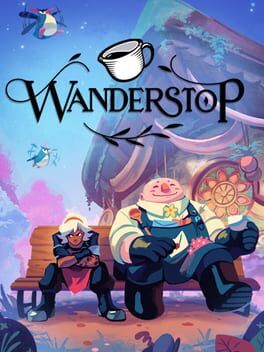

A year after Wanderstop’s launch and on the eve of Ivy Road’s closure, we look at how the cozy tea shop game actually landed, the audience it found, and the next project that players will never get to see.
A small tea stand in the woods was never meant to hold the weight of an entire studio’s future. Yet that is where Wanderstop’s story ends: not with a disastrous launch or a messy controversy, but with a critically liked, modestly played game that arrived, made its point, and then watched the lights go out behind it.
A year on from Wanderstop’s release, Ivy Road is closing its doors. For anyone who followed the studio because of its lineage from The Stanley Parable, Gone Home, and Minecraft, the news feels surreal. This was the team that seemed destined to sit at the center of narrative indie games for the next decade. Instead, their debut is also their farewell.
A cozy game about burnout that actually found players
Wanderstop arrived in 2025 into a market overflowing with pastel color palettes and low-stress life sims. On the surface, it looked like another entry in that trend: a cozy tea shop adventure set in a magical forest, where you brew drinks for weary travelers and tidy up your little corner of the world.
What set it apart was its focus on burnout and the uncomfortable ways people rationalize staying in a situation that hurts them. You play as Alta, a former monster-slaying hero who is supposed to be “taking it easy” running a tea stand. The work is repetitive on purpose. Days blur together. The forest visitors bring small stories that gradually sketch out a larger, sadder picture of a life stuck between obligation and recovery.
Critics responded. Wanderstop settled around an 80 on Metacritic and similar scores elsewhere. Reviews called it reflective, melancholy, and deeply personal, especially for players who had themselves wrestled with work, identity, and the fear of stopping. It was not a universal crowd-pleaser, but it was the sort of game that generated long essays and late-night conversations.
Commercially, it did better than the closure headlines might suggest. Ivy Road’s own statement notes that Wanderstop reached hundreds of thousands of players across PC, PlayStation 5, and Xbox Series consoles. The game did not explode the way The Stanley Parable once did, but it clearly found an audience that was ready to sit with something slower and more uncomfortable than the standard idea of cozy.
In that context, Wanderstop’s first year looks like a quiet success. The problem is that quiet successes are not always enough to carry a studio to whatever comes next.
Ivy Road after launch: a team between projects
Internally, Ivy Road did what many studios do after shipping a narrative-heavy project. Bugs were fixed, quality of life updates rolled out, and the team took stock. Some members, like writer and director Davey Wreden, publicly talked about needing time away from the pressure of following up another critical hit. Others, including composer C418, spoke of wanting to keep working with the same group on a new idea once everyone was ready.
That idea eventually became Engine Angel. According to Ivy Road’s March update, this was a fully conceived new game that the team believed in. Early details describe a sharp pivot from Wanderstop’s slow, introspective pacing toward something more kinetic, with action built around driving and using your car as a weapon. It was still characterful and strange in the way players expected from this crew, but it also sounded like a deliberate attempt not to repeat themselves.
Ivy Road spent the year after Wanderstop’s launch pitching Engine Angel to publishers and investors. The studio’s public statement is careful about naming names or assigning blame, but the outcome is simple. Funding did not come together. By January, layoffs had already started. At the end of March 2026, the studio itself is gone.
The story here is not one of a troubled development or a broken launch. Wanderstop shipped, worked, was patched, and reached its audience. What failed was the bridge to whatever came after.
The project that will not happen
Engine Angel now joins the long list of games that exist mostly as fragments. The public has seen only hints via short clips and brief descriptions, but those hints suggest a project that might have been Ivy Road’s equivalent of the “second album” that redefines a band.
Where Wanderstop folded its mechanics into a story about being trapped in routine, Engine Angel looked ready to lean on motion and impact. Early footage shared by team members showed fast driving, cars used as tools and weapons, and a very different tone from the stillness of the tea stand. It is not hard to imagine how this might have played with the studio’s strengths in surprising narrative structure and player expectation.
For players who followed Ivy Road because of its pedigree, this is the sting. The people behind The Stanley Parable and Gone Home rarely repeated themselves. Each new project felt like a chance to see what else interactive storytelling could do. Wanderstop was their quiet, interior game, and Engine Angel looked set to swing in the opposite direction, without losing that focus on people and their inner lives.
Instead, it becomes a might-have-been, a name grouped with other lost concepts that fans will piece together from old posts and prototype clips. In a different funding climate, Engine Angel is the project we would be speculating about today, not the one we are eulogizing.
How Wanderstop lands after the closure
The news of Ivy Road’s shutdown changes the way Wanderstop feels, not in its moment-to-moment play, but in the frame around it. A game that was already about stepping away from a consuming life now belongs to a team that has been forced to step away themselves.
When you return to the tea stand now, it is hard not to see echoes of the studio in Alta’s dilemmas. The tension between what people expect of you and what you can reasonably sustain. The quiet fear of what comes after you stop. The way a place can be both safe and stifling.
That extra layer is not something the developers planned for, but it will be part of Wanderstop’s legacy. This is now a complete body of work from a studio that no longer exists. There will be no sequel that reframes its ideas, no follow-up that cannibalizes its best tricks. What you get in Wanderstop is the entire statement from Ivy Road in playable form.
For fans, that has already sparked a kind of protective response. Social feeds and forums are full of people recommending the game to friends, revisiting it for a final playthrough, or finally pulling it off their backlog because they feel an urgency to see what this team made before the end. The closure has not made Wanderstop more comfortable, but it has made it feel more precious.
The last surprise and a game’s afterlife
Ivy Road’s farewell message includes one detail that looks forward rather than back. The team has spent the past year collaborating with Annapurna Interactive on what they call “one last surprise” intended to help Wanderstop reach new players. Exact details are still under wraps, with Annapurna set to reveal more, but the phrasing suggests some kind of new release or feature that can extend the game’s life without the original studio.
Whatever form that takes, it will be part of how Wanderstop’s afterlife unfolds. Annapurna is taking over support, handling bug fixes and customer service. The game will remain on sale, still quietly inviting people into its forest, even as the people who made it move on to new jobs and projects elsewhere.
For players, that offers a small measure of comfort. Wanderstop is not being delisted or abandoned on broken storefronts. It will continue to exist as a living piece of the catalog, and the “one last surprise” may yet create a new wave of attention for a game that always felt slightly out of step with the market around it.
A legacy measured in tone, not sales
Ivy Road’s closure ends a studio that released one game and nearly made another. On paper, that might look like a minor footnote in an industry that launches thousands of titles a year. In practice, the influence of this small group of developers has never been captured by raw numbers.
The Stanley Parable, Gone Home, and now Wanderstop all belong to a lineage of games that convinced players to accept slower pacing, denser writing, and smaller spaces in exchange for a different kind of impact. These are works that many players remember vividly years later, even if they only played them once. Wanderstop continues that tradition by embedding sharp, uncomfortable truths inside something that appears soft and inviting.
A year after launch, that is the game’s real accomplishment. It did not reshape the market or become the next streaming phenomenon. Instead, it quietly took root in the minds of the people who connected with it, who now feel the closure of Ivy Road as a personal loss.
Engine Angel might yet find life in another form someday, whether as a reworked pitch at a new studio or as inspiration for a completely different project. The people who built its prototype will carry those ideas with them. But the version that would have carried the Ivy Road name is gone.
What remains is Wanderstop, a single game standing on a forest path, inviting new visitors to sit down for tea and think about what it means to stop, to change, and to walk away.