

Hands-on analysis of Nintendo’s new $99 Virtual Boy headset for Switch and Switch 2, its launch lineup, comfort, 3D effect, and what this experiment reveals about Nintendo’s evolving retro strategy.
Nintendo has spent most of the Switch era turning nostalgia into a subscription. NES, SNES, Nintendo 64, Game Boy and even Game Boy Advance libraries live inside clean menus on Nintendo Switch Online. Virtual Boy was the glaring omission, a 1995 red‑on‑black detour often treated as a punchline rather than a pillar of history.
Now it is back, and not just as another tile in the Switch Online carousel. Virtual Boy is returning as a $99 plastic headset that docks a Switch or Switch 2 into a modernized version of the old tabletop visor. It is part retro console, part accessory, and part museum exhibit, and the way Nintendo is handling it says a lot about how the company wants to reframe its strangest hardware.
Hardware design and ergonomics
At a glance the new Virtual Boy looks like a high‑resolution cosplay of the 1995 original. The red visor is slimmer, the lines are cleaner, and the plastics feel less toy‑store cheap, but the overall silhouette is unmistakable. Like the classic unit, this is not a headset you strap to your face. The visor sits on a collapsible metal stand and you lean into it.
The stand now has a wider footprint and more granular height adjustments, which makes it easier to fit on a desk or coffee table. The original Virtual Boy was notoriously picky about angle and eye line; the Switch version still wants you in a sweet spot, but the range of motion is far more forgiving. Rubberized feet help keep it from skating around when you nudge it mid Mario’s Tennis rally.
Comfort is better but still inherently awkward. The padded face gasket is softer and more breathable than the foam of the 90s, and the overall weight is down because the brain of the system is now the docked Switch instead of a self‑contained console. Even so, your neck and upper back are doing the same forward lean motion they did three decades ago. Sessions beyond 30 to 45 minutes can feel tiring, especially if you are tall and hunched over a low table.
The system routes audio through the Switch, so you get stereo speakers firing just outside your ears or a clean feed to headphones. This can actually feel more modern than the tinny speakers in the original Virtual Boy housing. The catch is that if you are playing on an original Switch rather than Switch 2, cable management for wired headphones can get a bit messy around the stand.
Tech specs and how it works
Nintendo is not marketing detailed specs on the box, but a few core details have filtered through official materials and teardowns.
Instead of spinning LED arrays reflecting off mirrors like the 1995 hardware, the new Virtual Boy uses a compact stereoscopic display module. The docked Switch or Switch 2 outputs a dual‑image video signal at higher resolution than the original Virtual Boy could dream of, then the visor’s optics converge those into a convincing 3D effect while preserving the iconic red‑and‑black style.
The experience is still locked to that red palette, both out of authenticity and to respect the art direction of the original games. There are optional filters to soften the harshness, including a dimmer mode, a scanline‑inspired presentation and a very gentle blur for those who found the original system’s razor‑sharp red lines abrasive. Players can also nudge the 3D intensity and adjust the parallax, echoing the IPD and focus sliders on the original hardware but with far more precise granularity.
Latency is effectively a non‑issue for the Virtual Boy catalog, since these games were designed around very simple, low‑latency inputs. Emulation uses the same framework that powers other Nintendo Classics apps, with frame pacing rock solid and no visible hitches in line scrolling or sprite scaling effects.
The headset itself includes basic sensors to track tilt and ensure you are within a safe viewing cone, but there is no head tracking in the VR sense. The unit is more a fixed 3D viewer than a modern VR headset. You are still playing with a detached controller, either Joy‑Con on a grip, a Pro Controller or a supported wired pad.
Launch lineup as a curated museum
Nintendo is treating the launch like a short, dense retrospective instead of dumping the full library. The original Virtual Boy only saw around two dozen games, many of them Japan‑only. The Switch rollout opens with a 7 game lineup through the Nintendo Classics app, available to Nintendo Switch Online + Expansion Pack members.
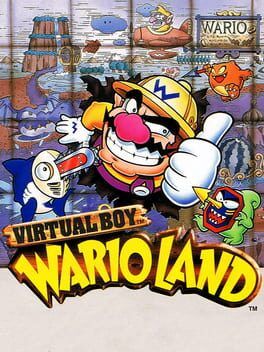
Mario’s Tennis leads the charge because it was the default pack‑in once upon a time, and it still plays well in short bursts. The 3D effect helps you judge lobs and depth in a way 2D tennis games rarely achieve. Next up is Wario Land, widely considered the original system’s best platformer. The parallax in its cavern stages looks terrific on the cleaner modern optics, and the added resolution makes background gags and hazard layouts easier to parse without losing that chunky sprite charm.
Teleroboxer and Red Alarm return as the “look what this thing could do” showpieces. Teleroboxer’s giant boxing robots use layered sprites to simulate scale, and in the new headset you can really feel the separation between your fighter and the opponent looming in the distance. Red Alarm was an ambitious wireframe shooter that used the hardware’s depth to suggest whole corridors and arenas. Here, the cleaner, higher resolution output removes some of the visual confusion that plagued the original release while keeping its raw vector aesthetic intact.
Rounding out the set are smaller curios that flesh out the library’s breadth. Galactic Pinball becomes a surprisingly hypnotic experience in the new visor, with its tables hanging in the void, while Virtual Boy versions of puzzle and sports titles act as compact slices of design history, showing how Nintendo tried to justify a new display tech across genres.
What is most striking is how curated this feels. You are not sifting through multiple versions of the same sports game or half‑finished experiments. The app presents each title with contextual notes, original box art scans and a short blurb on its historical role. It feels closer to a museum collection than a Netflix‑style backlog.
Emulation and the 3D effect vs original Virtual Boy
Purely as emulation, this is easily the best way to play Virtual Boy software without original hardware. Inputs are responsive, audio is faithful and clean, and the emulator even preserves quirks like the brief fade when swapping scenes in Wario Land. Where Nintendo has taken liberties it has generally been in the service of accessibility.
The 3D effect benefits significantly from the cleaner display pipeline. The original system’s “3D” relied on rapidly scanning LED lines and mirrors, which created subtle flicker and a sense of artificiality that some players found headache‑inducing. The new headset has none of that mechanical flicker. Parallax remains strong, and scenes feel solid in depth, but the image is more stable and easier on the eyes.
That said, some fans of the 1995 unit describe the new effect as almost too clean, losing a bit of the analog weirdness that made the original feel otherworldly. The crisp display can make the simple polygonal tricks and sprite stacks feel like dioramas instead of glitchy portals into another space. Nintendo addresses this by offering “classic” presentation options that slightly adjust brightness and edge sharpness to evoke the older feel.
There are also quality of life additions that the old hardware could never dream of. Save states mean you can dip in and out without committing to long sessions bent over the stand. Rewind lets you tackle punishing segments in games that were balanced around short, arcade‑style runs. For purists these options can be disabled, but their inclusion signals that Nintendo wants people to actually explore this catalog rather than just sample it.
Comfort trade‑offs and play styles
For all the technical improvements the Virtual Boy accessory is still an inherently fussy device. You need a surface at about the right height, a chair that lets you lean forward without wrecking your posture and a tolerance for having your field of view entirely occupied by red graphics.
Compared with simply booting up NES or Game Boy titles on a handheld Switch, this is orders of magnitude less convenient. That is sort of the point. Nintendo is asking you to make a little ritual out of playing Virtual Boy, to physically engage with it as a peculiar object from its past.
In practice, the best way to use it is in short, focused sessions. Fire it up for a few rounds of Mario’s Tennis or a world or two of Wario Land, then break. The headset is light enough that readjusting your position is easy, and the stand folds up quickly if you want to stash it between uses, but this will never be your main way of burning through a backlog.
What this says about Nintendo’s retro strategy
The most interesting part of the new Virtual Boy is not the games or even the hardware itself. It is the decision to treat a commercial failure with this much care.
Nintendo could have dumped the Virtual Boy catalog onto Switch Online with a simple depth‑simulating filter and called it a day. Instead, it created a dedicated physical accessory, complete with a plastic version at $99 and a cheaper cardboard option for those who just want to try the effect, then wrapped the games in a bespoke “Nintendo Classics” app with historical framing.
This suggests a willingness to experiment with how it surfaces its back catalog instead of just scaling the existing app model to infinity. Virtual Boy is too small and too odd to support its own subscription tier, but as a curated, tactile experience it becomes something else entirely. It becomes a limited, premium exhibit that you can visit at home.
It also hints at how Nintendo might handle other corners of its history that do not fit neatly into emulation apps. Think of peripherals like the 64DD, the e‑Reader or even arcade hardware. The Virtual Boy accessory tests whether players will pay for a physical gateway into those worlds rather than wait for a few ROMs to appear in a menu.
At the same time the move underscores Nintendo’s comfort with its own failures. For years Virtual Boy was shorthand for “what not to do.” Now it is a centerpiece in the Switch 2 era, not as a triumphant comeback but as a candid look at a fascinating misstep. The company is betting that players are curious enough about that history to literally stick their faces in it.
If you come to the Virtual Boy expecting a modern VR revolution, you will bounce off quickly. If you show up as a fan of game history and a little bit of tactile weirdness, the $99 headset is one of the most interesting retro experiments Nintendo has ever attempted, and a strong sign that its approach to the past is getting more playful, not less.