

All seven launch games, NSO features, and how Nintendo is turning its biggest hardware flop into a cornerstone of the Switch 2 retro strategy.
Nintendo is finally giving Virtual Boy a second life with the Virtual Boy – Nintendo Classics app for Nintendo Switch Online + Expansion Pack, arriving alongside the new Virtual Boy accessory and rolling straight into the Switch 2 era. What was once a short‑lived curiosity is now being treated like a proper legacy platform, with a curated launch lineup, modern comfort options, and the usual NSO bells and whistles.
This guide walks through the seven launch titles, explains the NSO‑specific features you can expect on both Switch and Switch 2, and looks at how this strange red relic fits into Nintendo’s broader retro strategy.
Getting Started: Virtual Boy on Switch and Switch 2
Virtual Boy – Nintendo Classics is included with Nintendo Switch Online + Expansion Pack. Once the app is live, you download it from the eShop like the existing NES, SNES, N64, Game Boy, Game Boy Advance, and Mega Drive apps, then launch it from your home menu.
Nintendo is pairing the software with a new Virtual Boy‑style headset that the company is positioning as an optional “authenticity” add‑on rather than a requirement.
The accessory comes in two flavors, a premium plastic unit and a cheaper cardboard shell, but every Virtual Boy title in the NSO app can still be played on a normal handheld or docked display. On Switch 2, Nintendo is clearly pitching Virtual Boy as part tech demo and part nostalgia play, a way to show off the new hardware’s screen and processing headroom while leaning on a previously untapped catalog.
The Seven Launch Games Explained
At launch the Virtual Boy – Nintendo Classics library brings seven titles, mixing obvious picks with deeper cuts that have rarely been accessible in any form. Here is what to expect from each one and how they feel in a modern context.
Galactic Pinball
Galactic Pinball is Nintendo’s take on a fantasy pinball table, dressed up as a space shooter. Each table uses the Virtual Boy’s stereoscopic effect to create layered playfields where balls can disappear into the background or pop out toward the screen.
On Switch, without the original optics, those depth tricks translate into clear lanes and visually readable multi‑tier layouts. Galactic Pinball is one of the easiest Virtual Boy games to pick up today since its core mechanics are simple, and NSO’s rewind function turns risky shots into low‑stress experimentation. If you only dabble in the app, this is one of the games that still plays almost perfectly as a 2D experience.
Teleroboxer
Teleroboxer is essentially Virtual Boy’s answer to Punch‑Out!!, where you pilot a telepresence boxing robot in first person. Fights demand careful reads on exaggerated wind‑ups and tell animations, along with pattern recognition across a small roster of opponents.
The original game leaned heavily on the Virtual Boy’s dual D‑pads for independent arm control. On Switch, customizable controller layouts are crucial. You can map punches to shoulder buttons or analog sticks, which makes the game feel less like a novelty control experiment and more like a fast, timing‑driven boxing game. Rewind softens the later difficulty spikes, so even if you bounced off the original’s harsh learning curve, the NSO version is approachable.
RED ALARM
Red Alarm is one of the true curios in the lineup, a wireframe 3D shooter that often gets mentioned as a technical high point of the system but was hard to actually enjoy back in the day due to visual strain and low resolution.
The game drops you into fully 3D maze‑like stages viewed from behind your ship. Environments are drawn as sparse vectors, which looked ambitious on the original Virtual Boy but could also be disorienting. On modern hardware, higher resolution output and cleaner scaling go a long way. Lines are easier to track, collisions feel more readable, and display options help you tone down or recolor the classic red wireframe aesthetic.
As part of the launch lineup, Red Alarm functions as a historical showcase of what Virtual Boy was trying to do technologically. With NSO’s quick suspend points and rewind, you can explore its convoluted levels without constantly restarting from scratch.
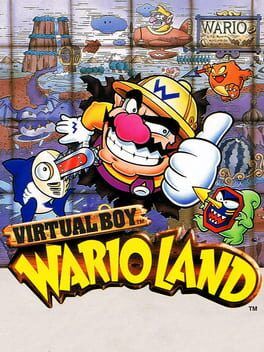
Virtual Boy Wario Land
Virtual Boy Wario Land is widely regarded as the system’s best traditional game and the closest thing it had to a killer app. It is a side‑scrolling platformer that plays like a lost entry between the Game Boy Wario Land titles, with branching stages, hidden treasures, and Wario’s trademark shoulder bash.
The big hook is the use of depth for platforming. Wario can leap into the background through doorways or be flung between planes by cannons and springs. On original hardware this created a striking “pop‑out” effect but could be hard on the eyes. On Switch and Switch 2 the same level layouts now feel like clever multi‑layered 2D puzzles rather than a visual endurance test.
NSO’s suspend and rewind features pair perfectly with the game’s secret‑heavy design. You can experiment with risky jumps, test alternate routes, or hunt every treasure without having to redo large chunks of a stage. For many players this will be their first chance to play Virtual Boy Wario Land at all, and it is likely to become the flagship recommendation in the app.
3‑D Tetris
3‑D Tetris reimagines the classic falling‑block puzzle template as a volumetric well where pieces stack backward and forward as well as left and right. You view a rotating 3D space and have to think in layers, clearing complete planes instead of horizontal lines.
The concept was ambitious on Virtual Boy but also notoriously confusing, since low resolution and the red‑only display made it difficult to parse exactly where a piece would land. The NSO version benefits from crisper output and a range of display options that make the depth separation far easier to read.
Combined with rewind, which effectively becomes a teaching tool for understanding 3D placements, 3‑D Tetris goes from an oddity to an interesting puzzle challenge. It also doubles as a neat comparison point to modern 3D puzzle experiments on Switch 2, giving a clear sense of how far the genre has come.
Golf
Golf is a straightforward, no‑frills golf sim that uses Virtual Boy’s depth to present a pseudo‑3D view of the fairway. You line up shots with a behind‑the‑golfer camera, then rely on a classic power bar and wind indicators to reach the green.
In a modern context this is comfort food gaming, the exact kind of slow‑paced, rules‑driven experience that benefits from save states and quick suspends. Pick up a round for a few minutes on handheld Switch, suspend, then resume on a Switch 2 home session without losing progress.
Because it leans less on stereoscopic tricks than many of its peers, Golf transitions cleanly into the NSO environment and serves as a welcome palette cleanser between more visually intense Virtual Boy titles.
The Mansion of Innsmouth
The Mansion of Innsmouth is the oddball of the bunch, a horror‑tinged adventure inspired by cosmic horror fiction that many Virtual Boy fans outside Japan have never played. It blends first‑person navigation with puzzle‑solving and tense encounters in a sprawling mansion setting.
Historically this game was infamous for being obscure as well as uncomfortable to play for long stretches due to the system’s visual limitations. On Switch and Switch 2, Nintendo is reframing it as a cult classic centerpiece. Better resolution and screen options make the oppressive red visuals more manageable, while NSO’s rewind and suspend systems let you experiment with puzzle solutions or retrace steps without losing significant progress.
By highlighting The Mansion of Innsmouth alongside marquee titles like Virtual Boy Wario Land, Nintendo signals that the Virtual Boy app is not just a collection of safe hits, but also a museum for strange experiments the company rarely revisits.
NSO‑Specific Features and Display Options
Virtual Boy – Nintendo Classics follows the template set by other NSO retro apps, with some tweaks tailored to the hardware’s unusual history.
Every Virtual Boy title supports rewind, allowing you to scrub back several seconds after a mistake. In demanding games like Teleroboxer and Red Alarm this is effectively a built‑in training mode. In puzzle titles such as 3‑D Tetris or exploration‑heavy games like Virtual Boy Wario Land and The Mansion of Innsmouth, rewind encourages experimentation and removes much of the punishment from trial and error.
Suspend points are integrated into the app’s main menu, letting you drop a bookmark at any moment. This is especially important for Virtual Boy software, which was originally meant to be played in short, eye‑strain‑limited bursts. Now you can run a quick stage or two and step away without worrying about passwords or manual save systems.
Controller remapping is a core feature here. Because the Virtual Boy relied on two D‑pads and a unique button layout, NSO gives you per‑game control presets so you can choose what feels most natural on standard Switch controllers. This alone dramatically improves the feel of Teleroboxer and Red Alarm.
A later update will introduce expanded display options. Nintendo has confirmed that players will be able to adjust the classic red‑and‑black palette to other colors such as white or green. While this is pitched as a feature for the new headset, it also matters for normal TV and handheld play on both Switch and Switch 2, giving you a way to reduce eye fatigue while still preserving the stark, high‑contrast art.
Spotlight on the Virtual Boy Deep Cuts
While Galactic Pinball, Teleroboxer, and especially Virtual Boy Wario Land give the app mainstream appeal, Nintendo is clearly leaning into lesser‑known titles to define the Virtual Boy library as something more than a novelty.
Red Alarm stands out as a technical statement that Virtual Boy aimed higher than many remember. Its wireframe 3D visuals foreshadow later experiments on Nintendo hardware, and running it through NSO positions Switch 2 as a machine that can comfortably host both the most modern Nintendo releases and their earliest stabs at 3D.
The Mansion of Innsmouth, meanwhile, brings a genre and tone that sits far outside the usual bright, family‑friendly crop of NSO classics. Resurfacing a horror adventure from a system associated mostly with eye strain jokes gives Nintendo a chance to reframe Virtual Boy as a platform where strange, ambitious ideas were tried long before the indie boom.
Together these curios help justify the app’s existence for long‑time fans who might have already seen Wario Land footage on YouTube but never had realistic access to the broader library. For the Switch 2 era this deeper cut approach underlines a strategy of treating retro apps as curated archives rather than simple greatest‑hits collections.
How Virtual Boy Fits into Nintendo’s Switch 2 Retro Strategy
Bringing Virtual Boy to Nintendo Switch Online is about more than rehabilitating a failed console. It fills a conspicuous gap in Nintendo’s playable history and signals how the company plans to handle retro content as it transitions from Switch to Switch 2.
First, it continues the pattern of grouping systems into self‑contained “Classics” apps. Virtual Boy joins NES, SNES, N64, Game Boy, Game Boy Advance, and Mega Drive as its own branded channel, which makes it easy to surface on the Switch 2 home screen and to market in future Directs.
Second, it lets Nintendo showcase Switch 2 hardware without building a bespoke tech demo. The new Virtual Boy accessory, depth‑heavy visuals, and optional color filters all give Nintendo talking points about screen quality and comfort improvements on the next system, while the software itself is already paid for through NSO subscriptions.
Third, Virtual Boy gives Nintendo a controlled way to test interest in previously unreleased or import‑only titles. The service has already announced deeper cuts and even never‑before‑released games for later in the year. If those land well, it sets a precedent for future retro drops on Switch 2 that go beyond predictable reissues, whether for GameCube, Wii, or handheld libraries.
Finally, folding Virtual Boy into the NSO + Expansion Pack tier reinforces the idea that the premium subscription is a living museum that will carry forward between hardware generations. For players planning to upgrade to Switch 2, the message is clear: your subscription unlocks not just the familiar Nintendo back catalog but also the strangest corners of its history, now including one of its most notorious experiments.
As a practical launch offering, Virtual Boy – Nintendo Classics gives you seven varied games, modern comforts like rewind and remapping, and an early taste of how Nintendo wants retro to feel on Switch 2. As a statement of intent, it suggests the company is finally ready to treat even its missteps as part of a cohesive, playable legacy.