

An early look at Virtual Boy – Nintendo Classics on Switch and Switch 2: the confirmed launch lineup, how the new headset really feels, why Labo VR is left out, and what this revival says about Nintendo’s approach to preserving its weirdest hardware experiments.
Nintendo is about to do something it has spent almost three decades avoiding: invite everyone back into the red-and-black void of the Virtual Boy.
With Virtual Boy – Nintendo Classics arriving February 17 as part of Nintendo Switch Online + Expansion Pack, the company is turning one of its biggest commercial misfires into a curated, historically minded showcase. Early previews paint a picture of a service where the software is often better than its punchline reputation, even as the hardware experience remains awkward.
Below, we break down what is actually in the launch library, how the new headset accessory feels according to critics, why your dusty Labo VR goggles are not invited, and what this all suggests about Nintendo’s evolving strategy for keeping its strangest ideas playable.
What’s actually in the Virtual Boy – Nintendo Classics launch lineup?
Nintendo has confirmed that Virtual Boy – Nintendo Classics will roll out as a dedicated app for Switch and Switch 2, available only to Switch Online + Expansion Pack subscribers. At launch, the app focuses on a tight set of original Virtual Boy titles that showcase different genres and make strong use of stereoscopic depth.
Across Nintendo’s own announcements and detailed previews from outlets like CGMagazine and NintendoReporters, seven games keep surfacing as the core day one lineup:
Teleroboxer
Nintendo’s answer to “What if Punch-Out!! was happening inside a mech cockpit?” plays surprisingly well in 2026. You square off in first person against robot boxers, using the Virtual Boy’s layered depth not to simulate a room-scale ring, but to push fists and hit sparks out into the foreground. It is simple, brisk, and still feels like a very mid-90s attempt at “future sports.”
Galactic Pinball
A sci-fi pinball collection that uses the 3D effect for parallax-heavy tables, swirling ball trails and floating score readouts. Critics describe it as the kind of game you drop into for five or ten minutes between heavier sessions, and an easy way to acclimate to the headset’s depth without too much motion.
Red Alarm
Red Alarm is the Virtual Boy’s Star Fox moment, a wireframe shooter that comes alive again in the new headset. Flying through boxy, skeletal corridors, dodging simple geometry and distant lock-ons, it leans so hard into its primitive look that in 2026 it feels like deliberate retro minimalism. Previews note that depth perception helps with judging distance to obstacles, though the red-only palette still makes busy scenes visually tiring.
Golf
Nintendo’s 16-bit era take on the sport returns as one of the calmer launch experiences. The 3D effect is used mostly for layering interface elements and giving a gentle sense of elevation on fairways and greens. It is slow, readable and one of the safer starting points if you are worried about eye strain.
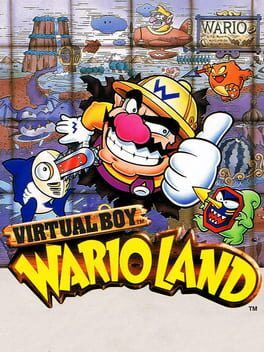
Virtual Boy Wario Land
This is the one critics keep circling in bold. Nintendo Life calls it an “incredible” 2D platformer, and CGMagazine and other outlets echo that it is easily the standout. Wario dives into the screen, pops out in the foreground, and zips between planes during platforming and boss encounters, turning depth into a core mechanic instead of a camera trick. When people talk about Virtual Boy’s library being better than its hardware, Wario Land is exhibit A.
3-D Tetris
Instead of a flat well, blocks drop into a three-dimensional space that wraps and rotates. It is more experimental spin-off than mainline Tetris, but the stereoscopic effect genuinely helps you parse where a piece is going to land inside the cube. Early impressions suggest it works best in short bursts, partly because of the cognitive load of managing rotation along multiple axes.
The Mansion of Innsmouth
A lesser-known horror-flavored maze adventure, this one stands out precisely because Virtual Boy had so few games of this style. The red-and-black aesthetic is a natural fit for grim corridors and looming creatures. From a preservation standpoint, having oddities like Innsmouth officially archived beside Wario Land and Red Alarm is part of what makes this collection feel more like a museum gallery than a simple “greatest hits.”
Nintendo has also confirmed that more titles will join the app over time, including two that never officially launched in the 90s: Zero Racers (the long-mythologized F-Zero spin-off) and the Intelligent Systems-developed D-Hopper. Their future arrival is a quiet but important milestone for game preservation, turning prototypes and magazine shots into fully playable, legit releases.
How the new Virtual Boy headset actually feels
The Virtual Boy – Nintendo Classics service is tightly bound to a physical accessory. You are not just downloading another app; you are committing to a piece of plastic that revives some of the original hardware’s quirks.
Nintendo is selling two official ways to see the stereoscopic effect:
A dedicated plastic Virtual Boy-style viewer that closely mimics the original hardware, with a cradle slot for Switch and Switch 2.
A cheaper cardboard model pitched as a lighter-weight alternative.
Across the board, critics say that Nintendo has, for better and worse, mostly nailed the feeling of using a Virtual Boy in 2026.
Comfort: “authentic neck pain” in a better-built shell
IGN’s preview jokes that the new viewer delivers “authentic neck pain.” After about 20 minutes they avoided the infamous instant headaches of the 1995 unit, but still found the act of leaning in, craning your neck and trying to see the edges of the display to be “kind of a pain to play.”
Vooks, which tried both the cardboard and plastic versions, reported that the plastic recreation feels closest to owning a pristine Virtual Boy today. The downside is mechanical rather than optical. Getting the viewer to the right height is difficult, and most setups encourage you to hunch over a desk and mash your face into the visor. The cardboard shell can be held up like a chunky VR goggles set, which some previewers found very slightly more forgiving on posture but more tiring on the arms.
Other outlets echo the same pattern. Mashable and PCMag both flagged eye and neck strain after only a few minutes, along with that odd VR feeling of being disconnected from the room around you. Game Informer went in expecting a mix of nausea and migraines and instead came away “mildly impressed,” calling it far from perfect but likely the best way yet to revisit Virtual Boy software.
In other words, Nintendo has not magically solved the core ergonomic problem of a system built around binocular 3D on a stationary stand. The lenses are sharper, the screens are higher resolution, and the hardware quality is leagues ahead of 1995, but physically this is still a device that wants you to plant your elbows and lean.
Visuals: better fidelity, same red void
The Switch and Switch 2 screens dramatically outclass the original Virtual Boy’s low-res LED array. That matters. Edges are cleaner, text is more readable, and details like background parallax and particle effects are more pronounced. Wario Land’s layered stages, for example, gain clarity without sacrificing the stark red-and-black mood.
Yet the color limitations are intentionally intact. Nintendo is preserving the monochrome palette rather than remastering it into full color, and every preview stresses how committed the company is to historical accuracy here. You can tweak depth intensity and, according to some hands-on reports, swap lens filters to slightly change the tint, but the underlying art is still built for that pure red aesthetic.
The result is an experience where games look the best they ever have, while still being unmistakably Virtual Boy.
Why Labo VR is not supported
Given that Nintendo already sold a cardboard VR kit for Switch, the most obvious question fans immediately had after the Virtual Boy announcement was: why can’t I just slot my Switch into the Labo VR goggles and play these games there?
Nintendo has now given a firm answer. In a clarification reported by My Nintendo News, the company states that Labo VR is not compatible with Virtual Boy – Nintendo Classics. Early assumptions from some preview coverage that the older goggles would work were simply incorrect, prompting Nintendo to apologize for the confusion.
If you want stereoscopic 3D, you need one of two specific accessories:
The Virtual Boy headset accessory at roughly 100 dollars
The Virtual Boy Cardboard Model at a lower entry price point
On paper this is puzzling. Labo VR is already a head-mounted enclosure designed for the same console. In practice, there are clear technical and commercial reasons for the cutoff.
Technically, Virtual Boy – Nintendo Classics is not just rendering a single side-by-side image. It is built around very specific optics and IPD (interpupillary distance) assumptions that match the new lenses in the dedicated viewer. The original Labo kit only received a handful of lightweight VR modes and did not have to contend with hours of intense binocular contrast using a stark red-and-black palette.
By locking support to a new accessory, Nintendo can standardize the lens arrangement, viewing distance and overall stability. That gives the company firmer ground for its own internal health guidelines and for tuning each game’s 3D effect, rather than having to account for Labo’s more flexible, sometimes wobbly cardboard builds.
Commercially, Virtual Boy – Nintendo Classics is a paid piece of hardware attached to a higher-tier subscription. Nintendo has spent the past few years turning Switch Online + Expansion Pack into a curated museum spanning NES through N64 and Game Boy Advance. Selling a dedicated “exhibit” accessory for its strangest system is perfectly in line with how the company has treated controllers like the wireless N64 pad or the Genesis controller, just on a more flamboyant scale.
The backlash is understandable. Commenters on My Nintendo News and social media question the value of buying a new viewer when a perfectly serviceable cardboard headset already exists, especially when Virtual Boy games are already behind a subscription paywall. For Nintendo, though, the trade-off is a more controlled, consistent experience that is easier to support, even if it means leaving Labo VR as a quirky dead end.
The critics’ verdict so far: better games than you remember
If you strip away the plastic and cardboard, how do the games themselves hold up?
Most previews converge on the same takeaway: Virtual Boy software is stronger than its meme status suggests. DualShockers talked about coming away “a believer” in these games. PCMag and VGC both highlight how titles like Wario Land and Red Alarm reveal a design philosophy that was more “clever arcade experiments” than “failed VR revolution.”
Virtual Boy Wario Land earns near-universal praise. The jumping-between-planes mechanic is repeatedly cited as more than a gimmick, supporting real platforming puzzles and enemy encounters. For players raised on the Game Boy Wario titles or Wario Land 4, this feels like a missing link finally slotted into place.
Red Alarm, Teleroboxer and Galactic Pinball are framed as stylish curios that gain a lot from cleaner rendering and stable 3D. They are not deep in the modern sense, but as bite-sized score-chasers they fit the same niche as many of the NES and SNES classics already on the service.
Less universally beloved, but still appreciated, are experiments like 3-D Tetris and The Mansion of Innsmouth. These are the boundaries of the system’s design space, games that feel like prototypes for ideas that would be better realized later on other hardware. Their presence in this collection, though, is exactly what makes it feel complete. Without the oddballs, Virtual Boy history would be flattened into one or two safe highlights.
The major caveat in every verdict is comfort. Almost every outlet warns that they would not want to play for hours at a time. Sessions are more likely to be ten to thirty minutes, and the service is best approached as a dip-in, dip-out novelty rather than a nightly main event.
What this says about Nintendo’s preservation strategy
Virtual Boy – Nintendo Classics sits at the intersection of several trends in Nintendo’s recent history.
First, it is another step in the company’s gradual move away from selling virtual console-style individual ROMs and toward bundling history into subscription tiers. NES, SNES, Nintendo 64, Genesis, Game Boy and Game Boy Advance libraries now live inside Switch Online and its Expansion Pack. Virtual Boy’s arrival continues that museum-like framing, and brings in a platform that had previously been completely absent from re-release conversations.
Second, the project shows a willingness to engage with failure on Nintendo’s own terms. For years, the company treated Virtual Boy as an embarrassment, acknowledged mostly through Easter eggs and the occasional developer interview. By building a lavish accessory, commissioning a bespoke app and even finishing unreleased games like Zero Racers and D-Hopper for modern consumption, Nintendo reframes the console as a fascinating detour rather than a punchline.
Third, the strict requirement for a dedicated viewer hints at how Nintendo thinks about preserving hardware-dependent experiences. Earlier oddball experiments have been handled in very different ways. Wii’s motion control library is being selectively remade with new control schemes. DS and 3DS dual-screen titles are being ported in piecemeal fashion, often with reworked interfaces. In contrast, Virtual Boy is being preserved almost as an interactive exhibit, where the constraint of the visor, the monochrome color and even the neck strain are acknowledged parts of the experience.
It is not hard to imagine similar treatment for other eccentric peripherals in the future. The success or failure of this rollout will say a lot about whether Nintendo pursues, for example, a more authentic light-gun solution for its Zapper-era catalog, or a specialized dock for DS and 3DS compilations that rely on vertical dual screens.
Finally, Virtual Boy – Nintendo Classics speaks to how Nintendo is using Switch 2 to re-anchor legacy content. The service works on both Switch and Switch 2, but it arrives at a time when Nintendo is reshaping its catalog around the new machine via high-profile Directs, third-party showcases and upgraded “Switch 2 Editions” of modern hits. Planting the Virtual Boy flag inside this broader ecosystem sends a subtle message: even the most offbeat corners of the back catalog are part of the story Nintendo wants today’s audience to see.
Early-access verdict: who is this really for?
Framed as an early-access-style feature, the answer is that Virtual Boy – Nintendo Classics is not trying to be a mass-market killer app. It is unabashedly a niche, historically minded add-on aimed at three overlapping groups.
First are preservation-minded players who want to legitimately experience Nintendo’s strangest system without hunting down fragile original hardware. For them, the promise of eventually playing Zero Racers and D-Hopper alone might justify the cost of a cardboard shell.
Second are retro enthusiasts who enjoy score-chasing and short-session arcade play. If you already spend time in NES and SNES apps sampling old curios, Wario Land, Red Alarm, Galactic Pinball and Teleroboxer slot neatly into that rotation.
Third are curiosity seekers who treat Nintendo hardware as a long-running, occasionally baffling art project. For that audience, the appeal is less about minute-to-minute gameplay and more about donning a contemporary reproduction of 90s VR fever and seeing, firsthand, what went wrong and what secretly went right.
If you are sensitive to VR discomfort, wary of more plastic on your shelf or uninterested in playing with a monochrome palette, there is nothing in the first wave of previews to suggest that Virtual Boy – Nintendo Classics will win you over. But judged as a living exhibit inside Switch Online rather than as a standalone platform, it looks like one of Nintendo’s most intriguing attempts yet to preserve not just its classics, but its glorious mistakes.