
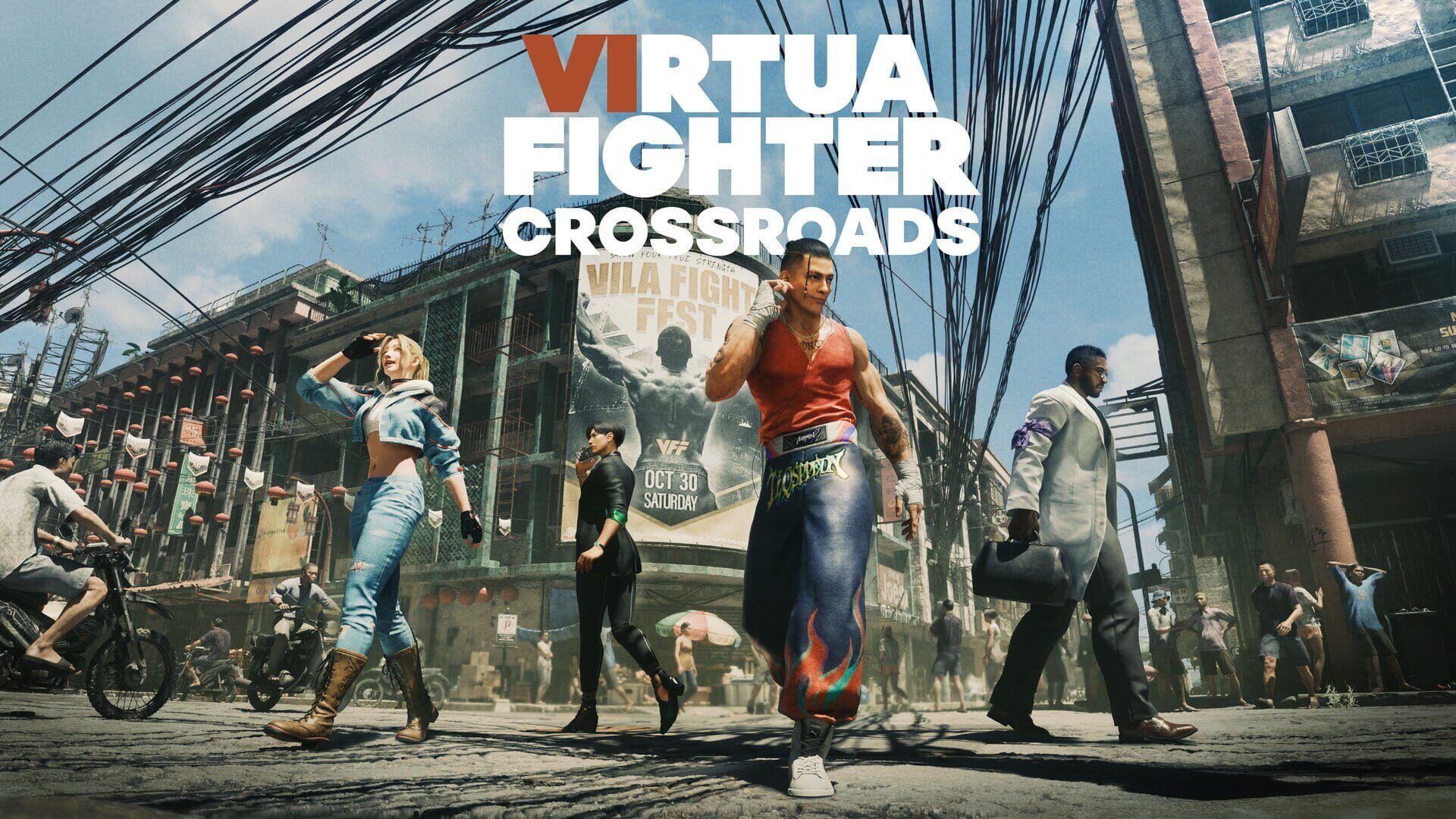

Sega and Ryu Ga Gotoku Studio are turning Virtua Fighter into a cinematic, story‑driven brawler, backed by David Hayter and Persona talent, to compete with today’s heavyweight fighting games.
Virtua Fighter has always been the “serious” 3D fighter. No fireballs, no anime supers, just footsies, frames and realistic martial arts. With Virtua Fighter Crossroads, Sega and Ryu Ga Gotoku Studio are not throwing that legacy out. Instead, they are trying to wrap it around something the series has never really had before: a lavish, narrative‑driven campaign built to stand shoulder to shoulder with modern blockbusters.
Crossroads is targeting a 2027 launch and is being billed as a reinvention rather than a simple sequel. For Sega, this is the moment to pull Virtua Fighter out of cult‑classic status and into the same mainstream conversation as Street Fighter, Tekken and Mortal Kombat. To do that, they have turned to the studio that made “story in a brawler” its house specialty: RGG Studio.
RGG Studio’s vision: a fighting game that lives like a city
RGG Studio has been clear in interviews and press materials that what they do best is build cities that feel alive. From Kamurocho to Yokohama, their Like a Dragon and Judgment games are defined by dense, walkable hubs packed with side stories, minigames and oddball character beats. Sega wants that DNA in Virtua Fighter Crossroads.
Rather than a thin arcade ladder punctuated by static cutscenes, Crossroads is described as an omnibus narrative set in a new, original city. There are four main protagonists, all new faces to the Virtua Fighter universe, each following their own path around the core theme of “crossroads.” Their stories intersect as they move through neighborhoods, back alleys and gyms, meeting classic Virtua Fighter cast members and new combatants alike.
RGG’s approach suggests something closer to a playable drama than a traditional fighting game wrapper. Think of the social density of a Like a Dragon city, then frame it around martial arts scenes and tournament drama instead of RPG brawls. Sega’s language about an “unconventional new approach” points directly at this hybrid: Virtua Fighter that behaves like a narrative action game when you are not in the ring.
For a franchise that built its reputation on pure mechanics, this is a deliberate gamble. Sega is betting that Virtua Fighter’s systems are strong enough to support a full‑scale story experience without losing their competitive edge.
A cinematic story mode designed to matter
Fighting game story modes have come a long way in the last decade, but they still tend to fall into two camps: bombastic, cinematic campaigns that you finish once, or lightly sketched arcade stories that mostly exist for lore. Virtua Fighter Crossroads is aiming for something more integrated, closer to how RGG treats narrative in its own series.
The story mode is framed as a large, cinematic campaign that you are meant to spend serious time in. Sega’s materials emphasize cutscenes, voice acting and character arcs on the scale of a standalone action game. The structure, with four playable leads, allows the team to move between perspectives, styles and tones, showing different corners of the city’s scene. One character might be coming up in underground circuits, another dealing with organized crime pressure on a dojo, another balancing everyday life with tournament ambitions.
RGG has a long track record of making conversation scenes and quiet character moments as compelling as brawls. Bringing that sensibility into Virtua Fighter could finally give its lore the spotlight longtime fans have wanted, while giving newcomers an emotional anchor for what has often been seen as an intimidatingly technical series.
Just as important, Sega is positioning this mode as a pillar, not an afterthought. The story campaign is being marketed right alongside the versus modes, rather than as a bonus. That is a clear statement about how Sega wants Crossroads to be perceived by a broader audience that now expects a strong single player package with any big fighting game.
David Hayter’s worldbuilding: from stealth ops to dojo wars
To sell that cinematic pitch, Sega recruited David Hayter as World Building Supervisor. Most players know him as the original English voice of Solid Snake, but Crossroads leans on his screenwriting side. Hayter has writing credits on films like X‑Men and Watchmen and has spoken about spending the past year shaping the world and tone of Virtua Fighter Crossroads.
His role as worldbuilding lead suggests that the team is treating this setting almost like a new IP. The city needs its own history, power structures, subcultures and everyday rhythms that can support multiple protagonists and a possible multi‑game arc. With Hayter guiding that foundation, the narrative can aim for a grounded, character‑driven style that suits Virtua Fighter’s realistic combat.
A key benefit here is cohesion. Fighting game story modes often feel like they were bolted onto mechanics, with characters teleported from scene to scene. Hayter’s background in building universes that hold together across long films should help Crossroads avoid that patchwork feel. The city exists whether or not you are in a match. Factions remember you. Dojos and gyms feel like places people actually train, not just stage select backdrops.
Persona and Ghost of Tsushima talent bring RPG‑grade storytelling
Hayter is not carrying this alone. Sega unveiled a stacked narrative team that pulls from some of the most story‑driven games of the last twenty years.
Brad Kane, a writer on Ghost of Tsushima and As Dusk Falls, is serving as lead writer. That mix of big‑budget samurai drama and intimate, branching narrative lines up well with what Crossroads appears to be chasing: stylish martial arts spectacle grounded in personal, often messy human choices.
On the Japanese side, RGG veteran Tsuyoshi Furuta brings experience from Like a Dragon and Judgment. He has helped craft long‑running character arcs, morally gray crime stories and the exact kind of tonal whiplash RGG is famous for, shifting from heartbreak to absurdity without breaking immersion. In Crossroads, he anchors the scenario direction, making sure each protagonist route lands both structurally and emotionally.
Then there is Shinji Yamamoto, whose credits across the Persona and Shin Megami Tensei series immediately caught the community’s attention. Persona’s success rests heavily on its ability to balance daily life, social relationships and high‑stakes conflict. Translating some of that sensibility to Virtua Fighter suggests more emphasis on how characters live between fights. Training partners, rivals, mentors and community ties can all feed into why people step into the ring.
The combination is unusual for a fighter. You have a Hollywood‑tested worldbuilder, a prestige action‑adventure writer, the architects of RGG’s own crime sagas and a Persona/SMT veteran all funneling into a single mode. For Sega, this is their clear answer to a market where narrative quality is now a selling point, not an optional extra.
Keeping Virtua Fighter’s identity in a changed market
Modern fighting games live in two worlds. On one side are casual players who want cinematic story, style and accessible online play. On the other are dedicated competitors who care about frame data, rollback netcode and tournament‑friendly balance. Virtua Fighter Crossroads has to satisfy both to carve out space between Street Fighter 6, Tekken 8, Guilty Gear Strive and Mortal Kombat 1.
Sega has stressed that, underneath the new wrapper, this is still Virtua Fighter. The combat remains strike, throw and guard focused, with realistic martial arts styles and an emphasis on movement, spacing and timing. Accessibility is being handled through clearer onboarding and presumably better tutorials rather than by flattening the system.
Where Crossroads differentiates itself is the texture of that system in context. The realistic, grounded style fits a story that treats martial arts as a discipline and culture rather than just an excuse for superpowers. In a landscape dominated by giant supers and supernatural gimmicks, Virtua Fighter’s purity becomes a differentiator, especially when you place it inside a rich setting that respects how fighters live and train.
On the feature side, Sega is clearly watching the competition. Street Fighter 6’s World Tour proved that players will spend dozens of hours in a good single player mode that also teaches fundamentals. Tekken 8 has leaned hard into high‑end production values and aggressive online support. Mortal Kombat continues to push cinematic presentation and generous offline content.
Crossroads attempts to answer all three at once. It offers a full story campaign like Mortal Kombat, a city‑style exploration layer that can double as a tutorial space similar in spirit to World Tour, and the kind of deep, execution‑heavy 3D system that has historically appealed to the same audience that loves Tekken. If Sega can combine robust online infrastructure with that package, Virtua Fighter could finally break out of its niche.
A revival built for longevity, not just nostalgia
Virtua Fighter Crossroads is not being sold as a nostalgia play, even if it celebrates familiar faces and styles. Sega’s messaging and the assembled talent point to a long‑term plan: reintroduce Virtua Fighter as a modern platform that can sustain competitive circuits and single player fans for years.
Bringing in RGG Studio was the boldest possible way to do that. This is a team that understands how to keep players in a world through sheer narrative and tonal variety. By pairing that expertise with Virtua Fighter’s still‑respected mechanics and bolstering the writing staff with names from Persona and Ghost of Tsushima, Sega is positioning Crossroads as both the best entry point the series has ever had and its most ambitious evolution.
The fighting game landscape of 2027 will be crowded, but Virtua Fighter Crossroads is arriving with a clear pitch. It wants to be the game where the depth of a legendary 3D fighter meets the character‑driven storytelling of Japan’s premier narrative studio, under a world shaped by some of the medium’s most recognizable writers. If Sega and RGG can stick the landing, Virtua Fighter may finally stand at the crossroads of mainstream success and hardcore respect instead of just watching the tournament from the sidelines.