
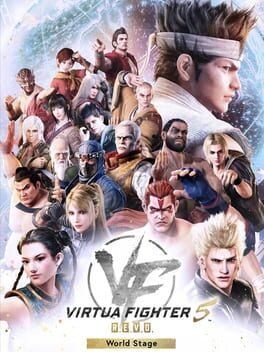

Sega’s definitive Virtua Fighter 5 finally hits Nintendo hardware with rollback netcode, cross‑play and training upgrades. Here’s what Virtua Fighter 5 R.E.V.O. World Stage on Switch 2 changes, and why it matters for the series’ competitive future.
Virtua Fighter is finally stepping into Nintendo’s ring. Sega has confirmed that Virtua Fighter 5 R.E.V.O. World Stage is coming to Nintendo Switch 2 on March 26, 2026, marking the series’ first modern appearance on a Nintendo platform and the most feature‑complete version of Virtua Fighter 5 to date.
R.E.V.O. World Stage launched elsewhere in late 2025, but this Switch 2 release is more than a late port. It arrives with rollback netcode, full cross‑play and a slate of balance and training updates that aim to make this the definitive home for competitive Virtua Fighter, including for players who have never owned a PlayStation or Xbox.
What’s actually new in Virtua Fighter 5 R.E.V.O. World Stage on Switch 2?
Sega is presenting R.E.V.O. World Stage as the culmination of every prior Virtua Fighter 5 revision, from the original arcade release through R, Final Showdown and Ultimate Showdown, then layering modern online tech and quality‑of‑life features on top.
The Switch 2 version keeps parity with PS5, Xbox Series X|S and PC while adding several key pillars for competitive play.
First is rollback netcode. Previous Virtua Fighter 5 releases relied on delay‑based netcode that struggled once latency climbed, especially in cross‑region play. Rollback rewinds and resimulates game states locally so that inputs feel more immediate, and the engine only corrects visible mistakes when desyncs occur. For a game built on tight frame data, fuzzy guards and micro‑sidesteps, this change is more than a technical bullet point; it directly affects which matchups and setups are actually viable online. Pressure strings that were borderline unreactable under delay netcode should feel closer to offline conditions now, which is critical if Sega wants online ranked play to feed into serious tournament seeding.
Second is cross‑play across all platforms, including Switch 2, PS5, Xbox Series X|S and Steam. Instead of splitting an already niche community into separate lobbies, the Switch 2 playerbase will be folded into one global pool. That has two major effects. Matchmaking should be faster and fairer, with better odds of finding opponents near your skill level and region. It also means Switch 2 owners can train with the same top players who have already been grinding R.E.V.O. on other platforms, narrowing the historical gap between Nintendo’s audience and the traditional Virtua Fighter scene.
Third are gameplay refinements. R.E.V.O. introduces new moves and combo routes for the roster, plus balance adjustments tuned around the current competitive understanding of Virtua Fighter 5. These tweaks are not wholesale reworks, but they do nudge certain archetypes. Characters who relied on oppressive vortexes have had some of their most abusive options toned down, while weaker tools receive frame or hitbox adjustments so they see more real‑match use. For returning players used to Final Showdown or Ultimate Showdown, muscle memory will still carry over, but lab time will be required to optimize damage and oki under the new rules.
Finally, the training suite has been meaningfully upgraded. Beyond standard dummy recording, frame display and command lists, the Switch 2 build includes more flexible replay tools and situational drills that mirror real match scenarios. Being able to record a sequence, tag it with frame data, then replay that situation with different defensive options shortens the gap between theory and practice. For a game that has historically intimidated newcomers with dense system mechanics, better training tools could be as important as any new character or mode.
The World Stage mode and Nintendo’s audience
R.E.V.O. World Stage does not only chase tournament players. The new single‑player World Stage mode is designed as a narrative‑light climb through a global circuit of digital events, sponsored exhibitions and boss‑style encounters against high‑profile AI fighters modeled on real community legends. On Switch 2, that structure has particular value because Nintendo’s audience often splits its time between portable quick sessions and longer docked play.
World Stage lets you earn cosmetic rewards, learn matchups in a lower‑pressure environment and experiment with characters before risking your rank. The Switch 2’s suspend and resume features pair naturally with these bite‑sized runs. That loop could hook players who would never otherwise sit in training for an hour, quietly feeding more prepared competitors into the ranked ecosystem.
Why Virtua Fighter on Switch 2 actually matters
Historically, Virtua Fighter has largely lived in arcades and on Sega or PlayStation machines, with Xbox support coming later and Nintendo mostly watching from the sidelines. The Switch 2 port changes that calculus in a few important ways.
The first is reach. R.E.V.O. World Stage is arriving on a platform that is expected to have a huge global install base early in its life. Even a modest conversion rate could meaningfully swell the Virtua Fighter player count overnight. That is especially significant in regions where Nintendo hardware dominates, such as Japan, where portable play is the default and local scenes often build around what people can practice on the go.
The second is perception. For years, Virtua Fighter has been considered a purist’s 3D fighter, technically revered but commercially overshadowed by Tekken, Street Fighter and even Sega’s own Yakuza and Like a Dragon titles. Showing up on Switch 2 day and date with robust rollback and cross‑play sends a quiet signal that Sega still sees Virtua Fighter as a living competitive franchise rather than a nostalgia project. It positions the series alongside other modern fighters that treat online infrastructure as seriously as character balance.
The third is ecosystem impact. Switch 2 is likely to become a key tournament console simply because of its portability and the expectation that many events will be running first‑party Nintendo games already. If Virtua Fighter 5 on Switch 2 performs well and stays in balance parity with other platforms, tournament organizers have one less barrier to adding it to lineups. They will not have to worry about version discrepancies or tiny online‑only communities; they can rely on a unified playerbase that has trained together across systems.
Rollback, cross‑play and the road to a healthier competitive scene
For Virtua Fighter specifically, the combination of rollback and cross‑play does more than smooth online ranked matches, it rewires how the community can function day to day.
Cross‑play breaks the isolation that used to define platform‑locked fighters. A strong Switch 2 player in a region without many locals can now spar consistently with PlayStation or PC regulars. Training groups and Discord communities no longer need to segregate by hardware. That matters for mid‑level players trying to break into top 8s, who often plateau simply because they lack access to stronger opponents.
Rollback netcode amplifies that effect. High‑level Virtua Fighter is built on small timing windows and strict defensive techniques. Under delay‑based systems, some of those techniques were effectively offline‑only skills. Reliable rollback makes match footage, Discord coaching sessions and online first‑to‑10 sets much more representative of how a major bracket will feel. Over time, that tends to raise the global skill floor and deepen character knowledge.
If Sega commits to seasonal balance passes and netcode maintenance across all platforms, R.E.V.O. World Stage could evolve into the stable, evergreen ruleset that Virtua Fighter fans have been asking for since Final Showdown. The Switch 2 release is critical in that equation because it ensures that a large, younger audience can enter the ecosystem without worrying about buying a specific console just to play one fighter.
Training changes that could lower the barrier to entry
Virtua Fighter has a reputation for being mechanically unforgiving. The basic rules are simple, but once players encounter system concepts like evade‑cancel throws, fuzzy guarding or guard‑break setups, many bounce off without a structured way to practice.
R.E.V.O. World Stage’s enhanced training suite is Sega’s most direct attempt in years to address that problem. On Switch 2, these tools take on extra meaning because portable play encourages frequent, short sessions. Instead of needing a dedicated sit‑down to work through complex concepts, a player can focus on one specific drill intro throw escapes against common strings, or practicing sidestep timing versus linear mids during a commute.
The inclusion of better replay analysis is just as important. Being able to tag moments in a replay and jump straight into a training scenario from that exact frame turns every loss into a potential lesson. Over time, that loop can convert curious Switch 2 owners into serious competitors, which is what Virtua Fighter needs most.
What this could mean for Virtua Fighter’s long‑term future
All of this raises a bigger question: what does a strong Switch 2 debut mean for Virtua Fighter as a whole?
If R.E.V.O. World Stage finds an audience on Nintendo’s hardware, it gives Sega clear data that a properly supported Virtua Fighter can thrive beyond its traditional homes. That strengthens the case for future content updates, new single‑player experiments and, eventually, a true Virtua Fighter 6 that launches simultaneously across every major platform, including Nintendo.
A healthy Switch 2 community also acts as a safety net for local scenes. When a game exists only on a subset of consoles, regional events sometimes struggle to justify dedicating setups and bracket space. Cross‑play plus rollback mitigates that. A scene anchored on Switch 2 can still mingle freely with PlayStation and PC players, which makes it easier for tournament organizers to treat Virtua Fighter as a standard mainstage option rather than a risky side bracket.
In the shorter term, the Switch 2 release gives Virtua Fighter something it has lacked for years: visibility. A March launch window, an open beta beginning February 19 focused on server stability and cross‑play tests, and pricing that starts at $19.99 for the standard edition put R.E.V.O. World Stage in reach for curious fighting game fans.
If those players stick around, learn the systems and start showing up in online brackets, Virtua Fighter 5 on Switch 2 could be remembered as the moment the series stepped back onto the global competitive stage instead of quietly living on in legacy lobbies.